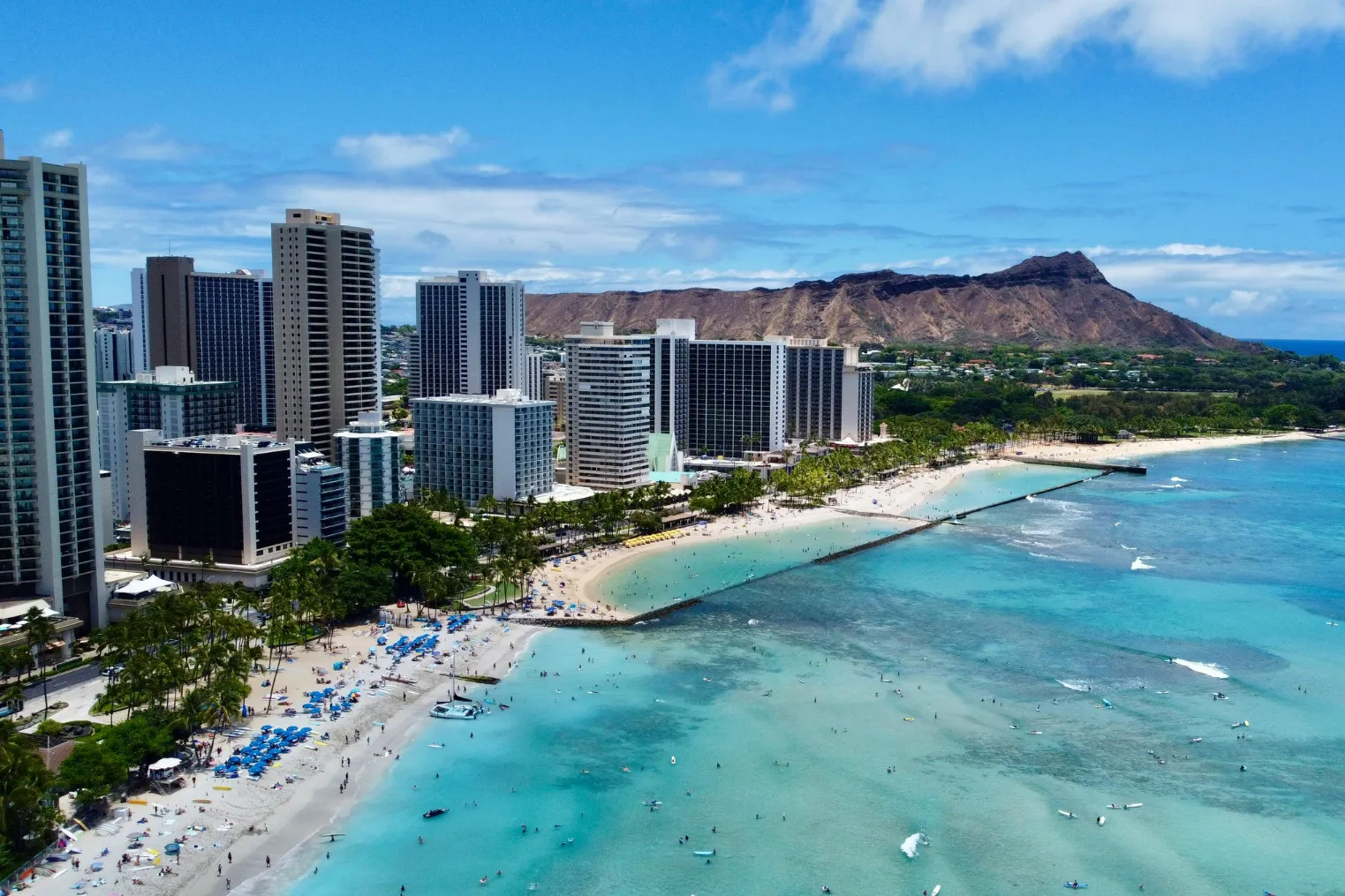
From a window seat or a doors-off helicopter, you’ll spot Diamond Head (Lēʻahi) curving like a stone crescent, with Waikīkī’s beach and hotel strip laid out below. Go early, around 8 to 10 am, when the water’s calmer and the reefs show up as teal quilts and dark channels. Expect $180 to $350 for air tours, and book ahead in peak weeks. Bring polarized sunglasses, skip flash. Next, you’ll want to know what those seams actually are.
Key Takeaways
- From above, Waikīkī appears as a pale, curved beach ribbon framed by hotels and anchored by Diamond Head’s iconic crater silhouette.
- Dark reef shelves form quilt-like patterns that shelter calm lagoons, with darker seams marking ridgelines and channels.
- Water color shifts signal depth: pale turquoise indicates shallow reef and sand flats, while deep jade or cobalt suggests deeper water.
- Beyond the reef break, faint ripples and color bands reveal currents, and winter surf can create darker lanes from stirred-up grit.
- Clear, calm mornings best separate reef texture from sandbars; rain and wind chop can turn water milky and mute detail.
What Can You Identify in Aerial Waikīkī?
A bird’s-eye view turns Waikīkī into an easy-to-read map if you know what to look for.
From aerial photography, trace the pale curve of the beach, then spot dark reef shelves and the calm lagoons they shelter. You can even read ocean currents as faint ripples and color bands beyond the break, handy for picking a safer swim zone later.
Look for the canal’s straight line, the marina’s neat slips, and hotel towers stacked along Kalākaua.
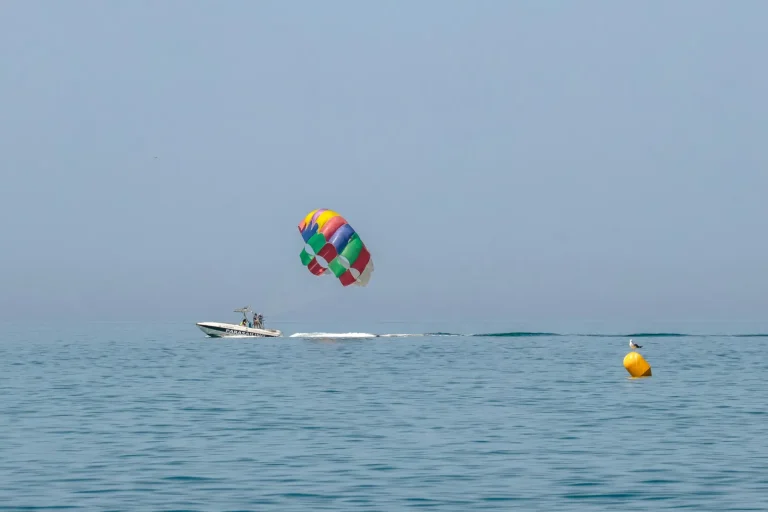
From high above, you’ll also catch unforgettable parasailing views that make Diamond Head and the reef patterns stand out in vivid contrast.
Go early, 8 to 10 a.m., for cleaner light and fewer tour boats.
How Diamond Head (Lēʻahi) Frames Waikīkī From Above
From above, you can’t miss Lēʻahi’s iconic silhouette, it anchors Waikīkī like a postcard you can navigate by.
Time your visit for sunrise if you want softer light and fewer people, bring water and a hat, and expect the summit trail to cost about $5 per person plus $10 per vehicle if you drive.
The 0.8-mile summit route climbs 560 feet and passes through a lighted 225-foot tunnel to the Fire Control Station.
Lēʻahi’s Iconic Silhouette
When you look down on Waikīkī, Lēʻahi, better known as Diamond Head, anchors the whole scene like a compass point, and it’s hard to miss how it frames the curve of the beach and the hotel strip. Its sharp ridge marks the city’s edge, a dark wedge against bright water.
You’re tracing an ancient caldera, and you can see why it served as a navigational landmark before GPS. From a parasail, the scenic highlights include Diamond Head’s profile and the reefs shifting in turquoise patches below.
- Go early for softer light, fewer buses, and bring water and a hat.
- Skip midday glare, expect $0 to look from above, or $30 to $60 for a helicopter seat.
Summit Vistas Over Waikīkī
At the summit, Waikīkī snaps into focus like a clean map, with Diamond Head’s crater rim curving behind you and the beach ribboning out toward the hotel towers.
Face the ocean and you’ll read the reef’s seams and the channel where surf lines up.
To capture Diamond Head in your parasailing shots, ask your crew to angle your towline so you drift back toward Waikīkī for a clear Diamond Head backdrop.
Go before 9 am for fewer crowds, though the bunker lookout still bottlenecks. Entry is $5, and the $2 shuttle helps. Pack water, a cap, and grippy shoes, skip flip-flops and selfie sticks.
Look for summit flora clinging to lava cracks.
Follow visitor etiquette: stay on marked paths, don’t pick plants, and give everyone space at the rail.
How to Spot Waikīkī Reefs by Color and Texture
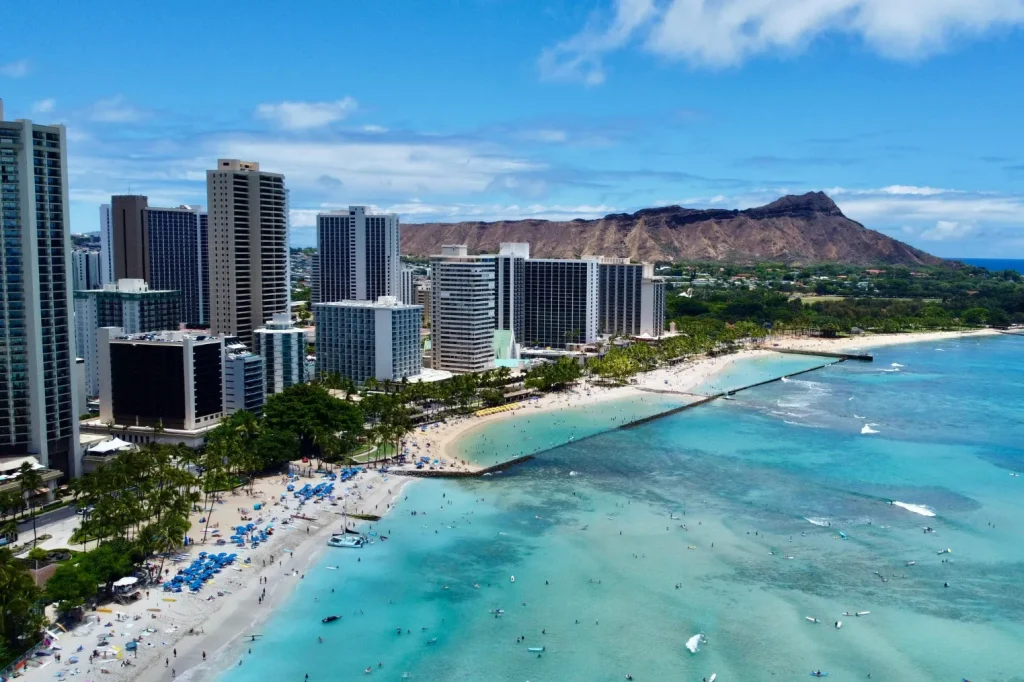
From your lookout or helicopter window, you’ll see the water shift from pale aqua to deep jade, and that color change often marks where reef begins and depth drops.
Look for mottled, patchwork textures that stay put as waves slide over them, then separate the smooth, bright sand lanes from the darker coral heads that look almost velvety.
Bring a waterproof camera to capture parasailing photos as you hover above the reefs and Diamond Head.
Still comparing What You See Above Waikiki: Diamond Head Reefs?
Ask for tour ideas, hotel suggestions, or a simple trip plan that combines both.
Trip Helper
Reading Water Color Shifts
Color is your quickest reef map in Waikīkī, and you can read it in seconds if you know what to look for.
From a lookout or drone shot at 9 a.m., deep cobalt usually means sand or depth, while pale turquoise hints at shallows where reefs may sit.
Water clarity matters: after rain, light scattering turns everything milky, so wait a day if you can.
Watch seasonal shifts, winter surf can darken lanes with stirred-up grit.
Wind effects also wrinkle the surface and mute color, so aim for calmer mornings.
For sweeping shoreline context, plan around best time for views at Diamond Head and Waikīkī parasailing so the light helps separate reef texture from glare.
- Bring polarized sunglasses, 20 bucks at ABC Stores.
- Skip midday glare and packed catamarans.
Identifying Reef Texture Patterns
Once you’ve clocked the blue-to-turquoise palette, start hunting for texture, because reefs don’t just change the shade, they change the surface.
From a plane window or drone view, scan for speckled, quilt-like reef mosaics that look matte and slightly grainy, not glassy. You’ll also notice thin, darker seams that zigzag like brushstrokes, these are ridge lines that catch light at low sun.
In the main Hawaiian Islands, the State’s Division of Aquatic Resources (DAR) helps coordinate reef management to protect coral reefs and associated habitats like seagrass beds and mangroves.
For the best read, fly in before 10 a.m. when glare stays tame, and keep polarized sunglasses in your daypack.
Skip midday loops, haze and chop blur texture mapping. Sit by the window, and wipe your lens often.
Separating Sand From Coral
Dial in the contrast and you’ll start separating Waikīkī’s sand flats from coral heads in seconds. Sand reads pale tan or milky turquoise, especially at noon when glare smooths it out. Coral looks darker, mottled, and slightly rough, like a patchwork quilt under the surface.
- Check sediment sorting: uniform color usually means wave-worked sand, while mixed tones hint at living reef.
- Watch particle size and grain composition: fine grains brighten the shallows, chunkier rubble throws speckled shadows.
- Trace beach morphology: sand tongues curve with currents, reefs hold steadier shapes and edges.
From higher up, keep expectations realistic about spotting marine life, turtles, dolphins, or whales are possible, but not guaranteed, and conditions matter. Go early, 7 to 9 a.m., before crowds and wind chop. Bring polarized sunglasses. Skip filters.
Waikīkī Reef Channels, Sandbars, and Surf Breaks
Even if you’ve walked Waikīkī a dozen times, seeing its reef channels, sandbars, and surf breaks from above changes the whole map in your head. You’ll pick out dark reef passages that funnel swell, plus pale sandbars at low tide, handy for sandbanks mapping with a quick screenshot. Before you go, note that coastal waters forecasts are subdivided by zone and each zone is identified by a Universal Generic Code.
Choose a 20 minute heli loop at sunrise for less glare and lighter traffic, expect $250 to $320. Midmorning flights fill fast, though. Bring polarized sunglasses, a thin windbreaker, and a camera strap. Skip loose hats and bulky lenses. From up high you can trace the classic breaks and watch sets peel toward shore in clean lines.
Why Waikīkī’s Coastline Looks the Way It Does
Because Waikīkī sits behind a living reef, its shoreline behaves more like a protected lagoon than an open-ocean beach. From above, you notice calmer water, pale sand pockets, and straight hotel edges that show how engineered this coast is. After heavy rainfall, the state may issue a Brown Water Advisory because runoff can carry sewage, chemicals, and animal waste to the shoreline.
- The reef slows waves, so sand lingers, but storms still trigger coastal erosion that the city fights with periodic sand replenishment.
- Groynes, seawalls, and dredged channels shape currents, which is why one block can feel wide and the next pinched at high tide.
- The Ala Wai and streets funnel urban runoff after rain, tinting the water near drains and briefly thinning beach crowds.
Bring reef shoes, a shell, and cash for a $3 bus ride. Skip noon sun, go early, and you’ll see more texture.
How to View Waikīkī Reefs Without Harming Wildlife
Usually, you’ll see Waikīkī’s reefs best when the water is calm in the early morning, and you don’t have to step on a single living coral to do it. Swim out at Kuhio Beach before 9 a.m., float face-down, and keep your fins up. Choose reef friendly snorkeling gear: a snug mask, short fins, and mineral sunscreen or a rash guard. Don’t feed turtles or chase monk seals, even for a photo. Before you go, watch for rip currents and check conditions with a lifeguard so you’re not surprised by hazards.
| Do | Skip |
|---|---|
| Stay 3 m from turtles | Touching coral |
| Use float belt | Standing on reef |
| Pack water, cash $5 | Flash photography |
| Go with small group | Peak noon crowds |
Frequently Asked Questions
What’s the Best Season for Clear Aerial Views Over WaikīKī?
Pick the dry season, especially April through October, for the clearest aerial views, you’ll get low haze and steadier light. Avoid peak winter swells; when you fly after fronts, you’ll catch calmer seas and sharper detail.
Are Drones Allowed Over WaikīKī Beach and Diamond Head?
Drones aren’t generally allowed over Waikīkī Beach and Diamond Head without permits; you’ll face strict drone restrictions and privacy concerns. You must follow FAA rules, avoid people and parks, and check state and local bans.
Which Flights Offer the Most Consistent Views of WaikīKī’s Reefs?
You’ll get the most consistent reef views on low-altitude morning charters and early interisland shuttles that hug Oʻahu’s south shore; pick window seats on the right heading east, left heading west, for clearer water below.
Can You See Turtles or Monk Seals From Above in WaikīKī?
You can sometimes spot turtles from above Waikīkī on clear, calm days, but it’s rare. Turtle sightings improve over shallow reefs. You’ll almost never see monk seals; monk seal behavior keeps them submerged or distant.
What Camera Settings Work Best for Photographing Reefs From the Air?
Use shutter priority at 1/1000s to freeze motion, set ISO 200–800, and stop down to f/5.6–f/8. Add polarizing filters to cut glare, shoot RAW, and dial -0.7 EV for highlights when sun’s high, avoid haze.
Conclusion
Catch Waikīkī from above and you’ll swear the ocean’s a giant stained glass window. Go at sunrise for the clearest reef quilt, fewer helicopters, and softer light. A doors-off flight runs about $300, but you can also hike Diamond Head early for $5 parking. Bring sunglasses, a windbreaker, and a phone strap. Skip midday glare and weekend crowds. If you want easy logistics, Viator’s flights offer hotel pickup, free cancellation, and reserve now pay later.