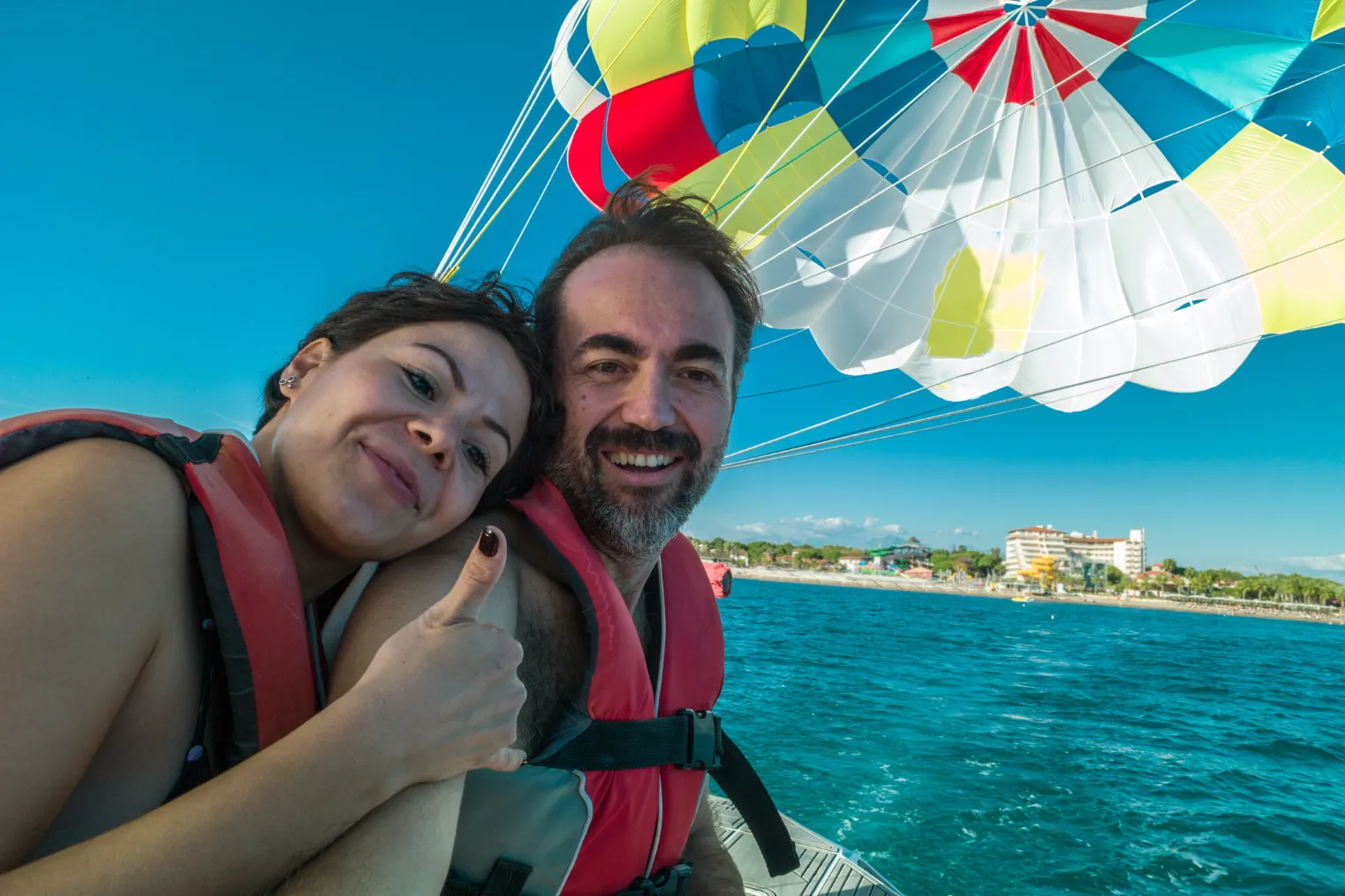
Book the 8 a.m. slot, pack a waterproof phone case, and lock in your wrist tether. You’ll beat the crowds and catch softer light over Waikiki, plus calmer seas that keep video steadier. Plan on $80–$150, arrive 20 minutes early, and skip loose hats unless you want to donate one to the Pacific. If you need clean logistics, a Viator tour with verified reviews, free cancellation, and reserve now pay later can help you snag that early time, but your settings and framing will decide whether Diamond Head looks epic or… flat.
Key Takeaways
- Book the first flight (8–10 a.m.) for golden light, calmer winds, fewer boats, and cleaner views of Diamond Head and Waikiki.
- Use an action camera or compact mirrorless; charge batteries, clear cards, and skip bulky bags that bounce under the seat.
- Waterproof and tether everything: sealed housing, wrist lanyard to harness strap, dry bag, and microfiber cloth for salty mist.
- Shoot video at 60 fps (120 fps for takeoff); use high shutter, auto ISO capped near 800, and −0.3 EV to protect sky glare.
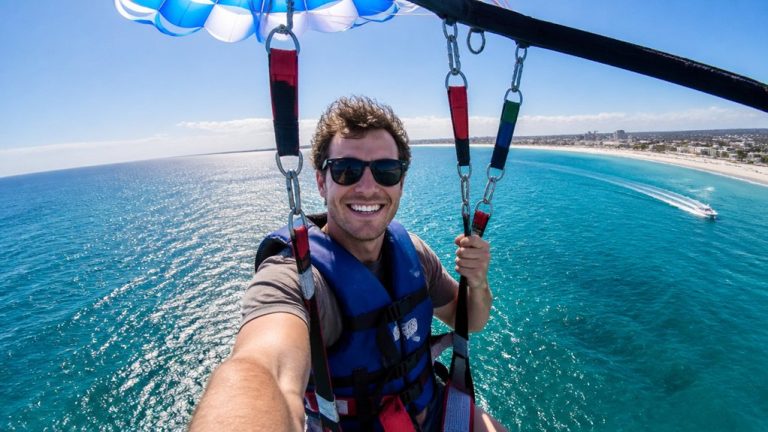
- Capture in 10‑second bursts; angle slightly down, brace elbows to your vest, and include towline and boat wake for scale.
Pick the Best Time for Waikiki Parasailing Photos
Early morning, right after the sun clears Diamond Head, is your sweet spot for Waikiki parasailing photos. Catching the light just as it rises over Diamond Head views gives you dramatic contrast between the crater, city skyline, and ocean in a single frame.
Early morning, just after the sun clears Diamond Head, delivers Waikiki’s best parasailing light for crisp, glowing photos.
You’ll get golden hour glow on the water, calmer trade winds, and fewer boats photobombing your frame.
Book the first flight, usually 8 to 9 a.m., and you’ll beat the beach traffic and the midday haze.
If you can’t snag morning, aim for overcast mornings or late afternoon when light softens and colors pop without harsh shadows.
Midday rides can still work, but expect squinting and glare.
Plan $110 to $160, plus tips, and bring a dry bag, sunglasses strap, and reef safe sunscreen.
Skip bulky towels and loose hats.
Viator tours help with fixed time slots, verified reviews, and free cancellation, reserve now, pay later too.
Choose the Best Camera for Waikiki Parasailing Video
Pack the right camera and you’ll turn that Waikiki towline swing into smooth, vivid video instead of shaky proof you survived. For most riders, an action camera with stabilization and 4K at 60fps nails the spray, the skyline, and your grin. Want richer color and shallow depth? Bring a mirrorless compact with a wide zoom, but skip big lenses, they feel clumsy in sea wind. For GoPro users, dialing in top GoPro settings like 4K/60fps with strong stabilization makes parasailing footage look dramatically smoother and sharper.
| Pick | Why it works | Typical cost |
|---|---|---|
| Action camera | Best stabilization, hands free angles | $250 to $500 |
| Mirrorless compact | Cleaner low light, better audio options | $700 to $1,200 |
| Phone + gimbal | Great if it’s calm, bulky otherwise | $150 to $400 |
| 360 cam | Easy reframes, huge file sizes | $300 to $600 |
Charge batteries, clear cards, and set exposure before you queue.
Secure and Waterproof Your Camera Before Takeoff
Lock your camera down before you clip in, because once the boat throttles up off Waikiki the wind and salt spray start testing every latch you forgot to check.
Secure your camera before you clip in, Waikiki’s throttle-up brings wind and salt spray that punish every unchecked latch.
Slide your phone or action cam into a waterproof housing, close it until you hear the click, then tether it with a wrist lanyard to your harness strap. For extra peace of mind on choppy days, look for waterproof phone cases specifically recommended for parasailing in Waikiki, which are built to handle spray and sudden dunkings.
Bring a small microfiber cloth in a zip bag, skip bulky camera bags that bounce under the seat.
Most crews load fast, so arrive 20 minutes early and do your sealing on the dock, not mid ride.
Expect $90 to $140 tours.
- Double check seals, you’ll breathe easier.
- Clip the lanyard, you won’t watch gear splash away.
- Stow spares, you’ll feel ready.
- Relax, you’ll remember the view.
Use the Best Settings for Sun, Spray, and Motion
Once your camera’s sealed and tethered, the next battle is Waikiki’s bright sun, salty mist, and the steady tug of wind that turns every swing into blur.
Set shutter priority at 1/1000 for stills, or 60fps video with 1/120 shutter, so spray and lines stay crisp.
Keep ISO on auto with a cap around 800, and dial minus 0.3 exposure to protect clouds and glare.
A polarizer filter cuts shimmer, but rotate it before launch because you won’t want to fumble aloft.
If you can, book the first boat of the day or golden hour, when light softens and crowds thin.
For the most flattering angles, have a friend shoot from the ideal spot on the boat where they can see both the chute and the Waikiki skyline behind you.
Bring a microfiber cloth in your dry bag and skip lens wipes that smear salt.
Use burst mode, then relax, you’ll get keepers.
Still comparing Waikiki Parasailing?
Ask for tour ideas, hotel suggestions, or a simple trip plan that combines both.
Trip Helper
Frame Iconic Waikiki Coastline Shots From the Air
Aerial framing is your cheat code for turning Waikiki into a postcard instead of a random patch of blue. As you rise, drop the horizon, then line up golden hour silhouettes,diamond head panoramas in one sweep: reef greens, hotel strip, and the crater’s edge. For the most cinematic perspective, time your flight so you’re soaring over Diamond Head while the sun rakes across its ridgeline, spotlighting the crater against the deep blue Pacific.
Fly early or late for softer light and fewer beachgoers.
- Put the boat wake in a corner for scale.
- Use the towline as a leading line toward Diamond Head.
- Tilt to include a ribbon of sand, not just water.
- Snap one close shot of your hands on the harness, then go wide.
Bring a wrist strap and a tiny microfiber cloth; skip bulky bags. Expect $90 to $150 per flight, so shoot with intention every time.
Keep Waikiki Parasailing Video Smooth in Wind
Out over Waikiki, the trade winds can jiggle your footage, so lock in with two hands and brace your elbows before the boat accelerates, and skip one-handed wave shots (save that for the dock). Turn your body slightly to shield the camera from gusts and salt spray, and keep a small microfiber cloth in a pocket since everything gets misted fast. Since wind can also change how high and stable your chute flies, operators constantly monitor Waikiki parasailing weather and may adjust your ride or timing to keep conditions camera-friendly. If your camera allows it, bump up to 60fps or higher so you can smooth out shakes later, and if you book a Viator parasailing slot, pick an early time with verified reviews, hotel pickup, and free cancellation, since mornings often run calmer and less crowded.
Stabilize With Two Hands
Grip your phone or camera with both hands the moment the towline tightens, because Waikiki’s trade winds love to turn a one-handed shot into shaky confetti. Lock your elbows to your vest, keep shoulders relaxed, and use a two handed grip. Add wrist tethering so a bounce doesn’t send gear into the blue. For action cams, consider GoPro mounts for parasailing to lock in stable angles while still keeping safety lines attached.
- Breathe, then hit record.
- Shoot 10-second bursts.
- Let a buddy tap your arm to cue pans.
- Skip the selfie stick, it bugs the crew.
Rides take about 60 minutes and cost $90 to $150. Bring a slim dry bag, and wipe your lens. Book early; noon boats fill fast.
A well reviewed Viator tour can help with timing, hotel pickup, free cancellation, and reserve now pay later.
Shield Camera From Gusts
Once you’ve steadied your shot with two hands, the next battle is Waikiki’s gusty trade winds, which can smack your camera and turn that smooth glide into jittery footage. If you’re thinking about your phone instead of a dedicated camera, make sure you understand bringing your phone parasailing so you can keep it safe while still getting stable video. Tuck the camera close to your chest between takes, then lift it only when the boat gives you the cue. Use your body as a windbreak, and angle the lens slightly down so the airflow skims past. A small foam sleeve adds cheap wind dampening and also improves grip when your palms get salty.
If you want hands free steadiness, try visor mounting with a snug cap, but skip floppy hats. Bring a microfiber cloth, not tissues. On midday flights, book a Viator tour with hotel pickup, verified reviews, free cancellation, and reserve pay later.
Use Higher Frame Rates
Sometimes the easiest way to beat Waikiki’s wind wobble is to let your camera catch more moments per second. Set 60 fps for most rides, or 120 fps for takeoff, and use a high shutter to freeze spray and swinging harness straps. On your iPhone, you can trim clips, adjust speed, and create smooth parasailing edits directly in the Photos app right after your ride.
In editing, drop the best bits into slow motion, you’ll get that smooth, weightless drift over the reef and skyline.
- You’ll feel steady when the boat bounces.
- You’ll keep faces sharp, even in gusts.
- You’ll hear cheers that match clean visuals.
- You’ll replay the splashdown with real drama.
Bring a dry bag and spare battery, skip bulky zooms. Pack a microfiber cloth for salty mist. Book the 8 to 10 a.m. slot for lighter crowds, $90 to $140.
Frequently Asked Questions
What Should I Wear for Parasailing Photos and Video in Waikiki?
Wear a swimsuit or quick-dry top with Light layers over it, and choose Non slip shoes for safety. Skip loose hats, secure sunglasses, and bring a waterproof pouch so you’ll still look sharp on camera.
Can I Bring My Phone, or Is a Dedicated Camera Required?
Yes, you can bring your phone, most riders do, and 70% capture video mid-flight. Use waterproof cases, check operator policies, and prioritize handheld stability with a strap; a dedicated camera isn’t required if you secure it.
Are There Restrictions on Drones or External Microphones During the Ride?
You’ll be barred from flying drones; FAA rules and local permits make it impractical, and operator policies forbid them for equipment safety. You can use external mics only if you secure them and crew approves.
How Do I Share or Back up Footage Safely After Landing?
After landing, you’ll copy files to your phone or laptop immediately, then upload to cloud storage on Wi‑Fi. Keep a second copy on a drive with encrypted backups, and don’t delete originals until you’ve verified.
Do Parasailing Operators Offer Photo/Video Packages, and What Do They Include?
Yes, like a memory net, most operators sell photo/video packages: onboard photographers shoot takeoff, flight, and splashdowns, then you’ll get digital downloads, prints, and edited packages with highlight reels, USB or links, plus raw clips sometimes.
Conclusion
Lock in the 8 to 10 a.m. flight and you’ll beat the midday chop and the tour-boat traffic. Waikiki hosts about 5 million visitors a year, so prime slots sell out fast. Bring a waterproof case, wrist tether, and a fresh battery, and skip the floppy selfie stick. Expect $90 to $140 per person. If you want easy timing, Viator’s verified tours with hotel pickup, free cancellation, and reserve now pay later keep it simple.