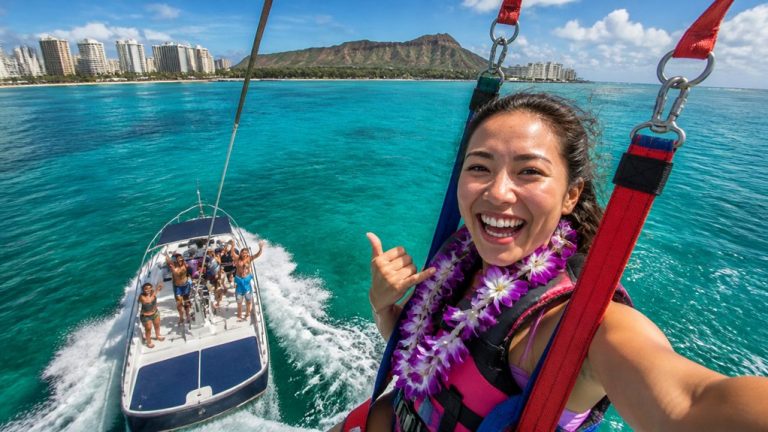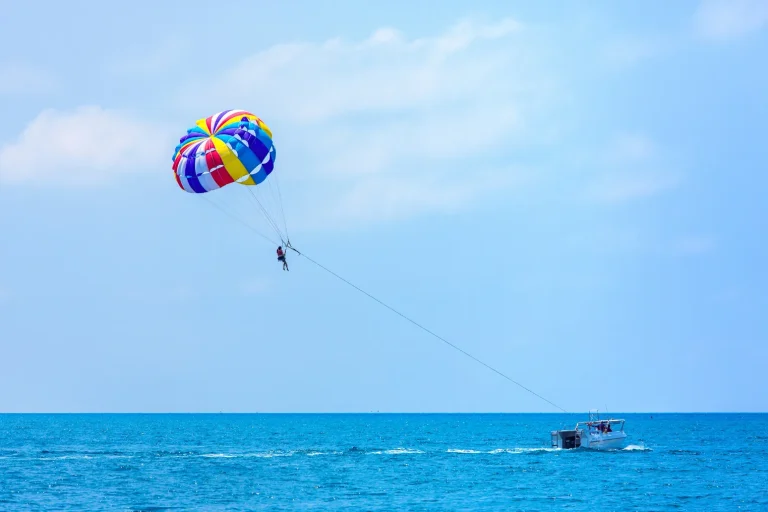
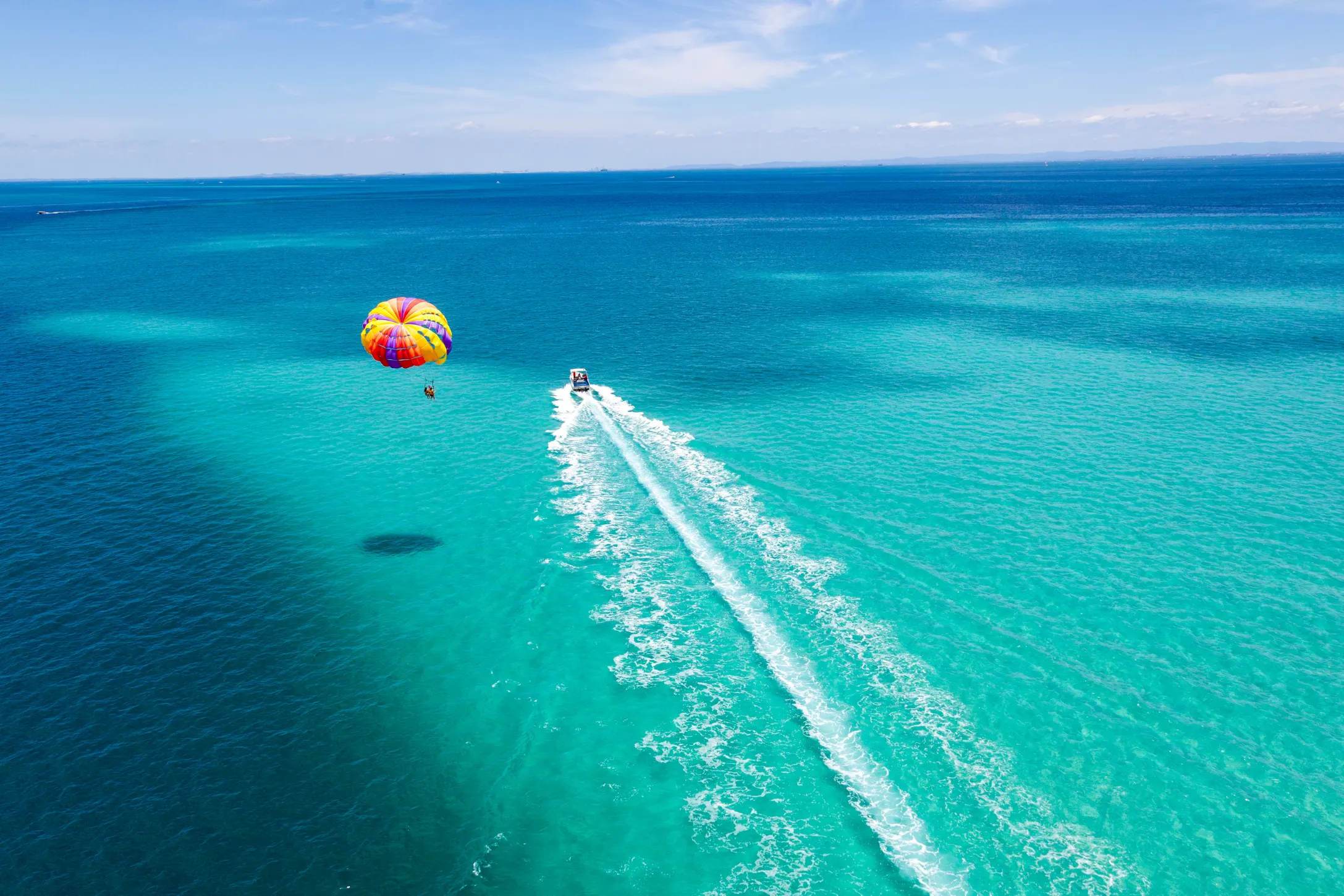
You’ll check in early at Kewalo Basin or the Ala Wai, sign a waiver, then spend about 60 to 90 minutes on the water for an 8 to 12 minute flight over Waikiki’s glittering shoreline. Book a calm morning slot for smoother seas and smaller crowds. Wear quick-dry swimwear and reef-safe sunscreen, skip loose hats, and stash your phone in a dry bag or leave it ashore. Expect $120 to $200 plus photos and tips, and if timing’s tight, a Viator tour with verified reviews, free cancellation, and reserve now pay later can lock in a spot. Next, you’ll want to know what happens on the boat before you go up.
Key Takeaways
- Check in at Kewalo Basin or Ala Wai; plan 60–90 minutes total, including boat time, with 8–12 minutes actually parasailing.
- Book morning (8–10 a.m.) for calmer, smoother rides; afternoons often sell out and winds can cause delays or weather cancellations.
- Expect $90–$180 per person; photos/videos and altitude or equipment upgrades usually cost extra, so bring cash for tips and add-ons.
- Verify operator safety: clear crew briefing, fitted life jackets, inspected harness/towline/canopy, and US Coast Guard–compliant captain and boat maintenance records.
- Dress in quick-dry swimwear; bring reef-safe sunscreen, water, towel, and phone in a float case; leave valuables, loose hats, jewelry, and bulky bags ashore.
What Is Parasailing in Waikiki Like, Step by Step?
If you’ve never flown behind a boat, parasailing in Waikiki feels surprisingly organized from the first minute. You check in at Kewalo Basin, sign waivers, and stash sandals in a dry bin.
Expect $120 to $180 for 8 to 10 minutes aloft, with photos extra. Book mornings for quieter seas and fewer crowds; afternoons sell out.
Plan on $120–$180 for 8–10 minutes in the air, photos extra; mornings are calmer, afternoons book fast.
Most Waikiki tours use specific launch points like Kewalo Basin to streamline boarding and boat access. On board, you cruise toward Diamond Head, clip into a harness, and shuffle to the launch pad.
Crew sets you up for tandem thrills or solo, then the winch reels you skyward. You settle into ocean view serenity with a salty breeze. Bring sunscreen, a light rash guard, and water. Skip big bags, and don’t chug coffee. Viator bookings help, with verified reviews, hotel pickup, and free cancellation.
Is Waikiki Parasailing Safe for First-Timers?
Before you clip in for your first Waikiki parasail, you’ll want to know what safety standards look like on the boat, how the crew trains you in a few quick minutes, and what gear checks happen before you lift off.
When booking, look for a company that follows safe operator standards like clear crew briefings, well-maintained equipment, and transparent wind and sea-condition calloffs.
Weather matters here, so you’ll watch wind, waves, and rain timing, and you might shift to a calmer morning slot to avoid choppy water and bigger crowds.
Pack reef-safe sunscreen, a light jacket, and a dry bag for your phone, skip loose hats and dangling jewelry, and if you want the simplest timing, a Viator tour with verified reviews, hotel pickup, free cancellation, and reserve now pay later can lock in a slot without guesswork.
Safety Standards And Training
Although parasailing in Waikiki looks like pure, breezy fun from the sand, your first-timer experience depends on the operator’s safety standards and crew training.
Before you book, ask your operator about their inspection schedule and whether they document routine checks and maintenance.
Expect $90 to $150 and about an hour on the water. Ask how the crew trains and who’s on the helm. You should get a quick briefing, a snug harness fit, and simple hand signals. Check for:
- logged equipment checks on canopy, towline, and harness
- current instructor certification for captain and deck crew
- posted weight limits, bailout knife, and fitted life jackets
Bring water, sunscreen, and sunglasses with a strap. Skip loose hats, long scarves, and bulky bags. If you want timing, Viator listings let you compare verified reviews, reserve now pay later, and use free cancellation.
Weather, Wind, And Waves
| Check | What you do |
|---|---|
| Wind | Go early, aim 8–10 a.m. |
| Waves | Skip after big south swells |
| Rain | Light showers are fine, squalls aren’t |
| Surface currents | Listen during the boat briefing |
If the wind picks up, operators may delay, shorten, or cancel rides based on wind speed thresholds to keep the towline and canopy stable.
Bring a jacket, sunscreen, and a dry bag. Skip loose hats. Expect $90–$140, higher on weekends. Book a Viator tour for reviews, free cancellation, pickup, and reserve pay later.
Who Can Parasail in Waikiki (Age, Weight, Rules)
If you’re eyeing that bright parachute drifting over Waikiki’s glittery water, you’ll want to confirm the basics first: most operators set a minimum age around 5 to 7, require a parent or guardian to sign for minors, and enforce weight limits that shift with the wind. Family-focused tours may also follow age guidelines specifically geared toward kids and first-timers.
Before you fly over Waikiki, check minimum ages (often 5–7), guardian signatures for minors, and wind-dependent weight limits.
Expect clear age limits, plus weight restrictions for each flyer and for tandems, and tandem allowances depend on total combined pounds.
- Bring reef-safe sunscreen, water, and a light windbreaker.
- Skip big bags and loose hats, they’ll stay behind.
- If you’ve got medical considerations like pregnancy, heart issues, or recent surgery, get provider approval.
Trips run 60 to 90 minutes total and often cost $90 to $140.
Book mornings, beat crowds. Viator listings can help with timing and reviews.
What Happens on the Boat Before You Fly?
Once you’ve confirmed the age and weight rules, the boat is where everything gets real and pleasantly routine.
You’ll stow bags in a dry bin, pay any balance, and hear a crisp pre flight briefing on signals, takeoff, and landing.
The crew checks harness clips, tightens straps, and points out deck etiquette: stay seated, keep fingers clear of the towline, and wait for the call.
Before you board, follow the dock check-in process so the crew can verify your booking and get you onto the manifest.
If you’ve booked a Viator tour, show your voucher, note free cancellation, and you’re on the manifest fast.
Expect 10 minutes of prep, and around $10 if you want photos.
While others fly, you’ll sit near the stern, splashy and breezy.
Bring sunscreen, a light jacket, and a phone in a float case.
Skip bulky backpacks and loose hats.
Best Time of Day and Season for Waikiki Parasailing
Although Waikiki’s trade winds keep parasailing running most days, you’ll get the smoothest ride by going early, before the beach crowds thicken and the ocean chop kicks up.
Waikiki trade winds help keep parasailing on most days, but early launches deliver the smoothest ride before crowds and chop build.
Aim for an early morning launch, 8 to 10, when the water looks like polished glass and the harbor’s quieter.
Midday rides can bounce, and late-afternoon slots book up. Rates run $120 to $180 plus tax. Summer weekends draw families, so weekdays feel calmer overall.
For the most reliable weather window, plan around the best season from April through October when conditions tend to be steadier.
- April to October brings steadier conditions
- In the winter months, pick the first calm day and expect occasional resets
- Viator listings help you compare times with verified reviews, free cancellation, and reserve now pay later
Bring water and a phone lanyard, skip big bags, and keep a buffer for wind holds.
What to Wear for Parasailing in Waikiki
Morning glassy water feels great, but you’ll still get a salty mist and steady breeze once the boat clears the harbor, so dress like you’re heading out for a quick swim with a wind-chill kicker. Choose light clothing that dries fast, like a rash guard and snug swim shorts, and skip cotton that turns heavy. If you run cold, add a thin windbreaker for the ride back.
On your feet, water shoes beat flip-flops for the wet deck and quick ladder steps. Wear reef safe sunscreen before you board and reapply after, even on cloudy 9 a.m. runs. Bring secure sunglasses with a strap, or you’ll donate them to the Pacific. Keep jewelry minimal, it snags harness webbing in busy mid-day departures at all. Pack a small towel and a dry bag to protect your phone and keys, both are essential gear.
What to Bring (and What to Leave on Shore)
Before you head out from Waikiki, pack the few essentials that matter on the boat, think water, reef-safe sunscreen, a towel, and a little cash or card for photos and tips, and expect about 60 to 90 minutes from check-in to splashdown.
Leave your phone, passport, and anything you’d hate to lose on shore, lockers are limited and the deck gets busy when the late-morning boats fill up.
Before you sign, take a minute to understand your parasailing waiver in Hawaii and what risks you’re agreeing to.
If you’re booking through a Viator tour to lock in a time slot, look for verified reviews, hotel pickup, free cancellation, and reserve now pay later so you’re not juggling tickets in the sun.
Essentials To Pack
Once you’ve booked your Waikiki parasail slot, pack like you’re heading out for a quick ocean mission, not a full beach day.
Mornings run breezier and less crowded, so arrive 20 minutes early and keep your kit tight.
Do your sunscreen application before you board, then bring a small top up tube for after.
Salt spray happens, and so do splashdowns, so protect essentials and stay comfortable.
- Waterproof pouch for phone, ID, and a credit card, clipped to your life vest
- Hydration reminder: a refillable bottle for the dock, plus a few sips right after landing
- Extra towel for the ride back and your car seat
Most operators include harness and jacket, so you won’t need specialty gear.
Expect about $100 to $150 today.
If you wear contacts, consider bringing sunglasses to help with glare and salt spray on the water.
Items To Leave Ashore
Pare it back and leave the fussy stuff on shore, because Waikiki parasailing runs smoother when you’re light, quick, and not babysitting valuables.
Skip camera gear and jewelry; salt spray and dunkings ruin them.
Leave your wallet, bring only ID and one card.
Ditch beach footwear on the boat; it’s slick and crew will bag it.
Avoid big bags, drones, and snacks that bother birds and marine life.
Keep your phone in a dry pouch if you want photos.
Even with a pouch, treat your phone as not fully waterproof and assume it could still get splashed or dropped overboard.
Respect local culture by keeping low at the dock and packing out trash.
With sun protection on before you board, you can skip extra lotions.
For squalls, use travel insurance or a Viator tour with verified reviews, hotel pickup, free cancellation, reserve now pay later.
Waikiki Parasailing Cost: Prices, Photos, Upgrades
Although Waikiki parasailing feels like a splurge when you’re watching the boat idle offshore, the pricing is usually straightforward: expect roughly $90 to $160 per person for a standard flight, with morning slots often a touch cheaper and weekend mid day rides booking out first.
Photos and video usually run $30 to $60 per group, so decide before you board because you won’t want to juggle cash with salty hands.
- Photo package: digital downloads, fast delivery
- equipment upgrades: longer towline or higher altitude, often $10 to $25
- sunset packages: pricier, but the light turns Diamond Head copper
Some operators also offer reserve now pay later options and free cancellation, which can be helpful if your plans are still flexible.
Bring a light jacket and sunglasses strap, skip bulky bags.
If you’re timing an itinerary, Viator tours can help you reserve now pay later, with free cancellation and reviews.
How to Pick a Safe Waikiki Parasailing Operator
If you’re going to float above Waikiki’s blue shallows, pick an operator that runs tight, not just loud. Start by checking boat age, harness condition, and a clear safety brief before you pay. Ask about pilot certification and how many flights the captain logs each week. A good crew explains emergency procedures in plain English, points out radios, and keeps a first aid kit within reach. Look for US Coast Guard credentials and a consistent track record when comparing Waikiki parasailing tours.
Book morning slots for smoother wind and fewer boats, and confirm launch from Kewalo Basin or Ala Wai. Expect $90 to $160, photos cost extra. Bring reef safe sunscreen, a light jacket, and cash for tips. Skip upsells you won’t use. Viator can help you compare verified reviews, free cancellation, and reserve now pay later before you commit.
First-Timer Fears: Seasickness, Heights, and Splashes
When your stomach flips before the boat even clears the harbor, you’re not alone. Take motion sickness seriously: eat light, sip water, and ask the crew where the smoothest seat is, usually midship. Consider taking an over-the-counter motion sickness medication 30 to 60 minutes before departure if you’re prone to nausea. If you’ve got water sensitivity, tell them before you gear up, they can skip the dip or keep it gentle.
- Pack ginger chews, sunscreen, and a dry bag for your phone
- Skip heavy breakfast, loose hats, and alcohol the night before
- Bring $5 to $10 cash for tips and a light towel for the ride back
Heights feel calmer once you’re clipped in and gliding. Most flights run 8 to 12 minutes, with 60 to 90 minutes total on the boat. Book early to dodge midday crowds. You’ll land smiling, salty.
Frequently Asked Questions
Can I Bring My Phone or Gopro While Parasailing?
Yes, you can bring your phone or GoPro, but that convenience invites risk. You’ll protect phone safety with a waterproof case and tether. For GoPros, pick mounting options like a chest strap or helmet mount.
Are There Lockers or Secure Storage for Valuables During the Trip?
Most boats don’t offer locker availability, so you’ll use a small dry bin or crew-held bag for secure storage. Bring only essentials, keep valuables minimal, and ask staff before boarding about options for your tour.
What’s the Cancellation or Refund Policy for Weather-Related Changes?
If weather changes, the operator cancels at operator discretion; you won’t pay to fly in unsafe conditions. You’ll typically reschedule, get voucher options, or receive a full refund depending on their terms for your booking.
Do I Need to Know How to Swim to Parasail in Waikiki?
Even if you’re nervous about water, you don’t need to know how to swim to parasail in Waikiki, most rides involve no swimming. You’ll wear a life jacket, stay harnessed, and complete the waiver requirement first.
Is Transportation or Hotel Pickup Available From Waikiki Resorts?
Yes, many operators offer hotel pickup from Waikiki resorts, often via a Shuttle service to the harbor. You’ll need to confirm your resort’s spot, since Resort partnerships vary, and some tours require you to meet nearby.
Conclusion
Show up early at Kewalo Basin, sign the waiver, and listen to the crew. Book a morning slot for smoother air and smaller crowds, and expect 60 to 90 minutes with an 8 to 12 minute flight. Most rides run $120 to $180, photos cost extra, so bring cash and a dry bag, skip loose jewelry. Better safe than sorry. For timing, Viator tours with verified reviews offer free cancellation and reserve pay later today.