Roughly 1 in 5 parasailers drops something overboard, and your phone loves saltwater more than you do. You’ll board in flip flops, clip in fast, and you’ll have maybe 60 seconds to set up before the boat guns it past the crowd. Bring a snug wrist strap, a short tether, and a float case, skip greasy sunscreen on your hands, and you won’t fund the sea’s gadget graveyard. Still, one small mistake can slip through…
Key Takeaways
- Tether your phone or camera before stepping onto the dock, using a short wrist strap clipped to a harness or life-vest D-ring.
- Use a locking carabiner and avoid long, dangling neck straps that can snag lines or swing into gear in gusts.
- Add a float case with a clear window and lanyard loop so dropped devices resurface during splashdowns.
- Dunk-test the sealed float case for 30 seconds at the dock, and rinse gear with fresh water afterward to prevent salt damage.
- Improve grip with dry hands, an anti-slip sleeve, and a wrist lanyard so you can reset your hold safely during lift-off.

Waikiki Parasailing in Hawaii from Oahu
Experience the thrill of parasailing over Hawaii’s stunning coastline as you glide above crystal-clear waters and lush island landscapes. You’ll s...

Parasailing Experience in Waikiki, HI
Experience the thrill of Oahu parasailing on this unforgettable 1-hour adventure from Waikiki. Soar up to 1,000 feet...

Oahu Grand Circle Island Experience from Waikiki
Enjoy Grand Circle Island experience tour with breathtaking views of Amelia Earhart Lookout on Diamond Head, admire...

Hanauma Bay Snorkeling from Waikiki
Experience Hanauma Bay the easiest way with Waikiki’s most reliable Hanauma Bay shuttle. Our early 5:40 AM pickup...
What Can Go Wrong With Parasailing Photos?
Although parasailing photos look effortless, plenty can go sideways between the dock and that first sweep over the water.
You might launch late after the briefing, then rush to shoot as the boat swings through its wake. Watch for wind gusts,equipment failure, and sudden dips that steal your framing.
Salt spray freckles lenses, and noon glare washes out faces.
Crowds on the dock bump shoulders, so you miss the clean moment.
Plan for 60 to 90 minutes from check-in to landing, especially on busy weekends peak.
If the crew reels you in early, you still pay, often $70 to $120.
Bring a microfiber cloth and a slim pouch for keys. Skip loose hats and dangling jewelry.
Book early morning to dodge chop and lines.
Before you clip in, decide whether you’ll keep your phone on the boat or bring it up, because not every operator allows phones while parasailing and you may need a strap or waterproof case to avoid losing it.
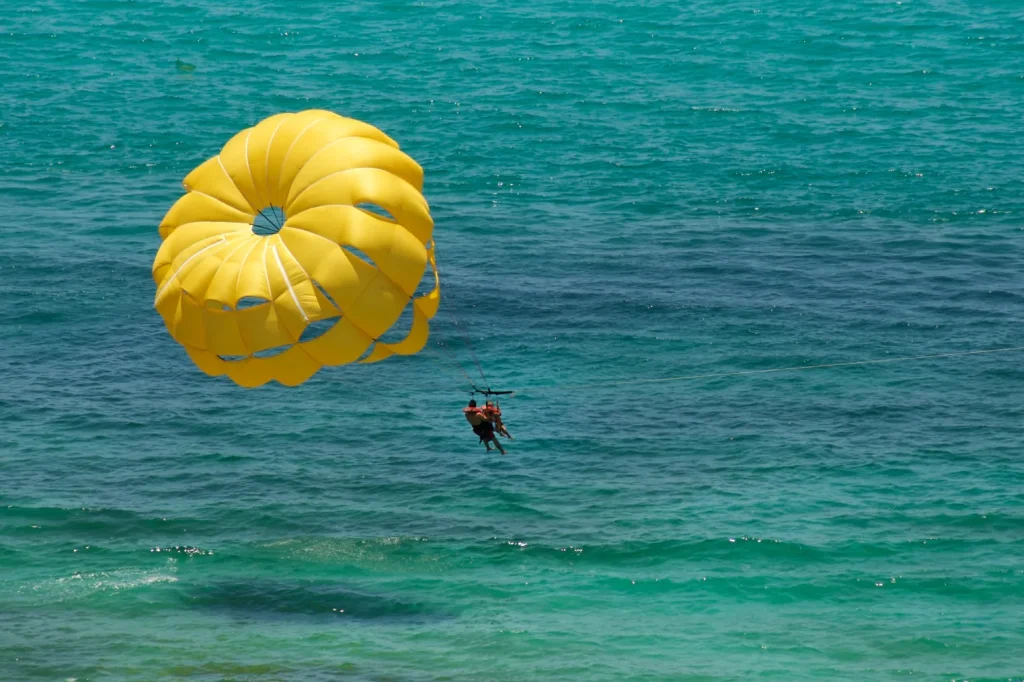
Secure Your Phone Grip for Parasailing Photos
Once you’re in the air, the biggest threat to that perfect shot isn’t glare or spray, it’s a slippery phone in a death grip.
Up in the air, forget glare and spray, the real enemy of a perfect shot is a slippery phone in a death grip.
Before you clip in, dry your hands, ditch lotion, and slide on an anti slip sleeve. It adds texture even when the wind turns your palms clammy.
Adding one of the best waterproof phone cases designed for parasailing in Waikiki can also protect your phone from sudden splashes and salt spray without sacrificing touchscreen control.
Keep your grip relaxed but deliberate: two hands for framing, elbows tucked, bursts of photos instead of long video.
A wrist lanyard helps you reset your hold midflight, especially during the first 30 seconds of lift off when people fumble.
Bring a microfiber cloth and a slim case, skip bulky battery packs that shift your balance.
If your operator sells sleeves for about $10, buy one early, the line gets crowded before launch.
Tether Your Camera for Parasailing Photos
Before you even step onto the dock, tether your phone or camera like you mean to keep it. Salt air slicks your hands, the deck rocks, and a gust can turn a $900 camera into a souvenir for the sea. Use wrist tethering with a snug strap, then clip it to your harness or life vest D-ring. Camera lanyards work too, but choose one with a locking carabiner and a short length so it won’t swing into your face. If you’re also using GoPro mounts, pair them with redundant safety tethers so your camera stays secure no matter the angle or movement. Buy a tether kit for $10 to $25 at the marina shop, or pack one in your day bag. Skip dangling neck straps. If you book a Viator parasailing tour, pick verified reviews that mention gear checks and on-time launches. Arrive early, crowds swell fast.

Polynesian Cultural Center: Gateway Buffet Package
Located on O‘ahu’s North Shore, the Polynesian Cultural Center is a one-of-a-kind attraction showcasing the peop...

Oahu: Kualoa Ranch UTV Raptor Tour
Traveling with family and friends? You can enjoy the fantastic Multi-passenger UTV Raptor experience with your entir...

Waikiki: 2 hours - Friday Night Fireworks Catamaran Cruise
Enjoy the spectacular FRIDAY NIGHT FIREWORKS show along the beautiful coastline of Waikiki while we get up close and...
Add a Float Case for Parasailing Water Landings
Usually, the splashdown is the moment your “waterproof” confidence gets tested, so slide your phone or camera into a float case and treat it like standard gear. In Hawaii, saltwater can quickly corrode ports and speakers, so rinsing your gear with fresh water after use is just as important as preventing saltwater damage in the first place.
Pick one with a foam collar or air bladder so it pops back up if it slips. A clear window keeps shots usable, and a simple lanyard loop lets you clip it to your tether.
Before you launch, seal it dry and dunk test it at the dock for 30 seconds. Skip bulky dry bags that snag lines.
If you’re shooting with a compact, pair a waterproof pouch with an impact resistant case inside for knocks on the boat ladder.
Expect $15 to $40, cheaper online than beach kiosks. On busy afternoons, buy it the night before.
Take Parasailing Photos Hands-Free and Safely
How do you grab a clean, horizon-level shot when both hands should stay on the harness straps? Use hands free mounts: a chest mount or helmet mount if the operator allows it. Set a lens, lock exposure, and start recording before takeoff, when staff can check angles. Ask for a two-second countdown, relax your shoulders.
Up in the breeze, let voice triggers fire the shutter so you don’t fumble with screens. Clip a short tether, salt air is slick. Bring a microfiber cloth and skip bulky gimbals, they fight the wind. Fly early, 9 a.m. feels calmer and less crowded. For the sharpest clips, match the best GoPro settings for parasailing to bright, open-sky conditions before you launch.
Expect $80 to $150, plus tips. A Viator tour with verified reviews, hotel pickup, free cancellation, and reserve now pay later can nail timing.
Frequently Asked Questions
What Are the Best Camera Settings for Sharp Parasailing Action Shots?
Use a fast shutter (1/1000s or higher) to freeze swings; you’ll choose a wide aperture (f/2.8–f/5.6), raise ISO as needed, track with AF-C and burst mode, meter for highlights, stabilize lens, and keep horizons level.
Do Parasailing Operators Allow Selfie Sticks or Extended Mounts Onboard?
Often you can’t bring selfie sticks or extended mounts onboard; operator policies usually ban them due to mounting restrictions and safety. You should ask ahead, and use a short handgrip or body-mounted camera instead today.
How Can I Protect My Phone From Saltwater Corrosion After Parasailing?
Why risk corrosion at all? Rinse your phone with fresh water immediately, dry it, then stash it in a waterproof pouch. Apply a corrosion inhibitor to ports, and avoid charging until you’re sure it’s dry.
Is Travel Insurance Coverage Available for Lost or Damaged Cameras During Parasailing?
Yes, policies can offer travel insurance with equipment coverage for lost or damaged cameras during parasailing, but you must check exclusions. You’ll need receipts and photos for the claim process, and limits affect camera replacement costs.
Can I Safely Wear Prescription Glasses While Taking Photos Parasailing?
Yes, you can wear prescription glasses while shooting parasailing, but you’ll secure them with a snug strap for prescription retention. Choose polycarbonate lenses or a cover for lens protection, and avoid loose frames, always tighten.
Conclusion
Before you clip in, treat your phone like a passport, secured, tethered, ready for salt air. Tighten the wrist strap, lock a short tether to your vest D-ring, and add a float case so a splash landing doesn’t end your day. Arrive 20 minutes early, expect $60 to $120, and brace for a short noon line. Bring a microfiber cloth, skip rings and lotion. Viator can often simplify timing with verified reviews and free cancellation.