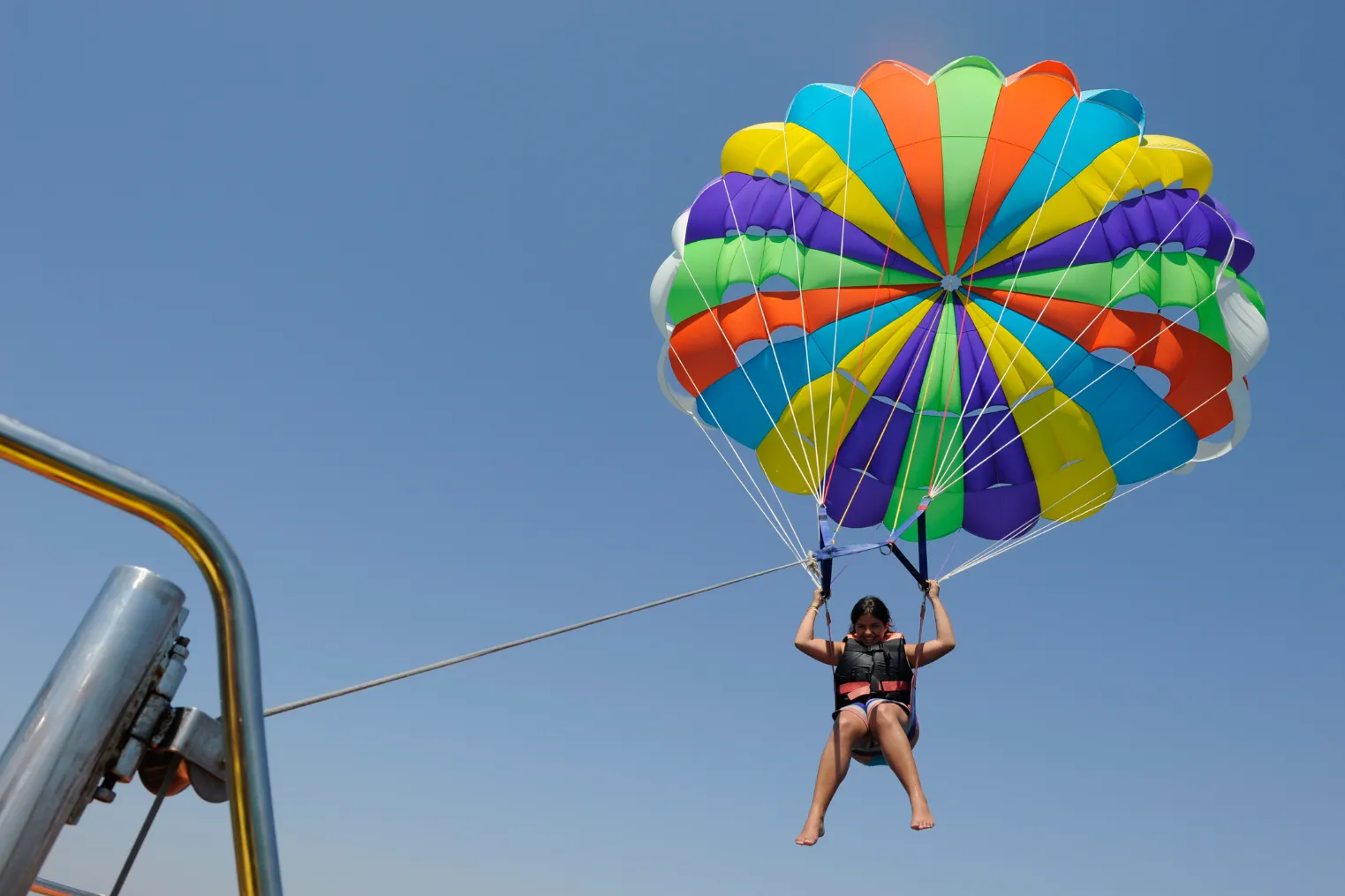
Nearly 70% of Waikiki first-timers say the scariest part is the first 10 seconds off the boat. You’ll clip in, get a tight safety brief, then rise smoothly to about 500 feet for an 8 to 12 minute glide with Diamond Head in view. Expect $120 to $180, and busier midday boats. Book an early slot, bring reef-safe sunscreen and a windbreaker, skip heavy cameras. But what happens when the wind shifts…
Key Takeaways
- Most people find Waikiki parasailing calmer than expected; you mostly float quietly 500 feet up with wide ocean views.
- The scariest moment is leaving the boat; a winch system usually makes takeoff smooth and controlled.
- Landings are typically gentle and quick; follow crew cues like “knees up” and keep feet together until told.
- Choose a reputable operator with USCG-licensed captains, clear safety briefings, and conservative weather calls to reduce anxiety and risk.
- Book morning flights for lighter winds and smoother water; arrive early, eat light, and use slow breathing to manage nerves.
Is Parasailing in Waikiki Scary?
While it looks wild from the sand, parasailing in Waikiki usually isn’t scary once you see how calm and routine the setup feels on the boat. You’ll get a quick safety brief, a snug harness check, and a slow tow out past the break before anything happens. Most operators run about $90–$140, and morning slots beat the afternoon crowds and winds. Before you book, review a few key parasailing safety tips specific to Waikiki so you know what to expect from the crew and the conditions.
If heights make you tense, bring sunglasses and a light jacket, skip breakfast, and tell the crew you want a gentle takeoff. Keep your phone on a float strap for ocean photography, or leave it in the bag they provide.
What Parasailing in Waikiki Feels Like
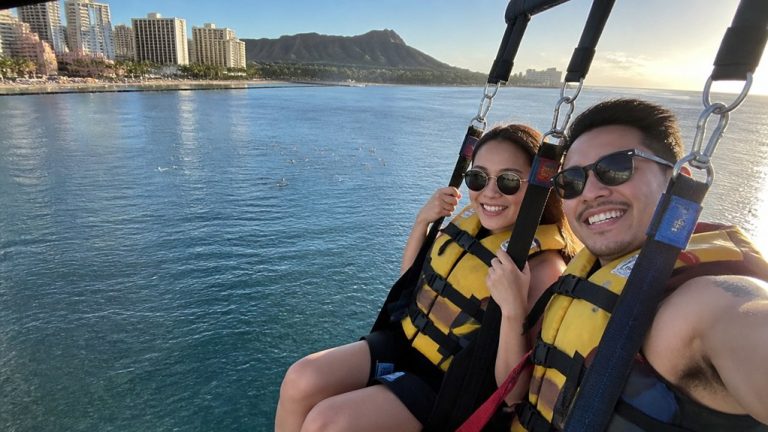
Floating up over Waikiki feels less like a thrill ride and more like a slow elevator into sea and sky.
Drifting above Waikiki feels like a gentle elevator rising into open sea, blue sky, and calm.
You settle into the harness, breathe, and notice ocean serenity replacing the shoreline buzz.
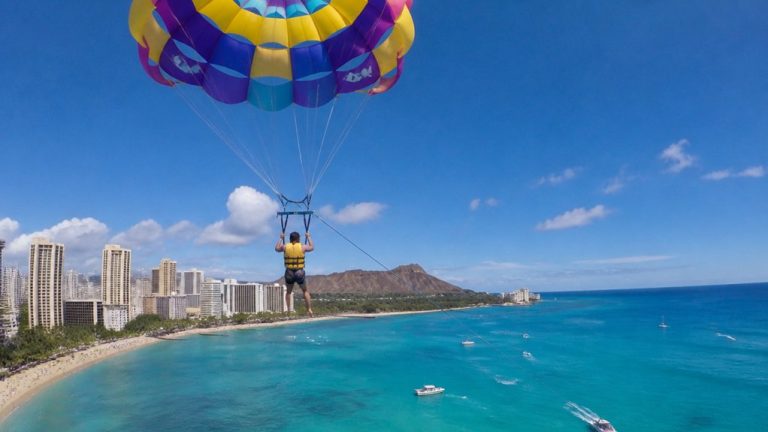
From your aerial perspective, Diamond Head looks like a tidy postcard, and surfers become dark commas in turquoise water.
Most flights run about 8–10 minutes aloft within a 60–90 minute trip, and midmorning usually beats the afternoon trade winds and crowds.
In Waikiki, you can reach 500 feet above the water during a parasailing flight.
- Wear sunglasses with a strap.
- Bring a light jacket and reef-safe sunscreen.
- Pack your phone in a dry pouch.
- Skip bulky bags and dangling jewelry.
Takeoff and Landing in Waikiki Parasailing
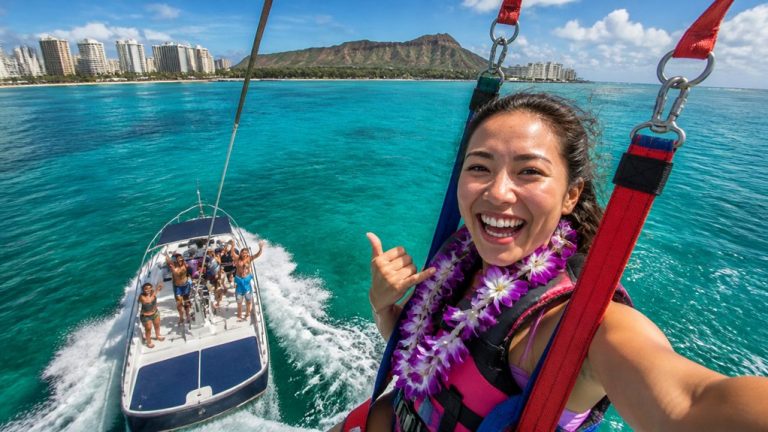
On the boat, you’ll clip into a harness, get a quick safety check, then the crew eases the winch and you lift off in under a minute, with trade winds cooling your face as Waikiki shrinks below.
At the dock, you’ll follow the crew’s dock check-in steps before boarding so everything stays organized and on schedule.
Book an early slot around 8 to 10 a.m. to dodge choppier water and bigger crowds, and bring reef-safe sunscreen and a light windbreaker while skipping bulky bags and loose hats.
When it’s time to come down, you’ll glide in slowly as the crew reels you back, and a smooth landing usually means a gentle sit-down on the deck, plus you’ll want about $150 to $200 and a bit of cash for photos.
How Takeoff Works
If you’re picturing a beach sprint and a sudden leap into the sky, relax, Waikiki parasailing takeoff usually happens right from the boat.
You sit on the launch bench while the crew checks your harness design, clips the towline, and cues the boat choreography.
In light trade winds, the captain eases up to speed, and you feel a gentle lift, like an elevator with ocean spray.
Most Waikiki operators use a winch system for smooth, controlled takeoff and landing on the boat.
Remember these quick basics:
- Arrive 20 minutes early, mornings feel calmer.
- Bring reef-safe sunscreen, a light jacket, and a phone lanyard.
- Skip bulky bags, the deck’s tight when boats stack up.
Once you’re clipped in, you breathe, smile, and let the line do it.
Still comparing Is Parasailing Scary?
Ask for tour ideas, hotel suggestions, or a simple trip plan that combines both.
Trip Helper
Smooth Landing Expectations
Usually, the landing in Waikiki feels even easier than the takeoff, because the crew does most of the work while you just follow a couple of simple cues. You’ll drift in on a gentle glide as they reel you down, then bend your knees, feet together, for a smooth touchdown on the stern. Most of your flight time is spent gently floating high above the water, with the reel-in and touchdown taking only a small part of the total 8 to 10 minutes.
| What you do | What you’ll feel |
|---|---|
| Listen for “knees up” | Harness lifts, no jolt |
| Keep hands on straps | Steady, controlled swing |
| Step when told | Quick reset on deck |
Flights run 8 to 10 minutes, landings take seconds, so mornings move. Budget $90 to $140. Bring sunglasses and a windbreaker, skip flip flops on wet decks.
What Makes Parasailing Feel Scary?
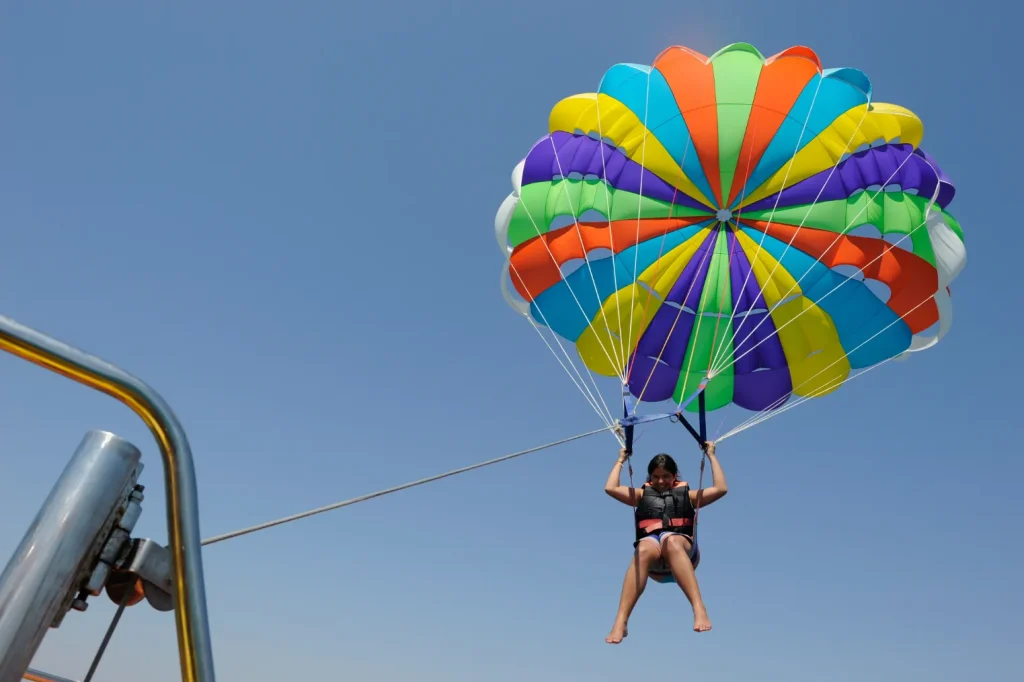
Up in the harness above Waikiki’s bright, glassy water, fear of heights can hit fast, especially when the boat looks suddenly small and the wind tugs at the lines.
Most of the nerves come during takeoff and landing, so book an early-morning slot to dodge the noon crowds and chop, and bring snug sunglasses and a light windbreaker while skipping loose hats and dangling jewelry.
In most Waikiki trips, the crew will give a quick safety briefing and hand-signal rundown before you launch, which can take the edge off if you’re anxious.
Fear Of Heights
Sometimes the scariest part of parasailing in Waikiki isn’t the flight, it’s the moment your feet leave the boat and your brain clocks the height.
Up there, the ocean looks like polished glass, and your body may yell “too high” even while you feel steady. If you’re prone to dizziness, plan simple vertigo management: eat light, hydrate, and keep your eyes on the horizon. Think of it as gentle exposure therapy, a few calm minutes that teach your nerves new math. Many people find that focusing on slow breathing and treating it like gentle exposure therapy helps a fear of heights settle once you’re in the air.
Takeoff And Landing Anxiety
Once you’ve made peace with the height, the nerves often show up at the bookends, the takeoff and the landing, when the boat, the rope, and your body all feel in motion at once. You’ll hear the crew call “knees bent” and the deck may slap with wake, so your stomach flips. Do pre flight breathing while you’re clipped in, then try visualization rehearsal of a smooth lift and a soft sit-down. Before you go up, confirm the crew runs through a quick parasailing safety checklist so you know what signals and steps to follow.
| Moment | Quick fix |
|---|---|
| Takeoff | Grip straps, look at horizon |
| Midair | Let legs dangle, relax jaw |
| Landing | Keep feet up till told, trust crew |
Book morning slots for calmer wind and smaller crowds. Expect about $80 to $120. Bring sunglasses strap, skip loose hats. A light spray hits, so pack a small towel.
How Safe Is Parasailing in Waikiki?
Because you’re flying behind a boat over open water, parasailing in Waikiki feels bold, but it’s generally safe when you choose a reputable operator and don’t push it in sketchy weather. You’ll ride in a harness, clip to a towline, and lift smoothly in minutes. Operators should follow US Coast Guard rules for passenger safety and vessel operations, so don’t hesitate to ask what standards they’re meeting.
Before you book, look for:
- Clear US Coast Guard credentials and briefings
- Routine equipment inspection of harness, line, and winch
- Consistent weather monitoring and conservative go or no-go calls
- A calm crew that limits weight and spacing
How Waikiki Wind and Waves Affect It
Although Waikiki looks postcard-calm from the sand, wind and wave chop decide whether your parasailing ride feels smooth and floaty or like a quick lesson in sea legs.
Waikiki may look glassy from shore, but wind and chop can turn a parasail into a sea-legs workout.
Trade winds often pick up after lunch, and the boat’s bounce can spike Ocean turbulence, especially when Waikiki currents pull against the swell outside the reef.
In Windy Waikiki, operators may call off trips for wind thresholds when conditions get too gusty or the chop turns rough.
If you want the calmest lift, book an early slot, aim for weekdays, and show up 20 minutes ahead.
You’ll dodge peak crowds and afternoon gusts. Expect $90 to $140, plus tip. Bring sunglasses with a strap, reef-safe sunscreen, and a light spray jacket.
Skip a big breakfast and alcohol, and consider ginger chews if you get queasy.
How to Choose a Waikiki Parasailing Operator
When you’re scanning Waikiki parasailing operators, pick the one that runs a tight boat before you chase the cheapest price. Look for Local permits posted at the dock, and ask about Boat capacity so you’re not packed in like beach chairs. Morning departures usually feel smoother and less crowded, and you’ll spend about 60 to 90 minutes total on the water. Make sure you choose a company that emphasizes USCG-licensed captains and documented crew safety training.
- Check USCG-licensed captain and crew training.
- Confirm weather policy, free rebook, and refund terms.
- Compare towline length, harness type, and photo pricing.
- Bring reef-safe sunscreen, a light jacket, and cash for tips, skip bulky bags.
If you want easy logistics, Viator tours with verified reviews, free cancellation, and reserve now pay later can lock in a slot this week.
Parasailing in Waikiki With Fear of Heights
If your stomach tightens at the thought of dangling over the Pacific, Waikiki parasailing can still feel surprisingly calm once the boat idles out past the surf line and the breeze turns steady.
Not always. You’ll start with a tow and rise in smooth stages, gradual exposure that feels steadier than you expect.
At 500 feet, Waikiki turns postcard-small, and the ocean flashes turquoise. Plan on 8 to 10 minutes aloft, plus 45-minute boat ride, $90 to $150.
Early slots are quieter; later trips get busier. As a first-timer, you’ll get a quick rundown of signals and a snug harness check before takeoff in this first-timer guide. Do mental preparation the night before. Bring sunscreen, a cap with a strap, and a phone lanyard. Skip loose sandals, big backpacks, and dangling jewelry.
Tips to Stay Calm While Parasailing Waikiki
Before you even clip into the harness, you can stack the odds in your favor with a few calm-first habits that work on the dock, on the boat, and up in the breeze. Aim for an early slot when the ocean’s glassier and crowds thin, and expect $90 to $160 depending on photos. For a smoother first time, choose a company known for a beginner-friendly flight so takeoff and landing feel more predictable.
- Do 4-6 breathing exercises: inhale 4, exhale 6, repeat until your shoulders drop.
- Use visualization techniques: picture the towline steady, your legs relaxed, Diamond Head in view.
- Ask the crew to talk you through takeoff and the first turn, you’ll feel in control.
- Pack light: water, sunglasses strap, thin windbreaker. Skip loose hats and bulky cameras.
Once airborne, focus on horizon, and enjoy 8 to 10 minutes.
Frequently Asked Questions
What Should I Wear for Parasailing in Waikiki?
Wear a swimsuit or quick-dry shorts and rash guard, and pack a light windbreaker. Use sun protection like reef-safe sunscreen and sunglasses with a strap. Choose water footwear or secure sandals, and skip loose jewelry.
Can I Bring My Phone or Gopro While Parasailing?
You can bring your phone or GoPro, but you’ll secure them first. Use waterproof cases and tethered mounts, and ask the crew’s rules. Don’t hold devices loose; clip them to your harness before you takeoff.
Are There Weight Limits or Age Restrictions for Waikiki Parasailing?
Like a gatekeeper at the pier, operators set weight limits and age restrictions: you’re usually 5+ with an adult, and tandem flyers must meet combined minimums and maximums. Call ahead, wind and company rules can shift.
Will I Get Seasick on the Boat During Parasailing?
You might feel queasy if you’re prone to motion sickness, since boat waves can roll the deck. Sit near the stern, face forward, hydrate, and avoid heavy meals; you’ll usually feel fine once airborne though.
How Much Does Parasailing in Waikiki Typically Cost?
Sunny, soaring savings: you’ll typically pay $120–$200 per person to parasail in Waikiki, depending on height and package. You can widen your price range with photos, while seasonal discounts sometimes drop rates midweek or off-season.
Conclusion
You’ll feel your stomach flutter on the first winch lift, then Waikiki turns quiet and blue beneath your toes. Book a morning slot for lighter wind, and expect 8 to 12 minutes in the air from about 500 feet. Most rides run $90 to $140. Bring sunscreen, a light jacket, and a phone leash. Skip big bags. Want timing? Viator tours with verified reviews, hotel pickup, free cancellation, and reserve now pay later can help.