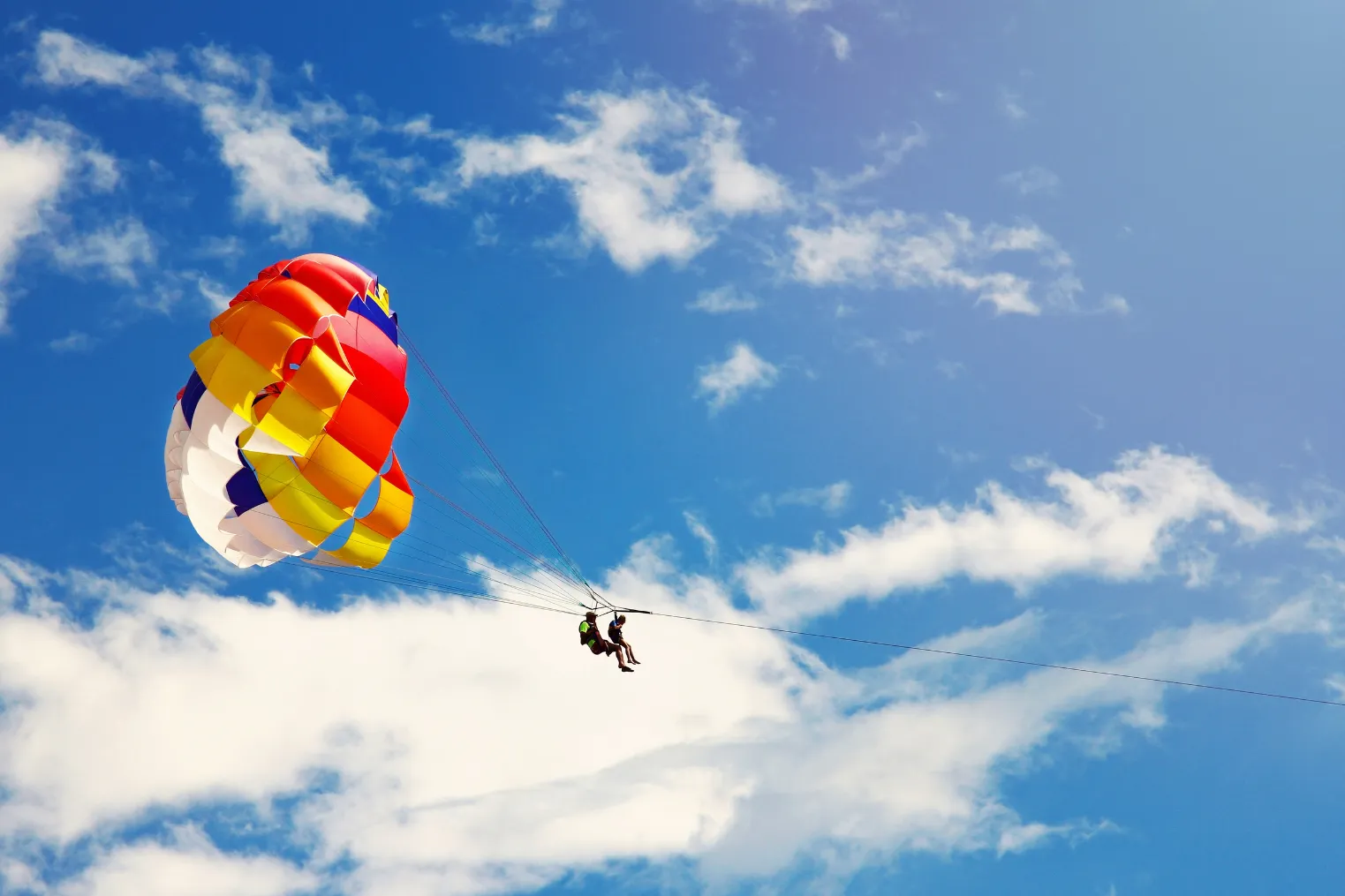
Most Waikiki parasail flights give you just 8 to 10 minutes of real airtime, even if the whole outing runs 60 to 90 minutes. You’ll check in, hear a quick safety brief, then wait your turn on the boat, so bring water, reef safe sunscreen, and a light windbreaker, and skip bulky bags. Expect $80 to $140 depending on height and photos. If you book via Viator, verified reviews and free cancellation help, but the fine print on tow time is where it gets interesting…
Key Takeaways
- Most Waikiki parasailing flights give about 8–10 minutes of true airtime in the harness.
- Many operators sell 6-, 8-, or 10-minute packages, so confirm the exact minutes before booking.
- Altitude choices (600–1,000 ft) mainly change the view and glide feel, not the total airtime.
- Total trip time is longer, typically 60–90 minutes including check-in, briefing, boat ride, and rotations.
- Wind and ocean chop can shorten airtime to about 5–7 minutes or trigger cancellations, even on clear days.
How Long Is Waikiki Parasailing Airtime?
Step onto the boat, clip in, and expect about 8 to 10 minutes of true airtime on most Waikiki parasailing runs, though some operators offer 6-, 8-, or 10-minute flights depending on the package you choose and the day’s wind. Many tours use a stable big boat setup that keeps takeoffs and landings smooth, even for first-timers.
> Most Waikiki parasailing gives you about 8–10 minutes of real airtime, with 6-, 8-, or 10-minute options based on package and wind.
Plan on 60 to 90 minutes total for check-in, a quick safety briefing, and boat positioning.
Morning slots feel calmer and less crowded, while afternoons can stack parties back-to-back.
Prices usually run $90 to $140, with photo add-ons extra, so ask about camera options before you board.
Bring sunscreen, a light jacket, and a dry bag for your phone.
Skip heavy jewelry and big hats, they fly.
If you’re juggling schedules, Viator tours can help with reviews, free cancellation, and reserve now pay later.
What Does “8–10 Minutes” Mean in Waikiki?
When you see “8–10 minutes” in Waikiki, you’re looking at the flight-time industry standard, the stretch when you’re actually clipped in, rising over that bright, salt-spray horizon. First-timers can use this as a baseline to plan their parasailing in Waikiki experience, from initial check-in to touchdown back on the boat.
In practice, you’ll budget closer to 60–90 minutes total for check-in, a quick safety brief, boat ride out, and waiting your turn, especially when midmorning crowds stack up and photo add-ons nudge the price.
Bring reef-safe sunscreen and a light layer for the breeze, skip bulky bags, and if you want to lock in a clean time slot, Viator tours can help with verified reviews, free cancellation, and reserve now pay later, sometimes with hotel pickup.
Flight-Time Industry Standard
Although brochures love to promise “8–10 minutes in the air,” that number in Waikiki usually means actual tow time under the chute, not the whole parasailing experience from check-in to dock return. Operators measure it from lift-off to touch-down, and wind or boat traffic can trim it a bit. Before you reserve a spot, compare operators’ flight-time details and cancellation policies so you know exactly what you’re getting.
To keep that window consistent, reputable crews follow safety standards, post clear weight limits, meet training requirements, and log equipment inspections. Expect a quick briefing, a snug harness check, and a steady climb over blue water. Bring reef-safe sunscreen and a phone in a dry pouch. Skip bulky bags and heavy breakfasts. Most flights cost $80 to $120, plus tips. For easier booking, Viator listings with verified reviews and free cancellation can lock your slot.
Typical Waikiki Timing Breakdown
That “8 to 10 minutes” usually covers only the smooth part, the actual glide time from lift-off to splashy touch-down, so plan for a longer slice of your day. You’ll check in 30 minutes early, sign waivers, and sit through safety briefings while the crew sizes up wind and swells. Parasailing in Waikiki usually runs on a well-rehearsed schedule from pickup to drop-off, but small delays can stack up with each group ahead of you. Next come boarding logistics: walking the pier, loading coolers and cameras, and shuffling into harnesses. The boat ride out and back often adds 20 to 30 minutes, longer at golden-hour crowds. Expect 60 to 90 minutes door to door, and about $120 to $180 plus photos. Bring sunscreen, a light rash guard, and a dry bag. Skip bulky backpacks and fancy jewelry. Book the first run to dodge lines, and tip $10 to $20.
Still comparing Waikiki Parasailing?
Ask for tour ideas, hotel suggestions, or a simple trip plan that combines both.
Trip Helper
Why Total Waikiki Parasailing Trips Take Longer
Even if your airtime is only 8 to 10 minutes, you’ll spend extra time on the boat as it cruises out, idles into position, and lines up with the wind and chop. You’ll also wait through launch and landing checks, harness fitting, and quick safety cues, so bring reef safe sunscreen and a water bottle, skip bulky bags, and expect to tip around $10 to $20 if service is solid. If you’re in a group, everyone rotates in scheduled turns, and booking a Viator tour with verified reviews, free cancellation, and reserve now pay later can help you lock in a clean time slot, sometimes with hotel pickup, and dodge the worst crowds. For families, it’s smart to confirm any age requirements in advance so kids know what to expect before they head out on the water.
Boat Transit And Positioning
Before you’re clipped into the harness, the clock already starts ticking on the water. You’ll idle out of Kewalo Basin, then cruise past surf breaks until the captain finds the right wind line. That’s transit logistics, and it can add 15 to 30 minutes each way, longer on busy mornings when boats queue for space. If you’re driving, factor in a few extra minutes to navigate Kewalo Basin parking and walk over to the check-in area and bathrooms before boarding.
- Bring a light spray jacket and sunglasses, it gets salty fast.
- Skip bulky beach bags, storage is tight and wet.
- Ask about boat positioning and how far offshore you’ll go, it affects motion and photo timing.
If you want fewer waits, book an early slot and confirm check in times. Viator listings with reviews and free cancellation help you lock it in, and reserve pay later keeps plans flexible.
Launch And Landing Procedures
Although the flight looks like the main event, launch and landing take real time in Waikiki, and they’re the reason a “1-hour” parasailing trip can stretch longer. Before you even clip in, the crew runs a safety checklist, confirms wind, and gives a quick passenger briefing about hand signals and how to sit back. Then comes crew coordination. One deckhand steadies you at the rail, another manages the towline, and you’ll pause for a snug harness adjustment that shouldn’t pinch. Many first-timers are surprised that with clear instructions and professional crews, parasailing in Waikiki usually feels more peaceful than scary. Expect 10 to 15 minutes of setup and a few more on the return. Bring sunglasses and a light spray jacket, skip bulky bags. Budget about $20 for tips or photos. Booking via Viator can help with logistics, with verified reviews and free cancellation.
Group Turns And Scheduling
Since Waikiki boats usually rotate passengers in small groups, your “one-hour” booking often includes a lot of waiting your guide won’t rush. You’ll watch others suit up, clip in, and fly, while the crew checks wind and spacing. Plan 45 to 90 minutes total, especially on busy mornings, and bring water, sunscreen, and a light spray jacket. Reading up on top parasailing tours in Waikiki can also help you understand typical flight times, group sizes, and what’s included before you book.
- Arrive 20 minutes early and follow group etiquette so everyone cycles faster.
- Ask for scheduling flexibility if you’ve got a luau, kids’ nap time, or a tight surf lesson.
- Skip bulky bags, bring cash for photos, and expect a small harbor fee.
If timing matters, Viator tours with verified reviews can help you reserve now pay later, with free cancellation and occasional hotel pickup.
Waikiki Parasailing Packages: Standard vs Deluxe
Size up Waikiki parasailing packages by thinking in minutes and add-ons, not hype. Standard rides usually bundle the same tow time as deluxe, but you’ll pay different pricing tiers for photos, a dry takeoff, or a small group cap. Ask what’s included before you board, and listen for clues about equipment maintenance, like recent canopy inspections and clean harness webbing. Deluxe often adds photo packages, check-in perks, and fewer strangers on the boat, which helps you launch on schedule. Expect $90 to $140 per person, plus tax and gratuity. Bring reef-safe sunscreen, a jacket, and a lanyard. Skip bulky bags and big cameras. If you want booking, Viator tours with verified reviews, sometimes with hotel pickup, can offer free cancellation and reserve pay later. Many operators clearly list Waikiki parasailing prices online so you can see exactly which inclusions are covered and what counts as an extra before you commit.
Does Higher Altitude Change Waikiki Airtime?
If you bump up to a higher tow height, you might get a longer glide, but your total airtime still depends on the boat’s schedule, the line length, and whether your slot runs 8 or 10 minutes. Choosing between 600 ft vs 800 ft vs 1,000 ft tow heights mostly affects your view and glide feel rather than dramatically extending your overall time in the air. Up high, the breeze can feel cooler and steadier, or it can gust and shorten the run, so bring sunglasses and a light rashguard, and skip bulky hats that like to launch themselves. If you’re trying to lock in timing and avoid sold out midmorning boats, Viator tours with verified reviews can help with reserve now pay later, free cancellation, and sometimes hotel pickup.
Altitude And Flight Duration
Although it feels like a higher towline should buy you more sky time, Waikiki parasailing operators usually keep airtime about the same, roughly 8 to 12 minutes, and they use altitude mainly to shape the view and the vibe, not the clock. You may climb near the maximum altitude, but the captain sticks to a timed circuit for each group. Up high, air pressure effects nudge lift dynamics, so crew members check passenger weight and adjust line length or pairings. Before you head out, ask the crew about their most recent safety inspections and how they enforce onboard rules so your airtime stays fun and incident‑free.
- Bring a light rash guard, sunglasses strap, and a dry phone pouch.
- Skip bulky bags and big cameras; the deck’s crowded and splashy.
- Book early to dodge crowds; Viator listings with verified reviews and free cancellation help you lock $90 to $140 for today.
Wind Conditions At Height
When you rise above Waikiki’s bustle, the wind usually turns steadier and a touch stronger, and that changes the feel of your flight more than the minutes on the clock. At 400 to 800 feet, altitude winds can smooth out the tugging you felt near the boat, so you float like a slow elevator with views of Diamond Head and the reef’s teal patches. But the captain watches shear profiles, where wind shifts by layer. If they look edgy, you’ll launch later, fly lower, or shorten the tow to 8 to 10 minutes. Operators also constantly track how wind affects your ride so they can adjust speed, line length, and even cancel launches if gusts climb beyond safe limits. Aim for morning before trade winds ramp up. Prices run $120 to $180 on busy weekends. Pack sunglasses and a light jacket, stash phone in a dry bag, skip bulky backpacks.
Weather That Shortens Waikiki Parasailing Airtime
Since Waikiki’s parasailing runs on wind and visibility, the same weather that makes the ocean look wild can also shave minutes off your airtime or cancel your slot outright. Passing showers can drop the towline early when pilots lose the horizon, and low clouds can erase Diamond Head in seconds thanks to microclimate effects. In addition to rain, parasailing weather cancellations in Waikiki are often caused by sudden wind spikes that make it unsafe to keep guests in the air. In winter, seasonal fronts bring gust shifts and thunder risk, so crews may swap your time, shorten the run, or refund. Expect $90 to $150.
Waikiki parasailing depends on wind and visibility, wild seas can cut your flight short or cancel it completely.
- Book a morning slot, skies often stay clearer before noon.
- Pack a light rain shell, dry bag, and reef safe sunscreen, skip heavy cameras.
- Choose a Viator tour with verified reviews, free cancellation, and reserve now pay later if you’re tight on timing and crowds.
Ocean Chop: When Waikiki Flights End Early
If the trade winds kick up a short, sharp chop off Waikiki, your parasail might end early even on a bright blue day. The towline pulls steady, but the boat has to throttle back so you don’t bounce, and the crew may reel you in after 5 to 7 minutes instead of the usual 8 to 10. You’ll feel the spray and hear the slap of waves, a reminder it’s not just about sunshine. In stronger winds, operators may proactively cancel parasailing tours altogether rather than risk launching in unsafe chop, even when the sky looks clear. Check surf forecasting the night before, and book a slot with free cancellation, like some Viator tours with verified reviews and reserve now pay later. Bring a light windbreaker, sunglasses strap, and a small dry bag. Skip big hats and selfie sticks. Solid boat maintenance helps, but chop still wins.
Boat Size and Waikiki Parasailing Wait Time
Choppy water can cut your airtime short, but the boat you fly from often decides how long you’ll actually wait to get in the harness. Bigger boat capacity can mean more riders per run, yet it can also stretch dock time if loading efficiency lags. Look for a solid crew size, clear check-in, and realistic wait estimates, especially on sunny weekends. If you’re debating whether to add transportation, consider that parasailing with hotel pickup in Waikiki can save logistics time but usually doesn’t change how long you’re actually in the air.
Choppy water may shorten airtime, but boat efficiency dictates your wait, crew size, check-in, and honest estimates matter most.
- Ask how many flights leave per hour, not just “15 minutes in the air”
- Pack water, reef-safe sunscreen, and cash for photos, skip bulky bags
- Book an early slot, or use Viator tours with verified reviews, free cancellation, and reserve now pay later
Expect 30 to 90 minutes from arrival to takeoff, longer around 11 a.m. when tour buses roll in near shore.
Solo vs Tandem: Does Airtime Change?
People get hung up on whether going solo buys you more sky time, but in Waikiki the tow time usually stays the same because the crew runs a set line length and a timer. Whether you choose tandem or triple setups, operators in Waikiki typically keep the total airtime consistent per flight. Solo may feel quicker at launch with one harness check, but you’ll still log about 8 to 10 minutes aloft. Tandem dynamics can add a brief balance check, especially in midmorning crowds, yet the timer stays fixed.
Pick the vibe. Solo techniques give you quiet ocean views. Tandem feels steadier, plus a partner for photos. Prices run $90 to $150. Bring sunglasses and a light layer. Skip big bags. Viator listings with verified reviews, hotel pickup, free cancellation, and reserve-now-pay-later can secure a slot. Book earlier if you hate waiting.
Do Water Dips Reduce Waikiki Airtime?
Usually, that little “toe dip” you see in Waikiki parasailing photos doesn’t steal your airtime, because the crew still runs the same tow timer and line length. You’ll just descend for a few seconds, then rise back into the trade winds. If you’re wondering whether parasailing dips are safe, they’re generally kept very gentle and only done when wind, waves, and boat speed all line up within the operator’s safety limits.
- Expect the dip near the end, when the boat turns and the captain lines you up.
- Pack a light rash guard and secure sandals, skip bulky cameras unless they’re tethered.
- Tip about 10 to 20 percent, and budget $90 to $170 depending on height and add ons.
Dips happen only if conditions allow and you want it. Crews stick to safety protocols, equipment maintenance routines, so the reel stays smooth.
On afternoons, you may wait longer on deck, but your flight time stays steady.
How to Confirm Waikiki Airtime Before Booking
Before you click “book,” pin down what the operator means by “flight time,” because some quotes count the whole boat session, not the minutes you’re actually in the harness. Look for a clear minute range on the product page and in the fine print, not just “up to.” Last-minute parasailing pitfalls often happen when you assume “trip length” equals airtime, so verify the breakdown before you pay. After checkout, read your reservation confirmation and save screenshots. Do voucher verification too, the barcode and the listed duration should match what you saw. If it’s vague, call before you pack sunscreen.
Check recent reviews for “time in the air” notes, especially on busy weekends when loads run back to back. Bring a windbreaker and reef safe sunscreen, skip bulky bags. Booking via Viator can help with verified reviews, free cancellation, and reserve now pay later.
Questions to Ask About Airtime Guarantees
Drill down on airtime guarantees with a few pointed questions, because “10 minutes” can shrink fast when the boat’s stacked with riders and the trade winds get finicky. Before you pay $90 to $150, ask what “airtime” means: tow-up only, or canopy time.
Clarify how flights fit the schedule and whether late starts cut your turn. Get safety assurances in writing, and confirm who decides to shorten or cancel for weather. Then pin down refund policies so you’re not stuck with a “credit” you’ll never use. Tie those promises back to parasailing safety tips specific to Waikiki’s wind, wave, and traffic conditions so you know operators aren’t cutting corners.
- What’s the minimum minutes you’ll log, per tandem?
- If the schedule slips, do you get a partial refund or extra time?
- What should you bring: water, reef-safe sunscreen, and a dry bag, and what to skip: bulky cameras.
Minute-by-Minute: A Typical Waikiki Parasail Flight
Once you get clipped into the harness and the crew gives you the quick hand-signal rundown, the clock starts moving fast.
Minute 0 to 3, you hear safety briefings, hand over your sandals, and tuck your phone in a dry pouch.
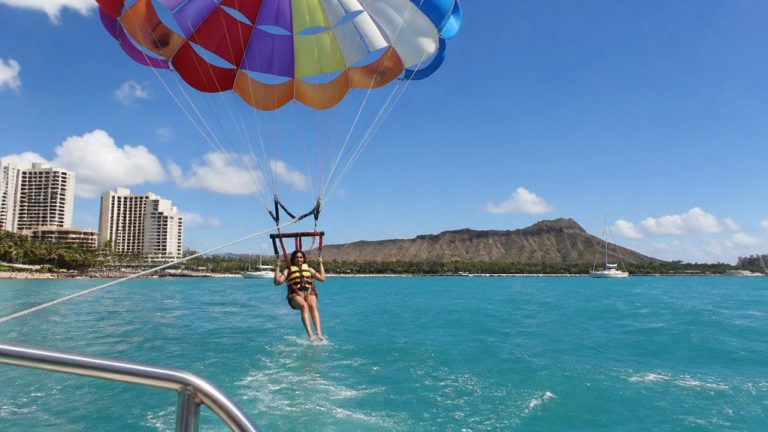
Minute 4 to 6, the winch reels out and you rise, with Diamond Head off your shoulder.
Minute 7 to 10, you float at full height, feel the trade winds, and smile for photo options, often $30 to $50.
Minute 11 to 12, you glide lower for a quick splash if seas are calm.
Minute 13 to 15, you land, unclip, and tip the crew.
Bring sunscreen and a light layer, skip hats.
Midday boats crowd up, so book early to save time. For more on planning and timing, check out how Waikiki parasailing works, from best launch spots to typical flight durations and boat schedules.
Frequently Asked Questions
What Should I Wear and Bring on a Waikiki Parasailing Trip?
Wear a swimsuit or quick-dry shorts, plus lightweight layers for wind. You’ll bring reef safe sunscreen, sunglasses strap, water shoes, towel. Pack waterproof phone pouch and ID; leave valuables behind on boat, a light hat.
Is Parasailing in Waikiki Safe for Kids and First-Time Flyers?
Yes, you’ll can take kids and first-timers parasailing in Waikiki safely, like Icarus with a wiser guide. You’ll follow strict briefings, check age ranges, choose training options, and trust vetted crews, weather calls, and gear.
Can I Bring My Phone or Camera, and How Do Photos Work?
You can usually bring your phone or camera, but follow the operator’s phone policy and use secure camera storage. Crew often takes photos with onboard cameras; you’ll review them after and buy downloads or prints.
Are There Weight Limits or Restrictions for Parasailing in Waikiki?
Yes, operators set weight restrictions and may adjust for wind; you’ll usually need a minimum around 90 lbs and a combined maximum near 450 lbs. You must also meet basic height guidelines for harness proper fit.
Do I Need to Know How to Swim to Parasail in Waikiki?
No, you don’t need to swim, coincidentally, most riders never touch the water. You’ll wear flotation devices, follow the boarding procedure, and staff watch your water confidence, ready for shoreline rescue if needed at all times.
Conclusion
Coincidentally, your 8–10 minutes aloft often matches the song playing on the boat’s speakers, just long enough to spot Diamond Head and smell the salt. Plan 60–90 minutes door to dock, and expect $90–$150 plus tip. Bring reef safe sunscreen, a light jacket, and a dry bag for your phone. Skip heavy backpacks. Book early if midday boats fill. If you need firm timing, check Viator listings with verified reviews, free cancellation, and reserve-now-pay-later options.