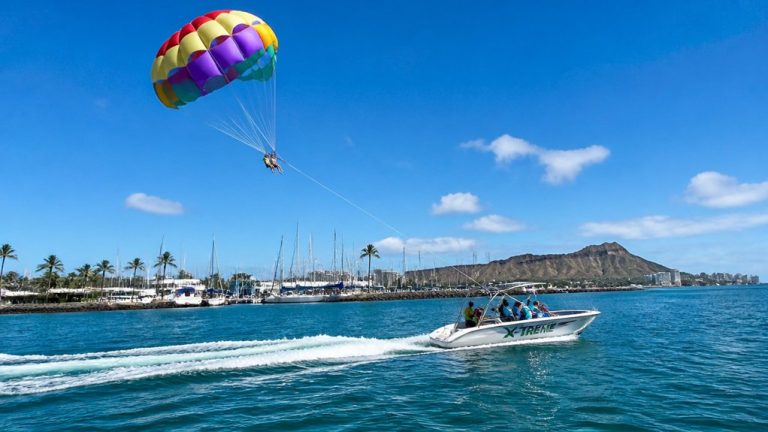

If you want the best 600-foot parasailing in Waikiki, you’ll likely start with Hawaiian Parasail, a longtime operator flying since 1977. You check in near the harbor, step onto the boat, and soon rise into warm trade winds above turquoise water. At 600 feet, you get wide views of Waikiki and Diamond Head without going full daredevil. The real question is what the trip feels like once your feet leave the deck.
Key Takeaways
- Hawaiian Parasail stands out as Waikiki’s original operator since 1977, offering experienced crews, simple harness launches, and strong long-term guest trust.
- The 600-foot flight gives broad views of Waikiki, coral patches, the shoreline, and Diamond Head without choosing the highest altitude options.
- Most trips ask you to check in 30 minutes early for harness, chute, and life jacket fitting before a smooth boat-deck takeoff.
- Wet toe-touches are common, but you can usually request a dry flight; crews may adjust, delay, or cancel for weather.
- Because 600-foot slots fill fast, book early, choose free cancellation when available, and confirm age, weight, tandem, or triple options.
Why Book Hawaiian Parasail Since 1977?
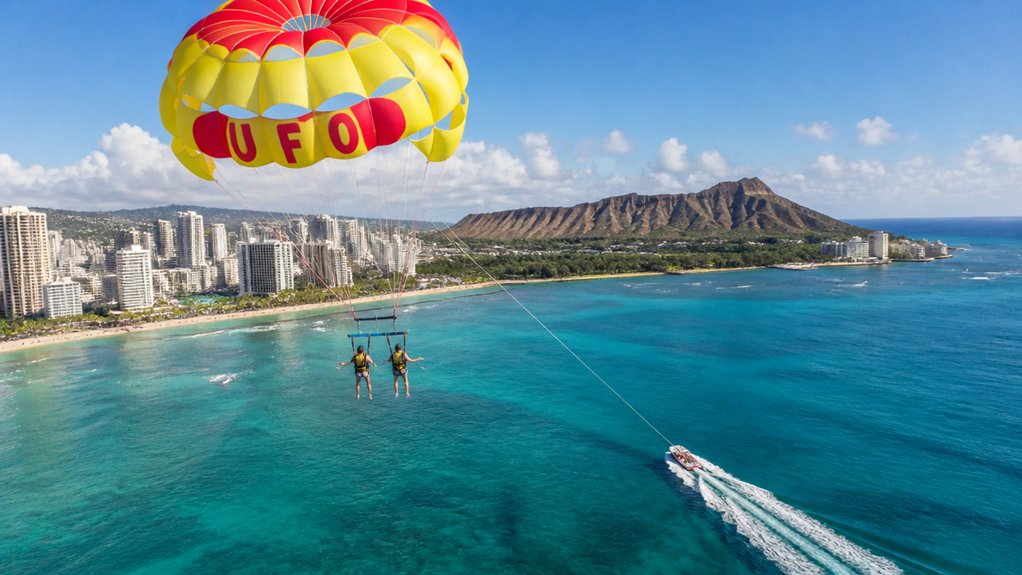
If you want a parasail operator with real staying power, Hawaiian Parasail Since 1977 makes an easy case. You’re booking the original parasail operator in Honolulu, and that history matters when you want calm, practiced hands. Hawaiian Parasail also earns strong guest ratings year after year, so you’re not betting on nostalgia alone. For first-timers, the simple harness takeoff and landing feel approachable, not intimidating. You can choose a water touch or stay completely dry, depending on the weather and your mood. The views sell themselves too. Think Waikiki Beach glowing below and Diamond Head rising ahead, the heart of Diamond Head Parasailing and Waikiki Parasailing in Hawaii. Clear age and weight guidelines help, and the experienced crew keeps comfort and safety front and center. Choosing a safe parasailing company in Waikiki also means looking for experienced crews, clear safety rules, and well-maintained equipment.
What Happens on a 1-Hour Waikiki Parasailing Trip?
Once you’ve picked your operator, the hour itself moves with an easy rhythm. You’ll usually arrive for check-in about 30 minutes early at the pier, then get fitted with a harness, chute, and life jacket. After that, the boat ride begins, and the mood shifts from simple logistics to salty breeze and open-water anticipation. Once you’re up, you’ll spot Waikiki and often Diamond Head, with the city looking oddly neat from above. Depending on the weather, the crew may offer a quick water touch or keep your flight completely dry. Following a parasailing safety checklist before takeoff can help confirm your harness, life jacket, weather conditions, and crew instructions are all covered. It’s part thrill, part sightseeing, and first-timers usually settle in fast. The crew keeps safety front and center, photos are often available for purchase, and you’ll return to the same meeting point afterward, smiling.
How High Is 600-Foot Waikiki Parasailing?
When you book 600-foot Waikiki parasailing, you’re usually flying about 600 feet above the water, though the crew may adjust the line a bit if the weather shifts. From that height, you can spot the curve of Waikiki, the green rise of Diamond Head, and a lot more blue water than you expected. You’ll feel high enough to get that small stomach flip, but you’ll also get the big reward: wide ocean views and a surprisingly peaceful rush of wind. Compared with 800 ft and 1,000 ft rides, 600 feet is often a great pick if you want scenic views without choosing the highest option.
What 600 Feet Means
At 600 feet, you’re talking about your height above the water, not the length of the whole ride. In Waikiki, that number usually describes the target top height for your parasolailing experience, often above Waikiki Beach. It sounds simple, but a few details matter.
- You rise about 600 feet over the sea surface.
- Operators tie that height to the flight line and setup.
- Wind and weather can nudge your actual altitude lower or higher.
- At check-in, you can ask how close you’re likely to get that day.
Your actual time in the air can vary by operator and conditions, even when you book a 600-foot parasailing option.
Still comparing Waikiki Parasailing?
Ask for tour ideas, hotel suggestions, or a simple trip plan that combines both.
Trip Helper
Views From 600 Feet
How different does Waikiki look from 600 feet up? You notice it right away. The beach shrinks into a bright ribbon. Hotels line the shore like blocks. Diamond Head rises with sharper shape and the Pacific spreads wide, giving you panoramic views that beach level never can.
On most trips, you spend about an hour on the boat, though your actual airtime depends on wind and the flight line used that run. The 600-foot ride is the main draw, whether you add a quick water touch or stay completely dry. Either way, you get that thrilling overhead look at the Waikiki coastline. A parasailing experience above Waikiki gives you a rare mix of height, ocean breeze, and city-meets-coast scenery. Conditions can shift, so the captain may adjust height slightly for safety. Nature still gets the last word, which feels fair enough.
What Can You See During Parasailing in Waikiki?
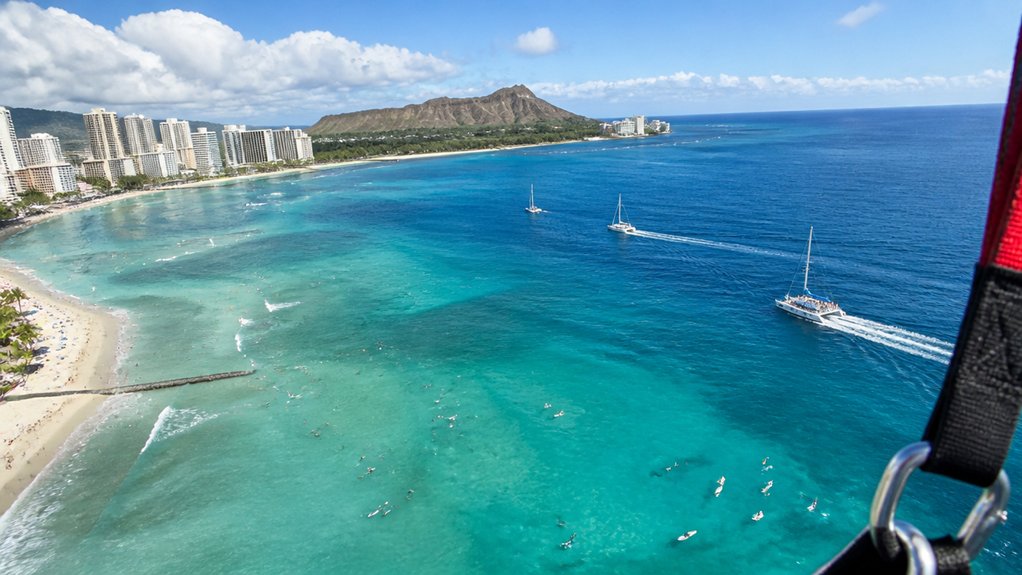
From 600 feet up, you’ll spot Diamond Head rising beyond the surf and hotels, and it looks even sharper from the air than it does on the sand. You can track the Waikiki coastline below as the beach, boats, and skyline line up in one long bright sweep. For the clearest scenery, planning around the best time for views can make Diamond Head and the Waikiki shoreline stand out even more. Out over the water, you’ll see the ocean stretch to the horizon, and on a calm day the ride feels smooth enough to take it all in without clutching the harness like it owes you money.
Diamond Head Views
Once the boat moves offshore and the line lifts you toward 600 feet, Diamond Head starts to look less like a postcard and more like a giant green crater guarding Waikiki. From up there, your Parasailing experience feels surprisingly still, and the crater’s ridges show shape, shadow, and scale. On clear days, Diamond Head views stay in sight as the boat tracks offshore, and you also catch the Waikiki coastline in one sweeping frame.
- You notice the crater rim first.
- Then the green slopes sharpen.
- The Waikiki skyline sits beside it.
- Wind can shift the angle, but the landmark rarely disappears.
For many riders, the best parasailing views of Diamond Head come when the boat reaches its offshore line and the crater opens up in full profile. During the total hour, your best view comes once you’re aloft, when you simply rise, scan the horizon, and grin at Oahu’s geology.
Waikiki Coastline Below
As you settle into the harness and rise toward 600 feet, Waikiki’s coastline opens below you in one long sweep of beach, surf, and city edge. You spot hotels lining the sand, breaks curling toward shore, and Diamond Head anchoring the scene like a postcard that feels real. The waikiki coastline below looks sharp enough to trace with your eyes, yet the ride stays smooth and calm. That mix makes your time in the sky feel both exciting and peaceful. The best season for parasailing in Waikiki can affect visibility, wind, and overall comfort during your ride. Conditions can shift the exact view, and you may choose a splashy water touch or stay completely dry if weather allows. First-timers often say they can follow Waikiki’s coastal landmarks with ease. Then the boat loops you back after roughly an hour. Great experience.
Ocean And Horizon
While the shoreline grabs your attention at first, the open Pacific quickly steals the scene. At 600 feet, you get ocean views that feel huge yet calm. You see the horizon stretching out from the boat until sea and sky almost blur together. The water looks textured and deep blue, and the breeze goes quiet enough that the moment feels oddly peaceful.
- Diamond Head stands out with clean volcanic lines.
- Waikiki’s skyline frames the beach behind you.
- Long bands of water spread in every direction.
- Coastline curves help you track where you launched.
From above, Waikiki’s coral reefs can also show through the water as lighter patches and shapes near the shoreline.
Depending on weather and line length, the panorama changes a little, but you still feel suspended over one of Waikiki’s most scenic blue rooms. Not a bad office for work today.
How Do Waikiki Parasailing Takeoffs Work?
Before you ever leave the dock, Waikiki parasailing starts with a simple routine that makes the takeoff feel calm instead of dramatic. You usually check in about 30 minutes early, get your life jacket and harness fitted, and learn how you’ll sit back for the flight line. At the parasailing dock check-in, the crew can also confirm your reservation details, review basic safety steps, and answer last-minute questions before boarding. When your reservation time arrives, the boat heads out on its scheduled run, and the crew showed you what happens next. They clip you into the chute system, watch the wind, and lift you smoothly from the deck. It feels more like rising from a chair than jumping. Depending on sea state, you might stay dry or get a water touch. If weather shifts, the operator can shorten a 600-foot setup to keep the launch controlled safely.
Can You Fly Tandem or Triple in Waikiki?

In Waikiki, you can often book your 600-foot parasail as a tandem or even a triple, so you won’t have to fly solo unless you want to. You’ll still need to meet the operator’s age and weight rules, which often start around age 5 and 50 pounds, with a shared harness limit the crew checks closely. If you’re wondering how crews pair flyers, they usually match riders by size, weather, and timing, so your launch feels smooth and your eyes stay on the blue water instead of the numbers. Choosing between tandem or triple usually comes down to your group size, combined weight, and the day’s ocean and wind conditions.
Tandem Vs. Triple Flights
If you’re eyeing a 600-foot parasail in Waikiki, you’ll usually go up as a tandem, with two people sharing the ride and the same wide sweep of blue water below. Triple flights can happen too, but they depend on the operator, the boat’s current load, and the captain’s call on weather and safety. If you want a specific setup, confirm it before your time slot.
- Tandem is the standard 600-foot format.
- Triple flights are a separate capacity option.
- Weight requirements shape whether your group fits tandem or triple.
- Availability can rotate, so booking details matter.
Understanding Waikiki weight limits ahead of time can help you avoid surprises, since restrictions may change based on wind, sea conditions, and the combined flyer weight. That little check can mean the difference between gliding beside your favorite person or squeezing in a third flyer while Diamond Head glints and the towline hums below softly.
Weight And Age Limits
While the view feels wide open, the rules are pretty simple: parasail flyers in Waikiki must be at least 5 years old, weigh at least 50 pounds, and stay under a 450-pound combined limit in the parachute system. That minimum age and minimum passenger weight matter. Tandem flights work if your total stays below the maximum weight, and some operators offer triples too. If your group goes over 450 pounds, you’ll need separate flights. The minimum weight limit helps operators balance comfort, equipment requirements, and changing ocean conditions. Younger kids can join as supervised observers from age 2, which lets them hear the boat hum and watch Diamond Head slide by. Even when you qualify, the package can shift with weather and the captain’s safety call. Bring weights, expect a check, and you’ll board with less surprise.
How Crews Pair Flyers
Because Waikiki crews send up small groups on the same flight line, you won’t always parasail solo. You might launch with a partner or two new friends, which can make the ride feel more fun than expected. Many operators offer tandem and triple flights, but the Crew decides who goes together after checking weights, wind, and sea conditions. Even if the crew was fantastic at planning, the captain makes the final call on site.
- You can request tandem or triple flights.
- Combined weight often must stay under 450 pounds.
- Some riders must weigh at least 50 pounds.
- Pairing may change by departure slot, weather, or line length.
For more details, a parasailing FAQ can help answer common Waikiki questions before you book.
Look up and listen for the winch hum as your group rises above Waikiki.
Can Waikiki Parasailing Be Wet or Dry?
Choose your adventure: Waikiki parasailing can be a splashy water touch or a completely dry flight. You usually get wet unless you ask otherwise, so mention your preference at check-in for your 600-foot parascailing adventure. Crews use a harness for a soft, dry takeoff and landing from the boat, yet a gentle dip can still happen. Weather shapes the day, so true dry runs and airtime vary. Many operators offer dip options where the captain can briefly lower you toward the ocean for a toe-touch or bigger splash.
| Choice | Ask for | Expect |
|---|---|---|
| Wet | Water touch | Splash |
| Dry | Boat launch | Maybe dry |
| 600-foot | Check in | Captain adjusts |
If the breeze shifts, the crew may swap your plan. That’s why confirming wet or dry at check-in matters. Either way, you rise above Waikiki with salt air in your face and the boat buzzing below for fun today.
How Safe Is Waikiki Parasailing?
Wet or dry, Waikiki parasailing runs with a safety-first mindset, and you notice it before the boat even clears the marina. Professional captains and calm guides move with practiced ease, so even nervous first-timers start to feel safe. Guests often highly recommend crews for their steady instructions and relaxed, capable energy.
Before the boat leaves the marina, Waikiki parasailing already feels calm, capable, and unmistakably safety first.
- You get necessary equipment like a chute, harness, and life jacket.
- The crew checks line and sky conditions before launch.
- The captain can delay, adjust, or cancel flights when weather shifts.
- Comfort matters too, with dry or water-touch options depending on conditions.
Before booking, it also helps to ask about safety inspections and crew procedures so you know exactly how the operator maintains its gear and boat.
Out on the water, you hear the engine hum, see Diamond Head sharpen, and realize caution can still feel thrilling. That balance of care and views is the whole Waikiki magic.
Who Can Go Parasailing in Waikiki?
Who gets to rise above Waikiki with Diamond Head in view and the boat buzzing below? You usually can if you’re at least 5 years old and weigh 50 pounds or more. Many boats allow combined flight weights up to about 450 pounds, so first time parasailing often works for families too. Operators must also follow US Coast Guard safety rules for the vessel and crew.
| You | Typical rule | Note |
|---|---|---|
| Kids | 5+ and 50 lb | Operator decides |
| Adults | Group limit near 450 lb | Weather can change plans |
If you’re pregnant or have back problems, you should skip it. If you’re afraid of heights, you may still enjoy the gentle lift. Expect some splash unless you request a dry flight. A lower price never overrules the captain’s weather call. Crew checks and trade winds shape today’s final flight list.
How Much Does Waikiki Parasailing Cost?
Start with this: a classic 600-foot parasailing ride in Waikiki often costs about $75, and many operators add a $7 fuel surcharge.
- You’ll usually pay that rate per person for a standard 600-foot flight above Hawaii’s bright water.
- If you’d rather stay dry and cheer from the boat, some companies list observer seats for about $45.
- You may also spot lower teaser fares, such as from $38.25, especially when operators offer free cancellation.
- Your final price can shift with weather, demand, and the company’s safety call, so check what is included before you book.
Photo packages are a common parasailing extra, so ask whether pictures are included or sold separately before you head out.
In short, Waikiki parasailing prices range from bargain bait to the usual midrange rate, with the fuel surcharge often tagging along on your receipt once the ocean breeze seals it.
Is the Photo Package Worth the Fee?
For many flyers, the extra $45 photo package is worth a closer look before you say yes at the dock. If you want hassle-free sharing later, some crews hand over an SD card loaded with 60 to 100 high-resolution shots from your flight. That sounds great, especially since parasailing can get bouncy and a little wet, which makes juggling your phone a bad idea. Still, quality can vary. One review said the professional photos looked cut off, so framing isn’t always perfect from the boat. On a 600-foot flight, the setup stays the same, and the question is whether you’re happy letting someone else choose the angles. A photo package can be the easier choice if you want more images without risking your own phone during takeoff, landing, or spray. If you’re picky about cropping, skip the photo package and snap your own pictures when conditions feel calm.
Where Do You Check In for Waikiki Parasailing?
Once you’ve decided on photos, the next thing to nail down is the meeting spot, because Waikiki parasailing check-in isn’t right on the beach. You’ll head to Pier E, Slip F6 at 1025 Ala Moana Blvd, where the pickup point hides in plain sight.
- Find the yellow-and-blue striped booth beside the Magic sign.
- Look for the front row, sixth booth from the left, marked F6.
- Double-check the yellow booth with pink dolphin sign so you know you’re in the right place.
- Arrive about 30 minutes before departure, because the boat leaves promptly and returns here too.
A quick look at the Kewalo Basin Harbor layout can also help you plan parking, bathrooms, and the short walk to check-in.
It’s simple once you know the clues, and that saves you from wandering the harbor. That little landmark memory pays off when sun, spray, and nerves scramble directions.
What Time Is Best for Waikiki Parasailing?
You’ll usually get the smoothest ride and the clearest Diamond Head views when you book a morning or early afternoon flight, since boats head out hourly from 8:00 AM to 5:00 PM. As the day rolls on, wind and sea conditions can get friskier, so an earlier slot gives you a better shot at a dry flight instead of a surprise splash and helps you avoid delays or safety cancellations. If you’re tempted by a later run, remember to check in 30 minutes early and weigh the golden light against bigger crowds and less predictable water.
Morning Water Conditions
In Waikiki, the sweet spot for parasailing usually comes early, when boats begin running around 8:00 AM and the wind and surface chop often stay calmer than they do later in the day. That makes morning water conditions an amazing time to fly, especially if you want a smoother launch that feels worth the money.
- Book a likely-to-sell-out morning slot early.
- Check in 30 minutes ahead, because the captain may adjust plans for safety.
- Choose a 600-foot flight for big Waikiki and Diamond Head views.
- Ask for a completely dry flight if you’d rather skip a surprise dip.
You’ll still hear the boat hum, feel the salt in the air, and rise into a clear, roomy slice of sky. It starts your day beautifully.
Midday Wind And Views
Often, the best time to parasail in Waikiki lands right around midday, from about 10 AM to 2 PM, when the wind usually steadies and lifts you into a smoother 600-foot flight. You’ll often get Great views of Diamond Head, Waikiki Beach, and the bright blue water with beautiful weather and cleaner light for photos. Boats usually depart hourly from about 8 AM to 5 PM, and you’ll check in 30 minutes early, so you can easily aim for a midday slot. Plan on about an hour total, though group size and conditions can stretch the timing a bit. Stay flexible. Your captain may adjust or cancel for safety if wind or weather shifts. Still, midday often gives you the clearest ocean visibility overall.
Sunset Slots And Crowds
Usually, sunset sounds like the dream slot, with warm light on Waikiki and Diamond Head glowing pink, but it also brings some of the busiest departure times. If you want a smoother 600-foot ride, earlier hours from 8:00 AM to midday are often a Great time, especially on weekdays. Operators in US waters run hourly, and sunset slots can sell out fast.
- Book ahead for the best time.
- Check in 30 minutes early.
- Choose weekday mornings for fewer crowds.
- Stay flexible, because wind can reshape plans.
You’ll still get gorgeous views later, but you may face longer waits, more boat traffic, and less room to adjust if weather changes. Nobody wants suspense before takeoff when the ocean is already sparkling below you that day.
What Do Reviews Say About Hawaiian Parasail?
If you’re scanning reviews before you book, Hawaiian Parasail looks reassuringly solid. It holds a 4.7 out of 5 from 774 reviews, and you keep seeing the same themes: a crew that feels friendly and professional, a smooth check-in, and a ride that stays fun without losing its safety focus. First-timers say the staff made sure they felt calm before takeoff. You can also choose a light water touch or stay completely dry, depending on conditions. Reviewers love the views of Waikiki’s bright shoreline and Diamond Head rising beyond the surf. For the 600-foot flight, many call the $75 price fair, even with the $7 fuel surcharge, and they definitely recommend it for a memorable first spin above the water on a clear day.
How Do You Book Before It Sells Out?
Those glowing reviews have a predictable side effect: the best 600-foot flights in Waikiki fill fast. To book smart, move early and keep your options flexible. That ocean-blue slot disappears faster than sunscreen at noon.
- Reserve as soon as you can. Top departures, including Hawaiian Parasail Since 1977 and Waikiki and Diamond Head, often show “Likely to Sell Out.”
- Choose free cancellation, usually up to 24 hours before the experience starts, local time.
- Book well in advance. One listing averages about 16 days ahead, and that helps you lock the 600-foot height you want.
- Pick instant confirmation, check in 30 minutes early, and use Reserve Now, Pay Later if offered. Experience even a breezy schedule feels better when you’re not scrambling hours in advance.
Frequently Asked Questions
What Should I Wear for Parasailing in Waikiki?
Wear quick-dry swimwear or a rashguard, and add light Wetsuit options if you get chilly. Follow Footwear recommendations: secure water shoes or sandals. For Sun protection, wear a sunglasses strap and sunscreen; don’t choose flip-flops.
Can Friends or Family Ride the Boat Without Parasailing?
Yes, you can bring friends or family aboard without parasailing through spectator access. You’ll check in together, enjoy group seating, and note weight restrictions apply to flyers, while supervised boat-only guests can simply ride along too.
What Happens if Bad Weather Cancels My Parasailing Trip?
Ironically, sunshine can’t save you: if bad weather cancels your trip, you’ll follow weather cancellation policies, check refund eligibility for cancellations over 24 hours ahead, and use rescheduling options to rebook another departure or day.
Should I Take Motion Sickness Medication Before Parasailing?
Yes, if you’re prone to seasickness, you should consider it. Weigh Risk factors, follow medication timing so it works before departure, and seek consultation advice first if you’re pregnant, have back issues, or medical concerns.
Are Phones, Sunglasses, and Loose Items Allowed Onboard?
Yes, 60–100 professional photos per flight mean you’ll likely skip your phone. For Packing essentials, secure phones, sunglasses, and loose items. Follow onboard etiquette and the safety briefing, and use waterproof protection if you get wet.
Conclusion
When you want the best 600-foot parasailing in Waikiki, you’ll do well with Hawaiian Parasail, a steady favorite since 1977. You get broad blue views, Diamond Head, and the bright band of Waikiki below without feeling wildly high. Book an early slot for calmer water and crisper skies. Arrive 30 minutes early, listen for the boat’s soft thrum, and let the warm wind do the work. It sells out, so reserve soon if you can.