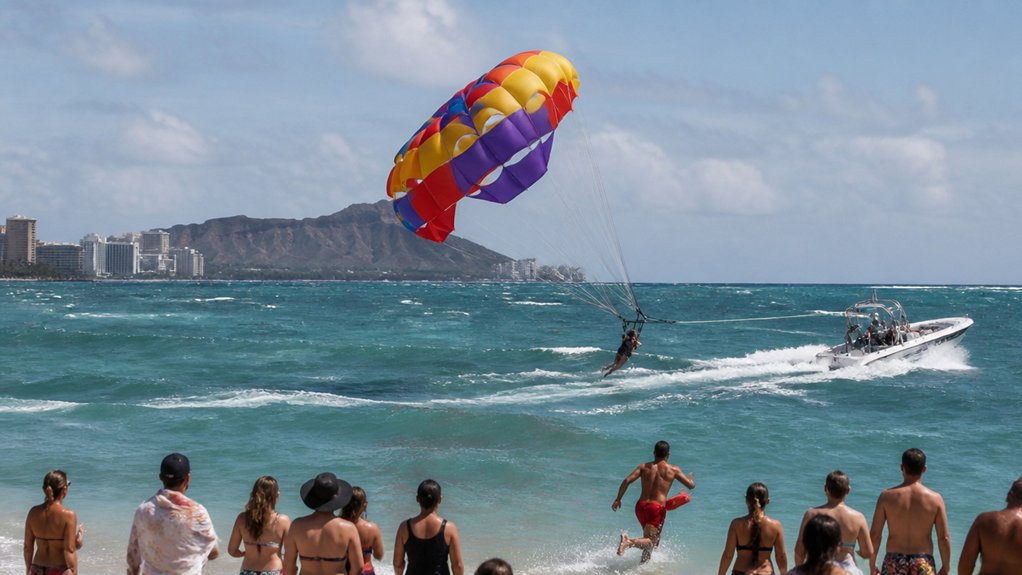
At 500 feet up, Waikiki can look calm enough to frame, but a fast wind shift can turn that smooth glide into a sharp tug over choppy blue water. You’re trusting the crew, the towline, the harness, and the weather at the same time. If one piece fails, the ride can change in seconds from breezy fun to a hard drop, and that’s where the real story begins.
Key Takeaways
- Waikiki parasailing can go wrong when operators miss wind changes, causing sudden loss of control during launch, flight, or reel-in.
- Calm-looking water does not guarantee safety, because gusts and shifting wind can quickly make conditions dangerous.
- Weak tow lines, worn webbing, bad knots, or broken hardware can fail under tension and cause hard drops.
- Human error, rushed inspections, and limited crew training are common factors in serious parasailing accidents.
- Safety standards vary by operator, so poor checklists, weak weather policies, and inconsistent equipment checks can raise risk.
Is Waikiki Parasailing Safe?
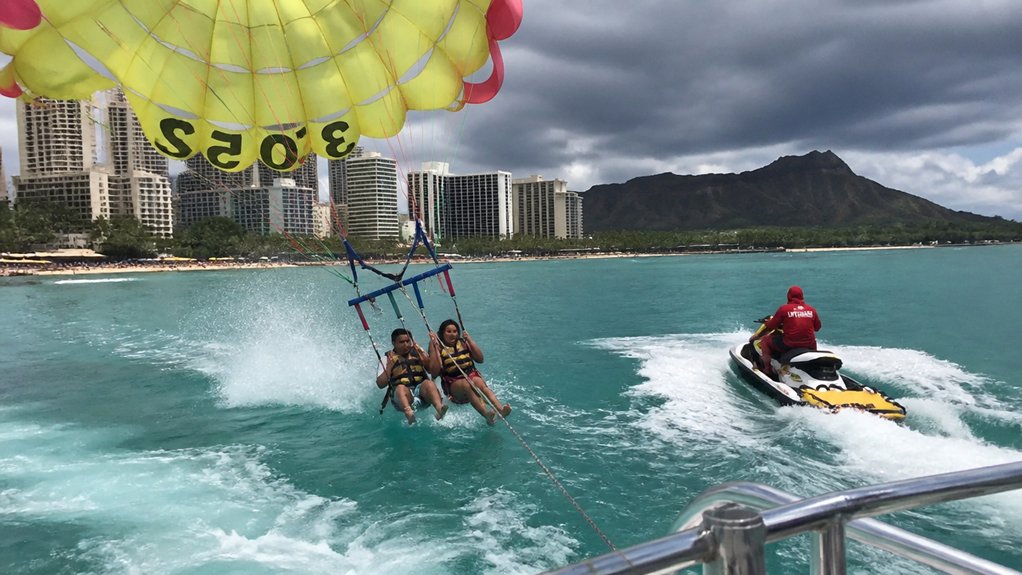
So, is Waikiki parasailing safe? You can have a smooth, sparkling flight over blue water, but safety isn’t guaranteed by federal rules. In the U.S., no federal standards govern operator training, equipment inspections, or weather stops, so quality can vary a lot. The NTSB’s 2014 investigation found parasailing can be high risk, with accidents often ending in serious injury or death. It also flagged human error, poor maintenance, and tow lines that lose strength from knots, sun, salt, and repeated use. Even a postcard calm day doesn’t erase those risks. Before you book, ask how often the company inspects and replaces lines and hardware, and whether it follows Parasail Safety Council guidance. Tourists should also know that Coast Guard rules may cover the vessel and captain, but they do not create comprehensive parasailing-specific safety standards. Paradise looks better when the checklist is as sharp as the view below.
How Do Crew Decisions Affect Waikiki Parasailing Safety?
Watch the crew as closely as you watch the water, because their calls shape most of your safety margin. NTSB reviews found many parasailing accidents start with operator human error, not some freak wave. When a captain pushes on, misses changes in wind, or skimps on training, you inherit the risk in real time.
You can also spot safety in the small rituals. Does the crew inspect towlines, knots, and hardware before launch, or do they move fast and shrug? A parasailing safety checklist can help you notice these preflight habits before you leave the beach. A common tow-rope knot can slash rope strength by up to 70 percent, and sun, salt, and use weaken it more. Since federal rules don’t tightly standardize training or inspections, the crew’s judgment often decides whether your ride stays controlled, smooth, and pleasantly, blessedly boring.
What Weather Makes Waikiki Parasailing Unsafe?
The weather that makes Waikiki parasailing unsafe often doesn’t look dramatic from the beach. You might see bright water, soft trade winds, and tourists licking shave ice, yet gusty or strengthening wind can quickly change the ride. As wind shifts, the parasail and boat pull differently, and that rising tension can turn a smooth flight into one of those parasailing accidents investigators keep studying.
You also need to watch drift. Fast wind or wave-driven movement near the boat can complicate launch, transfer, and reel-in. In Waikiki, wind changes can force operators to delay, shorten, or cancel a parasailing trip even when the sky still looks clear. Even on a so-called perfect day, operators may miss subtle changes in wind speed. Since no federal rule forces a weather shutdown, your safety often depends on whether the captain makes the cautious call before conditions start whispering trouble around you.
What Equipment Failures Cause Parasailing Accidents?
Picture the gear on a Waikiki parasail boat: a tow rope humming off the reel, bright nylon overhead, and metal connection points flashing in the sun. If any part fails, your ride can turn fast. The NTSB found some common knots can slash tow-rope strength by 70 percent. Sun, saltwater, wind, and repeated tension quietly weaken lines that still look fine.
- Worn ropes and faded webbing can snap after countless salty runs.
- Weak knots can gut a line’s rated strength before you even launch.
- Broken hardware where harness, canopy, and tow line meet can trigger a hard drop.
- Lines loaded past capacity ignore safety standards and fail under stress.
The core parasailing system depends on the harness, towline, winch working together to keep the rider connected and the boat in control. That’s why gear matters as much as the postcard view and the ocean breeze aloft.
Have a question about this guide?
Ask for tour ideas, hotel suggestions, or a simple trip plan that combines both.
Trip Helper
How Do You Choose a Safer Waikiki Parasailing Operator?
Gear tells only half the story in Waikiki, because the people checking that rope and reading that wind line can make or break the ride. If it’s your first time, ask sharper questions than the brochure answers.
| Ask | Why | Green flag |
|---|---|---|
| Training | No federal rules | Clear standards |
| Rope checks | Wear weakens lines | Replacement dates |
Choose operators with written checklists, careful harness inspections, and a firm cancel policy when weather shifts. Ask how they track wind speeds, inspect hardware, brief guests, and handle emergencies. Also ask about their safety inspections and who verifies them before boats leave the dock. You also want consistency over pressure, since poor judgment and overloaded tow lines have caused accidents on busy blue days too. If answers feel vague or salesy, walk. The safer crew sounds calm, specific, and totally willing to lose a booking.
Frequently Asked Questions
Can Motion Sickness Make Parasailing More Dangerous in Waikiki?
Yes, motion sickness can make parasailing more dangerous in Waikiki because you’ll feel distracted, weaker, and slower to follow instructions, brace or report trouble, which can worsen Rope Tangle Hazards during boarding, flight, and landing.
What Happens if a Rider Panics While Airborne?
About 70% of parasailing accidents involve operator or equipment issues, so if you panic airborne, you’ll increase line stress, worsen slack and re-tension, and make coordination harder. Stay Airborne Calm, follow instructions, and don’t flail.
Are There Age, Weight, or Health Restrictions for Parasailing?
Yes, you’ll face age, weight, and health restrictions because operators prioritize Equipment safety. You must meet age and weight limits, fit the harness, and avoid riding if you’re pregnant or have back or heart issues.
Can You Get a Refund if Conditions Cancel Your Flight?
Yes, like a stoplight turning red, Weather delays can get you a refund, but usually only when the operator cancels. You’ll often get credit or rescheduling instead, and third-party bookings may follow refund rules than theirs.
What Should You Wear or Bring for a Parasailing Trip?
Wear secure water shoes, a rashguard or light jacket, and sunscreen; bring strapped sunglasses, a lightweight towel, motion-sickness meds, and dry clothes. Listen during the Safety briefing, because you’ll likely get splashed, sunburned, or dunked.
Conclusion
Waikiki can feel postcard-perfect, but you’re still rising behind a moving boat on lines that demand skill, timing, and good judgment. The U.S. Coast Guard has linked parasailing accidents to sudden wind and equipment trouble, and one review found weather played a role in about 60 percent of serious cases. So ask questions before you book. Listen for clear safety briefings, watch the crew, and trust your gut if the trade winds start acting sneaky.

Hawaiian Parasail Since 1977
Experience one of Oahu’s most popular water adventures with a Waikiki parasailing tour. Perfect for thrill-seekers and first-timers alike, this guid...

Waikiki and Diamond Head Parasailing Experience
Take flight up to 1,000 feet above Oahu’s famous coastline on a thrilling 1-hour parasailing adventure from Waikik...

Parasailing on Maunalua Bay- Oahu's off Waikiki Playground
Bring the whole family along for an exhilarating Oahu parasailing adventure from Honolulu! Soar above the waters of...

Maunalua Bay Higher Flyer Parasailing Adventure
Bring the whole family along for an exhilarating Oahu parasailing adventure from Honolulu! Soar above the waters of...
Experiences to explore
 Explore experience ↗
Parasailing on Maunalua Bay- Oahu's off Waikiki Playground
◷ 1 hr 30 min
Bring the whole family along for an exhilarating Oahu parasailing adventure from Honolulu! Soar above the waters of Maunalua Bay for br
From $54.20 USD
View dates Explore experience ↗
Parasailing Experience in Waikiki, HI
◷ 1 hr
Experience the thrill of Oahu parasailing on this unforgettable 1-hour adventure from Waikiki. Soar up to 1,000 feet above the stunning
From $44.00 USD
View dates Explore experience ↗
Parasailing in Waikiki from Oahu Hawaii
◷ 1 hr
Scenic Aerial Views Take in unforgettable views of Waikiki, Diamond Head, and Oʻahu’s south shore as you soar above the water. Choose f
From $35.00 USD
View dates