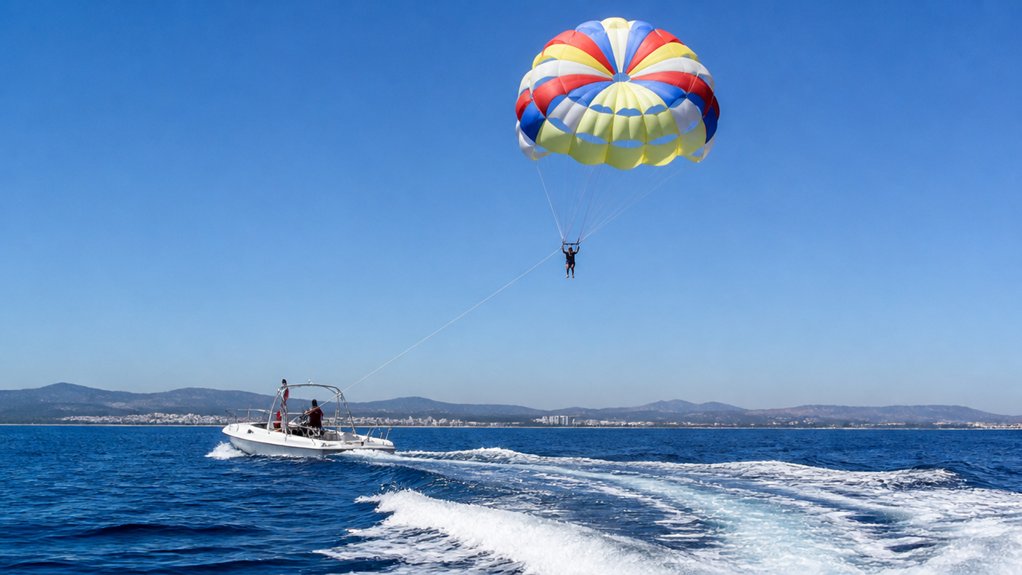
You don’t need a race boat to parasail. You need just enough speed for the tow line to pull tight, the engine to rise in pitch, and your feet to lift cleanly off the deck. The first burst feels brisk, then the ride settles into a smooth glide above bright water and boat wake. So how fast is that, exactly, and what makes it change from one flight to the next?
Key Takeaways
- Parasailing boats typically run about 15 to 30 mph, depending on wind, rider weight, and water conditions.
- Takeoff often feels fastest because the captain gently accelerates to create lift and tighten the tow line.
- Once airborne, the boat usually holds a steady speed for a smooth, controlled glide rather than a fast ride.
- Captains adjust speed for wind, waves, currents, and tandem or triple setups to keep the canopy stable.
- Near landing, the captain slows gradually so descent stays soft, controlled, and comfortable for the rider.
How Fast Does a Parasailing Boat Go?
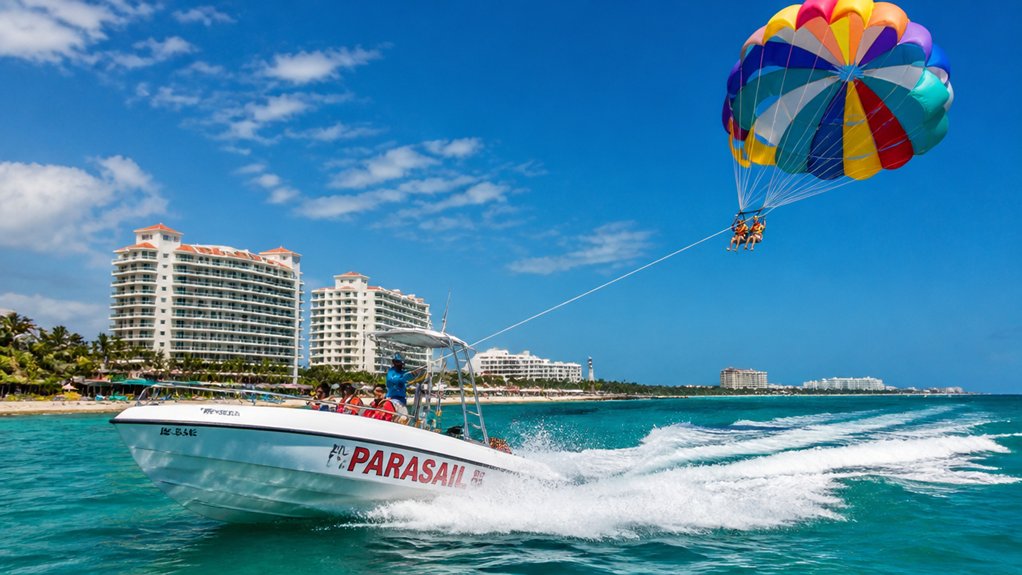
So how fast does a parasailing boat go? You’ll notice the biggest burst at takeoff, when the captain gently accelerates to lift you off the deck. Once you’re airborne, the pace usually settles into something controlled and smooth, not a racing sprint. You glide above the water while the canopy stays steady and the engine hums below. Conditions shape the rhythm. Wind, chop, and weather can nudge the captain to adjust speed and pacing as you rise, cruise, and return. In places like Waikiki, windy weather can even cause tours to cancel when conditions are not safe for flying. Your flight times may run about 10 to 15 minutes in the air, while the boat ride adds extra travel to and from the launch area. So the speed changes across the whole trip, never feeling wild or jerky at any point for you.
Why Does Parasailing Boat Speed Matter?
That changing pace isn’t just part of the scenery. During your parasailing adventure, boat speed decides how you leave the deck, how quickly you rise, and when you settle into a steady altitude. The tow speed and line tension work together, so the captain aims for a smooth lift and the usual 8 to 12 minutes aloft.
You’ll notice the difference at the start and finish. Proper pacing keeps the harness feeling steady instead of twitchy, and it brings you back to the boat with a soft landing rather than a jolt. If conditions shift, the captain may tweak speed to keep things comfortable, which can slightly shorten or stretch your ride. That’s why the safety briefing and crew training both stress consistent speed control. A clear safety checklist before launch helps everyone understand weather limits, harness fit, and crew signals on Waikiki beaches.
What Affects Parasailing Boat Speed?
While it may look like the captain just picks a number and goes, parasailing boat speed actually shifts with the conditions around you and the load behind the boat.
You need steady lift on the tow line, so the operator adjusts speed to help you rise smoothly without sudden dips. Wind and current change canopy pressure, which can mean more or less throttle. If wind picks up during the ride, the captain may adjust speed or shorten flight time to keep the tow line and canopy stable. Sea state and wave conditions matter too. In choppier water, the captain eases back so the line doesn’t jolt like a bungee cord. Your weight counts too. If you’re flying tandem or in a multi-guest setup, the boat may run faster within safe limits. Speed can also shift during takeoff and descent, when the crew manages tow-line tension with extra care.

Parasailing Experience in Waikiki, HI
Experience the thrill of Oahu parasailing on this unforgettable 1-hour adventure from Waikiki. Soar up to 1,000 feet...

Waikiki Parasailing in Hawaii from Oahu
Experience the thrill of parasailing over Hawaii’s stunning coastline as you glide above crystal-clear waters and...

Parasailing in Waikiki from Oahu Hawaii
Scenic Aerial Views Take in unforgettable views of Waikiki, Diamond Head, and Oʻahu’s south shore as you soar abo...
How Fast Does Parasailing Feel?
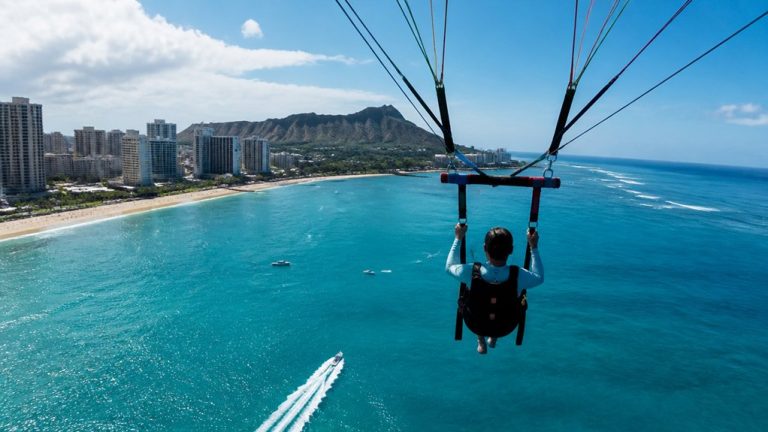
At takeoff, parasailing usually feels fastest, because the engine note climbs, the tow line goes taut, and the deck drops away in one smooth lift. You feel a clear rush as the boat pulls and your harness eases you skyward gently. Then the sensation changes. Once you’re up, the ride feels smooth and steady, more like gliding than racing. Your time in the air takes around 6 to 12 minutes, so you have room to notice the wind, the hush above the wake, and the toy-sized boats below you. Height and breezier conditions can make everything feel quicker, even when the boat isn’t surging. Before you book, reviewing parasailing safety basics for Waikiki can help you understand weather limits, equipment checks, and what to expect from the crew. If you add a brief feet-dip near the end, that splash can feel surprisingly sharp, like punctuation with salt spray.
How Does the Parasailing Boat Slow for Landing?
As you come in to land, the captain starts easing off the throttle well before the back deck comes into play. You feel the ride change from pull to glide as the tow line stays steady and the rig settles. Instead of a drop, you get a calm lift-down toward the boat. The crew keeps you centered in the harness while the captain creeps forward, sometimes nearly pausing, so side-to-side sway stays small. If you’ve chosen a wet dip, the speed falls even more so your toes can skim the water before touchdown. During Waikiki parasailing, your actual time in the air is usually only part of the total boat trip, so the landing sequence is carefully timed into the overall ride. It’s a neat finish, and every minute spent on the boat feels well used.
- A engine hum
- Salt spray on your ankles
- The deck rising to meet you
Frequently Asked Questions
Do You Need to Know How to Swim to Go Parasailing?
No, you don’t need to know how to swim for parasailing, because you’ll take off and land on the boat. You should follow the Safety briefing, trust the crew, and expect life jacket use throughout.
What Should You Wear for a Parasailing Trip?
Wear quick-dry shorts, a T-shirt, and secure shoes; bring sunglasses, sunscreen, a small towel, and a light jacket in cooler months. You’ll expect splashes, hear the safety briefing, and dress for wind speed effects, too.
Can Two or Three People Parasail Together?
Yes, like birds sharing a breeze, you can often parasail with two or three people through Group tandem bookings, if you’re within Weight capacity limits and the captain says conditions are safe for your flight today.
Are There Age or Weight Limits for Parasailing?
Yes, you must usually be at least 5, and if you’re under 18, an adult must check you in. You need about 125 pounds to fly solo. Equipment insurance, safety briefing, weather, and health rules apply.
How Long Does a Typical Parasailing Ride Last?
You’ll spend 2–3 hours overall, 8–12 minutes flying, 45–60 minutes boating. You’ll check in, hear Safety Briefings, follow Speed Controls, then launch, glide, and land, though weather and crowds can change your timing that day.
Conclusion
In the end, you don’t need a speedometer to understand parasailing. The boat moves fast enough to lift you, then settles into a steady pull that feels more like a kite string than a drag race. You hear the engine hum, feel the harness snug at your hips, and watch the shoreline shrink. Then the captain eases off for landing, and you float back in with surprisingly little fuss. Just sea breeze and a grin.

Hawaiian Parasail Since 1977
Experience one of Oahu’s most popular water adventures with a Waikiki parasailing tour. Perfect for thrill-seekers and first-timers alike, this guid...

Waikiki and Diamond Head Parasailing Experience
Take flight up to 1,000 feet above Oahu’s famous coastline on a thrilling 1-hour parasailing adventure from Waikik...

Parasailing on Maunalua Bay- Oahu's off Waikiki Playground
Bring the whole family along for an exhilarating Oahu parasailing adventure from Honolulu! Soar above the waters of...

Maunalua Bay Higher Flyer Parasailing Adventure
Bring the whole family along for an exhilarating Oahu parasailing adventure from Honolulu! Soar above the waters of...
Experiences to explore
 Explore experience ↗
Parasailing Experience in Waikiki, HI
◷ 1 hr
Experience the thrill of Oahu parasailing on this unforgettable 1-hour adventure from Waikiki. Soar up to 1,000 feet above the stunning
From $44.00 USD
View dates Explore experience ↗
Parasailing in Waikiki from Oahu Hawaii
◷ 1 hr
Scenic Aerial Views Take in unforgettable views of Waikiki, Diamond Head, and Oʻahu’s south shore as you soar above the water. Choose f
From $35.00 USD
View dates Explore experience ↗
Maunalua Bay Higher Flyer Parasailing Adventure
◷ 1 hr
Bring the whole family along for an exhilarating Oahu parasailing adventure from Honolulu! Soar above the waters of Maunalua Bay for br
From $94.24 USD
View dates