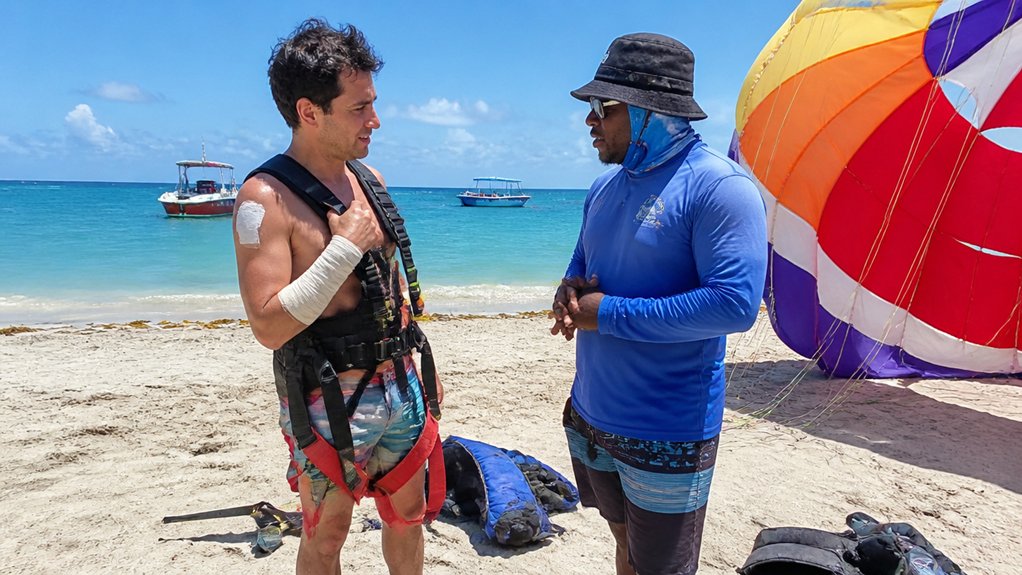
What you might not know is that parasailing can stress a healing injury long before you feel any trouble in the air. You step into a harness, hear the boat engine rise, and then the towline gives a sharp pull that can jar your neck, back, ribs, or ankle. Even the easy splashdown can hit harder than it looks. So if you’re feeling mostly fine, are you actually ready to go up?
Key Takeaways
- Generally, you should not parasail with a recent injury, even if walking or standing feels normal.
- Ongoing pain, dizziness, bleeding, or limited movement are clear signs to postpone parasailing.
- Towing forces, sudden jerks, and splashdowns can worsen healing muscles, ligaments, fractures, stitches, or internal injuries.
- Get medical clearance before parasailing after a concussion, back or neck strain, fracture, or internal injury.
- Tell the operator about any recent injury, and seek urgent care after riding if head, neck, back, chest pain, or breathing problems occur.
Can You Parasail After a Recent Injury?
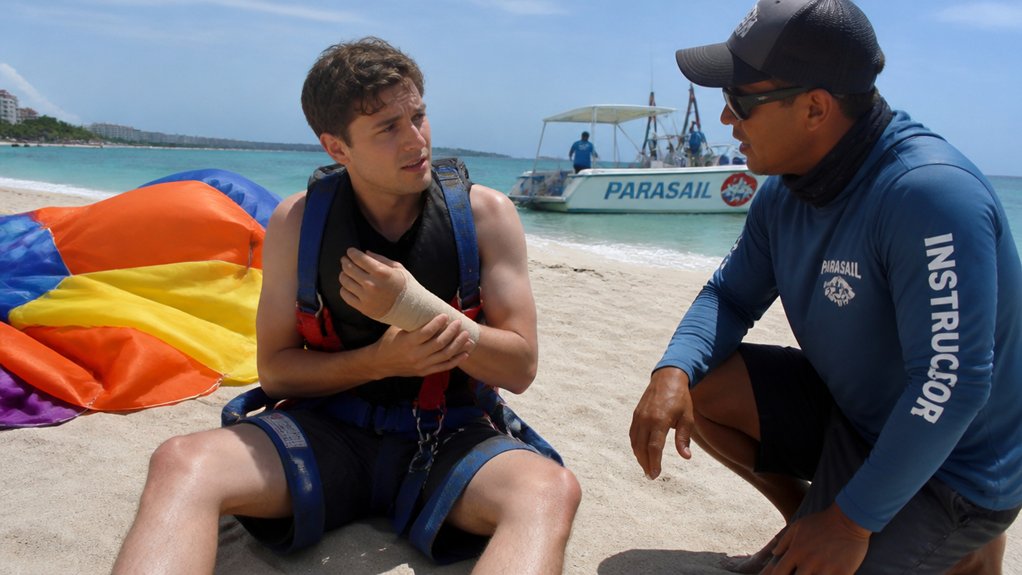
Even if you feel fine walking the dock, you usually shouldn’t parasail soon after a recent injury. Parasailing looks like a thrilling experience, with bright canopies snapping in the weather and salt spray tapping the boat, but your body may not be ready. Strong towline strain and hard water impact can turn a minor ache into a bigger accident. If you’ve been injured in a parasailing incident before, or had a concussion, back strain, fracture, or internal injury, get medical care and doctor clearance for towed flying. In many places, operators also treat pregnancy safety as a separate reason to avoid parasailing or require extra restrictions. Follow all safety instructions, but know that rules and gear can’t replace healing. Accidents often start when injuries happen and balance, mobility, or bracing fail during launch or landing. Good safety means postponing until you’re truly ready again.
When Is an Injury Too Recent for Parasailing?
So when is an injury actually too recent for parasailing? If you still hurt, feel dizzy, bleed, or can’t move freely, it’s too soon. Symptoms matter more than the calendar. Brain injuries need extra caution.
| Sign | Why wait | Ask |
|---|---|---|
| Pain | Harness pressure hurts | Can provider assess? |
| Dizziness | High altitude, splashdown risk | Doctor okay? |
| Restricted movement | Safety procedures suffer | Stable enough? |
| Fresh surgery | Tether load strains tissue | Fully healed? |
In Hawaii, Coast Guard rules and operator safety requirements make it even more important to disclose a recent injury before you go. Even before common parasailing injuries, parasailing accidents occur from weather conditions, strong winds, a weak towline, equipment failure, or faulty equipment. Add possible medical costs, and caution suddenly sounds stylish. Waivers won’t change that. You should ask the operator whether you’re medically fit before booking, especially if a fracture or neck or back injury lingers.
How Can Parasailing Worsen a Healing Injury?
Because parasailing looks smooth from the beach, it’s easy to miss how many quick tugs, lifts, and drops your body can take once the boat speeds up. During parasailing activities, changing wind speeds can yank healing muscles, ligaments, or fractures and turn one sore spot into severe injuries. If accidents or equipment trouble hit a hundred of feet above water, the harness can jolt you hard and press on stitches. Ignoring weather warnings raises the risks associated with drifting into piers, seawalls, buildings, or slamming the water like a brick wall. Waikiki operators often stress weather conditions and pre-ride safety checks because sudden changes can make a healing injury far more vulnerable. Even with safety equipment, you can panic, inhale water, or get trapped under the chute, and accidents victims often face extra trauma. Nobody responsible for a parasailing ride can cancel those towing forces entirely.
What Should You Do If Parasailing Causes Pain or Injury?
If your head, neck, back, or chest starts hurting after a parasailing ride, treat it as a real injury and get checked right away. Go to urgent care or the ER if you notice concussion signs, severe pain, or trouble breathing. Then protect your claim like Accident Victims do. Take photos of gear, waves, wind, and the launch sand. Keep in mind that changing wind conditions can affect parasailing stability and may help explain how the incident happened. Get witness names. Save every text or email from parasailing operators, especially if they shrug off injuries associated with parasailing. Keep notes on pain, bills, rehab, and missed work if you’ve suffered injuries. Those details matter in the Legal Process. A Florida law firm can explain proper safety rules, the White-Miskell Act, and what you Need to Know. The Parasail Safety Council offers context.
Frequently Asked Questions
Should You Tell the Parasailing Operator About a Recent Injury?
Yes, disclose injury; Medical history disclosure guides emergency procedures, concussion concerns, shoulder strain risks, back injury safety, timing recovery window, preflight assessment, nerve injury symptoms, mobility limitations, and wound care guidance, so you’ll stay safer.
Can Pain Medication Affect Your Ability to Parasail Safely?
Yes, pain medication types, sedation effects, and withdrawal risks can harm your reaction time and balance coordination, and trigger impaired judgment; during post injury recovery, you’ll need legal disclosure, a safety checklist, and doctor clearance.
Are There Weight or Age Limits for Injured Parasailers?
Yes, weight matters, age matters: you’ll face operator limits plus pain flare ups, healing timelines, joint stability, shoulder mobility, medical clearance, range of motion, risk tolerance, re injury prevention, weather impacts, and the safety briefing.
Does Travel Insurance Cover Injuries Worsened While Parasailing?
Sometimes, you’ll qualify; preflight risk assessment, medical clearance requirements, injury type considerations, emergency rescue planning, insurance claim documentation, waiver and liability, timing of recovery, flight stability impact, post ride symptom tracking, provider safety screening matter.
Is Tandem Parasailing Safer Than Solo With a Recent Injury?
Usually not; you’re crossing a shaky bridge: rehab timing, medical clearance, safety briefing, injury location, motion sensitivity, balance issues, provider screening, flotation checks, ride duration, and post ride monitoring decide whether tandem helps you safely.
Conclusion
You can walk the dock and feel fine, which is exactly when parasailing can surprise you. The sea looks soft from above, yet the towline tugs hard, the harness bites, and splashdown can hit like a skipped stone. If you’ve got pain, dizziness, or a healing fracture, wait. Get medical clearance first. Tell the operator what happened. The best souvenir is the bright view, not a louder injury and a folder of clinic paperwork afterward.