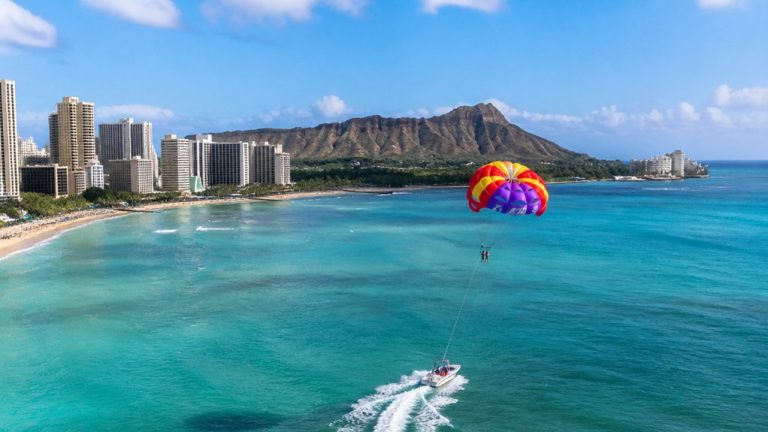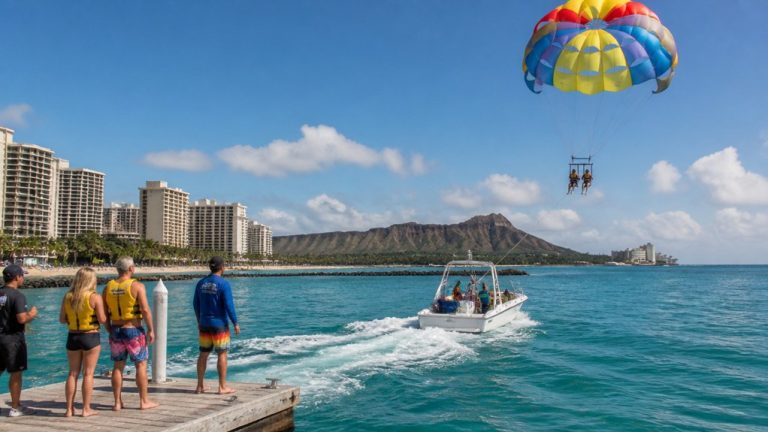
You’ll step onto a Waikiki parasailing boat that feels part shuttle, part floating photo deck. Bench seats run along both sides with a clear center aisle, so you’ll want a spot near the stern or rail if you’re chasing angles, and midship if you’d rather stay drier. Expect a quick safety talk, then names called and harnesses checked. The spray shows up on turns. The vibe stays upbeat, but launch gets quiet. Here’s what surprises most people…
Key Takeaways
- Check in quickly on the dock, mind the gap boarding, and stash shoes, phones, and loose hats in the dry bin.
- Expect bench seating with a center aisle; midship rides smoother, while stern corners offer best views but more bounce.
- A safety brief happens after leaving the break, covering towline handling, hand signals, life jackets, and emergency procedures.
- Spray comes mostly from the stern during turns or chop; sit upwind or toward the bow, and wear quick-dry layers.
- The vibe mixes island music, called names, and cheers at launch; use downtime to film Waikiki pans and wipe lenses.
Your Waikiki Parasailing Boat Ride, Step by Step
Start with a quick check-in at the marina, then step onto the boat and settle in as Waikiki’s skyline slips behind you. Crew will call names, so keep your booking info handy and listen for your turn. The boarding logistics feel simple: walk down the dock, mind the gap, grab a seat along the rails. Before you ever step on the boat, you’ll complete a brief dock check-in where staff confirms your reservation, waivers, and weight groups so the crew can organize flight order. Stash shoes, phone, and loose hats in the dry bin for gear storage, then claim a spot where you can see Diamond Head and the wake. Expect a little spray when the captain throttles up. It’s salty, not scary.
Between runs, you’ll cruise in arcs, chat, and watch other flyers lift off and skim down. When it’s your turn, you’ll move to the back platform, clip in, and go.
When the Safety Brief Happens and What It Covers
Once you’ve stashed your stuff and the boat noses past the break, the crew gathers everyone for a quick safety brief before the first pair goes up. That’s the briefing timing you want: early enough that you’re calm, close enough that you remember it when the harness comes out. You’ll also hear a bit about how operators keep parasailing from feeling too intense for most people, especially if you’re wondering is parasailing scary in Waikiki. You’ll hear how the tow line connects, what hand signals mean, and how to keep fingers clear of clips and winch, the pull-up machine on deck. They’ll confirm life jackets stay on and tell you what to do if you feel sick or anxious.
Listen for emergency procedures: where the radio is, how they’ll stop the boat, and what “man overboard” means. Ask questions now. Later, wind and engine noise drown you out onboard, too.
Seating Layout and the Best Place to Sit
Before you clip in, take a quick look at the boat seating map so you know where you’ll land on the ride out. If you want salt spray and that cool mist on your face, you’ll usually do best near the stern (the back of the boat) and on the windward side where the breeze hits first. Prefer to stay drier and keep your hair and phone happier? Pick a seat closer to the middle. For the best combination of comfort and photos, many people love the top spots along the sides of the boat where you have clear views and easy angles for pictures.
Boat Seating Map
Step onto the parasailing boat in Waikiki and you’ll notice the seating layout sets the tone for the whole ride. Most boats run bench seats along both sides with a clear center aisle leading to the tow point. That aisle is your boarding flow, so keep bags tucked under your knees and let crew move fast. Look for seating ergonomics: a slightly raised bench, a backrest, and a spot where you can plant your feet when the boat bumps. Big Boat parasailing in Waikiki usually means a spacious deck, room for multiple groups, and an energetic social vibe while you wait your turn to fly. Use this quick map in your head:
- Near the middle: steadiest, easiest chats.
- Tow-side bench: best view of the launch work.
- Back corner: widest panorama, but you’ll feel more bounce.
If you’re prone to nerves, sit midship. Pick your vibe, then commit.
Still comparing Oahu Parasailing?
Ask for tour ideas, hotel suggestions, or a simple trip plan that combines both.
Trip Helper
Best Seats For Spray
Usually, the spray finds you before the views do, so your seat choice matters if you don’t want to spend the ride tasting salt.
On Waikiki parasailing boats, the stern (back) sits lower and catches wake, while the bow (front) rides higher and stays drier.
Watch the crew’s flag or feel the breeze to judge wind direction.
If the wind blows across the boat, grab the upwind side, the side the wind hits first, because it sheds mist instead of collecting it.
Skip the middle bench if you hate surprise splashes; it’s the splash zone when the captain turns.
Want photos? Sit forward on the edge so you can brace your phone.
Even then, pack sprayproof gear: a jacket, dry bag, and a towel.
For first-time parasailing in Waikiki, picking a drier seat can make your very first flight feel a lot more relaxed and beginner-friendly.
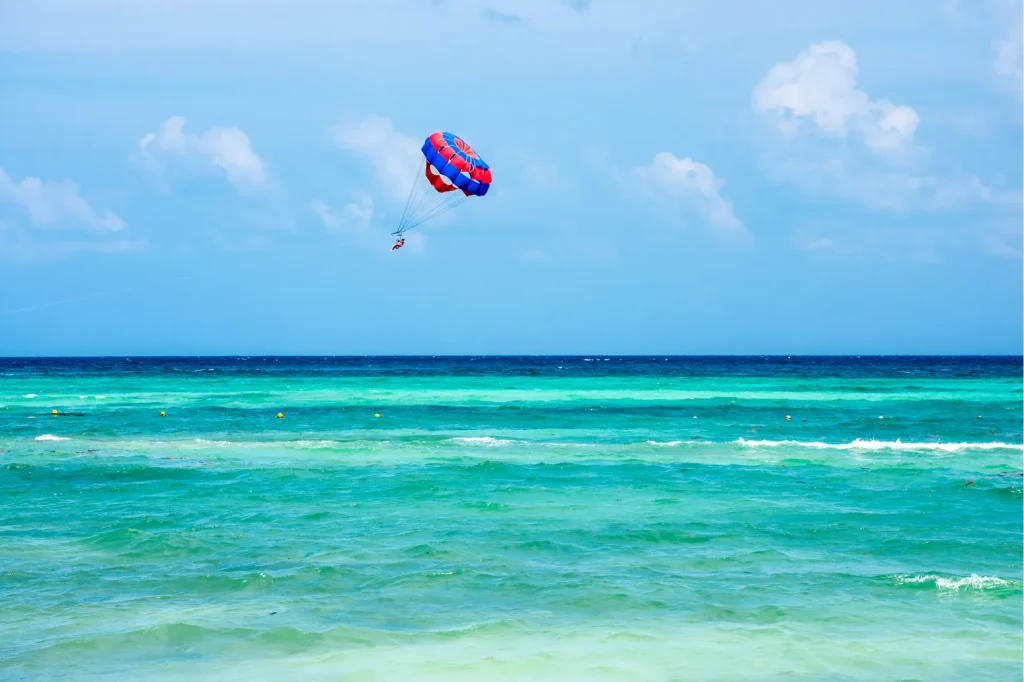
How Wet You’ll Get (and How to Stay Drier)
Out on the line, you’ll feel sea spray when the boat hits a chop (short, bumpy waves) or when the crew lowers you near the water for a quick “dip.”
Want to stay drier, not soaked? Sit higher on the harness when you can, stash your phone in a sealed waterproof pouch, and bring a light windbreaker so the salt mist doesn’t cling to your skin. For extra protection (and better photos), look into waterproof phone cases specifically suited for parasailing conditions in Waikiki.
What Causes Sea Spray
Flying behind the boat feels breezy and clean, until the ocean decides to reach up and tap you on the toes.
Sea spray starts at the stern, where the hull slaps chop and throws sheets of water into the air. Then wind turbulence, messy, swirling air, catches that splash and lifts it toward you.
As the boat speeds up, the water breaks into finer beads through droplet formation, meaning big splashes shatter into tiny droplets that travel farther.
You’ll notice three moments when it hits hardest:
- A tight turn that flings wake sideways.
- A gust that pushes the towline downwind.
- A passing swell that bumps the boat and pops spray upward.
Your cheeks taste salt for seconds. It’s usually quick. Then it fades.
If the breeze builds into stronger Waikiki winds, the boat may adjust speed or angle slightly, which can change how much of that spray actually reaches you.
Tips To Stay Drier
On a calm Waikiki morning, you might stay dry up there, but don’t count on it. Spray sneaks in when the boat turns, when wake hits, or when you do a “dip” and skim the surface. If you’re a plus-size traveler, most operators that specialize in parasailing Waikiki are used to a wide range of body types and can suggest the driest seats and best harness fit if you ask.
To stay drier, start with clothing choices: quick-dry shorts, a light rash guard (a snug swim shirt), and sandals you don’t mind soaking. Skip cotton.
Pack towel hacks: roll one as a seat buffer and keep a second small one for your face and sunglasses. Ask the crew about seat covers, or bring a microfiber towel to sit on if the benches are wet.
Save umbrella use for shore. On the boat it’s awkward and catches wind. Stow your phone in a zip pouch. You’ll thank yourself today.
What It’s Like to Watch Other Takeoffs
While you wait for your turn, watching other parasailers launch is part preview and part reality check. You’ll see the crew clip in harnesses (the seat-belt setup that holds you) and call out crowd reactions,launch timing like it’s a small show. Notice who looks calm on deck and who grips the rail; that’s your mirror.
- Your stomach flips when the canopy snaps open, bright against Diamond Head.
- You laugh when someone whooped a little too loud, then you realize you might, too.
- You breathe easier when you watch a smooth landing and hear the quick “all good.”
Reviews of parasailing in Waikiki often mention that watching takeoffs and landings from the boat is the moment people go from nervous to genuinely excited about their own flight.
Use this time to ask where to stash your phone, and to pick a seat with a clear view. Stay present. Really. You’re next.
The Towline Pull: Speed, Splash, and Lift
Grip the straps and brace your feet, because the towline pull hits like a clean jolt. The boat surges, the line tightens, and you’ll feel your hips slide forward an inch before the harness catches. Expect a fast skim across the wake. Cold salt spray. A quick check of your breathing. Rope dynamics, meaning how the towline stretches and steadies under load, can make the start feel smooth or a little twitchy, so keep your knees soft and your shoulders relaxed. Behind the scenes, the winch system carefully controls the towline tension so the harness, towline, and winch work together to give you a steady, predictable lift. As speed builds, lift mechanics take over: air rushing into the canopy creates upward force, and your weight suddenly feels lighter. Don’t fight it. Look ahead, stay seated, and let the crew’s hand signals guide you into the climb above the Honolulu-blue water.
Photo and Video Tips From the Boat
Usually, your best photos start before you ever leave the dock, so treat the boat like your first shooting platform. Ask the crew where you can stand without blocking lines, then set your phone to burst mode (rapid-fire shots). Wipe your lens, check battery, and do quick gear maintenance: tighten mounts, close ports, and stash loose caps. For stronger shots once you’re moving, position yourself near the rear corner of the boat to capture the perfect angles of the parasail against the skyline and water.
Once you’re underway, chase moments, not perfection:
- Catch the behind the scenes prep, harness clips, grins, the rope sliding out.
- Film a 10-second pan of Waikiki, slow and steady, then stop. Quality beats shaky minutes.
- Time your launch shot for the instant your feet lift, when faces change from brave to thrilled.
Keep a wrist strap on. You’ll thank yourself. Later, review your best takes.
Boat-Ride Comfort Checklist (Spray, Sun, Seasickness)
Even if the ocean looks glassy from the dock, the ride out can feel like a salt-and-sun obstacle course. Wear a light windbreaker or rash guard so spray doesn’t chill you, and stash a small towel in a dry bag (a waterproof pouch). Keep sunglasses on a snug strap; caps fly. Before you board, apply reef safe sunscreen and reapply on your shoulders and ears. Drink water but skip heavy snacks. If you’re prone to motion sickness, take your usual remedy early, then sit near the stern where the boat feels steadier. Fix your eyes on the horizon and breathe slow. Bring lip balm, and a sealed phone case. You’ll thank yourself. Leave valuables on shore, and wear sandals you can grip when wet. For more on what to bring, check this simple parasailing gear checklist so you’re not scrambling at the dock.
The Onboard Vibe: Music, Motion, and Downtime
Once you’ve zipped the dry bag and checked your straps, the mood on the boat becomes its own part of the trip. The crew cues Island playlists and you feel the salt air cut the heat. Seats stay close, so you’ll trade small talk with strangers and watch Waikiki shrink behind you. Between launches, the boat settles into gentle rocking. If you’re prone to nausea, fix your eyes on the horizon and sip water, not soda. While you’re hanging out on board, the crew will usually mention how long you’ll be actually in the air so you know what to expect once your turn comes.
Expect moments that land differently:
- The bass thump as your name gets called.
- The hush when the chute blooms, then cheers.
- The slow glide back, legs dangling, sun drying the spray.
Downtime feels short. Use it to breathe, reset, and stash your phone securely now.
Frequently Asked Questions
What’s the Minimum Age or Weight Required to Parasail in Waikiki?
You’ll usually need to be at least 5–6 years old, though age limits vary by operator. You must also meet weight restrictions, often 90–100 lbs minimum and 450–500 lbs combined, so check ahead before you book today.
Can I Bring a Phone or Small Bag Onboard, and Where Is It Stored?
Phone? Pack it properly: you can bring it, but you’ll need waterproof pouches. Keep small bags minimal; crew stows them in tethered storage under seats or in lockers, and you’ll ride hands-free for safety always.
Are There Restrooms on the Parasailing Boat?
Most parasailing boats don’t have restrooms, so you’ll want to go before boarding. If there is restroom access, it’s usually a tiny marine head with limited privacy stalls, expect quick turns and cramped space onboard though.
What Happens if Weather Cancels My Trip, Refund or Reschedule?
If weather cancels, you’ll usually reschedule or get a refund, your choice under the weather policy. It’ll feel like Neptune himself shut it down, but you’ve got clear cancellation options; call promptly to confirm availability today.
Do I Need to Know How to Swim to Go Parasailing?
No, you don’t need to know how to swim to parasail. You’ll wear life jackets and other flotation devices, get a safety briefing, and crews provide non swimmer accommodations, though you should feel comfortable on water.
Conclusion
You’ll step off the dock and, by coincidence, the crew calls your name just as a kite of a chute snaps open behind you. You slide onto a bench near midship, upwind, and your phone’s already sealed in a waterproof pouch. Smart. The playlist thumps, then the boat turns and you feel that quick stern spray. A little salty. You watch a launch, hear the cheers, then it’s your clip-in. Lift. Waikiki shrinks fast.