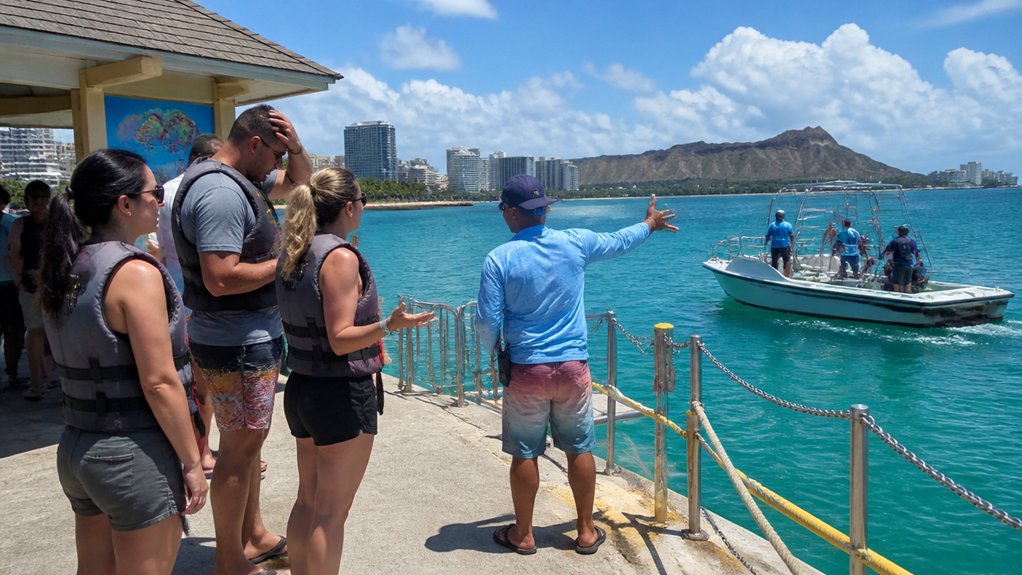
You picture the big blue lift off Waikiki, but a “no-show” can happen before you even see the boat. If you miss check-in, head to the wrong harbor, or fumble your ID and waiver, you could lose your spot fast. Weather adds another twist, though not always a penalty. Before you count on that sky-high view, it helps to know which mistakes cost you and which ones don’t.
Key Takeaways
- Arrive about 30 minutes early with photo ID, signed waiver, and time for weight or harness screening.
- Late arrival, wrong pier check-in, or missing boarding windows is commonly treated as a no-show without refund.
- Failing age, weight, pregnancy, or injury screening can trigger a no-show-style denial, even if you reach the dock.
- If weather makes launching unsafe, operators usually reschedule or issue credit, but guests must still stay check-in ready.
- Call the operator immediately if delayed, confirm meeting points or shuttle timing, and keep a backup day open.
What Counts as a Waikiki Parasailing No-Show?
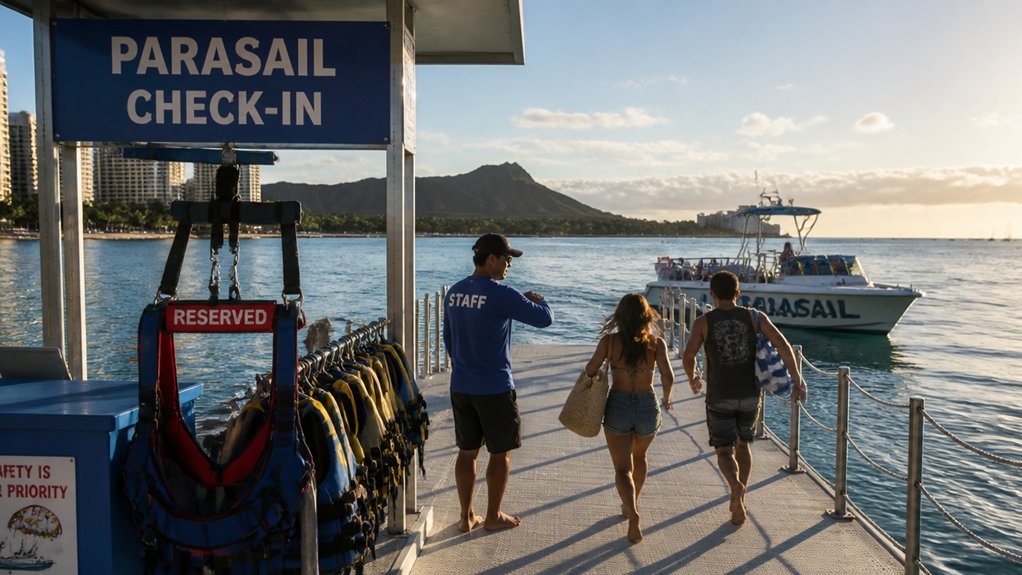
Start with the clock, because in Waikiki parasailing a no-show usually means you didn’t make it to the harbor or office by the required check-in time, which is often about 30 minutes before your flight, with your ID ready and your waiver signed. For Waikiki Parasailing, you can lose your spot if wind shifts, your time changes, and you miss the window. Waikiki Beach mornings move fast. If parasailing operators call your boat and you’re buying shave ice, that counts too. Safety checks matter before you parasail in Waikiki. If your age and weight or combined tandem load falls outside the minimum and maximum weight rules, some parasailing tours may mark you absent after boarding. Hear emergency procedures as gulls circle and lines snap. The dock check-in process is where staff confirm your reservation, review paperwork, and get your group ready before the boat departs.
How Do Check-Ins and Harbors Cause No-Shows?
Most Waikiki parasailing no-shows begin on land, not in the air. You usually need check-in 30 minutes early with ID, a signed waiver, and a quick weight check. If you’re late, staff may move on.
| Slip-up | Result |
|---|---|
| Wrong pier meeting point | Late arrival |
| Missed check-in | no-show mark |
| Forgot ID | Delay |
| Ignored wind-sensitive scheduling | Lost slot |
Your ride may launch from harbor, not the beach, so one wrong turn can sink the morning. Busy docks also add harness fit, height verification, and pairing by combined weight. Operators may also reschedule or cancel for weather conditions, so watch messages from the tour company closely. If you don’t clear those steps fast, you can lose your booking while ropes slap, radios crackle, and boats idle. Book windows can be short, so if you miss the scheduled day, your reservation usually isn’t protected for later use.
When Will a Waikiki Parasailing Refund Be Denied?
If the crew could’ve taken you up but you weren’t ready at the dock, a refund usually won’t follow. In Waikiki, many operators treat late check-in like a no-show, especially when you miss ID, waiver, and harness screening before you parasail.
Before booking, review Waikiki parasailing tips so you know check-in timing, eligibility rules, and cancellation terms before arrival. You can also lose a refund if the Parasailing Company finds you ineligible on the dock. That can happen when weight limits, age limits, or weight distribution don’t work for the day’s solo or tandem setup, or when pregnancy or a recent injury blocks clearance. In HAWAII TRAVEL, fine print matters. If you booked Parasailing in Waikiki through a third party, extras like fuel fees, photos, or booking charges may stay nonrefundable even when your ticket changes. Read the terms before sandals hit planks.
Do Weather Delays Change No-Show or Refund Rules?
Weather can rewrite the dockside script in Waikiki, where trade winds riff across the marina and a glassy morning can turn choppy by noon. If weather delays hit, operators usually follow safety standards first and reschedule, not punish you under no-show rules, when the boat can’t launch.
| Situation | Typical call | Your move |
|---|---|---|
| morning parasailing gusts | Shorter towline length | Stay flexible |
| Rain builds fast | Crew may reschedule | Keep check-in window |
| Seas block launch | refund policy varies | Expect credit or refund |
Common weather cancellations in Waikiki are usually tied to wind, rain, or unsafe sea conditions rather than a guest missing check-in. In July, book earlier in your trip because conditions can flip after sunrise. You’ll have more room if the marina turns loud, wet, and fussy, and the captain reassesses. That weather call usually means a safer swap, not a vanished reservation for you that day.
Still comparing Waikiki Parasailing No Show Rules: What Tourists Should Know?
Ask for tour ideas, hotel suggestions, or a simple trip plan that combines both.
Trip Helper
What Should You Do if You’re Late to Check-In?
If you’re running late, call or email the operator right away using the contact info on your confirmation, because the dock gets busy fast after 10 a.m. Ask if they can still process you for the next boat or move you to another time, since a quick ID, waiver, and weight check can make the boarding window snap shut. You might still get a rebooking, but if the wind shifts or the morning fills up, a late check-in can turn into a no-show before your flip-flops hit the dock. If your booking includes hotel pickup, contact the operator immediately so they know whether you missed the shuttle or can still meet the boat on time.
Contact The Operator Immediately
Even when Waikiki traffic or a wrong turn throws off your timing, call the operator the moment you realize you’re running late. For Waikiki parasailing, late arrivals can trigger no-show rules, so contact the operator immediately using the number in your confirmation.
Aim to reach the meeting point about 30 minutes early for check-in and safety briefing. It might be a pier or harbor, not the sand, and missing it can mean you won’t board the boat departure. Bring photo ID, especially for teens, and expect a waiver and weight check before takeoff. If wind or rain has crews shifting schedules, your call helps them confirm the latest boarding status for your slot. Last-minute changes are easier to handle when you understand the operator’s smart booking tips before departure. That quick call can save a breezy morning and your nerves too.
Ask About Rebooking
Because boats run on a tight launch schedule, ask about rebooking the moment you reach check-in. If you’re late, don’t wait by the rail while the crew loads lines and life jackets. Your slot can go to the next party, even if you’re standing on the dock. Ask how no-show rules apply and whether wind-based delays affect missed launches today. Same-day seats aren’t guaranteed, especially when capacity shrinks after changing weather. A safe parasailing operator should explain its timing, weather, and rebooking policies clearly before you decide what to do next.
| Ask now | Picture it |
|---|---|
| New meeting point | A sunlit dock, engines humming |
| New check-in time, ID and waiver | Salt air, clipboards, quick footsteps |
If rebooking opens up, confirm every detail. Schedules shift with wind, rain, or swell. Book early in your trip, so you’ve got a backup day instead of a soggy shrug.
How Can You Avoid a Waikiki Parasailing No-Show?
While Waikiki looks easygoing from the beach, parasailing runs on a tighter clock. To avoid tripping the no-show rules, book early, ideally for Day 1 or 2, and choose a morning Waikiki parasailing slot. That gives you room to pivot around wind delays or rain. Because windy weather can force Waikiki parasailing tours to cancel, always monitor messages from your operator before heading to the dock. Confirm the exact check-in time, then plan to arrive about 30 minutes early with photo ID and your signed waiver. If you booked through a marketplace, check for dock fees or fuel surcharges so payment doesn’t stall you at the pier before the crew starts calling names aloud. Pack smart too: closed-toe sandals, swimwear, sunscreen, and a towel help you move fast, and weight rules or fit checks can slow boarding. Keep a backup day open. The ocean loves surprises.
Frequently Asked Questions
Are There Age or Weight Limits for Waikiki Parasailing Participants?
Yes, you’ll face age requirements, weight minimums, and height restrictions; operators use participant screening, health guidelines, buoyancy considerations, and boarding assistance needs to approve flights, while teens may need waiver rules completed before launch onsite.
Can Non-Flyers Ride the Boat Without Parasailing?
Sometimes, you can get Nonflyer access with boat seating, but you’ll need to confirm viewing options, onboard participation, reservation rules, check in procedures, comfort expectations, and safety briefings directly with your operator before booking.
What Should Tourists Wear and Bring for a Parasailing Tour?
Like Mia, you’ll wear swimwear essentials, comfortable footwear, and windproof layers; bring sun protection, a water resistant pouch, motion sickness meds, hydration supplies, and cash tips, because you’ll board ready, dry fast, and protect valuables.
Are Photo or Video Packages Included or Sold Separately?
Usually, you won’t get photo bundles or video extras included; you’ll face add on pricing, separate purchasing, package inclusions checks, onboard options, possible editing fees, and upsell policies, so confirm before boarding with staff directly.
Is Waikiki Parasailing Safe for First-Time Flyers or Nervous Travelers?
Yes, you’ll usually feel safe if you choose strong operator reputation, follow waiver requirements, trust weather safety checks and emergency procedures, watch water conditions, use height anxiety tips, expect gentle landing experiences, and understand booking cancellations.
Conclusion
Think of Waikiki parasailing like catching a boat to Neverland. You need to be there early, know your pier, and keep your ID and waiver ready. If weather turns, you’ll usually get a new shot, not a penalty. If you’re running late, call fast and stay calm. A few simple steps can save your flight above the blue water, the salt breeze, and that bright hush you hear once Honolulu drops away from the shore.