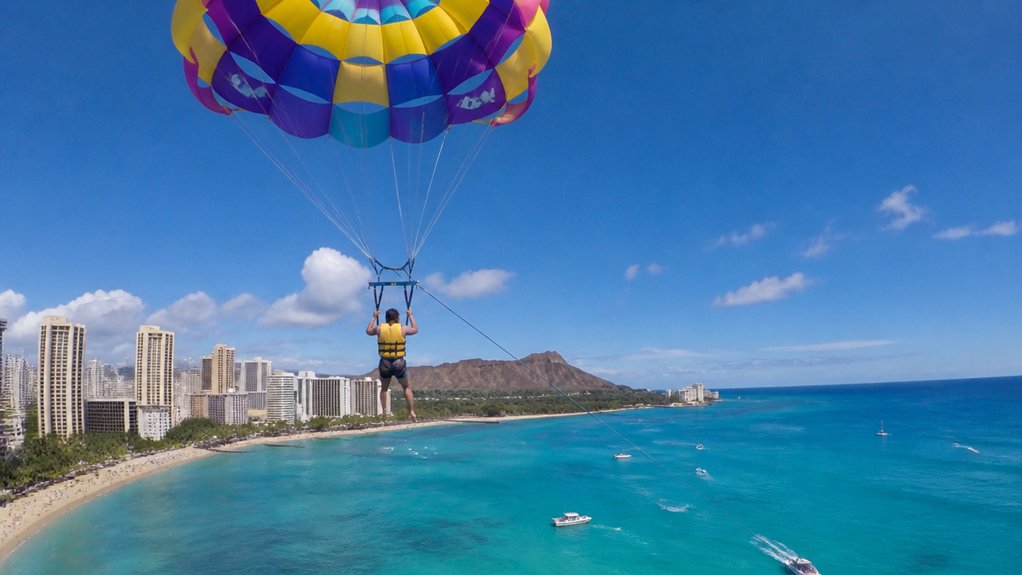
In Waikiki, you’ll usually rise about 600 to 800 feet above the water, high enough to spot reef patterns through clear blue water and watch Diamond Head sharpen against the skyline. The tow starts smooth, then the boat noise fades and the air feels oddly calm. Some trips go higher if conditions allow, but the real question isn’t just how high you’ll go. It’s what that height actually changes once you’re up there.
Key Takeaways
- Parasailing in Waikiki typically rises about 600 to 800 feet above the water.
- Some operators offer higher flights, with options advertised up to 1,000 or even 1,200 feet.
- The exact height depends on wind, ocean conditions, and the operator’s safety limits.
- At 600 to 800 feet, you can clearly see Waikiki, reef patterns, and Diamond Head.
- Late morning, usually 9 am to 2 pm, often provides smoother conditions for higher, clearer rides.

Parasailing Experience in Waikiki, HI
Experience the thrill of Oahu parasailing on this unforgettable 1-hour adventure from Waikiki. Soar up to 1,000 feet above the stunning south shore of...
How High Do You Go Parasailing in Waikiki?
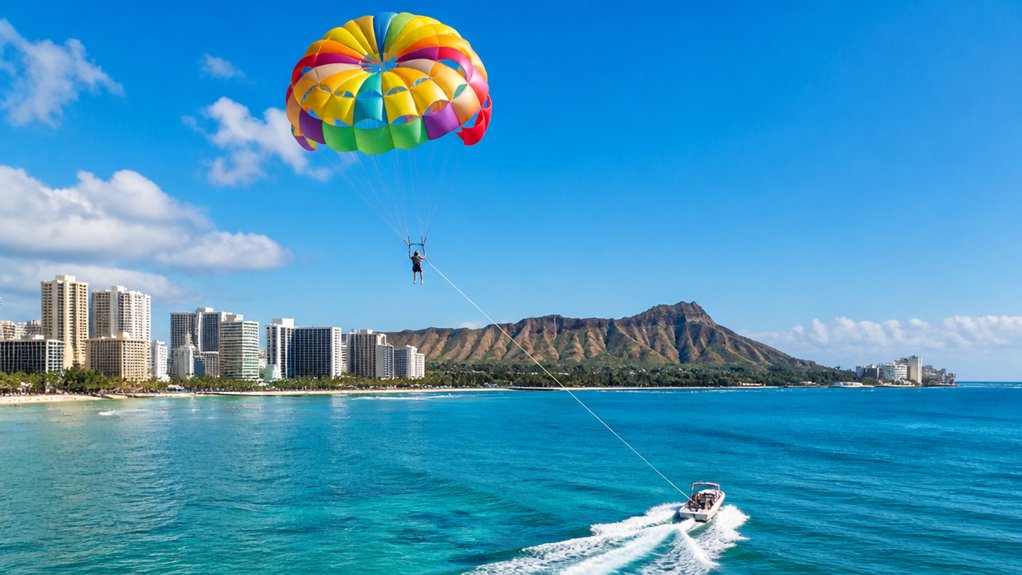
How high do you go parasailing in Waikiki? On most Waikiki parasailing trips, you rise about 600–800 feet above the water, which feels plenty lofty when Diamond Head sharpens in the distance and the boat shrinks below your sandals. If it’s your first time parasailing, expect a smooth climb and a quiet float, with only wind and ocean hiss in your ears.
If you’re wondering, How High Is Parasailing in Waikiki, some operators offer longer lines and flights up to 1,200 feet. Many tours let you compare height options like 600 ft, 800 ft, and 1,000 ft to choose the view and thrill level that suits you best. An experienced crew handles takeoff and landing, checks maximuM weight limits, and keeps the ride easy to follow. You’ll spend more time gazing than gripping. That’s the charm of parasailing here. You lift, level out, and see Oahu from a bright new angle.
Why Waikiki Parasailing Heights Vary
Weather-window days can make the same Waikiki parasailing ride fly a little differently from one booking to the next. You aren’t buying one fixed number, because wind and ocean conditions help the crew choose a safe altitude. One company may market 800 feet, another up to 1,200, while some trips usually run 600 to 700 with higher limits available. Your route and launch area matter too. A flight leaving Waikiki can be set up differently from one near Maunalua Bay. Your passenger weight also matters, especially if you’re flying solo or tandem, since the crew adjusts line length within limits. Even the time of day can change what’s practical, from calmer late mornings to breezier sunset runs. Mother Nature still gets final say that day. If wind picks up, the crew may lower the ride height or pause flights until conditions improve.
What You See From 600 to 800 Feet
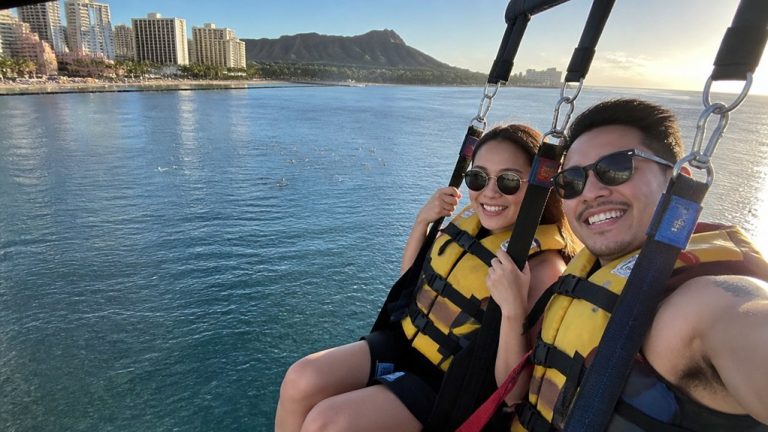
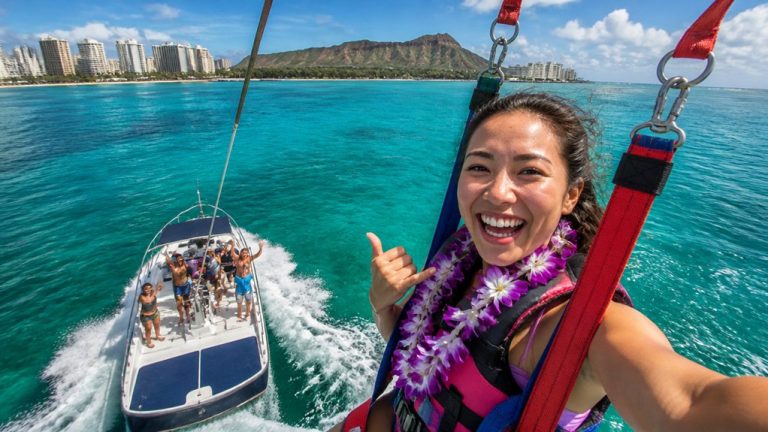
What does 600 feet over Waikiki actually look like? You rise above the beach and suddenly see Waikiki as a coastline, not just a strip of sand. At 600 feet, the reef outlines the water like brushstrokes, and Diamond Head stands in sharp contrast. Climb toward 700 or around 800 feet and the city spreads wider. Street grids, beachfront towers, and ocean color bands snap into a cleaner view without much effort. On your first parasailing experience, that shift feels surreal yet calm. The harness holds steady, the boat keeps the line firm, and you felt safe the entire parasailing adventure. Even your sense of time changes. Best time to go questions fade when Diamond Head’s crater and the shoreline sit beneath your feet. For the clearest panorama, best time for views often comes when light and visibility make Diamond Head and the coastline stand out most.
Best Time for Parasailing in Waikiki
By late morning, Waikiki usually hits the sweet spot for parasailing. You’ll often get the best time between 9 am and 2 pm, when winds stay friendlier, the boat ride feels smoother, and Parasailing in Waikiki delivers sharper photos over Ala Moana and Diamond Head. Perfect time to parasail over Waikiki beaches usually lines up with these late-morning to early-afternoon hours.
- Choose a mid-morning slot if you want a calmer entire experience.
- Pick sunset for an awesome experience with warm skyline color.
- If motion bothers you, I recommend going earlier rather than later.
Most trips last 60 to 90 minutes, so you can finish before gustier afternoon weather builds. Feel the rush up high, then enjoy the splashdown laughs. Prices vary per person, but timing matters as much as altitude. Sunlit water below you often looks like rippled blue glass.
Frequently Asked Questions
Is Parasailing in Waikiki Safe for Beginners?
Yes, you’ll usually find parasailing in Waikiki safe for beginners when crews closely follow weather considerations, weight limits, operator licensing, equipment checks, a safety briefing, sea conditions, flight duration, landing procedures, and emergency protocols carefully.
Can Children Go Parasailing in Waikiki?
Yes, your child can parasail in Waikiki if they meet age requirements, weight limits, and height restrictions; review medical forms, life jacket use, weather impacts, height expectations, duration timeline, and booking policies before reserving carefully.
Do I Need to Know How to Swim?
No, you don’t need to swim; you’re in a safety cocoon, not cast into deep waters: know the basics, life-jacket requirements, beginner swim guidance, water-entry safety, ocean comfort, height visibility, buoyancy checks, rescue support, emergency procedures.
Can Two People Parasail Together in Waikiki?
Yes, you can parasail together in Waikiki on a two person tandem, if you meet weight limits and booking requirements; you’ll get harness safety, height duration, wind conditions, ride experience, landing process, and photo packages.
What Should I Wear for Parasailing in Waikiki?
Wear swimwear or quick-dry clothes; you’ll want sunscreen-ready layers and secure shoes. Ask about gear provided, weight limits, safety briefing, landing process, wind impact, water conditions, tide awareness, best time, and booking tips before going.
Conclusion
When you parasail in Waikiki, you’ll usually rise 600 to 800 feet, high enough to spot reef grids, beach curves, and Diamond Head sharpening against the sky. Some rides go higher if wind and line limits allow. You lift, you level, you linger. That’s the charm. Go early for calmer water and cleaner views. Then listen for the boat’s hum below, feel the salt breeze on your face, and enjoy the city turning slowly small.
Parasailing Experience in Waikiki, HI
Experience the thrill of Oahu parasailing on this unforgettable 1-hour adventure from Waikiki. Soar up to 1,000 feet above the stunning south shore of...

Waikiki Sunset Cruise: 2-Hour Catamaran & Swim Adventure in Oahu
There’s no better place to take a dip than the crystal-clear waters of Waikiki—and no better way to experience a...