You might hate balcony railings, yet feel oddly steady floating above turquoise water on a parasail. You’ll book an early, calmer slot, pay about $70 to $150, and bring sunscreen, a hat strap, and a water pouch, not a big camera you’ll drop. Pick a reputable crew, ask for a tandem and a slower winch up, and lean on verified-review Viator tours for free cancellation and reserve now, pay later… but what do you say if your stomach flips mid-lift?
Key Takeaways
- Many people with mild height fear can parasail because the harness feels stable and the view is horizon-based, not “looking down.”
- If you have panic attacks or need an immediate exit to calm down, parasailing may be a poor fit since you can’t stop midair.
- Book calm weekday mornings and arrive early; lighter winds and fewer crowds make launch smoother and anxiety easier to manage.
- Ask the crew about wind limits, double-clip/backup lines, and how they handle panic midair, including signals and a slower descent option.
- Use 4-2-6 breathing, horizon focus, and grounding (name five sensations) during launch and flight; avoid loose hats and bring strapped sunglasses.

Waikiki Parasailing in Hawaii from Oahu
Experience the thrill of parasailing over Hawaii’s stunning coastline as you glide above crystal-clear waters and lush island landscapes. You’ll s...

Parasailing Experience in Waikiki, HI
Experience the thrill of Oahu parasailing on this unforgettable 1-hour adventure from Waikiki. Soar up to 1,000 feet...

Waikiki Turtle Snorkel and Sail on Hawea Catamaran
Experience the best of Waikiki on a Turtle Snorkel & Sail combo aboard the Hawea Catamaran. This popular Oahu tour b...

Oahu Grand Circle Island Experience from Waikiki
Enjoy Grand Circle Island experience tour with breathtaking views of Amelia Earhart Lookout on Diamond Head, admire...
Can You Go Parasailing With Fear of Heights?
Although it feels counterintuitive, you can absolutely go parasailing with a fear of heights, as long as you choose the right setup and give yourself a few smart safety nets. Book a calm morning slot, when winds stay light and the boat carries fewer riders. Ask for a low to mid tow at first, then decide if you want higher. Before you go, try virtual simulations of parasailing videos in VR or on your phone, and pair them with mindful visualization: picture the harness snug, the line steady, the landing gentle. In very windy places like Waikiki, tours may cancel or reschedule due to parasailing wind limits, so checking conditions ahead of time can help you feel more prepared and in control. Bring sunglasses with a strap, water, and a light layer; skip loose hats and big bags. Expect 8 to 12 minutes in the air, $60 to $120, plus photos if you want proof.
Who Should Avoid Parasailing With Acrophobia?
If your acrophobia tips into severe panic, like you can’t breathe in a glass elevator or you freeze on a hotel balcony, you shouldn’t book that 10 to 15 minute parasail slot, even if it’s only $60 to $120 and the marina looks calm.
Skip it too if you’ve got high-risk health issues such as uncontrolled heart problems, serious asthma, recent surgery, or you’re pregnant, because the harness pressure, sudden lift, and boat chop can hit harder than you expect. In popular spots like Waikiki, most operators follow cautious parasailing pregnancy policies that either strongly discourage or completely prohibit flying while pregnant, so you’re likely to be turned away at check‑in anyway.
If you still want ocean views without the altitude, bring sunscreen and a light windbreaker, leave the big camera behind, and consider a Viator boat tour with verified reviews, hotel pickup, free cancellation, and reserve now pay later so you can keep your timing flexible when the docks get crowded.
Severe Panic Or Phobias
Safety beats bragging rights when your fear of heights crosses into full‑body panic, and parasailing doesn’t give you many off‑ramps once you’re clipped in.
If you live with panic disorder, or you’ve had attacks in elevators, planes, or towers, the calm vibe can flip fast when the winch lifts and the shoreline shrinks. Before you sign anything, read your parasailing waiver in Hawaii carefully so you understand the risks you’re accepting and what the operator is (and isn’t) responsible for.
Skip it if you notice:
- Strong avoidance behaviors, like bailing on ferries or glass floors.
- Panic spikes in crowded marinas, engines, or tight harness fittings.
- Relief only when you can exit instantly, which you can’t midair.
Instead, book a sail or a snorkel.
If you still want to research, Viator listings with verified reviews, hotel pickup, free cancellation, and reserve now pay later help you plan without pressure.

Oahu: The Magical Mystery Show! at Hilton Waikiki Beach Hotel
Step back in Hawaii's history to 1881 when King Kalakaua visited London. You've found the hidden gem of Oahu. This i...

Oahu: Kualoa Ranch UTV Raptor Tour
Traveling with family and friends? You can enjoy the fantastic Multi-passenger UTV Raptor experience with your entir...

Polynesian Cultural Center: Gateway Buffet Package
Located on O‘ahu’s North Shore, the Polynesian Cultural Center is a one-of-a-kind attraction showcasing the peop...
High-Risk Health Conditions
Panic isn’t the only dealbreaker up there, because certain health conditions can turn a “just try it” parasail into a real medical risk once the boat throttles up and the harness tightens around your torso. If you have chronic spine issues, ask the operator detailed questions about parasailing with back or neck concerns before you book, since launch and landing jolts can aggravate existing pain or injuries.
If you’ve got cardiac conditions, asthma flare-ups, fresh injuries, or you’re pregnant, sit this out and book a calm harbor cruise. The takeoff tug and steady wind can spike your pulse, and you can’t bail midair.
Balance disorders and inner-ear trouble also count. The sway can spark vertigo, nausea, and a wobbly landing.
Rides last 8 to 12 minutes and often cost $60 to $120. Go early to beat lines, bring water and sunglasses, skip alcohol. Viator listings with verified reviews and free cancellation help. Reserve now, pay later.
Why Parasailing Feels Different Than a Ladder
You sit back in a snug seated harness and feel clipped in like you’re in a swing, not balancing on rungs, so your body relaxes even if your brain’s skeptical. The lift starts gentle and gradual, usually a minute or two from boat deck to sky, and on most beaches you can book a 10 to 15 minute flight for about $60 to $120, best in the calm morning before crowds and wind pick up. If you’re flying over Honolulu, many parasailing for beginners operators cruise along Waikiki’s shoreline, giving you a smooth ride with postcard views of the city, Diamond Head, and the open Pacific. Up there, open-sky views replace “look down” panic cues, so bring sunglasses and a light windbreaker, skip heavy bags, and if you want clean timing and fewer surprises, a Viator tour with verified reviews, hotel pickup, free cancellation, and reserve now pay later can simplify the logistics.

Seated Harness Security
Once you clip in and settle back, the seated harness does most of the mental heavy lifting, because it holds you like a snug swing chair instead of asking your feet to “find” anything the way a ladder does. Modern boats use a winch-controlled towline to lift and lower you smoothly, so the harness works together with the line and boat system to keep everything feeling stable rather than jerky.
You’re supported at your hips and thighs, and harness ergonomics spread pressure so you can focus on the view.
Before you leave the dock, do this:
- Sit all the way back, loosen your shoulders, and take ten slow breaths.
- Ask the crew to show attachment redundancy, like double clips and a backup line.
- Snug straps until they’re firm, then secure sunglasses with a retainer.
Bring a light windbreaker and sandals, skip dangling jewelry. Expect $60 to $120, book weekdays to avoid crowds.
Gentle, Gradual Lift
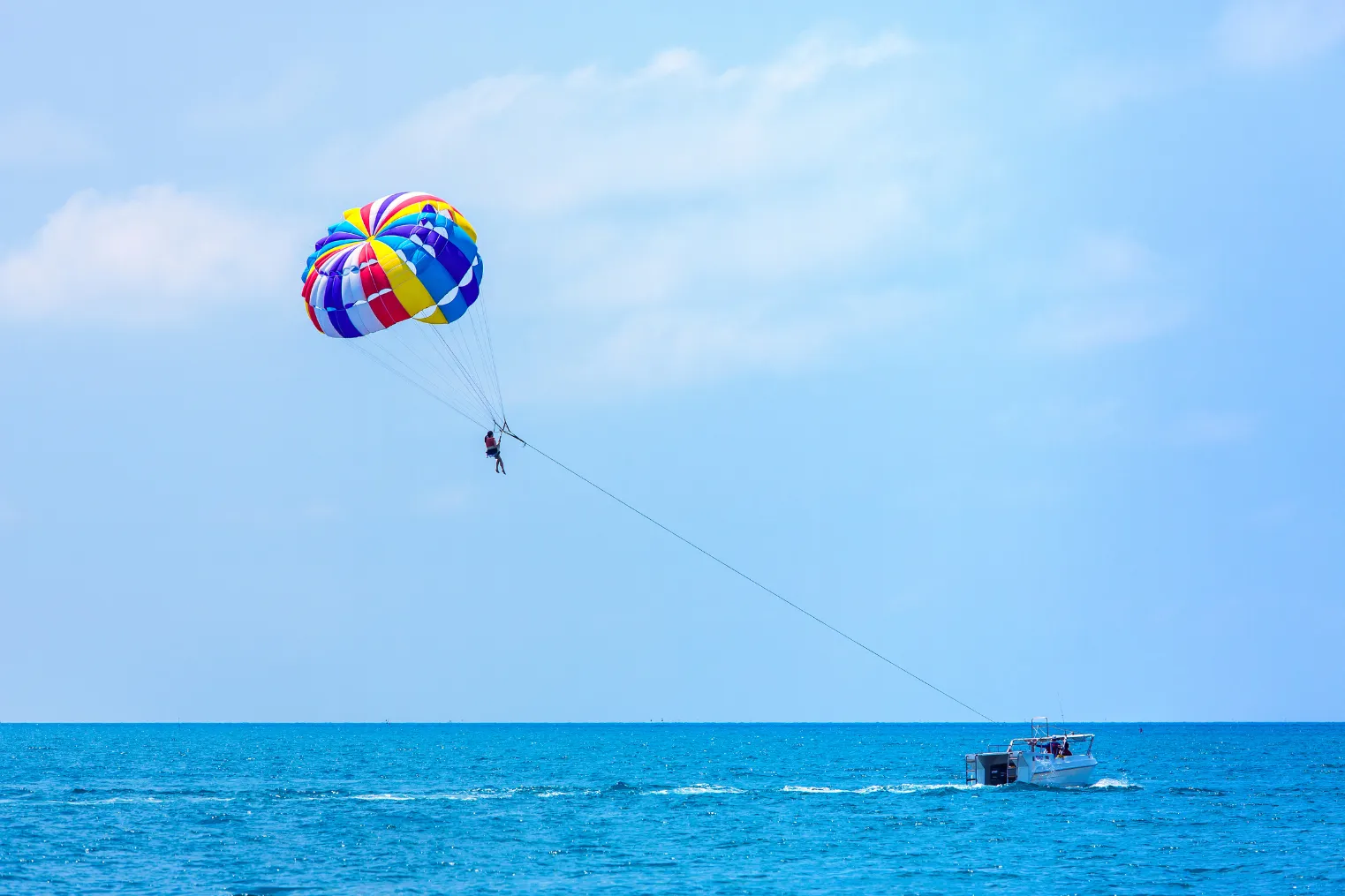
Although the towboat does all the work, parasailing lifts you in a slow, steady arc that feels more like rising in an elevator than climbing a ladder rung by rung. In a full parasailing play-by-play, you’d notice how the boat’s smooth acceleration and the wing-like canopy keep that rise feeling surprisingly calm instead of like a sudden drop.
You stay seated while the winch releases line in a slow ascent, about 30 to 60 seconds to leave the platform and two minutes to reach cruising height.
That pacing creates gradual exposure, so your breathing can settle before fear spikes.
Focus on the tug of the harness, not the height, and match it with a long exhale.
Book the first slots of the day for fewer spectators.
Prices run $70 to $120, photos extra.
Bring sunglasses, a jacket, and a waterproof pouch for your phone.
Skip hats and anything you can’t clip securely.
Open-Sky Visual Cues
From the moment the canopy catches air, the view turns into open sky and a wide, stable horizon, not a fixed rung-by-rung target like a ladder. You’re not staring down; you’re reading horizon cues, like on a calm ferry ride. Over Waikiki, many riders focus on Diamond Head and reefs as stable reference points instead of looking straight down, which further calms that “height-checking” reflex.
The open sky color softens edges, so your brain quits measuring height and starts noticing steadiness. You’ll feel suspended, not climbing today.
- Choose midday light for fewer shadows. Budget $80 to $150, with lighter crowds than sunset.
- Pack polarized sunglasses, a thin windbreaker, and a phone lanyard. Skip bulky backpacks.
- For easy logistics, use a Viator tour with verified reviews, hotel pickup, free cancellation, and reserve now pay later.
While you float, keep your gaze on the horizon and exhale slowly.
Parasailing Launch and Landing: What Happens
Step up to the harness and things move fast: you’ll check in, sign a waiver, and watch the crew clip you in while the boat idles a few yards off the beach. The Waikiki parasailing dock is where you’ll confirm your reservation, receive a brief safety orientation, and meet the crew before heading out to the boat.
Step into the harness and it’s go-time, check in, sign the waiver, and get clipped in as the boat waits offshore.
The launch choreography feels like a brisk dance, straps snug, thumbs up, then you glide from the deck as the winch pays out line.
Expect 8 to 12 minutes in the air, with a 60 to 90 minute total outing, often $60 to $120 plus photos.
Bring sunglasses with a strap and a light layer. Skip loose hats and dangling jewelry.
On return, you follow a simple landing checklist: legs forward, sit back, keep hands on the harness, and let the crew catch you.
Go early for calmer winds and thinner crowds.

Waikiki: 2 hours - Friday Night Fireworks Catamaran Cruise
Enjoy the spectacular FRIDAY NIGHT FIREWORKS show along the beautiful coastline of Waikiki while we get up close and...

Waikiki 2-Hour Sunset Sailing Catamaran – Swim & Sail Adventure
There’s no better place to take a dip than the crystal-clear waters of Waikiki—and no better way to experience a...
Polynesian Cultural Center: Gateway Buffet Package
Located on O‘ahu’s North Shore, the Polynesian Cultural Center is a one-of-a-kind attraction showcasing the peop...
Choose a Fear-Friendly Parasailing Operator
Once you’ve pictured the launch and that calm, seated landing, your comfort level will hinge on who runs the boat. Pick a friendly operator that treats nervous flyers like VIPs, not a line item. Scan local reviews for notes on smooth rides, clear safety briefings, and how they handle wind changes. Aim for morning slots when seas are glassier and the marina feels less hectic. Expect $70 to $140, and book ahead in peak weeks. If you’re flying in Hawaii, those same criteria are exactly how you’d sort through the top parasailing tours in busy spots like Waikiki.
- Choose smaller groups so you’re not waiting in a sweaty crowd.
- Look for modern harnesses, shaded seating, and a tidy dock.
- Bring sunglasses, water, and a light layer; skip dangling jewelry and big bags.
Arrive 20 minutes early, tip the crew, and keep phone strapped in.
Questions to Ask Before You Parasail
Before you clip in, ask the crew what the maximum height is, and whether you can cap it lower for a calmer, breezier ride.
Next, get specific about safety: how often they inspect the harness and towline, what the boat’s doing during takeoff and landing, and what you should wear, like snug shoes and sunscreen, while skipping loose hats and big bags.
If you’re flying in Waikiki, confirm whether the company follows local parasailing safety guidelines on weather conditions, equipment checks, and crew training so you know what to expect before you launch.
Finally, ask what happens if you panic midair, how fast they can bring you down, and whether a Viator tour with verified reviews, clear timing, hotel pickup, free cancellation, and reserve now pay later can smooth out tickets and crowds.
What’s The Maximum Height?
Although most parasail crews talk about “going up,” you should pin them down on the actual maximum height, because that number shapes how intense the ride feels and how comfortable you’ll be once the boat starts pulling. Ask for the maximum altitude in feet, and whether they’ll cap height limits for nervous flyers. Some runs top out near 300 feet, others 800, and the view shifts from postcard coast to wide open sky. In Waikiki, many operators offer tiered options like 600 ft, 800 ft, and 1,000 ft flights, which can dramatically change how high, and how exposed, you feel.
- Start low, then ask the crew to ease you higher if you’re steady.
- Choose an early slot, arrive 30 minutes ahead, lines tend to be shorter.
- Bring sunglasses and a light layer, skip bulky bags and jangly jewelry.
Most rides cost $70 to $120. Pick a shorter flight if you’re unsure.
How Safe Is The Setup?
Your comfort with the height matters, but the setup matters more, because the calm “postcard coast” feeling can flip fast if the crew cuts corners. Before you sign the waiver, ask when the last equipment inspection happened, and whether they log it daily. Check the harness, straps, and carabiners. They should feel clean, not salt-stiff, and the crew should welcome questions. Ask about tether redundancy: do they use a backup line or secondary clip, and how often do they replace the towline. Confirm wind limits and who calls the cancel. In Waikiki, ask specifically about their parasailing safety rules and how often local authorities or third parties inspect their boats and gear. Plan for 60 to 90 minutes on site, longer at sunset. Expect $80 to $150. Bring water and sunscreen, skip loose hats. Viator listings can streamline timing with reviews, cancellation, and reserve pay later.
What Happens If Panicked?
If the lift hits you in the gut the moment your feet leave the deck, you’ll want to know exactly what the crew does next, not just what they promise in the sales pitch. Before you clip in, ask how they read panic signals and what “down now” looks like: throttling speed, lowering altitude, or reeling you in within 60 to 90 seconds. In Waikiki specifically, many operators follow established parasailing safety practices, like clear pre-flight briefings and gear checks, so you can ask how closely they stick to those standards when someone panics.
- Can I use a hand signal or speak to you over the radio?
- Will you coach grounding techniques like breath counts and naming things you see?
- What’s the refund or reschedule policy if I bail at the dock?
Go early to dodge the noon queue. Bring sunglasses, skip bags, skip alcohol. Rides cost $60 to $120 per person, usually.
Ask for a Lower Parasailing Height
When the boat crew clips you in and starts the winch, ask for a lower tow height right then, before you’re drifting off the stern. Most operators can keep you at a lower altitude for the first minute or two, then reel you higher only if you nod yes. That gradual ascent lets your ears, legs, and nerves catch up while you watch the wake turn into a silky ribbon. Before you go, skim a breakdown of Waikiki parasailing prices so you know which height options, photos, and add‑ons are included and what costs extra.
Confirm the plan at check in, too, and expect a small fee on some beaches, about $10 to $20. Viator listings show verified reviews and free cancellation.
Book an early slot to dodge the midday queue, and bring snug sandals, a light windbreaker, and sunglasses with a strap. Skip loose hats and heavy lunches.
Waikiki Parasailing in Hawaii from Oahu
Experience the thrill of parasailing over Hawaii’s stunning coastline as you glide above crystal-clear waters and...
Parasailing Experience in Waikiki, HI
Experience the thrill of Oahu parasailing on this unforgettable 1-hour adventure from Waikiki. Soar up to 1,000 feet...
Oahu: The Magical Mystery Show! at Hilton Waikiki Beach Hotel
Step back in Hawaii's history to 1881 when King Kalakaua visited London. You've found the hidden gem of Oahu. This i...
Try Tandem Parasailing for Extra Calm
Ease into the ride by booking a tandem parasail, since sharing the harness with a calm partner takes the edge off that first lift.
You’ll chat on the boat, breathe in salty air, and let your buddy set the pace while the crew clips you in.
The tandem benefits are real: less solo focus, steadier breathing, and a lighter mood when the winch starts.
If you’re in Waikiki, you can also compare tandem vs triple parasailing options to see which setup feels safest and most reassuring for you.
- Pick someone steady, not the friend who screams at seagulls.
- Ask for a quiet slot, early morning often runs smoother and less crowded.
- Bring water and sunglasses, skip extra caffeine and big breakfasts.
Expect $60 to $120 per person for 8 to 12 minutes aloft.
Partner reassurance keeps you centered.
You’ll land smiling, not white knuckled afterward.
What Gear Keeps You Secure While Parasailing?
Although the ride looks like pure postcard freedom, the gear does the quiet work of making you feel locked in and looked after.
You’ll clip into a seated harness, and smart harness design spreads pressure across your hips so nothing bites.
The crew double checks carabiners, tow rope, and backup lines before launch.
A life vest is standard safety equipment, just in case.
Most boats use winch systems to reel you out and back with a steady pull.
On many Waikiki outings, you’ll spend about 8 to 12 minutes actually in the air before the winch gently brings you back to the boat.
Show up 20 minutes early, bring strap-on sunglasses, and skip floppy hats.
You’re usually airborne 8 to 12 minutes, around $60 to $120.
Midday crowds build, so mornings feel calmer.
If logistics stress you, Viator tours list verified reviews, free cancellation, and reserve now pay later.
Breathing Tricks for Parasailing With Fear of Heights
Your harness can hold you all day, but your breathing sets the tone once the boat starts its steady pull and the shoreline shrinks. Start with controlled breathing: inhale through your nose for 4 counts, hold 2, exhale for 6, like you’re fogging a mask. Do it for one minute before lift off and again when the winch hums. Before you clip in, quickly review the boat crew’s parasailing safety checklist so your mind has clear, simple steps to fall back on while you focus on breathing.
Your harness is solid; your breath leads, inhale 4, hold 2, exhale 6 as the boat pulls and shoreline shrinks.
- Take three grounding breaths, then name five things you can feel: straps, breeze, sun, boat spray, your feet.
- Sip water between breaths. Bring a small bottle, skip heavy snacks that churn.
- Ask the crew for a 30 second pause at the platform; it’s usually free, even on busy $60 to $120 rides.
If panic spikes, count your exhale, let shoulders drop softly.
Use the “Horizon Focus” to Stay Calm
When the towline tightens and the deck drops away, lock your eyes on the horizon, not the water glittering straight down. Pick a steady point where sea meets sky and keep it there. This horizon fixation gives your brain a calm reference, so your stomach stops arguing with gravity. Use visual anchoring like a photographer: soften your gaze, breathe, and let the boat and canopy move under you. If you need a task, count slow waves or scan for a lighthouse. Use this same calm focus if you decide to capture epic Waikiki parasailing moments with onboard photo or video packages. Bring polarized sunglasses, skip the phone. Most rides run 8 to 12 minutes and cost about $60 to $120. Go early for lighter winds and fewer spectators. A Viator tour can handle pickup from hotels, with free cancellation and reserve now pay later.
Small Exposure Steps Before Parasailing Day
Before parasailing day arrives, build a quick “mini ladder” of height practice so the boat launch feels familiar instead of dramatic. Start with gradual exposure that fits your trip:
- Spend 10 minutes on a hotel balcony or garage, eyes on the horizon, and do visualization practice of the harness lift and smooth glide.
- Ride a gondola, Ferris wheel, or elevator at a quiet hour, often $10 to $20, and stay until your breathing slows.
- Book a short boat ride the day before, bring water and sunglasses, skip alcohol and big meals, and notice how spray and engine noise settle into background.
Aim for off peak mornings, and pack a light layer. You’ll feel steadier when the dock gets busy at launch. Choosing a calm, clear morning is ideal, since it’s often the perfect time to parasail over Waikiki beaches.
What to Tell the Crew If Panic Hits
Although the deck feels loud and busy, the crew can only help if you say the simple thing out loud: “I’m getting panicky, I need a minute and a slower launch.”
Tell them what you want in one breath, then add one detail, “Please explain the next two steps,” or “Can you keep me low for the first pass.” Most operators hear this daily, especially on midmorning trips when the dock crowds stack up and the wind picks up, so you won’t shock anyone.
Agree on crew signals for slow and stop before you clip in. Repeat calming phrases, “Breathe, eyes on horizon.” Skip coffee, sip water, bring a sunglass strap. Photo add-ons run $10. Viator listings show reviews and free cancellation for flexibility.
Waikiki: 2 hours - Friday Night Fireworks Catamaran Cruise
Enjoy the spectacular FRIDAY NIGHT FIREWORKS show along the beautiful coastline of Waikiki while we get up close and...
Waikiki 2-Hour Sunset Sailing Catamaran – Swim & Sail Adventure
There’s no better place to take a dip than the crystal-clear waters of Waikiki—and no better way to experience a...
Polynesian Cultural Center: Gateway Buffet Package
Located on O‘ahu’s North Shore, the Polynesian Cultural Center is a one-of-a-kind attraction showcasing the peop...
Frequently Asked Questions
How Much Does Parasailing Usually Cost, and What Affects Pricing?
You’ll usually pay $50–$150 per person for parasailing. Prices rise with seasonal demand, longer flights, and photos. You’re also covering crew, fuel, equipment maintenance, location permits, and boat size or private rides in busy resorts.
What Is the Typical Minimum Age or Weight Requirement to Parasail?
You’ll usually need a minimum age of 6–8 to parasail, and operators enforce weight limits, often about 90–100 lbs minimum and 450–500 lbs maximum per flight, depending on wind, gear, and pairing at your launch site.
Can You Parasail if You Wear Glasses or Contact Lenses?
Yes, you can parasail with glasses or contacts; they’re your compass in the sky. Secure glasses with a strap, choose frames, and bring drops. For contacts, pack spares and prioritize sight considerations and lens management.
What Happens if the Weather Changes Suddenly During a Parasailing Trip?
If the weather shifts, the captain reels you in, adjusts course, and may call off the flight. You’ll feel sudden gusts, but you stay harnessed while crew initiates an emergency descent and lands you safely.
Are Photos or Video Packages Available, and Are They Worth Buying?
On the fence? You’ll usually find photo/video packages available, and they’re worth it if you want proof you did it. Ask about action cameras, pricing, and downloads; skip if you won’t frame souvenir prints later.
Conclusion
You don’t have to love heights to parasail, you just have to manage them. Book a calm morning slot, plan 60 minutes door to dock, and budget $80 to $140 for a tandem flight. Bring water, sunglasses, and a light windbreaker. Skip a big breakfast and loose hats. Slow and steady wins the race. If nerves spike, ask for a gradual winch up, breathe 4 2 6, and fix your gaze on the horizon today.