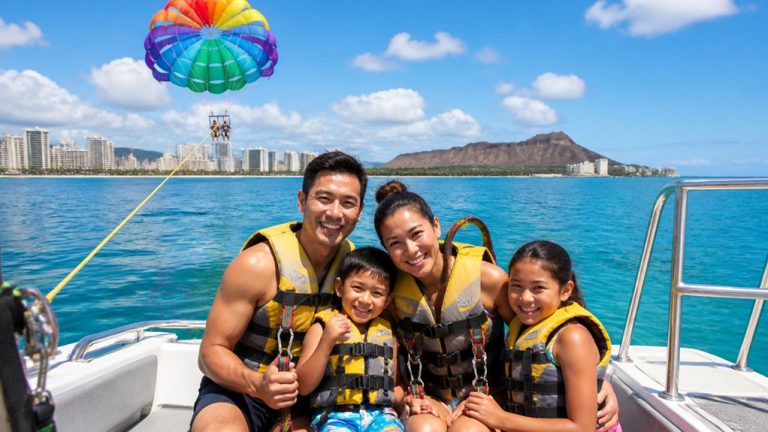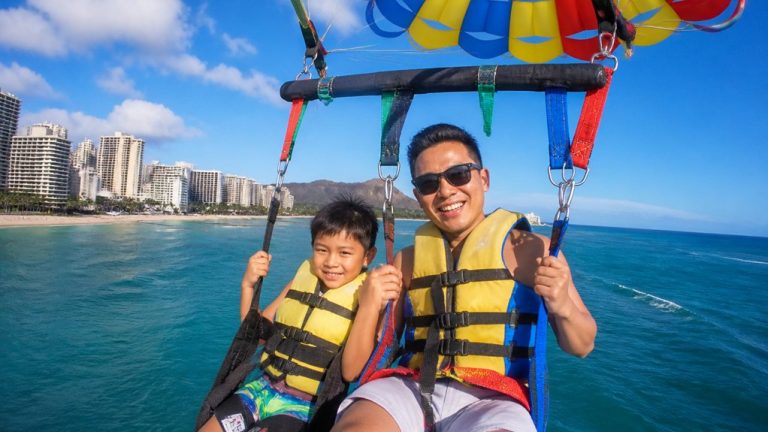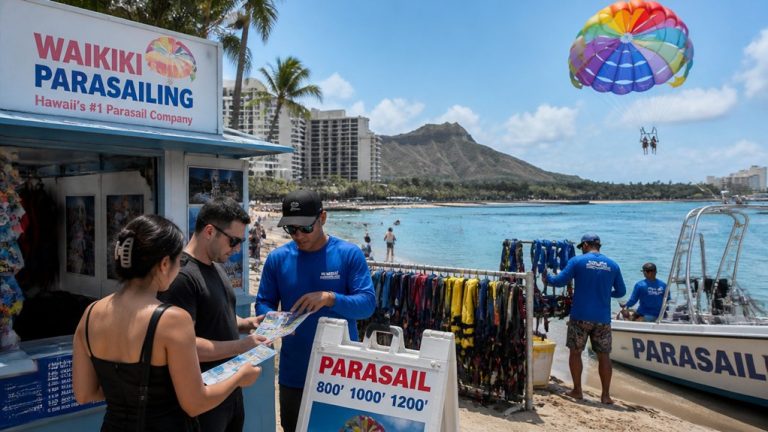
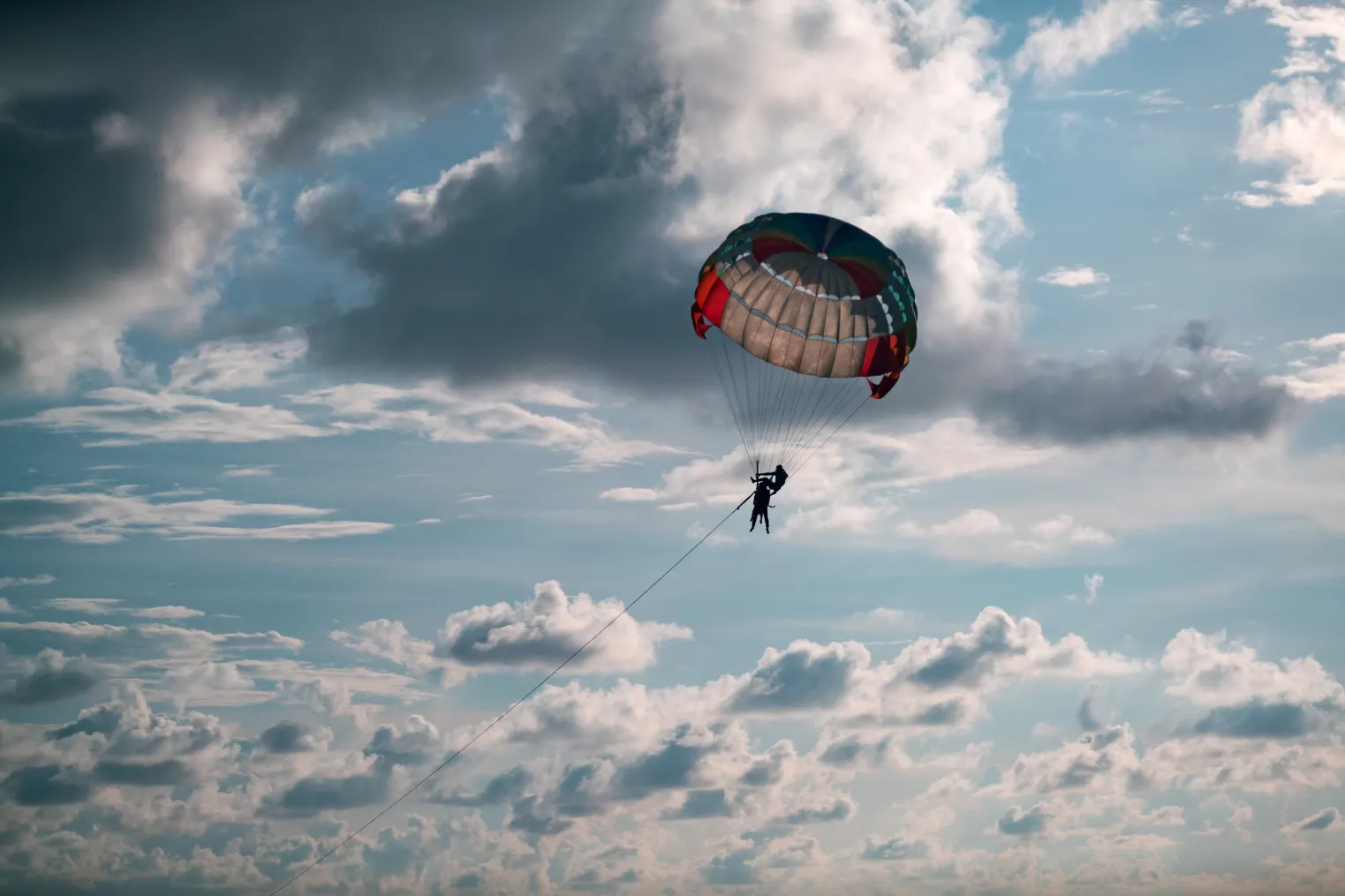
If your stomach tends to offer feedback at sea, you can still parasail without turning green. Book a calm morning slot, aim to eat a light snack 60 to 90 minutes before, and bring water, ginger chews, and a cheap acupressure band. On the boat, sit near the center or front, lock your eyes on the horizon, and breathe in 4, out 6. The crew sees this daily, but the timing trick most people miss is…
Key Takeaways
- Book a morning or late-afternoon slot, and rebook if marine forecasts show strong winds or choppy seas.
- Eat light 60–90 minutes before (toast/banana/yogurt), avoid greasy food and alcohol, and sip water slowly.
- Sit mid-boat with a clear horizon view, avoid engine-fume areas, and don’t look down or at your phone.
- At first nausea, tell the crew immediately, request a slower tow or early reel-in, and use 4-in/6-out breathing for two minutes.
- Use proven aids: scopolamine patch 4–6 hours ahead (test first), plus ginger chews or wrist acupressure bands.
Fast Parasailing Motion Sickness Fixes (Quick Plan)
If nausea starts to creep up, shift into triage mode and keep it simple. Tell the crew right away, they’ve seen it all. Fix your gaze on the horizon, then run breath techniques: inhale 4 counts, exhale 6, repeat for two minutes. Sip water, not soda, and loosen tight straps around your waist. Before takeoff, press acupressure points on your inner wrist, three finger widths below the crease, 30 seconds each side. If you didn’t pack bands, they sell them at most marinas for $10 to $15. Skip greasy snacks, save the iced coffee, and ride earlier in the day when winds are steadier and the dock’s less packed. Pack ginger chews, $3 at the kiosk, and a light jacket just in case. For recurring sickness, combine these tricks with basic parasailing safety guidelines from your operator so you can prevent issues and recover faster between rides.
Why Parasailing Motion Sickness Happens
Up in the harness, your inner ear tries to keep you balanced while your body swings and tilts, and that mixed signal can turn your stomach fast. Stronger trade winds can make your Waikiki parasailing ride feel bumpier and more unpredictable, which may increase motion sickness for sensitive riders. Add the boat’s wave rhythm and gusty wind, especially on a choppy afternoon ride, and you’ll feel the motion even before you’re fully airborne. Your eyes may lock on the bright horizon while your body keeps moving, so pack a small water bottle and ginger chews, skip a heavy lunch, and book a calmer morning slot when you can, a Viator tour with verified reviews, hotel pickup, free cancellation, and reserve now pay later can make timing smoother.
Inner Ear And Balance
While you’re floating high above the water, your inner ear is working overtime, and it doesn’t always agree with what your eyes see. Those tiny fluid canals read tilt and spin, but your gaze locks on a horizon and your brain calls foul. The mismatch can spark nausea, sweat, and a wobbly feeling before you smile for the photo. On Waikiki, reviewing parasailing safety tips before you fly can help you choose calm conditions and well‑run operators, which indirectly reduces motion-sickness triggers like sudden swings or choppy launches.
You can stack the deck. Eat light 2 hours before, skip greasy burritos, and bring water and ginger chews. Book an early slot, often 9 a.m., when lines are short and you’re fresher, $70 to $120.
If you feel off, fix your eyes on one point and breathe slow. At home, try balance retraining, like standing on one leg for 30 seconds, to train signals.
Wave Motion And Wind
Your inner ear might start the argument, but the sea and sky often finish it. When the boat idles in the chop, wave turbulence keeps nudging you side to side, then the towline tightens and lifts you fast. That quick switch from bobbing to climbing can turn your stomach, especially if the captain has to thread through other boats near the launch area. Up high, wind shear bumps the canopy like a sudden pothole, so you sway and drop a few feet before settling. Because operators closely watch parasailing weather cancellations for wind and rain, some flights get delayed or shuffled, which can extend your time bobbing on the boat and increase the chance of feeling queasy. Book a morning slot, seas are usually calmer and lines shorter, and you’ll pay about $80 to $140. Bring water, a light layer, and ginger chews. Skip heavy breakfast and extra booze. Pack small cash for photos, they’re pricey dockside.
Still comparing Parasailing Motion Sickness?
Ask for tour ideas, hotel suggestions, or a simple trip plan that combines both.
Trip Helper
Visual-Body Signal Mismatch
Even if the ride feels smooth, parasailing can still make you queasy because your eyes and inner ear don’t agree on what “moving” looks like. Up high, you stare at a horizon while your body feels gentle swings and drops from the towline. That visual mismatch scrambles motion cues, and your brain flags it as trouble, like reading in a car. To cut down on this mismatch in Waikiki, many operators recommend choosing the perfect time to parasail in the morning when the water and wind are calmer. To reduce it, pick a morning slot when winds are lighter and the crowds move faster, usually 9 to 11 a.m. Eat light, skip greasy tacos, and bring water, sunglasses, and a hat with a chin strap. Choose a seat facing forward on the boat.
If you’re booking, look for free cancellation and a 10 to 15 minute flight, often $70 to $120.
Prep the Night Before Parasailing
Because motion sickness often starts before you ever leave the dock, prep the night before like you’re packing for a short boat ride, not a big beach day. Lay everything out, set alarms, and keep your morning calm. If you’re still comparing options, look closely at Waikiki parasailing prices to see what’s included, what’s extra, and which operators throw in small comforts that can make motion sickness easier to manage.
- Light windbreaker and a brimmed cap for spray and sun
- Sunglasses with a retainer, so they don’t fly off at lift-off
- Small dry bag with phone lanyard, cash for tips, and a barf bag (just in case)
- Your kit: pack ginger, and wristbands if you use them
Skip perfume and backpacks. If you’re booking a Viator parasailing tour, choose one with verified reviews, hotel pickup, free cancellation, and reserve now pay later. Aim for an early slot before crowds and choppy afternoon winds, then sleep early.
Eat and Drink to Prevent Nausea
A little smart fueling goes a long way before you clip into the harness. Eat a small breakfast 60 to 90 minutes ahead: toast, banana, yogurt. Skip greasy tacos and bottomless mimosas, they bounce back fast once you’re up in the breeze. If you’re boarding from a crowded marina, stash light snacks in a dry bag: crackers, pretzels, or a granola bar. Sip water steadily, not a full bottle right before takeoff. On the boat, keep your stomach calm with ginger chews, or plain ginger tea if the captain has it. Avoid energy drinks and too much coffee. Remember to pack your essential gear for parasailing in Waikiki along with your snacks so you’re comfortable and prepared on the water. After you land, grab electrolytes and something salty for the ride back. Pack dollars for dockside snacks, and eat slowly while you wait in line there.
Parasailing Motion Sickness Meds and Patches
If you know you get queasy on boats, plan your meds and patches like you plan sunscreen, early and on purpose. Talk to your doctor a week out, especially if you drink alcohol or have glaucoma.
- A Scopolamine patch tucked behind your ear before sunrise
- Ginger chews in a zip bag, sweet and peppery
- Prescription antihistamines in your daypack, labeled and dry
- A small water bottle, cool against your palm
Most patches need 4 to 6 hours to kick in, so don’t slap one on at the dock. Expect $10 to $30, plus a clinic copay. In Hawaii, many operators will reference parasailing waivers that mention medication use and your responsibility to disclose motion sickness or medical conditions.
Pack wipes to remove residue, skip heavy perfume, it can turn your stomach. Test any new pill on a calm day, bring sunglasses, since drowsiness can sneak up.
Beat Boat Nausea: Seating and Focus Tips
Start by choosing your seat like you mean it: aim for mid-boat near the centerline where the ride feels steadier, and if you can, pay a few extra bucks to avoid the bouncy bow when the harbor gets choppy. On Waikiki parasailing boats, sitting mid-boat also keeps you farther from the bow spray and closer to the calmer back-of-boat vibes, which can help your stomach and your mood.
Once you’re underway, fix your gaze on a clear horizon or a distant shoreline, keep your chin level, and skip staring at your phone, your ticket details, or the wake (save that for later).
If your operator’s running tight departures and the dock is crowded, arrive 20 minutes early with water and a light snack, and if you’re booking through Viator, use verified reviews, hotel pickup, and free cancellation with reserve now pay later to lock in a calmer time slot.
Choose The Right Seat
On a parasailing boat, where you sit can decide whether you feel breezy or green before the harness even comes out. Ask for the front seat near the bow, where the ride feels steadier and you get fresh air. For both comfort and photos, the best seats on a parasailing boat are usually toward the front, away from engine noise and fuel smell, where the boat’s motion is smoother. Avoid the bench beside the outboard and fuel smell. If you’re waiting 20 to 40 minutes in a busy marina line, pay the small upgrade if offered, usually $10 to $20, to board earlier and pick your spot.
- Cool spray on your shins, not exhaust heat on your back
- A firm rail to hold during turns
- Space for a small water bottle and ginger chews
- A clear path when the angled harness is clipped in
Skip heavy snacks and keep a light jacket handy today.
Fix Your Visual Horizon
While the boat idles in the marina queue and then bumps out into open water, lock your eyes on a steady horizon, not the foamy wake or your phone screen. Pick a seat with a clear sightline and keep your head still, letting your eyes do the work. Use a fixed horizon like the line where sea meets sky, or aim at distant landmarks such as a lighthouse or headland. If winds pick up enough that operators start talking about parasailing tour cancellations, pay extra attention to your visual horizon because stronger chop and swell will amplify boat motion and nausea.
If you’re waiting 20 to 40 minutes for your turn, sip water, skip greasy snacks, and tuck your sunglasses and a light windbreaker within reach. Don’t read brochures. Chat if you want, but glance back to your marker every few breaths. Once you’re clipped in, keep looking out, not down. It’s surprisingly effective, honestly.
Choose Calm Weather and the Best Time
Because the sea sets the rhythm for your whole ride, booking parasailing for a calm-weather window and the right time of day can cut nausea fast.
Aim for low winds and glassier water, often in late afternoon when day-trippers thin out and the sun softens. For Waikiki specifically, the best season to go parasailing is when trade winds are lighter and seas are calmer, which typically means focusing on drier, less stormy months. Check the marine forecast, and don’t be shy about switching times; most operators will rebook if conditions spike.
If you need a simple plan, Viator tours can help with hotel pickup, free cancellation, and reserve now pay later.
- A pale flag barely moving on the dock
- A steady tow boat line with no slap or spray
- A harness that sits snug over a light windbreaker
- A small ginger chew and water in your pocket
Skip heavy meals and alcohol.
If You Feel Sick: What to Do Next
If nausea creeps in mid-ride, tell the crew right away and ask for a slower tow or an early reel-in before it tips into full queasy. Keep your eyes on the horizon, loosen your grip, and try breathing exercises: inhale for four, exhale for six, repeat. If you’re in Waikiki, remember that parasailing and alcohol don’t mix, and local rules expect you to stay sober before you fly. If you’re tandem, suggest seat swapping so the steadier rider sits closest to the harness bar. Sip water, don’t chug it, and skip sugary soda. Use the provided bag if you must, it’s better than toughing it out.
Once you’re back on deck, sit in shade, nibble crackers or ginger chews you packed, and give it 10 minutes. Booking a Viator tour with reviews, hotel pickup, free cancellation, and reserve pay later can help you pick time slots.
Frequently Asked Questions
Can Children Parasail if They’Re Prone to Motion Sickness?
Yes, your child can parasail even if they’re prone to motion sickness, but you’ll need child friendly precautions and pre ride acclimation. Choose calm seas, limit ride time, hydrate, and stop if nausea starts quickly.
Will Motion Sickness Ruin My Photos or Make Me Drop My Phone?
You won’t ruin photos or drop your phone, Jamie felt queasy but still filmed hands-free. You’ll keep shots steady if you use wipe proof cases,secure mounts, and a wrist lanyard, then shoot short bursts on takeoff.
Can I Parasail if I’M Pregnant and Get Motion Sick Easily?
You probably shouldn’t parasail while pregnant, especially if you get motion sick easily; many operators won’t allow it. Ask your OB and follow prenatal precautions; if cleared, request a gentle ascent and calm conditions only.
Is Motion Sickness Worse When Parasailing Tandem Versus Solo?
Is tandem worse? Usually, you’ll feel similar or slightly steadier tandem, because shared weight distribution damps swing, though extra wind resistance can add wobble. If you’re sensitive, request calm conditions and communicate with your partner.
How Long Does Parasailing Motion Sickness Typically Last Afterward?
You’ll usually feel better within 30 minutes to a few hours, though symptom duration can linger up to 24 hours if you’re prone. Hydrate, eat light, and rest to shorten your recovery timeline after parasailing.
Conclusion
Keep your parasail day smooth, not sour. Book a morning slot to beat crowds, budget $100, eat a snack 60 to 90 minutes before, and pack water, chews, and a layer. Skip heavy breakfasts and booze. Sit center, stare at the horizon, and breathe 4 in, 6 out. If you’re sensitive, set a scopolamine patch 4 to 6 hours ahead. To time it, grab a Viator tour with reviews, free cancellation, and reserve pay later.