Most parasailing shots look stiff because the crew shoots from a moving boat at a low angle, so your shoulders and chin matter more than your smile. You’ll get an easy, confident look if you relax your grip, keep one hand light on the harness, lift your eyes to the horizon, and turn your torso a few degrees. Book a midmorning or golden hour slot, expect $60 to $120, and bring sunglasses with a strap, not a floppy hat. Next, you’ll want the five poses that work every time.
Key Takeaways
- Keep shoulders down, jaw relaxed, and eyes on the horizon; a small chin tuck prevents stiff, awkward angles.
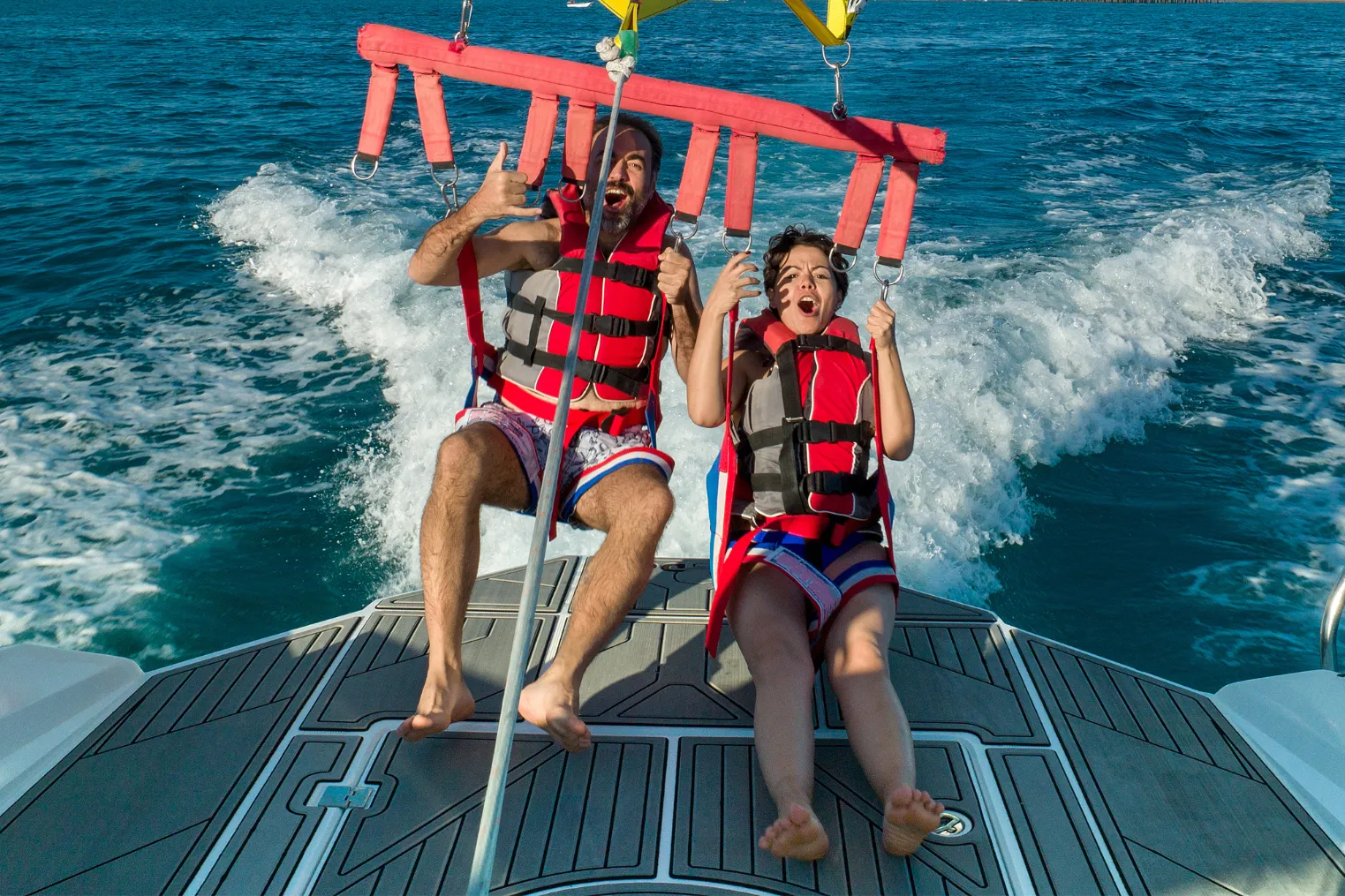
- Hold the harness lightly with soft elbows; add one quick wave or thumbs-up for a natural, confident look.
- Do simple “quick-win” moves: point at the shoreline, look back at the wake, or tuck hair behind one ear.
- For action shots, lean into a gentle side-to-side arc and use burst photos to catch mid-kicks and real laughter.
- At takeoff and landing, stand tall for clean lines, then lean back feet-forward and keep smiling until you’re unclipped.
Parasailing Photo Pose Quick Wins (5 Poses)
While the boat’s still idling and you’ve got a minute before they clip you in, line up a few quick-win poses that look great even if you only get one clean shot. After the safety briefing, ask about camera angles and confirm boat communication, a quick hand signal for “shoot now.” For every pose, make sure your camera or phone is attached with secure tethers so you don’t lose it mid-flight.
Pose 1: chin up, one hand on the strap, eyes to the horizon. Pose 2: both arms wide like a gull, knees relaxed. Pose 3: look back at the wake, hair tucked, to beat wind effects. Pose 4: peace sign close to your cheek for scale. Pose 5: point at the shoreline, then freeze.
Bring a dry bag, polarized sunnies, and $10 for photo add-ons. Skip dangling hats, they fly at takeoff too.
Parasailing Photos: Get Comfortable in the Harness
Usually, your best parasailing photos start the moment you sit back and actually settle into the harness, not when you’re already airborne and tense. Before takeoff, roll your shoulders, let the straps sit flat, and ask the crew for an adjustment if anything pinches. That reset builds harness trust, and it shows in your face. For a smoother ride and better photos, pack the essential gear for parasailing in Waikiki so you’re not distracted by missing basics once you’re in the air.
For chest comfort, lift your sternum and breathe slow. Keep hands light on the side straps, don’t white-knuckle. Wear sunglasses, tie hair back, and skip bulky jackets that bunch up. Bring a water bottle, leave your phone stowed.
Arrive 20 minutes early on weekends, and budget $70 to $120. For smoother timing, a Viator tour with verified reviews, hotel pickup, and free cancellation can help. Reserve now, pay later.
Parasailing Photo Angles Operators Actually Shoot
Most operators shoot two sure-thing angles: the standard takeoff and landing from the boat, plus a wide aerial perspective once you’re high and the water turns glossy blue below. These shots usually come from the boat’s rear or corner, giving you those perfect angles that frame both the chute and the ocean in one clean, dramatic line. You’ll want to be camera-ready at the start and end, so stash your hat, keep sunglasses snug, and tuck anything loose, and if you’re booking a busy time slot, arrive 20 minutes early because the deck can get crowded and the best corner fills fast. If timing’s tight, a Viator parasailing tour with verified reviews, hotel pickup, free cancellation, and reserve now pay later can help you lock in a calmer window, and you can skip the extra photo package unless you really want every splashy landing frame.
Standard Takeoff And Landing
Because operators run a tight, rehearsed sequence, the takeoff and landing shots they actually capture tend to look the same across beaches and boats, and that’s good news if you know what to do.
Listen in the safety briefing, then use clear boat communication: nod, thumbs up, point. After the weather briefing, set your stance at the back, knees soft, chin high, hands on straps. Your footwear choice matters, go barefoot or snug sandals, skip flip flops. Aim for the first run, less spray, fewer eyes, and bring a $5 tip and a phone lanyard. At the dock check-in, expect a quick rundown of timing, waivers, and gear that mirrors most Waikiki parasailing operations.
| Moment | You | Camera |
|---|---|---|
| Briefing | Listen | Smiles |
| Clip-in | Tall | Profile |
| Lift | Relax | Midshot |
| Touchdown | Feet-forward | Close-up |
On landing, lean back, feet out, and keep smiling until they unclip, for balance.
Still comparing Oahu Parasailing?
Ask for tour ideas, hotel suggestions, or a simple trip plan that combines both.
Trip Helper
Wide Aerial Perspective Shots
Often, the operator’s best “wow” shot comes right after you’ve climbed past the boat’s wake and the coastline snaps into a clean, wide frame, so get ready before your feet even leave the deck. To stay comfortable and get the steadiest shots, try to sit near the top spots on the parasailing boat where you’ll have a clear view and less spray while you gear up. Keep your arms down, legs bent, and turn your hips seaward to show aerial scale. Ask for two clicks: one with the boat centered, one with you tiny against the beach.
For horizon framing, pick where sea meets sky and keep your chin level. Midday glare is harsh, so book a morning slot when crowds thin. Expect $70 to $120, plus tip. Bring polarized sunglasses and a phone pouch, skip bulky hats. Booking via Viator can help easily, check verified reviews, hotel pickup, free cancellation, and reserve now pay later.
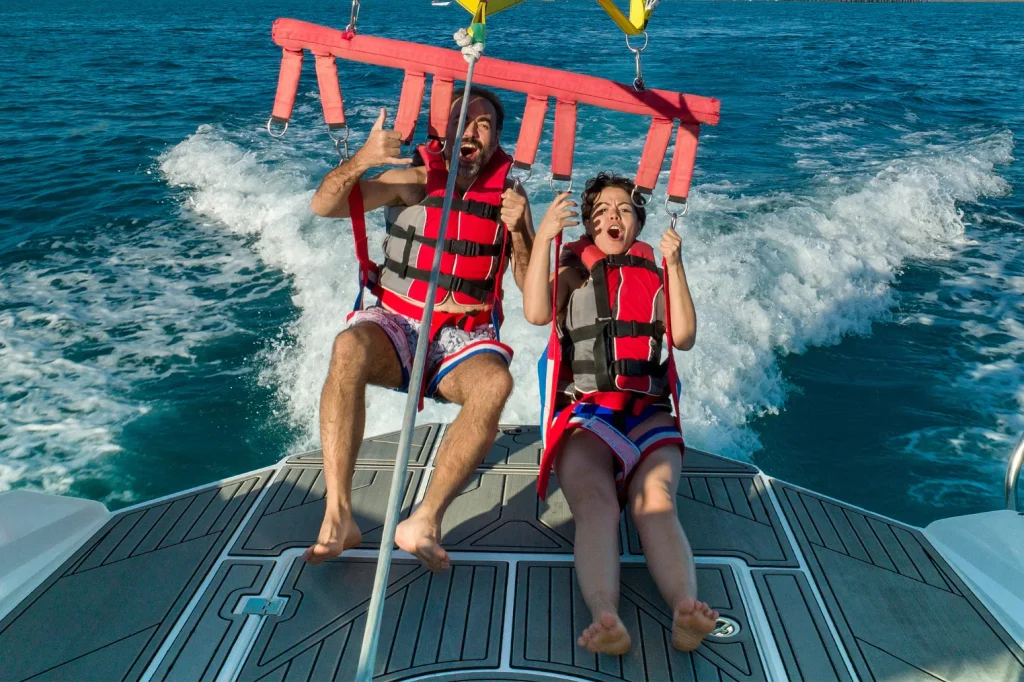
Solo Parasailing Photo Poses (Easy, Natural)
Once you’re clipped in and the boat’s pulling steady, lift one hand for a simple wave, it reads friendly and confident in the operator’s quick shots.
Keep your legs relaxed, toes slightly down, and hold an easy smile like you’re catching warm salt air, not posing for a school photo.
Skip fiddly hats and loose sunglasses, stash your phone, and bring a secure strap and a light layer, and if you want the timing locked in, a Viator parasailing tour with verified reviews, hotel pickup, free cancellation, and reserve now pay later can smooth the schedule.
For truly memorable shots, let the crew know you want to capture epic Waikiki parasailing moments so they can frame the shoreline and Diamond Head in the background.
One-Hand Wave Shots
Lean into the breeze and lift one hand for a clean wave shot that looks effortless but reads clearly from the boat. Angle your palm slightly forward, fingers loose, so your hand skyline pops against blue water or clouds. Hold the line with your other hand and keep your elbow soft, it steadies you in playful wind. For especially dramatic backgrounds, plan your ride around the Waikiki parasailing and Diamond Head ideal moments for clear views and vibrant color. Ask the crew for a 3, 2, 1 cue as the towline tightens, that’s when the camera fires. Midmorning light works best and the dock crowds thin after lunch. Bring polarized sunglasses and a wrist strap for your phone, skip bulky hats. Most rides run $75 to $120, photos cost extra. If timing’s tight, a Viator tour can bundle pickup, reviews, free cancellation, and reserve pay later.
Relaxed Legs And Smile
Usually the most flattering solo shot happens when you stop performing and let your legs hang loose, toes slightly pointed, then flash a simple smile as you look just past the camera.
Keep your hips square in the harness and aim for relaxed leg angles, one knee a touch bent, so you look weightless not stiff.
Take the photo right after the boat levels out, when the line steadies and the wind feels smooth. Tell the crew you want two quick bursts, it usually costs nothing extra.
Morning flights bring softer light and fewer boats crowding the frame.
Wear sunglasses only if glare is brutal; otherwise skip them for genuine smiles.
Bring a hair tie, lip balm, and a dry pouch for your phone.
If you’re using a GoPro, choose safe mount angles that keep the camera secure and slightly above eye level so your relaxed pose, horizon, and harness all stay in frame.
Tandem Parasailing Photo Poses That Match
Sometimes the best tandem parasailing shots happen when you plan to match before you even clip in. Go for simple matching outfits in solid colors that pop against water, white, coral, or lime, and skip busy logos. Pack a light windbreaker and polarized sunnies, but leave floppy hats behind, they fly. Once you’re up, cue each other for mirrored poses. Try both legs bent, then both legs straight, or tilt your heads toward the horizon at the same time. Time it for golden hour, or book the first slot to dodge midday glare and crowds. Most rides run $70–$150 per person. You can even turn your matching poses into short parasailing video ideas by filming each move as a quick clip for Reels or TikTok. If you want logistics, a Viator tour with reviews, hotel pickup, free cancellation, and reserve now pay later can keep you on schedule.
Natural Hand Placement for Parasailing Photos
Once you’re clipped in and the boat’s pulling away, keep a relaxed harness hold so your hands look calm, not clawed, and stash your phone unless it’s on a wrist strap. When the line steadies and the guide gives the nod, switch to a one hand wave for a breezy shot, then slide both hands onto the straps if the wind kicks up or there’s a bumpy stretch. Knowing how your harness connects to the towline and winch can also help you feel more secure and relaxed, which naturally softens your arm and hand positions in photos.
If your session’s on a tight schedule and the dock is crowded, a Viator tour with verified reviews, hotel pickup, free cancellation, and reserve now pay later can help you lock in a smoother time slot so you’re not rushing your pose.
Relaxed Harness Hold
On most flights, the cleanest parasailing photos happen when you keep your hands light on the harness straps instead of gripping like you’re on a roller coaster. Rest your fingers on the webbing, thumbs loose, elbows soft, and let the lines sit straight for harness aesthetics. Before takeoff, do a quick grip training check: breathe in, loosen, then hold at 30 percent effort. Stay alert for radio cues without clenching. Hit this pose right after launch, when the wake looks crisp and beach crowds are smaller, usually in the first two minutes. Bring polarized sunglasses and a hat with a chin strap. Skip scarves and big phone lanyards that flap into frame. Most rides run $60 to $120. Morning light flatters skin and sea. For beginners, especially those parasailing in Waikiki for the first time, this relaxed harness hold helps keep your flight and photos easy, calm, and fun.
One Hand Wave
Often, the most flattering parasailing shot comes when you lift one hand into a small, easy wave and let the other rest lightly on the harness strap.
Keep your elbow loose, palm turned to the camera.
Let the beach breeze part your fingers.
Flash a thumb up for one beat, then wave.
Do it in the first 30 seconds after takeoff, when the tow feels steady and the wake looks crisp.
Wear sunglasses on a strap, skip floppy hats.
A phone pouch helps but crew photos run $25 to $40.
Beat crowds with an early slot.
Bring reef-safe sunscreen and a light layer, it’s cooler up high often.
Viator tours with verified reviews, hotel pickup, free cancellation, and reserve now pay later simplify timing.
Later, you can use smooth parasailing edits on your iPhone to cut together the best waves and smiles into one clean highlight clip.
Hands On Straps
Skip the wave for a minute and go for the clean, confident look: both hands resting on the harness straps. Slide your fingers just under the webbing, not clenched, so the photo shows ease and grip ergonomics. Keep elbows soft, shoulders down, and turn your chin toward the horizon for that postcard-blue backdrop.
Ask the crew for a five-second pause after takeoff, when the line steadies and the wake looks tidy. Leave dangling hats behind, but bring polarized sunglasses and a waterproof phone lanyard. For clearer shots and protection overhead, consider waterproof phone cases specifically designed for parasailing in Waikiki.
If you paid $60 to $120, you’ll want shots, not hand flails. Check strap durability before you launch; fraying ruins comfort and confidence. Booking via Viator can streamline your timing, with reviews, hotel pickup, free cancellation, and reserve pay later.
Face and Chin Tips for Parasailing Photos
While you’re floating 300 feet up and the wind’s doing its best to rearrange your hair, your face and chin can make or break the shot. Start with a small chin tuck, then lift your eyes to the horizon so you don’t look stiff. Keep a relaxed jaw and let your lips part, it reads calmer than a clenched grin. Turn your nose slightly toward the camera to sharpen your cheekbones. If you’re not confident in capturing yourself mid-air, consider the boat’s parasailing photo package, which can be easier and more reliable than trying DIY shots while you’re focused on posing.
Before launch, sip water and skip sticky gloss, it catches salt spray. A microfiber cloth beats tissues. Aim for early morning when lines are shorter and light is softer. Expect $70 to $150. If timing’s tight, a Viator tour with reviews, hotel pickup, and free cancellation, reserve now pay later, can streamline it.
Action Parasailing Poses Mid-Flight
Lean into the swing and you’ll get those mid-flight shots that feel like you’re actually flying, not just dangling.
As the boat accelerates, ask your captain to give you a side-to-side arc, then shoot in burst mode on the count of three. Let wind swept hair do its thing and toss in dynamic leg kicks for energy.
For mid flight laughter, look at your partner, not the camera, and react to the wake below. Keep one hand on the harness and stretch the other out to frame parachute symmetry above you.
If you’ve never done it before, remember that parasailing feels more like a calm, floating glide than a roller coaster, so you can focus on capturing an honest parasailing play-by-play in your expressions instead of bracing for fear.
Morning flights run calmer and less crowded, $70 to $120. Bring a phone float or lanyard, skip loose hats. Viator tours help with hotel pickup, verified reviews, free cancellation, reserve now pay later.
Sunset Silhouette Parasailing Photo Poses
After you’ve nailed those energetic mid-air swings, time your next flight for golden hour and let the sun do the styling. Mornings often bring calmer tradewinds and smoother water, but sunset flights over Waikiki’s beaches are especially dramatic for silhouettes. Book the last slot, usually 30 to 45 minutes before sunset, when boats thin out and the water turns glassy. Expect $70 to $120, a bit higher in peak season. Wear a solid dark top for a crisp silhouette, and stash sunglasses so your backlit profile reads clean.
Ask the crew to line you up with the horizon line, then bend one knee, point your toes, and lift your arms in a slow V. Let the warm tones wrap the chute, and turn your head toward the light. Bring a light layer, skip bulky bags. Viator tours help with timing, reviews, free cancellation.
Parasailing Photo Pose Mistakes to Avoid
Because the wind and the camera both move faster than you expect, the easiest way to ruin a parasailing shot is to overthink the pose and ignore the basics. Don’t crane your neck for the perfect grin, it creates awkward angles and a tense jaw. Keep your shoulders down, breathe, and let the harness sit naturally. Check your straps before launch so you don’t end up with bad backstays twisting your torso in every frame. Since you’ll be tempted to capture your own footage, remember that whether you can bring your phone parasailing depends on operator rules and how securely you can store it. Skip dangling phones on a wrist lanyard; one gust and it’s gone. Bring a waterproof pouch and polarized sunglasses. Midmorning flights often run $60 to $90, with cleaner light before beach crowds thicken. For easy pickup and flexible timing, book a Viator tour with verified reviews and free cancellation.
Frequently Asked Questions
Can I Bring My Phone or Camera While Parasailing for Photos?
Yes, you can bring your phone or camera, but you’ll need it securely tethered. Use waterproof cases for spray, skip loose gear, and ask crew rules. Avoid selfie sticks unless they allow them onboard first.
Do Operators Provide Photo Packages, and How Much Do They Usually Cost?
Like catching sunlight in a bottle, yes, most operators offer operator packages with photos or video. You’ll see pricing tiers around $25–$60 for digital shots, $60–$120 for combo prints, USB, or GoPro edits per person, typically.
What Should I Wear to Avoid Glare, Reflections, or Photo Distractions?
Wear matte fabrics in solid colors, skip sequins and big logos, and choose non-glossy swimwear. Add polarized sunglasses to cut water glare, secure hair back, and avoid shiny jewelry that catches reflections in your photos.
How Do Wind and Weather Affect Whether Photos Can Be Taken?
Like a kite tugging your heart, wind and weather decide if you’ll shoot: high wind speed shakes you and blurs frames, while low wind steadies you. Heavy cloud cover dims light; clear skies sharpen colors.
Who Owns the Parasailing Photos, and Can I Use Them Commercially?
Usually, the photographer or company keeps copyright ownership, and you only get personal-use rights. If you want commercial use, you’ll need a written release or contract; ask about licensing options and fees upfront before booking.
Conclusion
Up there, you don’t need a runway, you need rhythm. Relax shoulders, let the harness hold you, then turn, wave, and bend one knee as the boat swings you into light. Shoot midmorning or golden hour, and ask the crew where they’ll film. Expect $60 to $150, and crowds dip on weekdays. Bring a sunglasses strap and dry bag, skip hats. Tight schedule? Book Viator: verified reviews, hotel pickup, free cancellation, reserve now pay later.