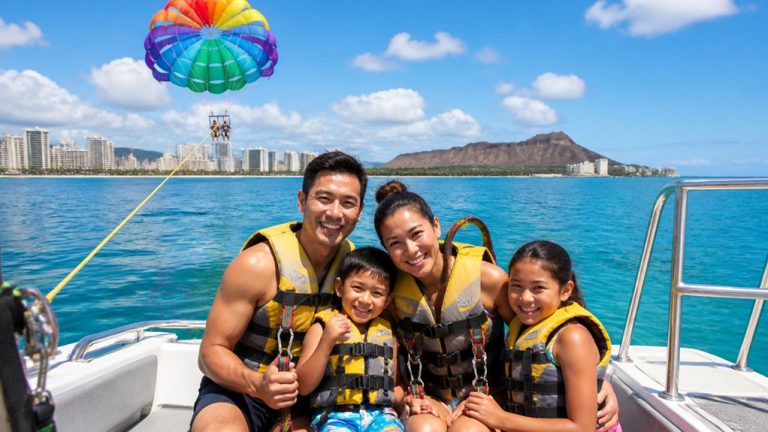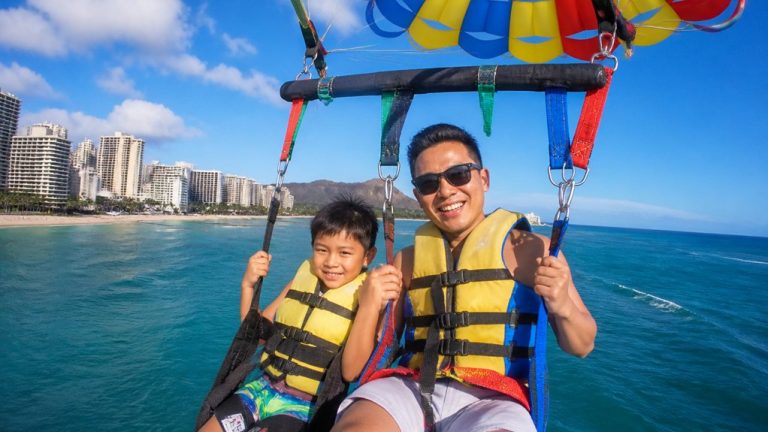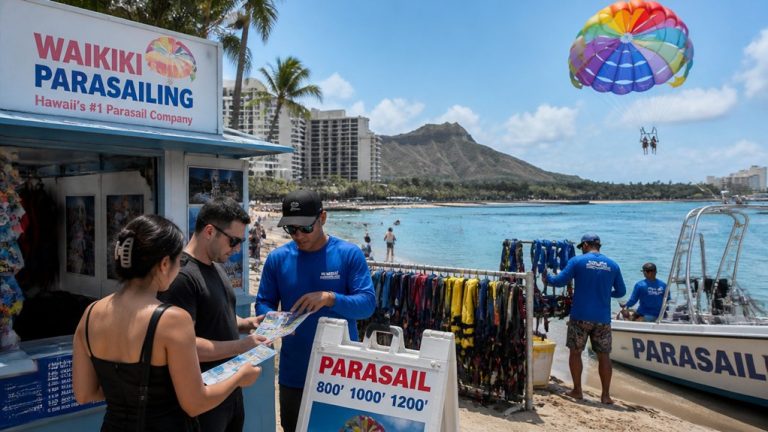
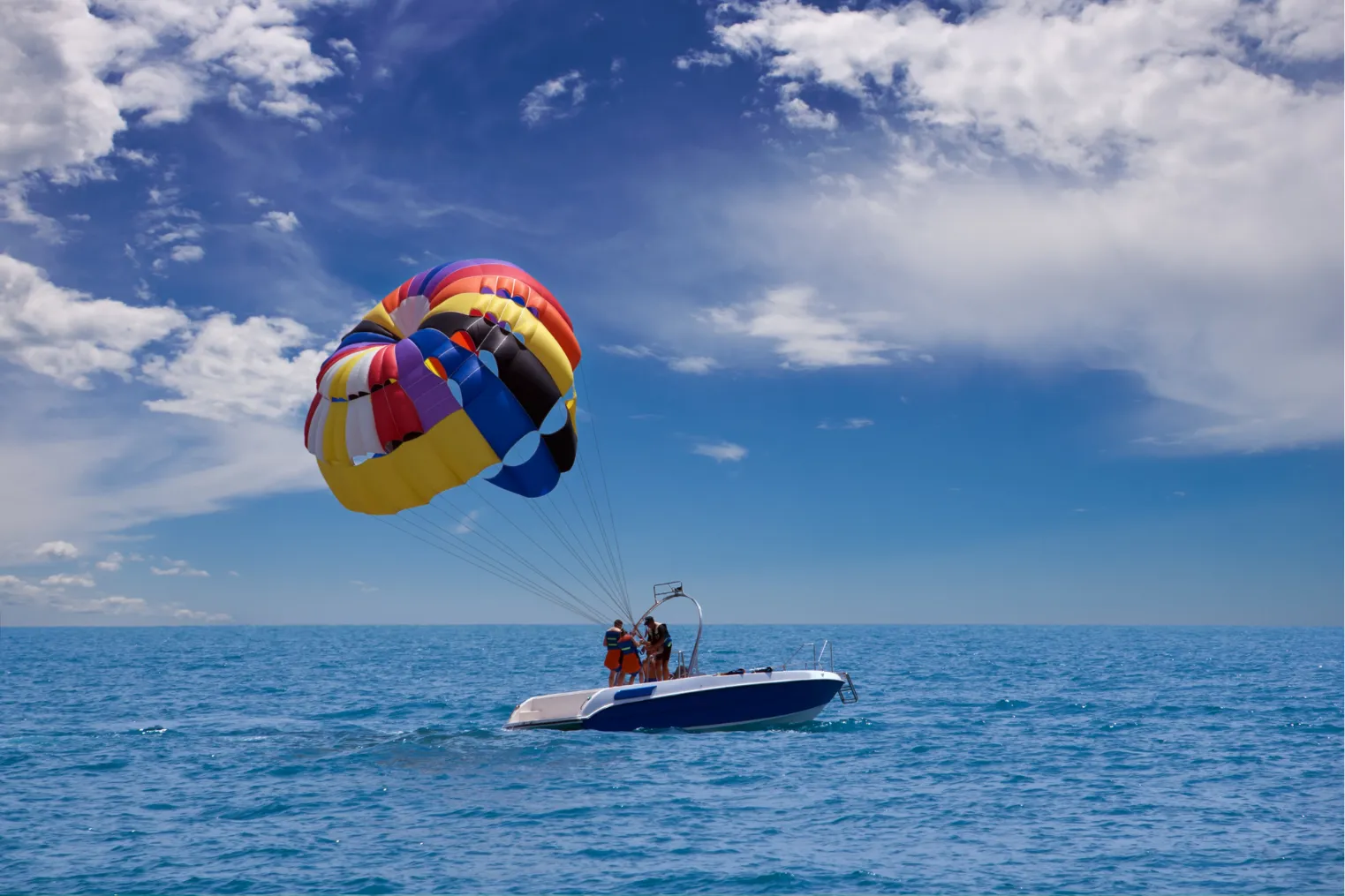
Parasailing isn’t always a smooth sail, so you’ll want to ask a few calm, pointed questions before you clip in. On the dock in Waikiki, you can request the captain’s Coast Guard credential and the company’s permits, then take a quick look at the harness, towline, and winch for frayed fibers or tired stitching. Ask who calls it off for wind, swell, or low visibility, and what the crew does in an emergency. The answers tell you everything…
Key Takeaways
- Ask to see the captain’s USCG Merchant Mariner Credential and confirm the helm operator’s name and license expiration match.
- Request current Waikiki-area operating permits (harbor/ocean-use, business, land-use if beach launch) and note permit numbers and legal operator name.
- Verify pre-flight gear inspections: harness stitching/buckles, towline fray/kinks, canopy seams, and ask for the last logged inspection date and inspector.
- Confirm dockside communication and emergency procedures: “stop winch” signal, “I’m okay/lower me” gestures, VHF test plan, and cutaway steps.
- Ensure weight limits are enforced with a scale, and ask how wind and sea state change max tandem/triple loads and cancellation decisions.
Waikiki Parasailing Safety Checklist (Fast Read)
Think of this as your pre-flight walkaround, only with salt spray in the air and Diamond Head on the horizon.
Before you board, run this Waikiki checklist: confirm the captain gives a clear briefing and you can repeat the hand signals.
Check the harness for frayed webbing and snug leg straps; it should feel firm, not crushing.
Ask what wind limit they use and whether they’ll cancel when gusts pick up.
Look for a spare life jacket in your size and wear it, even if you’re a strong swimmer.
Scan the towline and winch area for tangles.
No loose hats. No dangling straps. These are Safety essentials for a calm launch.
Finally, trust your gut. If the boat feels rushed or sloppy, walk away.
Always verify that the operator follows a parasailing safety checklist specific to Waikiki conditions, including equipment inspections and weather reviews before every trip.
Which Permits Should a Waikiki Operator Have?
You’ve checked the harness, watched the towline, and listened for a calm, clear briefing, now make sure the operator’s paperwork matches the polished pitch. Ask which commercial permits they hold for running trips off Waikiki: a state harbor or ocean-use permit, plus a city business license for the storefront or kiosk. If they launch from a beach park, request the land-use authorization that allows tour activity there. This is permit verification, and it should feel routine, not awkward. For state harbor permissions, operators should be able to show that they comply with Division of Boating and Ocean Recreation requirements for commercial use of state boating facilities.
Next, confirm zoning compliance, meaning the company is approved to operate in that exact location, not just “somewhere on Oahu.” Look for current dates and the operator’s legal name. No documents, no ride. Simple.
Snap a photo, and note the permit number before you step aboard.
How to Verify a Waikiki Parasail Captain’s License
Start with the person at the helm. Before you clip in, ask to see the captain’s U.S. Coast Guard credential, sometimes called a Merchant Mariner Credential, the wallet card that proves they can run this boat. Don’t accept a blurry phone photo. Sun glare can hide tiny numbers. Check the name matches the person steering, then note the license type and expiration date. A properly licensed captain is usually a sign you’ve chosen a company that takes safe parasailing operations and inspections seriously from the top down.
Next, do quick license verification. Ask where you can look it up online, or have the crew show the Coast Guard database page. While you’re at it, ask about captain background: years in Waikiki waters, recent safety training, and how many parasail launches they’ve done this season. Listen for calm, specific answers. Trust your gut. Walk away if it feels slippery.
What Insurance Should the Crew Carry?
Ask to see proof of insurance before you step onto the boat, because a calm morning can still turn choppy fast. Don’t accept “we’re covered” as an answer; ask what’s covered and by whom. You want liability coverage (pays others if the operator causes harm) and clear passenger protection for medical bills. Also look for hull insurance to repair the boat if it’s hit or swamped, and crew indemnity to cover the staff if they’re injured while working. In Hawaii, parasailing operators typically rely on specialized marine liability policies that spell out exactly what’s covered if something goes wrong on the water.
| Ask for | Why it matters |
|---|---|
| Liability coverage | You’re not stuck with costs |
| Passenger protection | Medical care gets handled |
| Hull insurance | Safe gear stays maintained |
| Crew indemnity | Crew isn’t pressured to hide injuries |
If they won’t show a current certificate with dates and limits, quietly walk away.
Still comparing Waikiki Parasailing?
Ask for tour ideas, hotel suggestions, or a simple trip plan that combines both.
Trip Helper
Weight Limits in Waikiki: Minimums and Maximums
Before you clip in, check the minimum rider weight, it’s there so the chute stays stable in the trade winds and you don’t get dragged on takeoff. Just as important, ask about the maximum combined weight limit for tandem or triple flights, meaning your total weight with your partner and any gear must stay under the operator’s cap. If the numbers feel fuzzy or they won’t say them out loud, treat that as a red flag and pick another boat. For your own safety, make sure the crew can clearly explain their Waikiki parasailing weight limits and how they enforce them during every flight.
Minimum Rider Weight Requirements
Even if the ocean looks like glass and the boat crew feels laid-back, Waikiki parasailing still runs on strict weight rules because the wind doesn’t care about your vacation plans. Ask for the minimum rider weight before you pay, and ask how they confirm it on the dock. An operator uses a scale, not a guess, and they’ll explain why: too-light riders can’t keep the canopy stable and may swing on takeoff. In Waikiki, operators set clear minimum and maximum parasailing weight limits to balance lift, stability, and safety for every flight. If you’re traveling with kids, don’t assume height equals readiness. Check whether child harnesses fit snugly, with straps that sit flat and don’t ride up. You may hear about tandem weightchecks, meaning they weigh each rider to make sure you meet the minimum. Walk away if they won’t show you the numbers.
Maximum Combined Weight Limits
Most Waikiki parasailing mishaps start with one simple number: too much weight on the line. Before you clip in, ask the crew for today’s maximum combined weight, not the brochure average. Wind, chop, and fuel load change what the boat can safely tow. If you’re flying with a partner, confirm the allowed tandem weight and whether it’s per pair or per flight.
Next, ask how they manage load distribution, meaning how they balance weight between harnesses and the towline so one rider doesn’t get yanked sideways. Step on their scale yourself. No guessing. If you’re close to the limit, request a solo flight or wait for calmer conditions. That sunset glow isn’t worth a hard landing. Bring a light bag, empty your pockets too. If you’re a plus-size traveler, look for operators who clearly explain their parasailing Waikiki weight policies and are used to discussing limits openly and respectfully.
What Gear Gets Inspected (Chute, Lines, Harness)?
Step up to the dock and you’ll see the crew go over the key gear that keeps a Waikiki parasail flight smooth and controlled. Ask what they check on the chute itself: the canopy fabric for sun fading or tiny tears, plus the seams that take the load. Next, look at the lines that spread your weight; they should be untwisted and evenly matched. You’ll also hear about connector hardware (metal links and swivels) and whether it’s rated for the pull. Ask about inspection intervals and logs, not just a quick glance. Essential parasailing gear like the harness, towline, and winch should also be inspected routinely to ensure every part of the system works together safely. Finally, request proof of periodic stress testing on the canopy and line sets, meaning they load it beyond normal force to confirm strength. If answers feel vague, pick another boat and keep your cash.
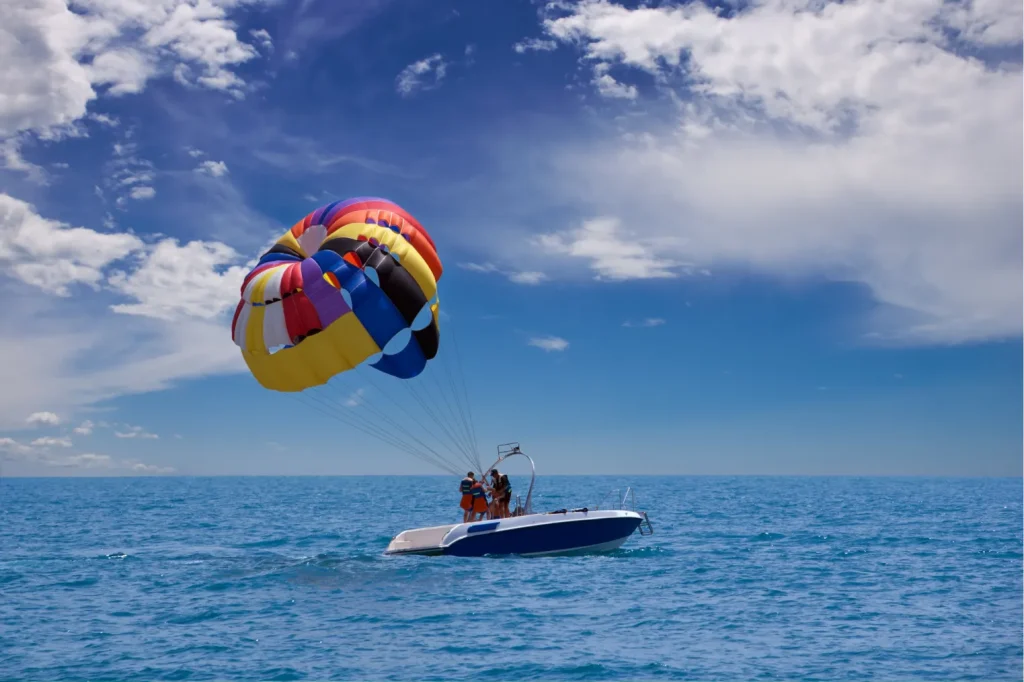
Harness, Towline, Winch: Quick Wear-and-Tear Checks
Before you clip in, give the harness, towline, and winch a fast once-over like you’re checking a rental car for scratches. Tug the straps and test the harness adjustment so it sits snug on your hips, not your ribs. Look for torn stitching, cracked buckles, and flattened harness padding that feels like a dead foam flip-flop. Next, scan the towline from your hands to the drum. Ask what towline material they use and whether it’s rated for saltwater. Frayed fuzz, hard kinks, or sun-bleached spots mean trouble. Confirm the towline length matches today’s wind and rider weight. Finally, peek at the winch. You want steady pulls, clean guides, and a log of winch maintenance. A light sheen of winch lubrication beats a dry squeal. For extra peace of mind, ask the crew how often they perform parasailing equipment inspections and what they look for during their daily safety checks.
Pre-Departure Boat Safety Checks to Expect
Before you leave the dock, you’ll get a crew safety briefing, a quick talk-through of hand signals, where to sit, and what to do if you feel uneasy. As part of this, the crew will confirm your name and reservation at the Waikiki parasailing dock check-in area before moving you toward the boat.
Watch them check the gear and towline, the thick rope that connects your harness to the boat, for frays, knots, and smooth winch pull.
If they rush it or skip steps, you can ask for a repeat or choose to sit this ride out.
Crew Safety Briefing
Usually, the crew won’t untie the lines until you’ve heard a quick, no-nonsense safety briefing and watched them do a few pre-departure checks on the boat. You’re listening for crew protocol, clear briefing timing, and who does what if something goes sideways. 1. Ask who’s captain and who spots riders; those are your emergency roles. 2. Watch them check radios, fuel, and the first-aid kit. Simple, but telling. 3. Confirm where life jackets sit and how to move on deck when the boat rocks. 4. Give verbal confirmation that you understand hand signals, stop commands, and where to sit. This is also a good time to ask how their safety checks help keep parasailing in Waikiki from feeling scary, so you can focus more on the views than on your nerves. If anything feels rushed, speak up.
A calm crew explains twice, without attitude, and keeps the vibe professional, even in Waikiki sunshine.
You should feel seen, heard, in control.
Equipment And Towline Inspection
Scan the gear like you’re checking a rental car for scratches, because your ride depends on a few key pieces working perfectly together. Before you clip in, watch the crew run their hands down the towline and call out line integrity. You want to see a clean, even braid with no fuzzy spots, flat sections, or knots. Ask to see the bridle attachment, the metal-and-rope link between harness and line, and make sure the pin locks and the shackle’s threads look sharp. Quick corrosion checks matter in salty Waikiki air; green stains or pitted metal mean trouble. For phones, cameras, or action cams, confirm that the crew provides or recommends secure tethers so your photo gear doesn’t become a hazard if it slips free. Finally, request splice testing, a tug-and-visual check of the rope joins. If they shrug, you should, too. Your calm questions set the tone before the boat moves.
Weather Call-Offs: Wind, Swell, and Visibility Rules
Even if the sky over Waikiki looks postcard-blue, your parasail crew might still call it off because the real deal-breakers happen out on the water.
You’ll feel it first as slap-chop gusts and a messy, rolling swell. Ask how they decide, and listen for simple rules, not vibes:
- Wind thresholds: the max steady wind and gust limit they won’t exceed.
- Swell height and period: bigger, longer waves can make takeoff and pickup rough.
- Visibility minima: the least distance they need to spot boats, lines, and squalls.
- Radar and forecast checks: when cells build fast, they cancel early.
Local crews regularly postpone flights due to parasailing weather cancellations in Waikiki when wind, rain, or sudden squalls push conditions beyond these limits.
You can always walk the beach instead, watching whitecaps march past Diamond Head.
If the answers sound fuzzy, reschedule. The ocean won’t negotiate.
What Your Safety Briefing Must Cover Dockside
Before you even step onto the boat, you’ll get a quick pre-flight gear rundown so you know what the harness straps do and where the clips lock in. In Hawaii, your captain should also confirm that the vessel, towline, and parachute setup meet current US Coast Guard parasailing safety requirements for the day’s conditions.
Next comes the play-by-play for launch and landing, including where to sit, when to lean back, and what “hands clear” means so you don’t pinch a finger on deck hardware.
Finally, you’ll learn the communication and emergency signals, simple hand signs and shouted cues you can use if the wind kicks up or you feel off.
Pre-Flight Equipment Overview
Step onto the dock and treat the safety briefing like your gear check, not background noise. You’re about to clip into a moving system, so ask for an equipment layout: where the harnesses, towline, and canopy (the parachute) live, and what’s been swapped out today. Watch the crew’s inspection sequence and mirror it with your eyes. Then confirm your own comfort and fit. Before you sign any parasailing waiver, make sure the briefing clearly explains how the operator’s safety practices and equipment checks are meant to reduce the specific risks being disclosed.
Use this quick safety checklist before you ever leave the pier:
- Harness webbing: no frays, buckles click shut.
- Carabiner: gate springs closed, lock turns smoothly.
- Towline and swivel: no knots, spins freely.
- Flight controls: who holds the winch controls, and what hand signals mean “stop.”
If anything feels rushed, say so. A good operator will slow down.
Launch And Landing Procedures
Once you’re clipped in and the boat noses into the wind, launch and landing stop being abstract “procedures” and start feeling very real, fast. Dockside, you’ll want a walk-through of the boat choreography: where you sit, where the crew stands, and how lines stay tidy so nothing snags. Ask who checks runway clearance, meaning the open space behind the boat, before you rise. In Waikiki, that briefing should also mention the specific parasailing launch points used, so you understand exactly where and how you’ll depart.
For launch, you should keep your hands on the harness straps, feet together, and let the towline pull you up. No jumping. On landing, you’ll come in low, then touch down on the deck in a seated position. Stay still until the crew unclips you. Wind shifts happen in Waikiki, so confirm they’ll abort a landing if the deck’s not open.
Communication And Emergency Signals
Although the ride looks serene from the sand, parasailing gets loud and fast the moment the boat throttles up, so you need clear communication and emergency signals nailed down dockside. Before you clip in, ask who you’ll talk to once you’re airborne and how they’ll hear you over wind and engine. Confirm the hand signal protocol and practice it while you can still see the crew’s eyes. Then check these essentials: 1) Primary command signal for “stop winch” (the reel). 2) “I’m okay” and “lower me” gestures. 3) What happens if you drop your life vest whistle. 4) Their distress systems testing plan, including radio (VHF, a marine walkie-talkie) and emergency cutaway steps. Finally, ask where the first-aid kit sits and who calls 911 or Coast Guard. For example, at Kewalo Basin most reputable operators will walk you through boat communication basics and confirm you understand their specific emergency signals before you ever leave the dock.
Red Flags When Booking or at the Marina
If you want your Waikiki parasailing day to feel like a clean, salty breeze instead of a scramble, pay close attention to the little warning signs before you hand over your card or step onto the dock. Online, watch for copied reviews, no boat photos, and deals that look too good. Smart booking tips from Waikiki regulars include checking whether operators explain their safety protocols clearly instead of just advertising discounts. At check-in, scan the fine print for Hidden costs like surcharges, photo bundles, or mandatory “crew tips.”
On the dock, trust your nose and eyes: bilge smell, frayed lines, rusty clips, or a crew that rushes you aboard. A sloppy safety board or missing life jackets isn’t “island casual.” If the operator seems annoyed by safety talk, walk. Waikiki has Nearby alternatives, and your time on the water should feel calm, not chaotic.
Questions to Ask Before You Pay (and Before You Fly)
Spotting red flags gets you off the dock before trouble starts, but smart questions keep you from booking trouble in the first place. Before you hand over a card, ask and listen for crisp answers, not vague smiles.
Ask smart questions before you pay, listen for crisp answers, not vague smiles, and skip trouble before it starts.
- What’s your last gear inspection date, and who did it? “Inspection” means a documented check of towline, harness, winch, and canopy.
- Which local regulations do you follow, and can I see your permits?
- What wind limit cancels flights, and who makes the call on the water?
- What’s your rider etiquette briefing, and how do you handle nervous flyers?
In Waikiki, that includes asking how they decide on weather cancellations in gusty conditions and what happens if parasailing tours cancel for wind.
You should hear clear rules, real numbers, and a calm plan for refunds or reschedules. If they dodge, walk. Trips should feel breezy, not like a gamble.
Frequently Asked Questions
Can I Bring a Phone or Gopro, and How Is It Secured?
You can bring a phone or GoPro, but you’ll secure it with approved phone mounts or waterproof cases. You’ll clip it to your harness using camera lanyards, and staff’ll double-check attachments before launch every time.
Are Motion-Sickness Remedies Allowed, and When Should I Take Them?
Yes, you can use motion-sickness remedies for motion sickness prevention; tell the crew what you’ve taken. Follow timing guidelines: take non-drowsy meds 30–60 minutes before boarding, or use patches several hours earlier, per your doctor.
What Happens if My Glasses, Hat, or Jewelry Falls During the Flight?
If your glasses, hat, or jewelry drops, it’s usually gone, operators retrieve fewer than 5% of lost items. You’ll likely sign waivers, so you cover replacements; ask about securing gear and any liability concerns before takeoff.
Is Parasailing Safe for Pregnant Guests or People With Recent Surgeries?
No, don’t parasail if you’re pregnant or recovering from recent surgery unless your doctor clears you. You’ll need strict pregnancy precautions and clear recovery timelines, because takeoff, landing, and harness pressure can stress you too much.
Can We Request a Private Flight Time or Avoid Flying With Strangers?
You can request a private flight time by choosing a private booking and confirming availability early. Ask the operator about group exclusion, extra fees, and minimum riders, so you won’t be paired with strangers today.
Conclusion
Nothing says “vacation” like asking to see a Coast Guard credential before you strap into a harness. Yet that tiny awkward moment can save your whole trip. Check permits, look for frayed towlines, and ask when the winch was last inspected. Get the wind and swell cutoffs in plain numbers, and learn who cancels the flight. If they dodge, you don’t fly. Easy. Then you can relax and enjoy the salt air up there, calmly.