You’ll feel the difference the moment the boat clears the dock: pick a mid-boat seat on the upwind side near the captain and you get a steadier horizon for photos and less salt spray on your lens. Bow seats bring more bounce and wind-in-your-face drama. Stern seats feel calmer and frame the towline and foamy wake. Want the driest spot and the cleanest light? It depends on one quick question you should ask the crew first…
Key Takeaways
- Sit mid-boat near the captain/console for the steadiest ride, clearer instructions, and typically the driest seat.
- Choose stern seats for comfort and launch photos, with a clear view of the towline, flyer, and wake.
- Pick bow seats only if you want action shots; expect more spray, sharper bounce, and higher risk of camera splashes.
- Sit on the windward side and opposite the sun to reduce glare, keep lenses drier, and prevent the canopy from blocking skyline views.
- Claim an aisle or corner early to pivot for takeoff/landing shots, and keep bags zipped and straps tidy to avoid blocking gear.
Best Parasailing Boat Seats (Quick Picks)
Let’s cut to the chase: the best seat on a parasailing boat depends on whether you want the clearest view, the calmest ride, or the quickest launch. For photos, grab an outside bench where you can pivot your shoulders and keep your phone over the rail. Nail camera positioning by bracing your elbows and shooting low, so the canopy fills the sky without chopping heads. For comfort, sit close to the captain and crew area; you’ll feel more stable, and you can hear instructions over the engine hum. If you’re first up, sit where the harness and towline are staged, but stay tidy. To really capture Epic Waikiki parasailing moments, choose a seat on the ocean-facing side so you can frame both the parachute and the Waikiki skyline in the same shot. Good passenger etiquette matters: keep bags zipped, don’t block gear, and ask before filming other riders. A little courtesy buys calm.
Bow vs Stern: Spray, Bounce, and Views
While the parasailing boat looks small from the dock, where you sit matters once it’s moving. Up front, you’ll feel every ripple: more bow sway, more spray, and sharper bounce when the captain turns. It’s thrilling, but your camera and stomach may disagree. On many Waikiki trips, the front seats also catch more mist when the boat pivots into the wind or chop.
In the back, the ride calms down and you get a steady stern view of the rope, the flyer, and the wake’s white zip. If you’re prone to seasickness, start aft and reassess later.
- Choose the bow if you want wind-in-your-face action photos.
- Pick the stern for steadier hands and less saltwater on your lens.
- Expect louder engine noise near the back, so talk close.
- Bring a dry bag either way, and keep feet braced on bumps.
Port vs Starboard: Which Side to Choose
Choosing port (left side facing the bow, or front) versus starboard (right) can change your whole ride, mostly because of sun angle and glare off the water.
Pick the side that keeps the sun out of your eyes so you’re not squinting through photos and missing the coastline.
Then think about wind spray and the boat’s wake, because one side often catches more mist and chop, and you’ll feel it in your hair and on your lens.
For the most stunning parasailing photos, pay attention to how the boat turns so you’re seated on the side that faces the action instead of the empty horizon.
Sun Angle And Glare
If you’ve ever tried to take a photo over open water with the sun in your eyes, you already know how fast glare can ruin the moment. On a parasailing boat, pick your side based on where the sun sits, not where your friends sit. Port is the left side facing forward, starboard is the right. In Waikiki, golden hour parasailing usually lines up with the sun dropping behind the city and Oʻahu’s mountains, giving you warm light on your face instead of harsh glare off the water.
Ask the captain which way you’ll run, then choose the side that keeps the sun behind you for color.
- Aim for golden hour rides when light turns warm and shadows soften.
- Sit opposite the sun to avoid squinting and blown-out skies.
- Wear polarized lenses to cut surface shine so you can see detail.
- Shade your phone with your hand, tap to focus, lock exposure.
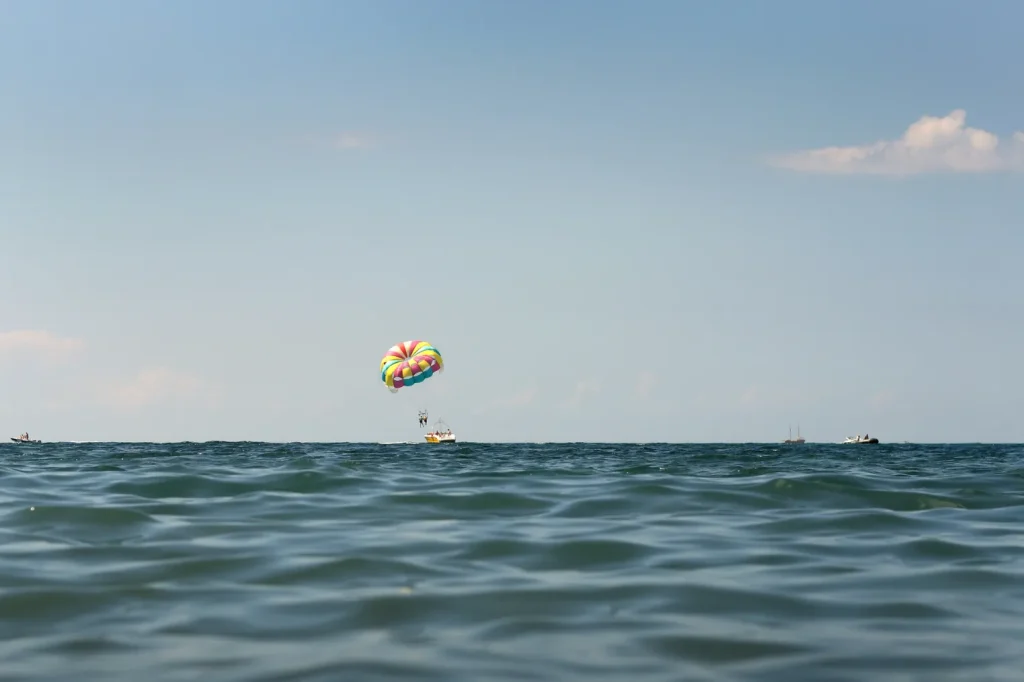
Wind Spray And Wake
Because the boat’s speed and the wind team up fast, the “best” seat often comes down to which side stays drier and steadier as you run. Watch the flags, hair, or loose towels to read the wind direction. If wind hits your port side, choose starboard for a cleaner spray trajectory, less salt on your lens, and fewer stinging droplets on your lips. If the wind flips, swap sides before you’re soaked. When you’re parasailing in Honolulu without a rental car, you can still reach most marinas easily using public transit options or short rideshares before you ever have to choose your seat on the boat. Now check the wake rhythm, the repeating rise and slap behind the hull. Sitting closer to the side that leans away from the wake feels smoother. On a right-hand turn, starboard usually rides higher while port takes more chop. Prefer comfort? Sit mid-boat, near the centerline, and brace your feet during turns.
Best Parasailing Boat Seats for Photos
Where should you sit if you want those clean, postcard-worthy parasailing shots without a lot of wasted frames? Aim for the upwind side near mid-boat, where spray stays low and the horizon looks steady. You’ll get fewer droplets on your lens and a cleaner view of the rider, rope, and sky. If you’re shooting with a GoPro, combine that seat choice with top GoPro settings for parasailing, like high frame rates and horizon leveling, to keep your footage smooth and sharp.
- Claim a seat with a clear rail gap; shoot through it, not over it.
- Keep your elbows braced on your knees for stability. Small trick, big difference.
- Set simple camera settings: fast shutter for action, auto ISO, burst mode.
- Follow a packing checklist: microfiber cloth, lens hood, dry pouch, spare battery.
Skip the stern when the wake froths. It’s drama, but it ruins sharpness and adds glare off foam.
Best Seats for Takeoff and Landing Photos
For launch shots, grab a stern seat at the back of the boat so you can frame the towline, the spray, and that first lift without heads blocking your view. When you’re coming back down, shift to the windward side, the side facing the wind, because the crew usually lines you up there, and the light often looks cleaner. Stay near an aisle so you can pivot fast for different angles, since takeoff and landing happen quick and you won’t get a second take. You’ll have the best chance to claim these seats if you pay attention during the brief dock check-in process, when the crew explains boarding order and where guests will be seated.
Stern Seats For Launch
While the parasail ride happens high above the water, the most electric moments are right at the stern, the back of the boat where the crew clips you in and sends you flying. Since most Waikiki tours depart from specific parasailing launch points, sitting near the stern also lets you capture the exact moment you clear the harbor and swing out over the open water.
If you want photos that feel like action scenes, grab a stern-side seat early and keep your camera ready, but secured with a wrist strap.
- Watch the crew check the towline and explain the hand signals. You’ll learn fast.
- Sit where you can see the safety harnesses go on, so you’re calm and not guessing.
- Angle your lens low for spray, boots, and the canopy filling the frame. Instant drama.
- Keep elbows tucked and gear minimal, since the deck gets busy during a stern launch every time.
Windward Side For Landing
As the captain lines up for the landing, you’ll get your best shots from the windward side, the side facing into the wind, because the canopy stays tight and predictable instead of drifting across the deck. Set yourself here before the crew calls windward boarding, so you’re not shuffling at the last second. From this angle you’ll see the tow line drop, the harness swing in, and the flyer’s feet skim the sea. At Kewalo Basin, this windward seating tip pairs perfectly with knowing where to go and what to expect so you’re ready with your camera before the boat even throttles up. Listen for the mate’s cues during the landing procedure: “hands down,” “knees up,” “stand.” You can shoot frames without the chute filling your view. It feels calmer. The wind presses spray away from you, and the rope tends to track in a line. Keep your phone strap on. Sudden gusts happen.
Aisle Access For Angles
- Stand for 10 seconds at launch, then sit. You’ll catch the lift.
- Shoot low, then high. Aisle angle access helps you change your horizon.
- Use burst mode for splashy landings and bouncing wake.
- Keep one hand on the rail. Boats jolt, cameras fly.
From your seat you can also capture the scale of the big boat parasailing setup, including the winch, chute, and the skyline of Waikiki in a single frame.
Ask the captain where the sun will sit, and avoid lens glare.
Driest Seats on a Parasailing Boat
Usually, the driest seat on a parasailing boat sits near the middle, low and tucked behind the console (that central steering station), where the hull cuts the chop and blocks most of the spray.
Usually, the driest seat is mid-boat, low and tucked behind the console, where the hull cuts chop and blocks spray.
From there, you’ll feel the boat’s motion without wearing it. Look for a bench with dry upholstery, not slick vinyl that holds puddles, and check that the deck underfoot has drainage grooves.
If your operator runs a larger rig with an enclosed cabin, grab the first inside seat aft of the doorway.
You’ll still hear the crew and watch the harness prep, but you won’t take every burst of salt. Skip the very bow and the stern corners; they catch the wake and fling mist up and over too easily. Before you even board, use the time during Kewalo Basin check-in to ask crew which spots stay driest on that specific boat, since layouts and spray patterns can vary.
Seat Tips for Sun, Wind, and Crowded Boats
If the sky looks like a perfect postcard, remember you’ll still feel the sun, wind, and elbow-to-elbow reality of a full boat. Pick a seat with a rail or console at your back, so you’ve got a brace when the captain throttles up. Shade is rare, so plan your own. For your phone, using one of the waterproof phone cases designed for parasailing in Waikiki lets you focus on your seat choice and shots instead of worrying about splashes.
- Sit aft (toward the back) when you want wind mitigation; the boat’s body breaks gusts, and you’ll squint less.
- Choose the outside edge for photos, but keep one knee tucked in so you don’t block the walkway.
- For sun protection, face away from glare and reapply sunscreen before you launch, not mid-bounce.
- On crowded trips, claim a corner, stash your bag under your legs, and keep straps tidy.
Small moves, big comfort, better shots.
Frequently Asked Questions
What Should I Bring on Board to Protect My Phone and Camera?
Bring a waterproof pouch for your phone and a float strap for your camera, and you’ll keep them safe if they splash or drop. Pack a microfiber cloth, zip bag, and lanyard, too, onboard today.
Are There Age, Weight, or Height Limits for Parasailing Passengers?
Yes, operators set age limits and weight restrictions for safety. You’ll usually need to fit a harness, meet minimum age (often 6–8), and stay within combined weight ranges. You should confirm exact rules locally before booking.
Can I Wear Sunglasses or a Hat Safely While Parasailing?
You can wear sunglasses and a hat, but secure them. Use sunglass retention straps and choose snug wraparound frames. Practice hat tethering with a chin strap, or skip loose caps if winds gust hard aloft.
How Early Should I Arrive Before Departure to Get My Preferred Seat?
Show up 30–45 minutes before departure; otherwise you’ll audition for the ‘last-seat’ tour. You’ll beat check-in lines with early arrival, and if they offer priority seating, you’ll snag it before the selfie squad does too.
Is Motion Sickness Common on Parasailing Boats, and How Can I Prevent It?
Motion sickness is common on parasailing boats; you can reduce it with preventive measures: take meds early, eat light, stare at the horizon, hydrate, guarantee vest fitting, and practice turbulence awareness by bracing during turns.
Conclusion
Pick your seat like you’re choosing a camera lens. It shapes the whole story. Slide mid-boat, upwind, near the captain for a steadier horizon, fewer salt hits, and an easy aisle exit. Want drama? The bow bites harder and sprays more. Prefer calm? The stern gives wake views and a softer ride. Strap your wrist, tuck your bag under your legs, and brace your elbows on your knees. Ask about the sun. Glare ruins shots.