You want the view, you want the thrill, and you want proof you were actually up there. You can usually parasail with a waterproof camera, but the real question is how you’ll secure it when the boat hums, the salt spray hits, and your hands would rather wave than grip a gadget. A good strap can save the shot and your camera, and a few small choices make a big difference once you’re airborne.
Key Takeaways
- Yes, most parasailing trips allow a small waterproof camera, especially if it is securely attached and easy to access near the harness.
- A waterproof action camera like a GoPro is the easiest choice because it handles salt spray and records steady video.
- Use a strap, chest mount, or harness mount instead of hand-holding to prevent drops during launch, flight, or landing.
- You will likely stay mostly dry while airborne, but salt spray and brief splash exposure can still reach your camera.
- Set your camera before takeoff, use wide-angle and fast shutter settings, and wipe the lens afterward to remove salt residue.
Can You Bring a Waterproof Camera Parasailing?
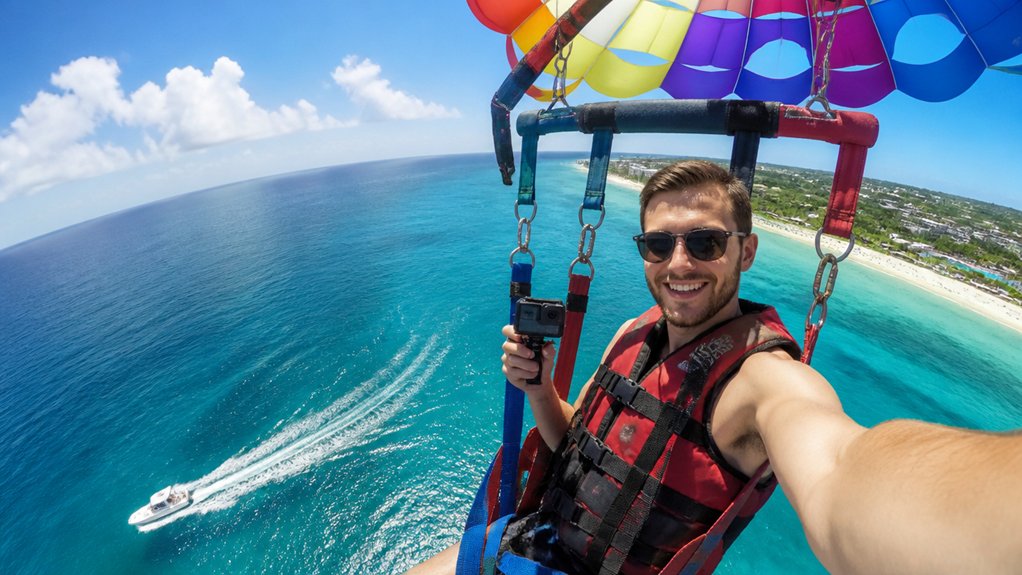
On most parasailing trips, yes, you can bring a waterproof camera. You can usually reach the harness area, so keeping a small camera close isn’t hard. A splash-ready model matters because salt spray can drift off the boat, especially near the bow. Many riders use a GoPro or waterproof disposable and secure it with a strap or chest mount, which is smarter than trusting your grip while you float and take pictures. Similar to bringing your phone parasailing, the biggest concern is keeping the device protected and securely attached. Fast shooting settings also help when the line hums and the boat pulls you toward those breathtaking views. If you’d rather skip handling gear, ask about the operator’s photo package. For about thirty dollars, some crews shoot dozens of images, so you can enjoy the ride and still bring home the sky too.
How Wet Will Your Parasailing Ride Get?
Your camera may be waterproof, but you probably won’t need it for a full soaking. Most rides leave you nearly totally dry while you float high above the Coast skyline. You’ll usually feel more breeze than spray, which helps you frame crisp shots during an unforgettable adventure.
- Expect little water while flying
- Watch for salt spray up front
- make sure goggles protect your eyes
- Plan for splashes at landing
- Keep gear secure and easy to wipe
You’re most likely to get wet when the crew lowers you slowly and your feet touch first. Front seats or forward harness positions can catch more mist, so placement matters. Even then, it’s usually a quick splash, not a dunking, and the boat ride dries you fast afterward. Afterward, wipe your phone or camera to remove saltwater residue that can linger on cases, screens, and buttons.
Can You Bring Your Phone Parasailing Too?
Because the ride often stays surprisingly dry, you can usually bring your phone parasailing if you secure it properly first. Salt spray can still reach you, especially near the boat’s front, so waterproof cases and lanyard straps matter. For Waikiki parasailing, choosing one of the best waterproof phone cases can help protect your device from ocean spray and accidental splashes. Keep your grip simple, and think about phone positioning before takeoff.
| Tip | Why it helps | What you do |
|---|---|---|
| Waterproof case | Blocks splashes | Seal it before boarding |
| Lanyard strap | Prevents drops | Wear it during launch |
If your operator limits hand-held devices, use the case on your neck instead. Try 0.5x and burst mode to capture the chute, coastline, and boat wake, even if your ride feels jumpy.
What’s the Best Waterproof Camera for Parasailing?
If you want the easiest parasailing camera, pick a waterproof action cam like a GoPro. You’ll get better video, quick shooting, and fewer worries when spray hits.
For parasailing, a waterproof action cam like a GoPro makes filming easy, sharp, and stress free.
- In any Action cam comparison, choose waterproof design first.
- Use a wide angle setting to fit water, coastline, and sky.
- Fast shutter speed cuts blur when the boat tugs.
- Saltwater protection matters near the launch and landing zone.
- Check Mounting durability for easy, hands free access.
For Waikiki rides, plan a few parasailing photos before takeoff so you’re ready to capture the coastline, ocean, and sky from above.
If you want simple snapshots, a waterproof disposable can still work for about ten shots. Still, action cams usually give you sharper footage and more flexibility while the wind hums and the ocean glows below. You can frame emerald water and a broad horizon in one sweep, which feels magical aloft.
Still comparing Oahu Parasailing?
Ask for tour ideas, hotel suggestions, or a simple trip plan that combines both.
Trip Helper
How Should You Secure a Camera for Parasailing?
A good waterproof camera only helps if it stays with you once the boat pulls tight and the wind starts singing past your ears. Start with a sealed camera or waterproof case, because salt spray can reach the front fast. For Wrist strap security, use an action cam with a snug lanyard that won’t slip or swing. Harness mounting also works well, since your parasailing seat already gives you a stable, easy to reach spot. Add a floating tether for extra insurance if the camera slips during launch, landing, or a splashdown. Check that every clip feels tight enough for one handed use. Think about lens positioning before takeoff. Aim the camera where you’ll face, but keep it tucked so the housing won’t bump your arm or harness hardware. If your setup survives a splash and bounce, you’re ready for liftoff.
How Do You Take Better Parasailing Photos?
How do you turn that windy ride into photos worth keeping? Use a securely mounted action camera or waterproof disposable, then lean on a few smart habits:
- Go wide. A wide angle catches emerald water and coastline together.
- Use composition tips and horizon control to keep tilted shots intentional.
- Watch lighting timing. Shoot during steadier moments when glare softens.
- Expect bounce. Use burst mode or faster film speed to beat blur.
- Guard against splash especially up front. Protect gear and wear goggles if needed.
For action cams, choose secure GoPro mounts designed for parasailing so your angle stays steady and your gear stays safer in the wind. From the harness aim slightly above your feet so the rope boat wake and sky add scale. You’ll still hear the engine and wind but your frame can feel calm when the ride settles briefly and the boat hums below.
When Is a Parasailing Photo Package Worth It?
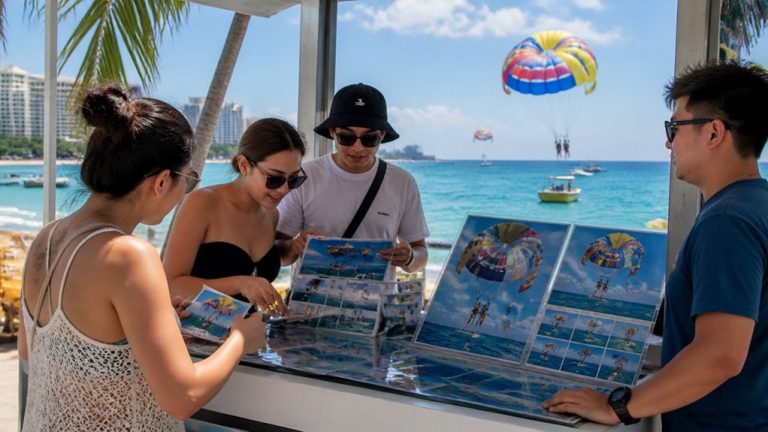
When does a parasailing photo package actually earn its keep? It makes the most sense when the crew asks you to leave your phone in the car and then shoots dozens of crisp images from better angles than you can manage while harnessed, bouncing, and getting splashed. That’s real Photo package value. Many operators also bundle photos and video with options like the dip, giving you a fuller record of the ride without handling your own camera. Reviewers often mention about $30 for lots of pictures, sometimes with a memory card and adapter, so after ride downloads feel easy and immediate. Even a $40 disk package can be worth it when you’d rather not gamble on wet gear or blurry shots. The timing benefits matter too. Staff can catch the launch, the dip, and the wide blue view while you simply enjoy the wind, the salt, and your heroic grin.
How Do You Get Parasailing Photos Without a Phone?
If your phone has to stay on shore, you’ve still got two solid ways to come home with parasailing photos. You can buy the operator’s package or bring one of your own Alternatives devices, usually waterproof onboard cameras.
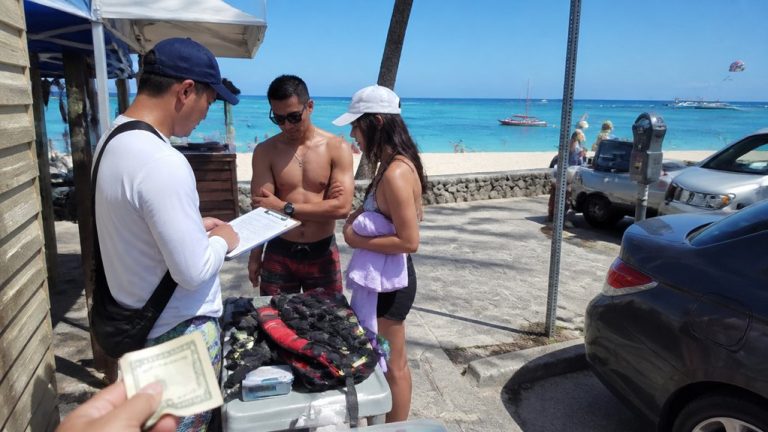
- Ask about photo costs before launch. Many crews charge about $30.
- Expect dozens of images, and sometimes hundreds, depending on the package.
- Staff often shoot with a professional camera from the boat or dock.
- Afterward, they may hand you an SD card, memory card, or disk.
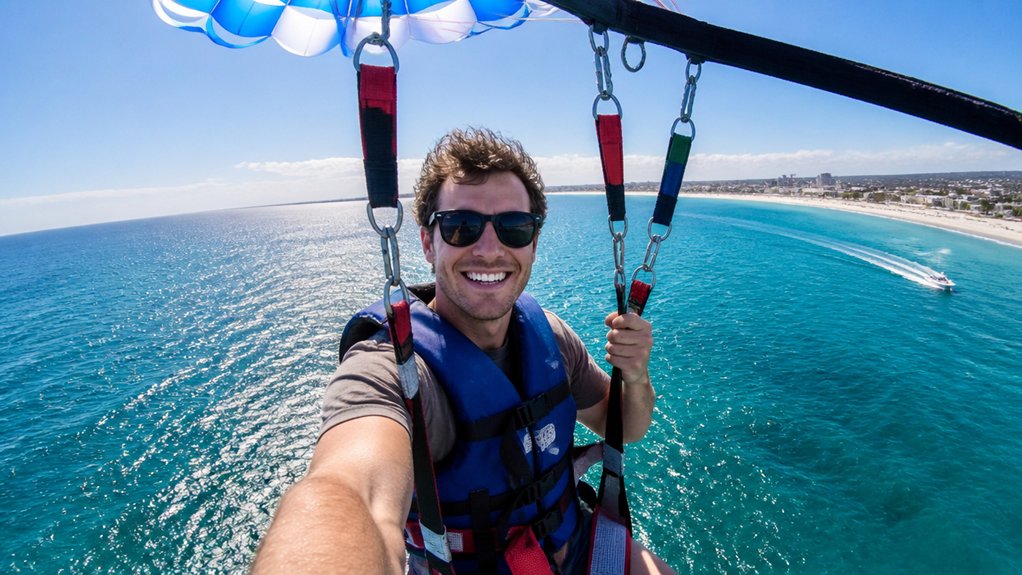
- A strapped GoPro lets you capture the ride yourself and keep your hands free.
The choice usually comes down to whether you want the convenience of a photo package or the control of DIY shots.
Either route saves the day when phones stay in the car and you still get sea spray, bright sky, and that boat below view forever too.
Which Camera Mistakes Ruin Parasailing Photos?
A waterproof camera can still let you down up there for a few very fixable reasons. If your Camera settings stay too slow, or you trust a laggy camera and low ISO, you invite motion blur the moment the harness sways. Use action mode or film speed 400+ when you can. For GoPro users, choosing the best GoPro settings before takeoff can help capture smoother, sharper parasailing footage. Check strap security too. Use a wrist strap or lanyard for control. A loose mount jiggles, shifts the lens, and turns blue water into a smear. Salt spray is another sneak attack. It stings your eyes in front seating, and it fogs contrast on the lens fast. Disposable waterproof cameras can grab a memory, but with only about 10 shots, don’t expect crisp magic every time. Pause, compose, then shoot during steadier moments.
Frequently Asked Questions
Are Selfie Sticks Allowed During a Parasailing Ride?
Usually, you can’t bring selfie sticks on a parasailing ride because they create hazards. Instead, check safety gear, use secure camera mounts, and follow operator rules so you don’t interfere with harnesses, lines, or crew.
Can You Livestream While Parasailing With a Waterproof Camera?
You can, but you’re chasing a long shot: offshore connections often fail. Check shore safety rules, follow communication signals, confirm filming permissions, and use a secured waterproof camera to record now and upload later instead.
Do Parasailing Operators Allow 360-Degree Cameras Onboard?
Yes, many parasailing operators allow 360-degree cameras onboard if you follow Operator policies, passenger restrictions, and camera safety measures. You’ll need to secure the camera tightly so it can’t swing, hit lines, or spray faces.
Should You Rinse Your Waterproof Camera After Parasailing?
Yes, because your camera obviously craves salt, you’ll rinse it after parasailing. Do post ride cleaning with a fresh water rinse, dry it, and keep it sealed before you open it for long term storage.
Will Saltwater Affect Your Camera Lens Over Time?
Yes, saltwater can affect your camera lens over time; you’ll see residue, spotting, and weakened lens coatings. If you ignore splashes, salt corrosion can spread. Give your gear a fresh-water maintenance rinse and microfiber drying.
Conclusion
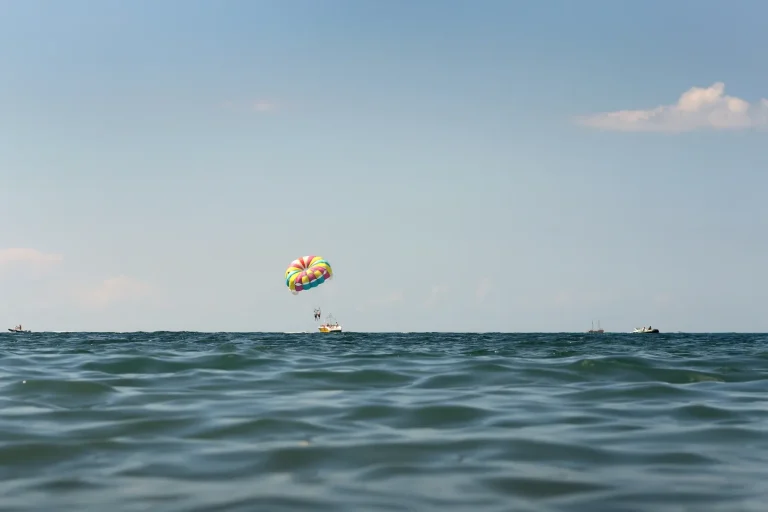
Turns out the theory that parasailing will drench your camera is only half true. You’ll usually stay high and fairly dry, with just a little salt spray and boat splash below. If you clip on a waterproof action cam and keep both hands free, you can catch bright water, toy-size boats, and that sudden hush above the engine. Your phone is riskier. Secure the camera, wipe the lens after landing, and enjoy the view instead.