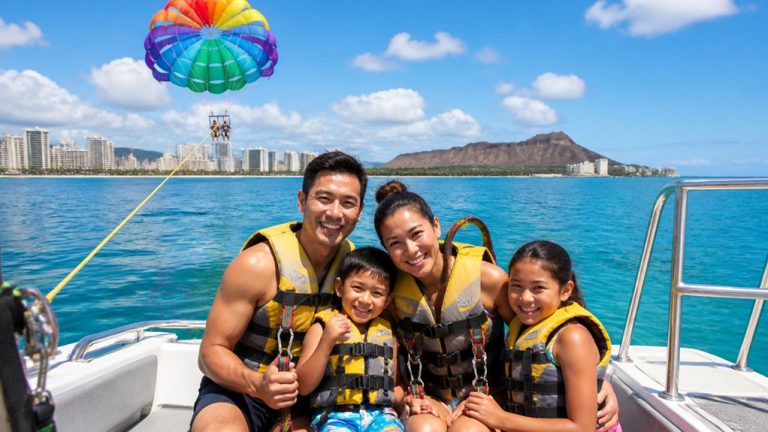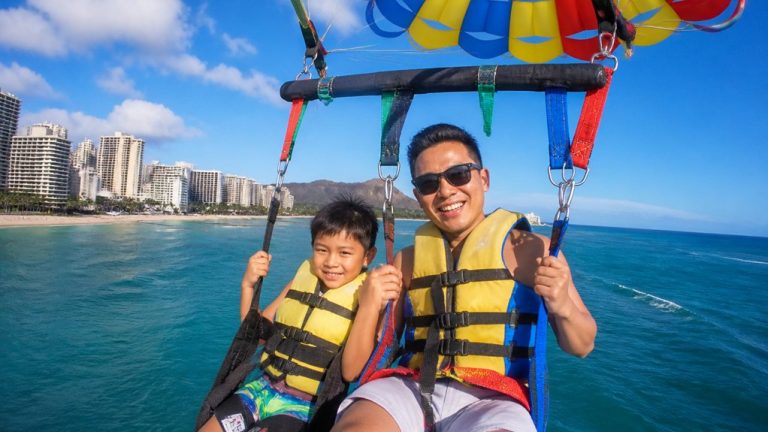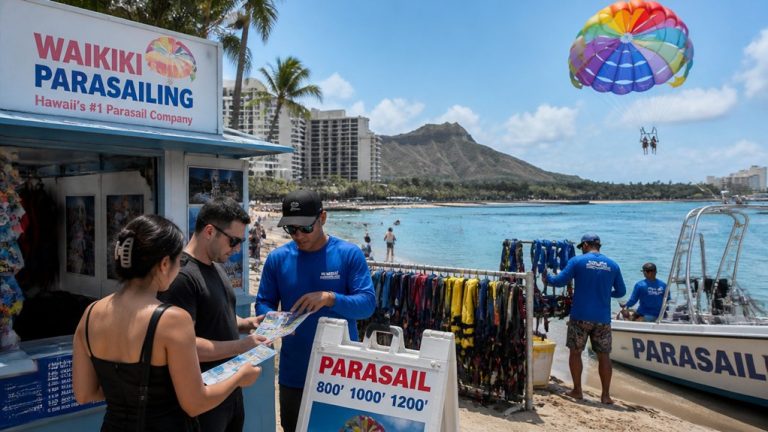
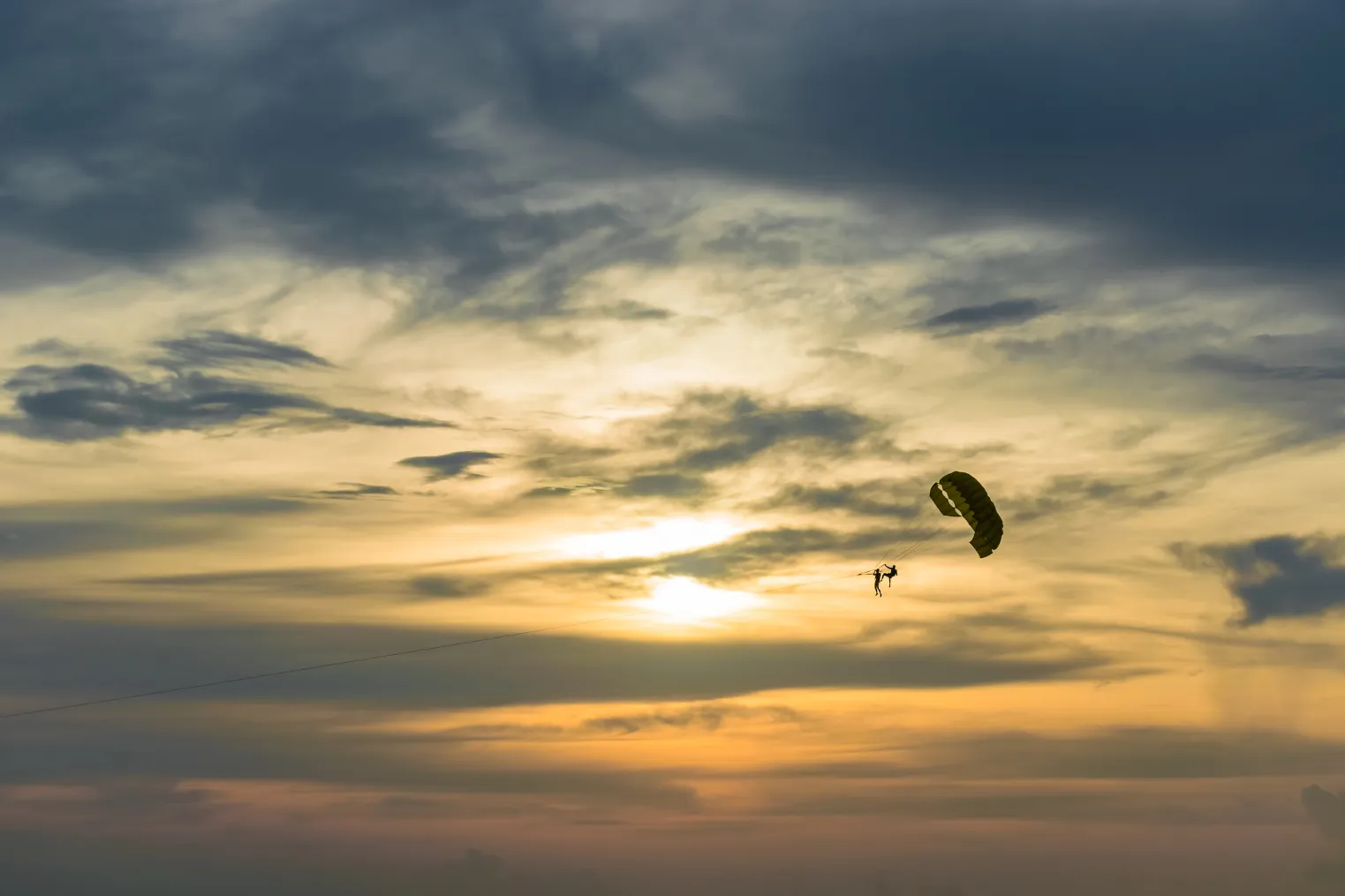
Like Icarus, you’ll rise over Waikiki’s turquoise water, only with a Coast Guard approved life jacket and a crew that’s done this all morning. You usually don’t need to swim, since most runs launch from a boat and keep you clipped in, but you should book a calmer early slot, tell them you’re a non swimmer, and bring sunscreen and a light jacket for the wind. Viator can help you compare verified reviews, timing, and free cancellation, but one detail should still decide if you go…
Key Takeaways
- Most Waikiki parasailing trips don’t require swimming; you wear a Coast Guard–approved life jacket the entire time.
- Choose calm morning slots (8–10 a.m.) and tell the operator you can’t swim before booking.
- Some trips include a planned splashdown; operators may expect you can tread water briefly during recovery.
- Don’t board if you panic in a harness, feel seasick at the dock, or lack insurance coverage.
- Weather matters: winds or rain squalls can cancel trips, so plan to reschedule and ask about medical contraindications.
Can You Go Parasailing in Waikiki Without Swimming?
Even if you can’t swim, you can still go parasailing in Waikiki because you’ll stay strapped into a harness and wear a life jacket from start to finish. Most operators launch from a boat off the south shore, so you won’t need deep-water practice, just a calm head and balance. For extra comfort if you’re nervous, ask the crew to walk you through the safety briefing and hand signals before takeoff.
Plan on 60 to 90 minutes total, with 8 to 12 minutes in the air. Expect $90 to $140, plus photos if you want them. Arrive early for parking and beach access, especially on weekends. Bring sunscreen, a light jacket for the breeze, and a bag for your phone. Skip bulky jewelry. Before you book, confirm insurance coverage and weight limits. Viator listings can help, with reviews, free cancellation, and reserve now pay later.
Do Waikiki Parasailing Tours Require Swimming Skills?
A parasail ride in Waikiki feels more like a seated zip line over the water than a swim test, and most tours don’t require swimming skills.
You’ll check in at Kewalo Basin or Ala Wai about 30 minutes early, sign a waiver, and listen to shore briefings that cover takeoff, landing, and hand signals.
You stay on the boat the whole time, so swimming rarely comes up, though operators still have you wear life jackets.
Expect 8 to 12 minutes in the air, with the full trip running about 60 to 90 minutes.
Prices usually land around $90 to $160, and midmorning slots fill fastest in peak season.
If you’re booking close to your trip date, stick with reputable operators and confirm what’s included so last-minute deals don’t come with surprises.
Bring sunscreen, a light layer, and a phone pouch.
Skip big breakfasts, you’ll thank me later.
Safety Gear Used for Parasailing in Waikiki
Most Waikiki parasail outfits run a tight safety setup, and you’ll notice it the minute you step onto the dock at Kewalo Basin or Ala Wai.
Before the boat leaves, crew fit snug life jackets, check straps, and clip you into rescue harnesses with stainless hardware. You’ll get a quick, simple hand-signal briefing, then a final gear scan, usually in under 10 minutes, so don’t arrive late. Expect breezier, sunny mornings, fewer crowds, and about $90 to $140 per flight. It’s also smart to confirm the crew does a pre-flight safety briefing covering wind conditions and what to do if you get dipped in the water.
- Coast Guard approved vest
- Waist and leg harness
- Tandem tow bar and clips
- Helmet when wind picks up
- Dry bag for phone, skip bulky backpacks
If you book a Viator tour, look for verified reviews, hotel pickup, free cancellation, and reserve now pay later.
What Happens if You Land in the Water?
Gear checks and snug harnesses are there for a reason, because a splashdown can happen in Waikiki parasailing, usually on purpose.
If you get a water landing, you’ll touch down near the boat, legs forward, and keep your hands on the straps while the crew reels you in. You’ll already be wearing floatation devices, so you can relax and breathe, even if you can’t swim. Follow the guide’s emergency procedures: wait for the tow line to slack, don’t unclip, and signal if you feel tangled. Before takeoff, the crew will also confirm your towline and winch setup is secure so recovery stays smooth and controlled.
Most flights run 8 to 12 minutes, and wet landings add only a minute. Bring a light towel and dry phone pouch, skip heavy sneakers. Crews practice recovery drills, so you’re back aboard fast. Mornings feel calmer than afternoons.
Still comparing Oahu Parasailing?
Ask for tour ideas, hotel suggestions, or a simple trip plan that combines both.
Trip Helper
Questions to Ask a Waikiki Parasailing Operator
Before you book, ask the operator exactly what safety gear you’ll wear, how the crew clips you in, and what the launch and landing routine looks like on a busy morning boat with salt spray in the air.
Confirm whether you need to swim at all, what happens if you touch down in the water, and whether life vests are required or optional, since rules and comfort levels vary by company.
Also ask about the company’s safety inspections and how often the parasail gear is checked, since reputable operators follow specific rules and maintenance routines.
If you’re comparing schedules and prices, a Viator tour can help with timing and tickets, and you can filter for verified reviews, free cancellation, and reserve now pay later, but you’ll still want these answers before you show up with sunscreen, a light jacket, and your phone in a dry pouch.
Safety Gear And Procedures
Often, the difference between a smooth Waikiki parasail and a stressful one comes down to what the crew puts on you and how they run the boat. Before you pay (usually $90 to $160, 60 to 90 minutes), ask to see the harness, life jacket, and towline, and watch how they brief the group, especially on emergency signaling. You’ll feel the trade winds, but you shouldn’t feel rushed, even on busy sunset runs. Make sure they also walk you through their pre-flight safety checklist so you know exactly what happens if conditions change.
- Coast Guard approved life jackets in your size
- Quick-release harness and double-check clips
- Radio, knife, and rescue float on deck
- Crew with current lifesaver training and CPR
- Clear plan for wind shifts, splashdowns, and pickup timing
Bring sunscreen and a dry bag, skip loose hats and dangling jewelry, pack water, too.
Swimming Ability Requirements
While you don’t need to be a strong swimmer for most Waikiki parasailing trips, you do need to know what happens if the wind shifts and the crew has to set you down in the water for a minute. Ask if you’ll ever be asked to tread water, and how they handle a splashdown near the boat for extra clarity.
Confirm you’ll wear approved flotation devices, and whether staff stay within arm’s reach during launch and landing. Also ask about lifeguard presence, some operators work near monitored beaches, others don’t.
Before you sign, read the parasailing waiver closely so you understand what risks you’re agreeing to and what the operator is responsible for. If you can’t swim, book the calm morning slot, usually 8 to 10 a.m., before trade winds and crowds build. Expect $90 to $150. Bring a light jacket and dry bag, skip bulky shoes.
Boat Takeoff, Flight, and Landing in Waikiki
Step onto the parasail boat at Kewalo Basin or Ala Wai Harbor and you’ll see how little “swimming” factors into the day: the crew fits your harness and life jacket, runs a quick safety check, and then you sit on the back platform for a smooth boat takeoff that feels more like getting lifted from a bench than jumping in.
Once the boat’s moving, the winch reels you up fast, and Wind patterns usually smooth the ride. You’ll spend about 8 minutes in the air before the winch brings you back down for landing. The Boat launch feels steady. You’ll fly about 8 minutes, total outing 60, with a small crowd aboard. Costs run $120 to $160. Bring water and a phone strap, skip loose hats.
- Watch crew signals
- Clip phone lanyard
- Spot Diamond Head
- Bend knees landing
- Sit and smile
When to Skip Parasailing in Waikiki (Non-Swimmers)
Parasailing in Waikiki can feel almost too easy once you’ve nailed the seated takeoff and soft landing, but non-swimmers should still know when to call it and keep their feet on dry sand. Skip it if winds spike, rain rolls in, or you’re queasy from the chop. In Waikiki, trips also get delayed when winds pick up or rain squalls move through, so be ready to reschedule. Ask the crew about medical contraindications like recent surgery, uncontrolled asthma, or pregnancy. Also pause if you can’t handle a harness or you’ll panic when you dip near the water.
| Red flag | What you do | Better plan |
|---|---|---|
| Seasick at dock | Reschedule early | Sunset beach walk |
| No insurance coverage | Don’t board | Buy policy, then book |
Bring water, sunscreen, and cash, skip a big breakfast. Viator can simplify tickets with verified reviews, free cancellation, and reserve now pay later.
Frequently Asked Questions
What Is the Minimum Age to Parasail in Waikiki?
In Waikiki, you’ll usually need to be at least 5 years old, the common minimum age, to parasail. If you’re under 18, you’ll need parental consent, and you’ll ride with an adult on most boats for safety.
Are There Weight Limits for Waikiki Parasailing Participants?
Yes, operators set weight restrictions. You’ll usually need to fall within a combined tandem range and a per-person minimum/maximum. You can’t fly if winds push limits, and harness sizes must fit securely for your safety always.
Can You Parasail in Waikiki if You’Re Pregnant?
You shouldn’t parasail in Waikiki while pregnant, like balancing on a breeze. Most operators won’t allow it due to pregnancy precautions. If you insist, you’ll need medical clearance and your doctor’s approval first at all.
What Should You Wear and Bring for Parasailing in Waikiki?
Wear lightweight clothing and water shoes, and pack sun protection, a waterproof bag, an extra towel, and a sunglasses strap. Bring motion sickness pills and small dry snacks, and you’ll stay comfortable on Waikiki’s ride.
How Long Does a Waikiki Parasailing Experience Typically Last?
You’ll typically spend 60–90 minutes total, including check-in, boat cruise, and turns in the air. Your flight duration usually runs 8–12 minutes, while the overall ride length depends on group size and sea conditions today.
Conclusion
You can parasail in Waikiki even if you can’t swim, since you’ll wear a Coast Guard approved life jacket and stay clipped in. Book a calm 8 to 10 a.m. slot, when winds and crowds are lighter, and expect $120 to $200. Bring reef safe sunscreen, a light jacket, and a dry bag. Skip it if you’re seasick prone. Fun stat: flights often reach 500 feet above the water. Tell the crew you’re a non-swimmer.