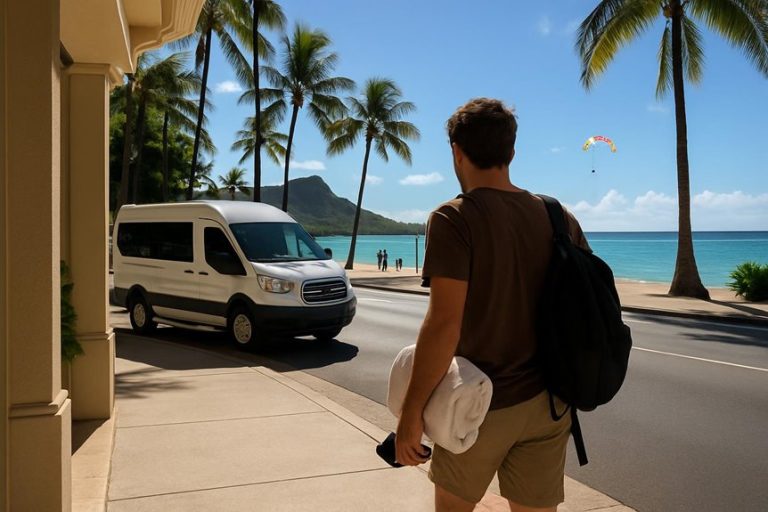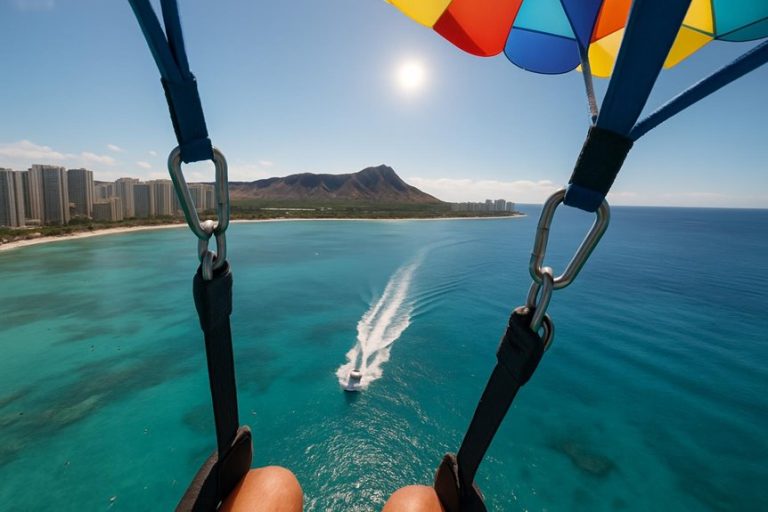
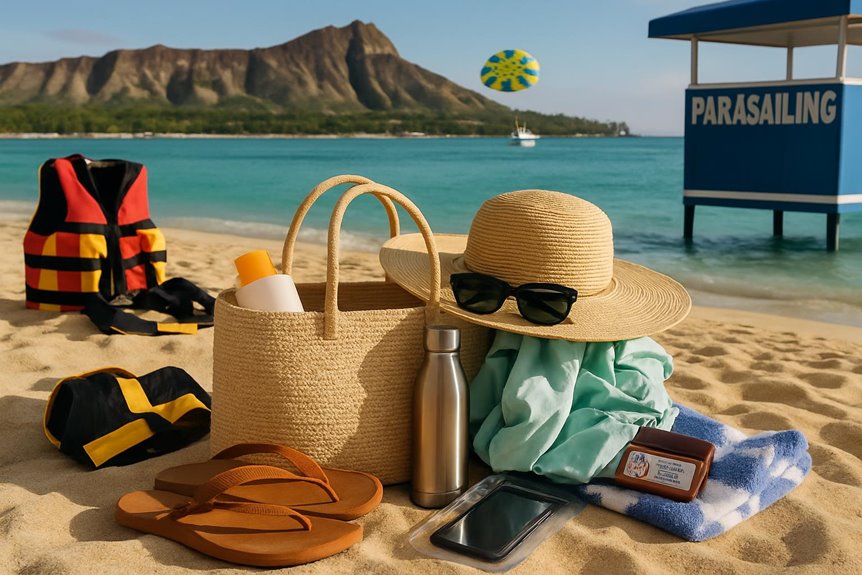
You’ll move fast on Waikiki parasailing day, so pack like you’ve got 10 minutes at the dock and a salty breeze in your face. Bring your photo ID, booking confirmation, and the card you paid with, plus a long-sleeve UPF rash guard, reef-safe mineral SPF 30+ and lip balm, water shoes, and a windproof hat with a chin cord. Skip jewelry and bulky bags, use a $5–$10 locker or a tested phone pouch, and stash a small dry bag. If you’re booking a Viator tour, verified reviews, free cancellation, hotel pickup, and reserve now pay later can save you timing stress, but the real question is what stays dry.
Key Takeaways
- Bring a photo ID, booking confirmation (or Viator voucher), and a card plus $5–$20 cash for tips, lockers, or parking meters.
- Wear a snug swimsuit and a long-sleeve UPF rash guard; pack a light windbreaker for cooler air during the flight.
- Use reef-safe mineral sunscreen SPF 30+ and SPF lip balm; apply 20 minutes before boarding and reapply after the ride.
- Secure sunglasses with a neoprene/silicone leash, and consider a wide-brim hat with a chin cord for dock time.
- Protect your phone/camera with a waterproof pouch clipped to your vest or leave it ashore; bring only a small dry bag and microfiber towel.
Parasailing in Waikiki Packing Checklist
Before you zip up the beach bag and head to Waikiki’s boat harbor, run through this quick packing checklist so you’re comfortable, sun-safe, and not paying resort prices for something you could’ve brought.
Check local weather at breakfast, pack reef-safe sunscreen and SPF lip balm, and add a windbreaker for rides.
Check the morning forecast, pack reef-safe sunscreen and SPF lip balm, and toss in a windbreaker for breezy rides.
Bring polarized sunglasses with a retainer strap, plus a brimmed hat for the dock.
Carry water and a salty snack since check-in lines can hit 30 minutes.
Keep cash for tips and locker fees, often $5 to $10.
Skip bulky cameras, loose jewelry, and anything you’d hate to drop.
Arrive 20 minutes early, listen to the safety briefing, and keep your ID handy.
If you’re planning to wear a swimsuit, choose snug-fitting straps so your swimsuit stays secure during takeoff and landing.
Viator helps with verified reviews, free cancellation, and reserve-now-pay-later today.
Will You Get Wet Parasailing in Waikiki?
Although parasailing looks like a dry, floating glide from the beach, you should plan to get at least a little wet in Waikiki. You’ll wade in during boarding, and spray kicks up as the boat throttles out past the swimmers. Some crews add a “dip” at the end, so stash your phone in a pouch and bring a towel. If your crew offers it, a controlled parasail dip can splash you in the water at the end of the ride, while other trips stay completely dry once you’re airborne.
Before takeoff, you’ll sit through a safety briefing covering water safety, wind effects, and how the parasail equipment clips to your harness. Expect 60 to 90 minutes total, with 8 to 12 riders rotating, and $90 to $160 plus photos. Morning runs usually feel calmer and less crowded. For logistics, Viator tours with verified reviews, hotel pickup, free cancellation let reserve now, pay later today.
What to Wear Parasailing in Waikiki
Start with swimwear and add a rash guard so you’re comfortable if the spray hits and the sun bounces off the water.
For the best outfits, stick to quick-dry layers and choose rash guard coverage to prevent chafing and sunburn.
On the boat deck, wear secure sandals or water shoes because it gets slick, and skip flip-flops unless you like chasing them (you won’t).
Bring a light wind layer for the ride out and the cooler air up high, and if you’re booking a Viator tour, lock in an early slot with verified reviews, free cancellation, and reserve now pay later to beat the midday crowds.
Swimwear And Rash Guard
Usually, you’ll want to treat parasailing in Waikiki like a beach day that might get breezy and splashing. Wear a snug swimsuit that won’t shift under the harness, and skip loose board shorts that can bunch.
Mornings often feel calmer and less crowded, and you’ll still get a salty rinse from takeoff and landing.
Most Waikiki operators provide a harness and safety briefing, which can make parasailing feel safe even if you’re nervous. Add a rash guard for comfort and sun control, especially if you’re out 60 to 90 minutes including boat time. Look for sun safe fabrics,quick dry fabrics so you’re not shivering on the ride back.
Pack:
- One-piece or tied bikini, plus a backup if you’re touring after.
- Long sleeve rash guard with UPF, light colors.
- Small microfiber towel and a dry bag for the return to shore.
Footwear For Boat Deck
Step onto the boat in footwear that grips a wet deck and slips off fast when the crew tells you to go barefoot for the harness.
Think water sandals or reef shoes with secure straps, not flip-flops that skate when the deck’s salty and busy. A cheap pair costs about $20. Look for real deck grip and nonmarking soles so you don’t scuff the boat and you keep your footing in the splash zone. For extra stability while you’re moving around the boat, aim for a spot near the center of the boat where the deck tends to feel steadier.
Leave bulky sneakers in your bag, they stay soggy and slow you down.
Stow shoes in a small dry bag or clipped tote near your seat, space is tight on midmorning runs. If you book a Viator tour, check verified reviews for deck rules and bring cash for a tip.
Sun And Wind Layers
Even if the sand feels warm at the marina, the ride out and the glide above Waikiki catch more wind than you expect, so dress in light layers you can peel off fast. Think light windbreakers,layered sunshirts for changeable air.
Mornings feel breezier, and late-afternoon rides can chill once you’re 500 feet up and hit by spray.
- Wear a UPF sunshirt that dries fast.
- Pull on a windbreaker with a zip pocket for cash and your key card.
- Bring a thin rash guard or buff if you burn.
Skip bulky hoodies, they fight the harness and stay damp. Book the first slot, stow layers in a small dry bag, and you’ll stay comfy in the queue and tow back to your hotel pickup later. First-timers usually find a morning flight the easiest way to ease into the wind and height over Waikiki.
Water Shoes or Sandals for the Boat?
On a Waikiki parasailing boat, your footwear matters more than you’d think, because decks stay slick with salt spray and you’ll step in and out of shallow water during boarding.
Skip flip flops. They slide, and crew may ask you to go barefoot, which feels sketchy on hot fiberglass.
Pack reef footwear or snug neoprene sandals with a heel strap. You’ll get better grip climbing the ladder and you won’t wince if you brush coral bits at the ramp.
Bring a small dry bag for your shoes once you’re clipped in, or tuck them under the bench. Mornings feel calmer, yet lines form fast.
At Kewalo Basin, the crew will typically give a quick safety briefing before you board and gear up.
Booking on Viator helps: filter for verified reviews, hotel pickup, free cancellation, and reserve now pay later for a slot.
Do You Need a Hat on the Boat?
Your shoes handle the slick deck, but your head takes the real beating once the boat clears the harbor and the trade winds kick up. You don’t need a hat, but you’ll want one when sun glare and salt spray hit hard. A wide brim also helps when you’re up in the air because ocean breeze can feel stronger at parasailing altitude.
Your shoes grip the slick deck, but your head gets hammered once trade winds, glare, and salt spray kick in.
Bring a sun hat with a wide brim, and skip flimsy straw. If you wear sunscreen on your part line, a hat feels cooler between pulls.
- Choose wind proof fabric like nylon.
- Use hat clips or a chin cord for the ride out.
- Stash it in a crushable pouch, or grab one in Waikiki for $15 to $30.
Crowded 9 a.m. departures leave on time, so show up 20 minutes early and keep your hands free for the briefing.
How Do You Keep Sunglasses On?
Start with the assumption that anything not attached will try to fly, because once the boat hits open water the trade winds and salt mist turn sunglasses into a quick donation to the Pacific.
Use a snug strap retainer or a sunglass leash before you board, and test it while you’re still at the dock. For $8 to $15 at ABC Stores, you’ll get neoprene or silicone that won’t chafe when you’re clipped into the harness. Skip loose fashion chains, they tangle fast.
If you plan on taking pics, remember your phone needs to be secured just as tightly because the same wind and spray that snatch sunglasses can send it overboard in seconds.
When the crew calls “ready,” tuck the leash under your rash guard collar, then tighten your frames at the bridge. If you book a Viator tour, choose one with reviews, pickup, free cancellation. Leave a backup pair in your dry bag.
Reef-Safe Sunscreen for Waikiki Parasailing
Before you clip in for a Waikiki parasail, make sure your sunscreen follows Hawaii’s reef-safe rules, because some chemical formulas are banned and shops check labels in the bright morning rush.
Pack a mineral SPF 30 or higher with zinc oxide or titanium dioxide, apply it 20 minutes before your boat time, then top up after the splashy ride, not on deck where it gets windy and crowded.
After heavy rain, pay attention to Brown Water Advisory updates because runoff can increase pollution and illness risk even if it didn’t rain right at the beach.
Skip aerosol sprays and heavily scented lotions, and if you’re booking a Viator tour, confirm in the verified reviews whether sunscreen’s included, plus hotel pickup, free cancellation, and reserve now pay later.
Hawaii Reef-Safe Rules
Packing reef-safe sunscreen matters in Waikiki because Hawaii’s law bans the sale of oxybenzone and octinoxate, and boat crews may turn you away if you show up with the wrong bottle. Before your 8 a.m. parasail check-in, scan the ingredient panel in good light and keep the bottle handy in your day bag. You’ll support reef conservation and marine protection, plus you won’t waste $15 to $25 at a marina shop. Afternoons crowd the dock fast. Healthy coral reefs are among the most biologically diverse ecosystems on Earth.
- Look for “oxybenzone-free” and “octinoxate-free” on the label.
- Skip aerosol sprays, they drift on deck and annoy crews.
- Pack it in a zip bag, saltwater leaks happen.
Booking a Viator tour can help with hotel pickup, verified reviews, free cancellation, and reserve now pay later.
Mineral Sunscreen Tips
Once you’ve got the right reef-safe label, go one step smarter and choose a mineral sunscreen with zinc oxide or titanium dioxide for your Waikiki parasail day. Mineral formulas sit on top of skin and handle salt spray better, so the mineral vs. chemical debate is easy up in the harness. Apply 20 minutes before you leave your hotel, then cover ears, neck, and the tops of feet. Bring a stick in a bag, it won’t leak in your dry bag.
Plan sunscreen reapplication after your flight, not on the boat. Crews keep decks slick and crowded, and you’ll pay prices at kiosks, often $15 to $25. If you book a Viator tour with hotel pickup, you’ll save time for a touch-up before check-in. Don’t forget to pack one of the waterproof phone cases recommended for parasailing in Waikiki to protect your phone from salt spray.
Bring a Small Towel for Salt Spray
You’ll almost always get a mist of salt spray in Waikiki, especially if the trade winds kick up and the boat picks up speed on the way out. Stronger winds can also change your timing or ride feel, since trade winds may lead the captain to adjust the route or speed for a smoother tow. Pack a small towel so you can wipe your face, dry your hands before grabbing your phone, and sit without soaking your shorts during the 10 to 20 minute ride back.
Skip a full beach towel, it’s bulky and slow to dry. Aim for microfiber selection, a quick-dry cloth that won’t hog your bag for under $10.
- Blot, don’t rub, to cut salt stains on sunglasses and skin.
- Use drying hacks: clip it to your tote or the boat rail.
- Practice towel care: rinse in fresh water tonight, air dry, and you’re set.
What If You Get Seasick?
If the ocean looks glassy from the beach but your stomach says otherwise, plan for seasickness before you step onto the dock at Kewalo Basin.
Eat light, skip the greasy plate lunch, and hydrate.
Pack motion sickness tablets or a patch and take them 30 to 60 minutes before check in. You can grab them at an ABC Store for about $10 to $15.
Prefer natural remedies? Bring ginger chews or tea bags, and consider acupressure wristbands.
To beat nausea fast, focus on steady horizon gazing and avoid reading or scrolling on your phone once you’re on the water.
On the boat, sit midship, face the horizon, and keep your head still while they clip you in.
Early morning departures usually feel smoother and less crowded.
If you book a Viator tour, choose one with verified reviews and free cancellation, plus reserve now pay later option.
Should You Bring Your Phone Parasailing?
Your phone might feel like a must for those Waikiki skyline shots, but salt spray, sudden drops, and a dunk at landing can ruin it fast.
If you bring it, lock it in a waterproof pouch with a lanyard clipped to your harness and skip loose pockets, the crew won’t wait while you fish around on the crowded dock.
For sharper clips, consider a GoPro and use best GoPro settings like high frame rates and stabilization to handle the bright sun and swaying harness.
Don’t want the risk or the extra cost of a rugged case, ask about the boat’s photo package or book a Viator tour with verified reviews, clear timing, and free cancellation so you can leave your phone dry and still go home with the pics.
Water Risks And Drops
While Waikiki parasailing feels calm once you’re gliding above that postcard-blue water, the real risk to your stuff happens during the quick, splashy takeoff and landing.
In the first and last two minutes, the deck’s wet, hands are busy, and a surprise gust can add wind shear. If the tow rope hiccups, line slack can jolt you, and that’s when phones pop free. Use secure tethers or straps (and even floaties) to keep cameras and phones attached if you bring them at all. Think about:
- Saltwater spray that soaks pockets and corrodes ports fast.
- Sudden dips where the crew “touches” you down for a photo, then lifts again.
- Drops over open water, where retrieval’s basically zero.
If you’re tempted to film, remember Oahu repair shops aren’t cheap, often $150 to $300, and lines can be long after lunch in busy Waikiki.
Securing Your Phone Safely
Phones get lost in Waikiki parasailing the same way sunglasses do, fast and usually for good, so decide before you board whether it’s worth bringing yours at all. If you can, leave it ashore in a locked bag or a locker, often $5 to $10, and enjoy the breeze.
If you must bring it, treat it like gear. Slip it into a waterproof pouch that’s rated for immersion, then add a lanyard attachment and clip it to your life vest or harness ring, not your wrist. Check the tight seal at the dock before the 60 to 90 minute trip. Keep the pouch under your vest during takeoff and landing when the deck gets crowded and splashy. Skip loose cases, and don’t pocket it. If it gets splashed, rinse it with fresh water as soon as you can because saltwater corrosion can start quickly in Hawaii’s ocean air.
Photos Without The Phone
Pack a little creativity instead of a handset, and you’ll still come home with solid photos. Most crews ask you to stash phones, and salt spray plus shaky hands can turn a great view into a cracked screen. Aim to shoot before you board, during the boat ride, and right after you land. For air time, try:
- Bring a cheap disposable film camera for dock shots and candid boat moments.
- Rent a GoPro on site, or bring yours with action camera mounts and a floaty grip.
- Ask the crew to snap you from the stern, tip them $5 to $10.
To really capture epic moments, plan a few quick shots around takeoff and landing when everyone’s already steady and smiling. Midday trips get brighter but busier; book early morning for softer light and fewer elbows. Bring a small towel for splashes.
Where Do You Store Your Stuff Onboard?
Because you’re boarding a small parasail boat with limited dry space, you’ll want a quick plan for where everything goes before the captain calls “all set.”
Plan your gear fast, parasail boats have tiny dry space, and once the captain says “all set,” it’s go time.
Most Waikiki operators offer a small dry box or zip pouch up near the console for essentials like keys and cards, but it fills fast on busy morning runs, so bring a single waterproof phone pouch and leave the tote bag at the hotel.
Listen for crew announcements about locker placement and what stays with you.
If you’ve got sandals or a light layer, tuck them into under deck compartments, where spray stays low. Ask before you stow anything.
For portable drybag locations, check the bench corners, then clip it so it won’t slide when the boat turns.
At Kewalo Basin Harbor, take a quick restroom break using the nearby bathrooms before you head out, since onboard facilities are limited.
Small Bag Rules for Waikiki Parasailing
Before you zip up that cute beach tote, check your operator’s size and weight limits, because small bag rules in Waikiki parasailing are strict and they’ll often make you leave bulky items on shore.
You’ll do best with a light sling or waterproof pouch that fits essentials only, then stash it in the boat’s secure bin or clipped storage spot so it won’t slide around when the deck gets splashy and crowded.
If you’re booking a Viator tour to lock in timing, look for verified reviews plus hotel pickup and free cancellation, then pack just your phone in a dry case, cash or card, and skip the big towel and extra shoes.
Choosing a tour with hotel pickup can make the whole morning smoother, especially if you want to avoid hauling extra stuff from Waikiki to the marina.
Size And Weight Limits
While you’re daydreaming about floating over that Waikiki shoreline, the boat crew is thinking about numbers: your weight, the wind, and how much you’re bringing onboard. Expect weight limits to change with gusty afternoons, so book earlier when the water’s calmer and lines are shorter. You’ll also meet age restrictions, and they’ll match you to harness sizes that fit snugly over a rash guard.
- Check your combined rider total, since tandem flights depend on seating capacity and balance.
- Pack light: a small dry pouch and water are fine, skip towels and shoes.
- Ask about minimums, height, and fit before you pay, especially for kids or tall riders.
Most Waikiki rides run 60 to 90 minutes and cost about $90 to $140.
Secure Storage Options
Show up with a small bag and you’ll glide through check-in faster, since most Waikiki parasailing boats keep storage tight and the deck uncluttered. Ask crew where to stow it before you board, as space fills quickly on 10 a.m. runs. If your operator offers an Under seat locker, use it for phone, keys, and wallet, then clip it shut.
No locker? Bring a Lockable drybag, slip in valuables, and keep it at your feet while you ride out. Skip hard cases and big beach totes, they roll and get splashed. At the harbor, coin lockers sometimes run $5 to $10, but they sell out by midday. Viator listings with hotel pickup, free cancellation, and reserve now pay later help you confirm storage rules.
ID, Tips, and Booking Info to Bring
Since Waikiki parasailing operators run on tight marina schedules, you’ll want your practical paperwork sorted so you’re not the person sprinting down the dock as your boat pulls out. Bring a photo ID, your booking confirmation screenshot, and a card for the balance and tips. Arrive 30 minutes early so you don’t miss the safety briefing and passenger briefing, and so crew can time weather windows, the equipment check, and a quick run-through of emergency signals, plus noise considerations on the boat.
- ID and reservation info, plus the operator’s phone number.
- Cash for crew tips, $10 to $20 per rider, and parking meters.
- Any Viator tour voucher if you booked for verified reviews, free cancellation, and reserve now pay later online.
What Not to Bring Parasailing in Waikiki
Because the boat deck stays wet, windy, and busy, you’ll have a better time if you leave anything fragile or fussy behind. Skip jewelry, watches, and sunglasses without a strap. Crews run on tight 60 to 90 minute slots, and anything dropped is gone.
| Leave | Why | Better option |
|---|---|---|
| Phone in pocket | no loose items | waterproof pouch |
| Big camera | spray, bumps | GoPro on mount |
| Cash wad | loss, theft | one card, tip ready |
| Chips, bread | wildlife disturbance | snack after landing |
Don’t bring a backpack or towel; space is tight, and most operators won’t store extras. If you need lockers, expect about $5 near the beach. Avoid alcohol and heavy perfume; the harness sits close and the sun bakes scents. Keep it simple, and you’ll float lighter.
Frequently Asked Questions
What Are the Age and Weight Limits for Parasailing in Waikiki?
You’ll usually need to be at least 5–6 years old, though each operator sets its own minimum age and may require a parent’s consent. Expect weight restrictions: typically 90–500 lbs combined, depending on wind conditions.
Can We Parasail as a Pair or Triple Together?
Yes, you can parasail together. You’ll book tandem flights for two riders, and some operators offer triple harnesses for three if wind and combined weight allow. You’ll still fly at the captain’s discretion on the day.
How Long Does the Entire Parasailing Tour Take?
Like a telegram from the future, you’ll finish the whole tour in about 60–90 minutes. Your approximate duration depends on group size and wind, plus the boarding process, safety briefing, ride, and return dock time.
Is Gratuity Expected for the Boat Crew and Guides?
Yes, gratuity’s typically expected, especially if you enjoyed the ride. You’ll want cash tipping for easy crew appreciation, since boats may not take cards. Aim around 10–20% or $5–$20 per person.
What Happens if the Trip Is Canceled Due to Weather?
Like a sudden squall, weather cancellations stop your flight; you’ll usually get a refund under the operator’s refund policy or you can pick rescheduling options. Call promptly, confirm timing, and keep your receipt for processing.
Conclusion
Pack light and you’ll glide easier. The dockside theory says you won’t get wet, but Waikiki trade winds often toss spray, and some crews do a dip at landing, so wear a UPF rash guard, reef safe mineral SPF, and snug water shoes. Stash phone and keys in a small dry bag or a $5 locker. Bring ID, booking screenshot, and a few bills for tips. Go at 8 to 10 am to dodge crowds.