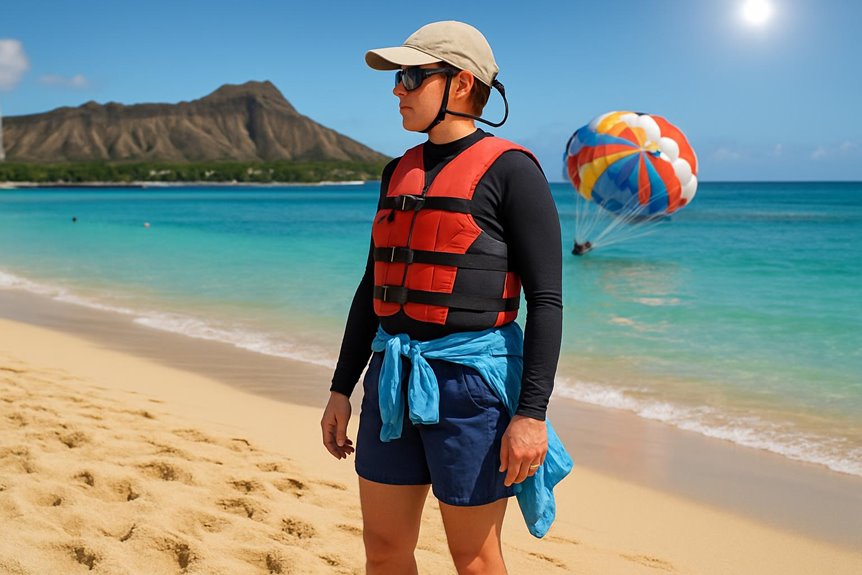
You book a 10 a.m. Waikiki parasail and realize the boat ride feels cool, then the sun hits hard once you’re clipped in. You’ll stay most comfortable in a fitted swimsuit or high-waist quick-dry shorts, plus a UPF rash guard that won’t bunch under the harness. Skip cotton, pockets, belts, and heavy jewelry. Bring reef-safe sunscreen, sunglasses on a floating strap, and a small dry bag for phone and ID. Now, about chafe, spray, and photo-friendly colors…
Key Takeaways
- Wear a fitted UPF 50+ rash guard and quick-dry bottoms; avoid cotton to prevent sogginess, chafing, and bunching under the harness.
- Choose high-waist or flat-waistband swim bottoms and minimal pockets so the harness sits cleanly on your hips.
- Apply anti-chafe balm to inner thighs, hips, and underarms before gearing up; keep layers smooth and snug under straps.
- Bring reef-safe SPF 50 sunscreen, a hat with chin cord, and sunglasses with a strap for strong ocean sun and wind.
- Pack a light windbreaker, microfiber towel, and small dry bag for boat spray; go barefoot or wear secure water shoes.
What to Wear Parasailing in Waikiki (Checklist)
If you treat Waikiki parasailing like a beach day with wind and spray, you’ll pack exactly right. Start with a light rash guard or quick dry tee, and a thin windbreaker for the boat ride.
Pack like it’s a breezy beach day: quick-dry rash guard or tee, plus a thin windbreaker for the ride.
Bring reef safe sunscreen, sunglasses with a strap, and a small towel for the 10 minute post flight drip. Slip on water shoes or secure sandals, the deck can feel slick.
Pack your phone, keys, and towel in a dry bag to keep essentials protected from salt spray on the ride out.
Toss a hydration pack or reusable bottle in your dry bag, tours run about 60 to 90 minutes, and midday sun bites. Carry cash for the crew tip.
Skip heavy jewelry, big cameras, and anything you’d cry over. If you’re booking last minute, Viator tours can show verified reviews, hotel pickup, free cancellation, and reserve now pay later.
Swimsuit vs. Shorts for Waikiki Parasailing
On a Waikiki parasailing boat, a swimsuit feels effortless in the harness and dries fast after the splashdown, but quick dry shorts can buy you a little modesty and sun cover when you’re waiting your turn in a crowded midmorning slot.
Board shorts with a snug drawstring stay put when the crew lifts you from the swim step. Skip cotton; it stays soggy and can chafe.
If you run cold, a Zip up wetsuit works for breezy trade winds and costs about $15 to rent near Ala Moana.
Bring a small dry bag for keys and $5 cash for crew tips.
Book an early ride to beat the queues, and on Viator choose tours with verified reviews, free cancellation, and reserve now pay later.
Don’t forget reef-safe sunscreen for the strong Honolulu sun, especially while you’re geared up and waiting on deck.
Best Tops for Waikiki Parasailing Sun
Most days in Waikiki, you’ll want a sun-smart top that stays smooth under the parasailing harness and still looks good while you wait in the midmorning boat crowd. Choose a bikini top with wide straps or a crop that won’t twist as the crew clips you in. Halter swimsuits can work, but tie them tight and skip bows that snag. If you burn fast, pack reef safe tops in a dry bag, and pull them on after flight for the walk back. Avoid metal rings that heat up. Expect salt spray, so bring a $10 clip while you pay at the dock. If you’re shopping extended sizes, check harness notes in Parasailing Waikiki booking tips so your top sits comfortably under the straps.
| Top style | Why it works |
|---|---|
| Wide-strap bikini | No rub, easy rinse |
| Sporty crop | Stays put, cute photos |
| Secure halter | Adjustable, minimal hardware |
Rash Guards and UV Shirts (Best Picks)
Start with a breathable UPF rash guard, it feels cool when the trade winds kick up and it saves you from midair sunburn without slathering on extra sunscreen.
If you’d rather pack light, grab a quick-dry UV shirt that won’t cling after the splashdown and still looks sharp for a post-ride shave ice.
Most Waikiki crews run thorough safety briefings before you launch so you know exactly what to do during takeoff, flight, and landing.
Book an early slot to dodge the bigger crowds and pricier midday times, and if you’re using Viator for hotel pickup, check verified reviews and free cancellation, then skip heavy cotton tees that stay wet and chafe.
Still comparing What To Wear Parasailing?
Ask for tour ideas, hotel suggestions, or a simple trip plan that combines both.
Trip Helper
Breathable UPF Rash Guards
Often, the smartest thing you can wear parasailing in Waikiki is a breathable UPF rash guard, because the sun hits hard once you’re up in the trade winds and the spray keeps everything cool but deceptively bright.
Choose UPF 50+, flat seams, and lightweight stretch so the harness won’t chafe.
Look for a moisture wicking weave that won’t cling while you wait on the boat, especially on late morning runs when lines stack up.
Pack it in a small dry bag, then pull it on just before the safety briefing. Skip cotton and skip chunky zippers that press under straps.
Your rash guard also layers smoothly under the parasailing harness used with the towline and winch system.
Aim to arrive 30 minutes early, and bring reef safe sunscreen for your face and hands only. It’s brief, about eight to ten minutes.
Quick-Dry UV Shirts
Usually, a quick-dry UV shirt is the piece you’ll thank yourself for once the boat leaves the calm and you’re sitting in salty wind, bright glare bouncing off the water. Pick UPF 50 fabric that dries fast after a splash, and choose lightweight long sleeves if you burn easily. If you want a neater look for lunch on Kalakaua, pack quick dry polos. Skip cotton, it stays heavy. Book an early Viator parasailing slot if you want softer sun, and check verified reviews, hotel pickup, free cancellation, reserve now pay later. For Waikiki trips, follow a parasailing safety checklist before you head out, especially around weather and wind conditions.
| Pick | Why | Note |
|---|---|---|
| Crewneck rash guard | Full cover | Snug |
| Hooded UV shirt | Neck shade | Clip hat |
| UV tee | Cool | Bring sunscreen |
| quick dry polos | Street-ready | UPF if possible |
Rinse it after every run.
What to Wear Under a Parasailing Harness
Because that harness sits snug at your hips and thighs for the whole flight, what you wear underneath matters more than you’d think. Choose swim bottoms or athletic shorts that stay put when you climb from the boat, then add a quick-dry layer on top if you want more coverage. Women often like a seamless bodysuit under a rash guard, it looks sleek and keeps everything streamlined. Men can go with fitted trunks or layered compression shorts for a secure feel. Even if you’re not a strong swimmer, operators provide a life jacket so you can focus on comfort and fit under the harness.
Plan to arrive 20 minutes early, check in, and stash phones in the boat’s dry bin. Waikiki departures run $90 to $140, and midday slots sell out fast in peak season. Skip bulky pockets, belts, and metal zippers. Bring a small towel afterward.
How to Prevent Harness Chafing
Start with smooth, snug layers that won’t bunch when you’re sweating in the Waikiki sun, and skip cotton that stays damp and rubs.
Before you head to the dock, swipe on anti-chafe balm or a little petroleum jelly on your hips and inner thighs, then toss a travel-size stick in your dry bag.
Once you’re clipped in, ask the crew to nudge the harness a touch higher or lower so it sits flat, and if you’ve booked a Viator tour, pick one with verified reviews, free cancellation, and hotel pickup so you can arrive early and adjust without the rush.
If you’re bringing a camera or phone, use secure tethers so your gear stays attached even if the harness shifts or your hands get sweaty.
Choose Smooth, Snug Layers
While you’re floating above Waikiki’s bright blue water, the harness does most of the work, so what you wear underneath matters more than you’d think. Start with a lightweight base that dries fast after the boat splash and won’t bunch when you sit into the straps. Pick seamless compression shorts or leggings, then add a smooth rash guard or fitted tee. Skip bulky pockets, knotty drawstrings, and rough waistbands; they rub when the crew tightens you in, usually 10 minutes before launch. You’ll feel better during the 8 to 12 minute flight, even if the line’s long at midday. Go early, lines shorten, and winds stay gentler. For beginners, an easy first flight also comes down to simple, snug layers that stay comfortable from takeoff to landing.
| Wear | Skip |
|---|---|
| Compression shorts | Boardshorts with seams |
| Fitted rash guard | Loose cotton tee |
| Flat waistband | Thick belt |
Add Anti-Chafe Protection
If your skin runs sensitive, the parasailing harness can feel like a sanded seatbelt once you’re clipped in and waiting on the deck.
Before you suit up at Waikiki’s morning launches, swipe anti chafe balms on inner thighs, hips, and underarms, anywhere straps might rub. Pack a travel stick, $6 to $12 at ABC Stores, and reapply after a rinse or boat ride.
Wear quick dry shorts or a snug rash guard over a swimsuit, plus seamless liners if you’ve got them, to keep fabric from bunching. Skip lotion with fragrance, it can sting in salt spray.
Stash a small towel and a spare liner in your dry bag. For salt spray and splashes, tuck your phone into one of the waterproof phone cases recommended for parasailing in Waikiki. A Viator tour with verified reviews can nab an early slot, with free cancellation today.
Adjust Harness Placement
Because the harness is where most of the rubbing starts, take 30 seconds on the dock to get it sitting right before the crew clips you in and the boat noses out of Waikiki.
Stand tall, then tug the waist strap down to your hip bones, not your belly, and ask them to tighten it until you can slip two fingers under it. That quick adjust fit keeps you stable when the line goes taut.
Next, check harness alignment: the leg loops should sit high in the crease, flat, with no twists or sandy folds.
If you feel a hot spot during the first minute aloft, call down and have them reel you in. It’s better than a $12 rash guard fix later today.
Also, as part of basic parasailing safety, tell the crew right away if anything feels pinchy or numb so they can adjust the fit before you head out of Waikiki.
Footwear for Waikiki Parasailing (or Barefoot?)
After you’ve watched a few Waikiki parasails lift off from Kewalo Basin, you’ll notice most people go barefoot, and that’s usually the smartest move. Decks are grippy, straps sit cleaner, and you won’t waste time stashing shoes. Bring a small dry bag or zip pouch for your ID, room key, and cash, $5 to $10 for tips or lockers, and keep it light. Before you head out, note that parking at Kewalo Basin Harbor can fill up quickly during peak parasailing windows.
If barefoot feels sketchy, pack reef safe sandals or snug water sneakers with a heel strap. Choose pairs you can slip on fast between check in and boarding, especially on busy 9 to 11 a.m. runs. Skip bulky hiking shoes and flip flops that fly off. A Viator tour with verified reviews and reserve now pay later can streamline timing today.
Will You Get Wet? Plan for Splashdowns
Out on the tow line, expect to get at least a little wet, even on calm Waikiki mornings. Crew often gives you a quick skim at launch or landing, and wind chop can flick spray up. Your splash probability rises if you ask for a “dip”, fly tandem, or go later in the day when trade winds build. Many operators offer optional toe-dip splashdowns where you briefly touch the water before reboarding.
Dress like you’ll board a boat at 8 a.m. and stroll Kalakaua by 10. Choose quick-dry swim trunks or a rash guard, skip cotton tees, and avoid heavy cover-ups that stay soggy. Drying time in the sun is fast, but shade and breezes can feel chilly. If you book a Viator tour, pick one with verified reviews, free cancellation, and reserve now pay later for timing.
What to Bring on the Boat (Dry Bag, Towel)
On a Waikiki parasailing boat, a small dry bag and a compact towel earn their keep fast. Choose a roll top that fits your phone, ID, cash, and a light layer, then clip it under the bench so it doesn’t slide when the captain turns. Follow dry bag etiquette: keep it zipped, keep it small, and don’t block the aisle. If you plan to bring your phone, use a waterproof phone case and keep it secured inside your dry bag between photos.
Pack smart with:
- A microfiber towel for quick wipe downs after spray.
- A water bottle and a snack, lines can run 15 to 30 minutes late in peak afternoons.
- A zip pouch for tips, most crews prefer $5 to $10 per person.
Do sunscreen application before boarding. Viator bookings help you pick a time, with reviews, cancellation, and reserve pay later.
Hats, Sunglasses, and Sunscreen That Stay On
Dial in your sun gear before you step onto the dock, because Waikiki’s trade winds and salt spray love to snatch anything that isn’t secured.
Secure your sun gear before hitting the dock, Waikiki trade winds and salt spray will snatch anything not locked down.
Choose wide brimmed caps with a chin cord so you keep shade while the boat idles in the Kewalo Basin line. Clip sunglasses on floating straps, and pick mirrored shades for glare off the water when you’re 500 feet up.
For sunscreen, go with a water resistant SPF 50 lotion, not a mist, and rub it in 20 minutes before check in. Reapply after the swim stop. A stick formula with silicone grips on the tube won’t slip from wet hands.
If you’re filming the ride, lock in best GoPro settings before takeoff so wind noise and harsh glare don’t ruin your parasailing footage.
Morning launches run cooler and less crowded, and most rides land around $120 to $160, plus tax, typically.
What Not to Wear Parasailing in Waikiki
You’ve got your sun gear locked down, so now focus on what to skip, because Waikiki parasailing has a way of turning “cute” into “gone” in about 30 seconds. On busy mornings at Kewalo Basin, the deck’s wet, tight, and rushed. Before you clip in, ask about the operator’s safety inspections and harness checks.
- Avoid jewelry, watches, and dangling straps. They snag on the harness and drop fast.
- Skip cotton and bulky cover-ups with pockets. They soak, drip, and feel cold in the wind.
- Ditch restrictive wetsuits and tight denim. You’ll hang and sit in straps for 8 to 12 minutes.
Leave pricey phones out unless you’ve paid for the operator’s photo package, often $40 to $60. Pack a small dry pouch instead. If you book via Viator, check verified reviews, and free cancellation.
Photo-Ready Waikiki Parasailing Outfit Ideas
Start with breezy beach-to-boat layers, like a quick-dry rash guard and light windbreaker you can peel off once the boat pulls away from Kewalo Basin.
Add waterproof, photo-friendly accessories you won’t cry over if they splash, a floaty phone strap, polarized sunnies, and a small dry bag, usually $10 to $25, and skip anything that can’t handle salt spray. For extra peace of mind, keep your device shielded from saltwater by stashing it in a sealed dry bag whenever you’re near spray.
Finish with a color-pop palette, coral, aqua, or sunny yellow reads sharp against the blue water, and if you’re booking a tight morning slot, a Viator tour with verified reviews, hotel pickup, free cancellation, and reserve now pay later can keep you on time without extra stress.
Breezy Beach-to-Boat Layers
Because Waikiki mornings can feel calm and sunny, then turn breezy the moment you step onto the boat, plan a beach-to-dock outfit that layers fast and still looks sharp in photos.
Start with boat ready fabrics like quick-dry nylon, cotton, or a rash guard, then add breezy layers you can peel off once the captain lines you up. Your ride time is typically 60 to 90 minutes, but the time in the air is only a portion of the tour.
- Pack a thin zip hoodie or windshirt, it blocks spray and won’t balloon at 500 feet.
- Choose high-waist shorts or a skort over your suit, so the harness sits clean and you feel covered in crowded check-in lines.
- Bring a tee for after, tours end 60 to 90 minutes later, around $90 to $140.
Skip heavy knits, they stay damp and look tired.
Waterproof Photo-Friendly Accessories
Once your layers are sorted, lock in a few waterproof accessories that won’t fly off, fog up, or look clunky in close-up shots. Clip a waterproof wristlet to your life jacket strap, stash your ID, cash, and room key, and you won’t fumble on the rocking dock. Arrive 20 minutes early; lockers run about $5 cash.
For photos, use a floating phone case with a lanyard, so you can shoot from the boat, then keep filming as you lift off. Turn on airplane mode to save battery and avoid salty pop ups. Skip bulky DSLR gear unless you’ve got a dry bag and a steady seat. A polarized strap-on pair of sunnies beats loose frames, and a sweatproof lip balm keeps your smile camera-ready. For hands-free footage, choose secure GoPro mounts that keep your camera locked in and angled safely while you’re up in the air.
Color Pop Outfit Palette
Lean into color and you’ll look sharper against Waikiki’s turquoise water and that wide, bright sky. Pick a base that won’t clash with the harness, then punch it up for the camera.
- White rash guard + coral board shorts, clean and crisp in noon sun.
- Navy swimsuit + Neon accents like lime straps or a hot pink cap for easy focus.
- Black windbreaker + Tropical contrasts, think mango tee or hibiscus-print trunks for late-afternoon glow.
Bring a spare tee for the boat ride and a hair tie, salt spray is real. Skip bulky patterns that fight the parachute lines, and avoid denim that stays wet. For parasailing photos and video, keep your brightest color on top so it reads clearly against the sky and water. Tours run about $90 to $140, book early for weekend crowds. Flights last about 10 minutes.
Frequently Asked Questions
Are There Age, Weight, or Health Restrictions for Parasailing in Waikiki?
You’ll face age limits, usually 5+ with adult consent. Operators enforce weight categories and may pair you for balance. Expect fitness considerations for boarding and landing, and bring medical waivers if you’ve conditions or pregnancy.
Do I Need to Bring My Own Life Jacket, or Is One Provided?
You don’t need to bring your own life jacket; operators provide one to meet regulations. You can ask about rental availability for different sizes, and you should confirm sanitation practices, since jackets get shared and cleaned between trips.
Can I Parasail if I Wear Glasses, Contacts, or Hearing Aids?
Yes, you can parasail with glasses, contacts, or hearing aids as the salt breeze sparkles around you. Use a strap for glasses retention, secure devices, and tell staff; they’ll offer sensory accommodations and guidance before launch.
Should I Tip the Parasailing Crew in Waikiki, and How Much Is Typical?
You should tip the parasailing crew in Waikiki if they’re helpful; 10–20% of the ticket price is typical. Hand cash at the dock as crew gratuity for service appreciation, especially for safety briefings and photos.
What Happens if My Parasailing Trip Is Canceled Due to Weather?
If weather cancels your trip, you’ll get a full refund policy or credit; check terms. You can choose rescheduling options, watch weather notifications from the operator, and pivot to alternative activities like snorkeling or sightseeing.
Conclusion
Suit up in quick dry layers and you’ll feel ready the moment the boat idles off Waikiki. Pull on a UPF rash guard, high waisted shorts, and snug liners so the harness sits flat, then add a thin windbreaker for the salty spray. Skip cotton, bulky pockets, and dangling jewelry. Pack reef safe sunscreen, sunglasses on a floating strap, and a small dry bag for phone and ID. It’s basically sun armor for hours.