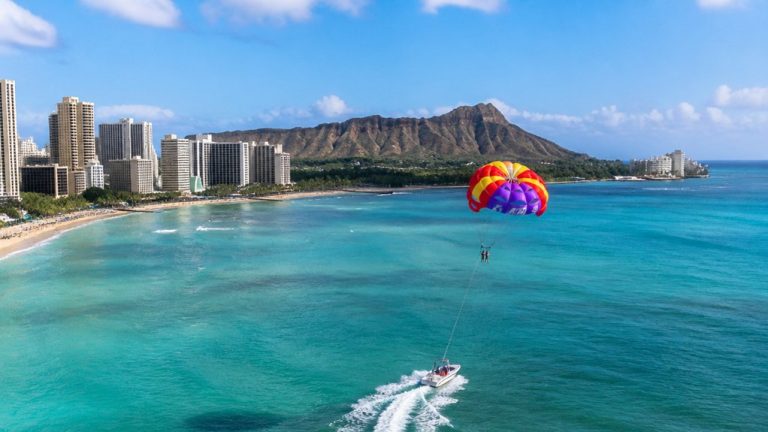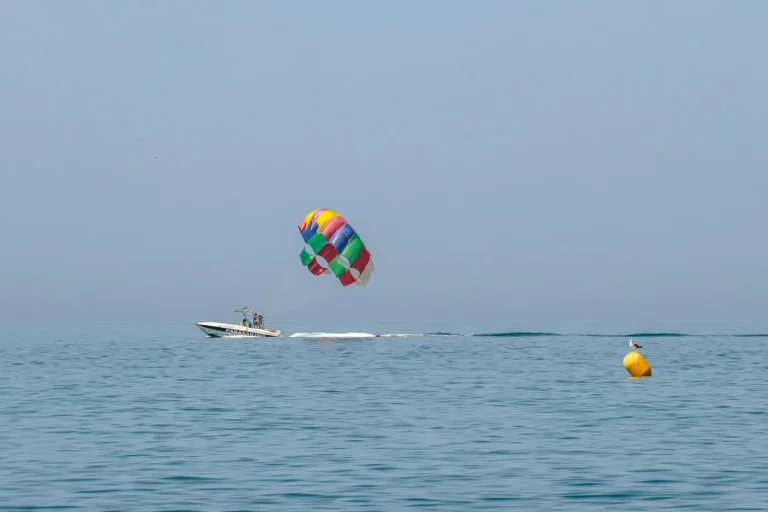
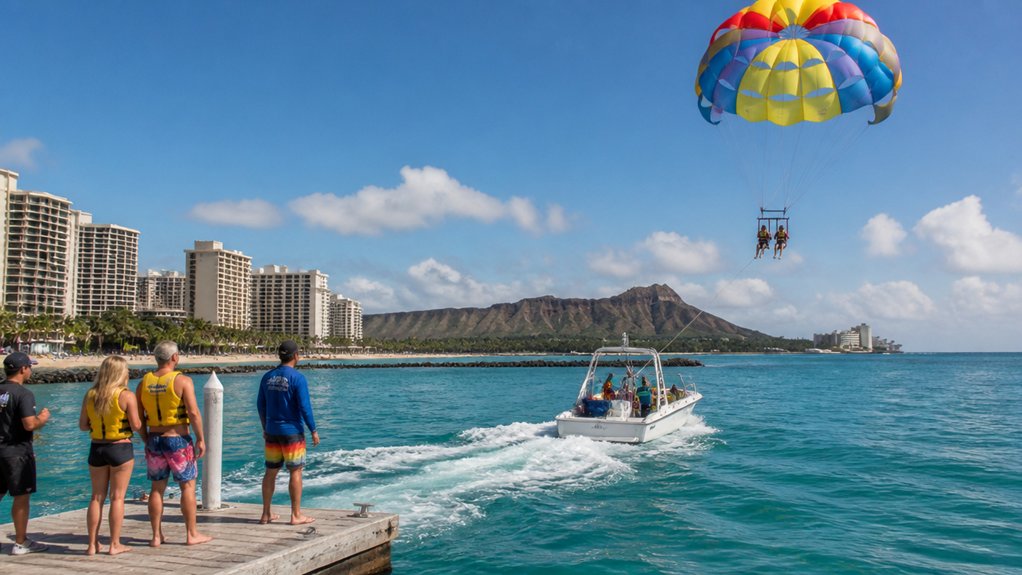
In Waikiki, a typical rideshare to the main parasailing harbors takes only 10 to 15 minutes, so skipping a rental car is easier than you’d think. You’ll want a morning launch between 8 and 10 a.m. when the sea usually looks smoother and the takeoff feels gentler. The real question is which check-in spot at Ala Moana Harbor or Kewalo Basin saves you the most hassle.
Key Takeaways
- Choose a morning tour between 8 and 10 a.m. for calmer water, steadier winds, and smoother takeoffs for first-time parasailers.
- Pick an operator with clear Kewalo Basin check-in details, such as Pier E, Slip F 6, or 1025 Ala Moana Blvd.
- Book a small-group 60 to 90 minute trip with about 8 to 12 minutes in the air for the easiest beginner-friendly experience.
- Look for tandem flights and clear child and weight rules if traveling with kids or nervous flyers without a rental car.
- Reserve early in your trip and arrive 30 minutes early, since weather changes and harbor check-in can affect timing.
Which Waikiki Parasailing Tour Is Easiest Without a Car?
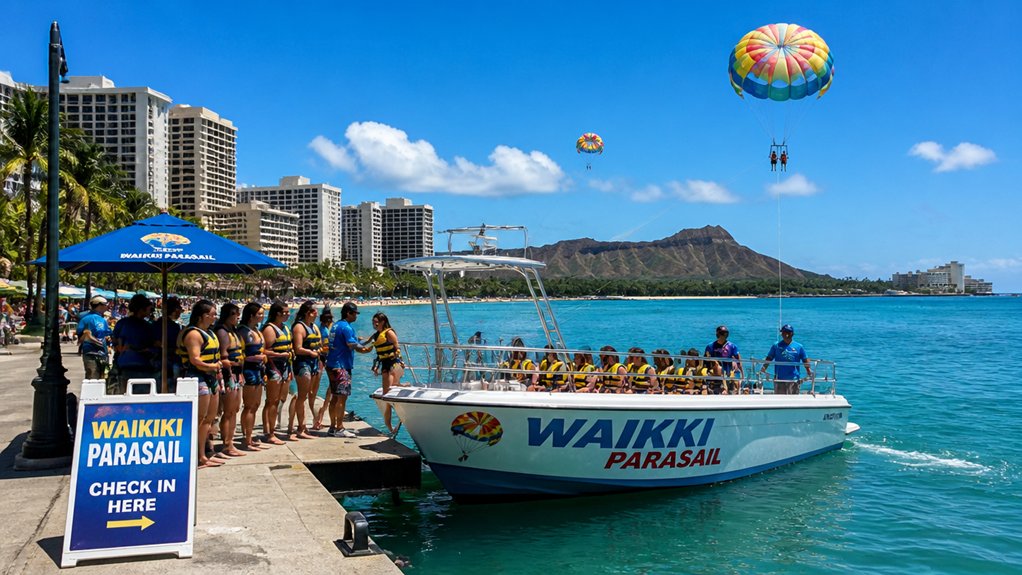
If you want the easiest Waikīkī parasailing tour without renting a car, book a morning launch between 8 and 10 a.m. and choose an operator with a simple, well-marked meet point like Pier E, Slip F 6 or 1025 Ala Moana Blvd. You’ll get calmer seas and smoother takeoffs when you walk or rideshare over. For Waikiki Parasailing, pick a small-group trip with 8 to 10 minutes aloft. The best Waikiki Parasailing Tours to Book keep the briefing short and the harnessing simple. Tandem flights help with kids or nervous flyers. Check Weight limits and equipment rules before reserving, then choose free cancellation if winds change. Use transportation tips for Honolulu parasailing to plan an easy route without a rental car. Your morning stays flexible, your transit stays easy, and the ride starts with salt air and hum.
Where Do Waikiki Parasailing Tours Check In?
Most Waikiki parasailing tours have you check in at Kewalo Basin, where you’ll spot bright booth colors and pier signs near the slips instead of a big front desk. If you’re staying in Waikiki, you’ll want to check whether your operator offers pickup or expects you to meet at the harbor, since the launch point can be somewhere else entirely. It’s also smart to review Kewalo Basin parking and bathroom options before you go, especially if you’re arriving on your own. Get there about 30 minutes early so you can show your booking, hear the safety briefing, and avoid that sweaty sprint down the pier.
Kewalo Basin Check-In
Before you ever step onto the boat, you’ll usually check in at Kewalo Basin, where Waikīkī parasailing operators run their harbor-side booths. For parasailing in Waikiki, your confirmation should spell out the exact booth or slip, because the basin can feel like a small maze of docks and signs.
- Confirm your kewalo basin check-in location, such as Pier E, Slip F 6, or the yellow and blue strip booth by the “Magic” sign.
- Arrive 30 minutes early. Operators often start the safety briefing right after check-in.
- Double-check your listing in Parasailing Tours to Book. Some departures reference 1025 Ala Moana Blvd, but your meeting point is still Kewalo Basin, not elsewhere.
Kewalo Basin is close to Waikīkī, but planning your harbor arrival ahead of time can make the start of your parasailing adventure much smoother.
That little detail can save time, stress, and one very sweaty wrong-turn shuffle.
Waikiki Pickup Options
Across Waikīkī, parasailing tours usually don’t start in your hotel lobby. Instead, you’ll usually check in at a harbor booth, not at your Waikiki hotel desk. A common spot is Pier E, Slip F 6, where you’ll find a yellow and blue striped booth beside the “Magic” sign. Some bookings list the launch area as 1025 Ala Moana Blvd, Oahu, even when the activity says Waikiki parasailing, so read your confirmation closely. Knowing the parasailing launch points in advance can make it easier to match your booking details with the right check-in location. If you want a Tour with Waikiki Pickup, look for those exact words because many operators don’t include hotel pickup or drop-off. No rental car? Choose a tour with a familiar pier address so your taxi or rideshare can drop you right at check-in, and you’ll know it’s time to go parasailing.
Still comparing Oahu Parasailing?
Ask for tour ideas, hotel suggestions, or a simple trip plan that combines both.
Trip Helper
Arrival Timing Tips
Once you know which harbor you’re heading to, the next win is timing. Most operators want check-in 30 minutes before departure at the pier office, not when the boat leaves. That matters in a harbor maze, especially if your booking says Waikīkī but your launch uses 1025 Ala Moana Blvd. book early, then confirm the meeting booth and the actual departure spot.
- Look for Pier E and Slip F 6.
- Find the yellow-and-blue strip booth by the “Magic” sign.
- Build in extra minutes for traffic, parking, or ride-share drop-off.
A quick dock check-in review before you leave your hotel can help you match the pier, slip, and booth details to your reservation.
Tours are wind-sensitive, so delays happen, but late arrivals still miss the boat. If you’re walking, don’t wander like a sunburned detective. A screenshot saves stress when the marina suddenly looks identical.
Which Waikiki Piers Are Easiest to Walk To?
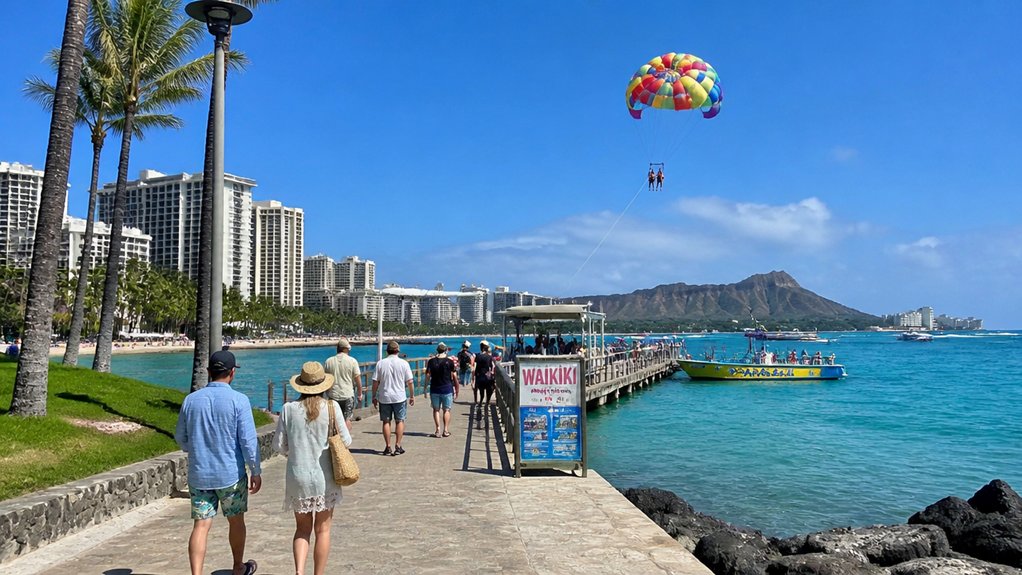
For the simplest walk from most Waikīkī hotels, Pier E in the Ala Moana harbor area is usually your easiest bet. If you want a smooth Parasailing Experience in Waikiki, look for listings near 1025 Ala Moana Blvd. Many operators use Pier E and sometimes Slip F 6, so you should confirm the exact booth before booking and check in 30 minutes prior.
| Spot | Why it helps |
|---|---|
| Pier E | Easy waterfront walk |
| Slip F 6 | Specific meeting point |
| Farther bays | Longer transfer, more crossings |
Kewalo Basin Harbor, directly makai of Ward Village, is being improved with dock renovations and added security to make the waterfront safer and more usable.
Pick the pier closest to your hotel on Google Maps, then count street crossings, not just distance. You’ll hear harbor clinks, feel the sun off the water, and save your energy for flying instead of speed-walking with sandals slapping on vacation.
When Is the Best Time for Waikiki Parasailing?
After you’ve picked the easiest pier, the clock matters almost as much as the map. For parasailing in Hawaii, morning seas often feel silkier, while late afternoon delivers postcard sunset views over Diamond Head and Waikiki’s first hotel lights.
- Choose morning parasailing around 8 to 10 a.m. for calmer water, steadier trade winds, fewer crowds, and a smoother ride if you’re nervous or motion-sensitive.
- Book day 1 or 2, so weather has room to misbehave and operators can reschedule you, often with a full refund when you cancel early.
- Want the biggest thrill? Ask for an early-morning maximum-altitude tow near 800 to 1,200 feet, if your group stays within the maximum weight.
Sunset costs more, but the glow can tempt you. For the perfect time to parasail over Waikiki beaches, balance smoother morning conditions against late-day scenery before choosing your tour slot.
How Long Does a Waikiki Parasailing Tour Take?
You can expect most Waikīkī parasailing tours to take about 60 to 90 minutes from check-in to dock return, with the boat ride, harness setup, and everyone’s turn built in. Your actual flight is much shorter, usually around 8 to 12 minutes, but it feels big as the water quiets below you and Diamond Head slides into view. If you’d like a smoother schedule, book an early morning slot, because lighter winds often help things stay on track. If your tour includes hotel transportation, plan extra time for pickup to drop-off so you are not rushing your next Waikīkī activity.
Total Tour Duration
While the actual flight feels blissfully brief, most Waikīkī parasailing tours take about 60 to 90 minutes total from check-in to dock return. That total tour duration usually starts with check-in about 30 minutes early. Then you board, get fitted, and motor past the shoreline while the boat crew keeps things moving. Your parasailing time also includes harnessing, other riders’ turns, and the ride back, so don’t expect a quick in and out.
- Arrive early for paperwork and a calm start.
- Expect the boat segment to shape the total minutes.
- Leave buffer time in case wind, weather, or group size slows departure.
The actual time in the air is usually much shorter than the full tour, often just a handful of minutes per flight depending on your package.
You might be back before lunch, but the salt air, engine hum, and Diamond Head views make the outing feel fuller.
Actual Air Time
The part everyone remembers is the stretch when your feet leave the deck, and in Waikīkī that airborne window usually lasts about 5 to 10 minutes, with many operators describing it as roughly 8 to 12.
Your parasailing outing runs closer to 60 to 90 minutes once you add check-in, boarding, and watching other riders rise and dip. The boat crew sets the pace, and wind can stretch or trim your time in the sky from one day to the next. Even taller thrill flights around 800 to 1,200 feet usually keep similar minutes in the air and fit inside about an hour on the water. For the smoothest plan, check your operator’s departure window and arrive about 30 minutes early. Ocean breeze included.
A parasailing FAQ can help first-timers understand timing, check-in expectations, and what to expect before boarding in Waikīkī.
How Much Does Waikiki Parasailing Cost?
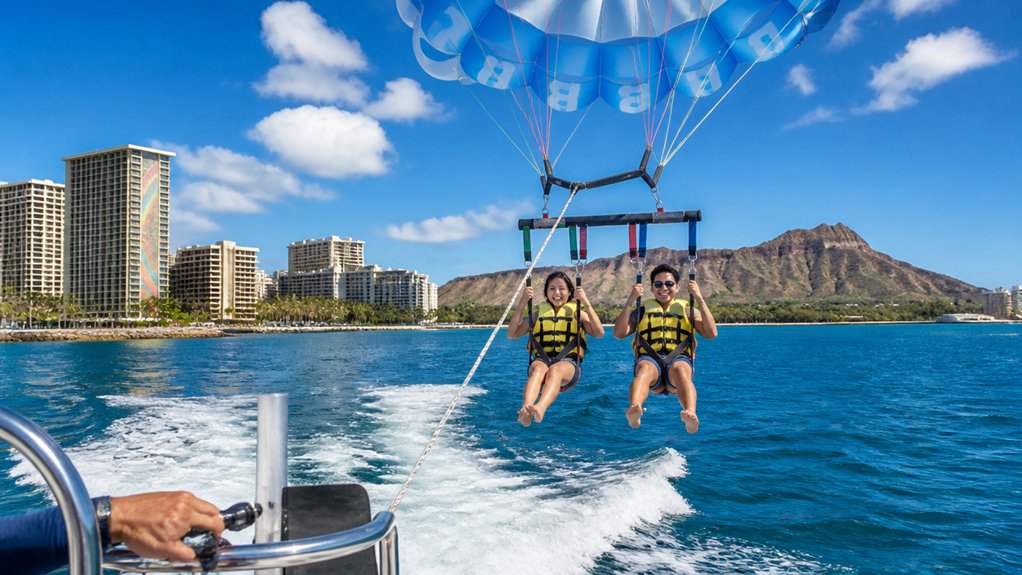
Expect Waikīkī parasailing to cost about $80 to $150 per person for a standard flight, with most outings running 60 to 90 minutes total and only 5 to 10 minutes spent in the air above the blue chop and hotel-lined shore. If you’re wondering how much does waikiki parasailing cost, most parasailing operators cluster around $90 to $130, though teaser rates can start near $44. Those teaser rates may mean a shorter flight, lower altitude, or added fees once you compare what is actually included.
- Go early. Morning launches often feel calmer and may bring better value.
- Skip the photo package. Souvenir shots usually cost extra.
- Check Weight rules and free cancellation before you book.
Premium flights aiming for 800 to 1,200 feet usually land around $120 to $200, so you’ll pay more for height, not magic over the surf below.
Which Waikiki Parasailing Tour Is Best for Beginners?
Price matters, but your first parasailing trip in Waikīkī goes better when the whole outing feels simple and calm. For First-Time Parasailers, a 60 to 90 minute tour with about 8 to 12 minutes in the air usually feels just right. You get a clear routine, a quick boat ride, and enough flight time to enjoy Diamond Head and the bright blue water without overthinking every splash.
The best time to go is a morning Waikīkī launch, around 8 to 10 a.m., when winds and chop are often lighter. Look for crews with strong beginner reviews, real knowledge and expertise, and a briefing that covers hand signals, takeoff, and landing. Before you book, confirm the operator checks weather conditions and explains basic safety rules for the day. If you’re nervous, skip the photo upsell first and focus on the smooth ride.
Which Waikiki Parasailing Tour Is Best for Families?
If you’re bringing kids, the best Waikīkī parasailing tour is usually the one that keeps the plan simple and the rules crystal clear. For Oahu parasailing, choose a Waikīkī operator that welcomes tandem flights, explains child and weight rules upfront, and keeps first-timers calm with an easy harness briefing.
For kids, the best Waikīkī parasailing tours keep rules clear, welcome tandems, and make first-time flyers feel easy.
- Book 8 to 10 a.m. for smoother water and gentler takeoffs.
- Pick a small-group trip, about 60 to 90 minutes total, so kids don’t stew on the boat.
- If your crew wants extra wow, ask about 800 to 1,200 feet, and whether Maunalua Bay options fit your family plan.
Small group parasailing can also feel more fun for families because the boat is less crowded and the crew can give everyone more personal attention.
You’ll usually pay about $90 to $140 per person, plus photos if that grin needs proof. Reviews often praise smooth, easy family pacing.
What Are Waikiki Parasailing Safety and Weight Rules?
Before you clip in above Waikiki’s bright blue water, you’ll want to know how weight limits work, since crews set solo and tandem pairings by per-person and combined totals and may change them if the wind picks up. Most operators publish minimum and maximum weight limits for parasailing in Waikiki, but the captain has the final say based on daily ocean and wind conditions. You’ll also get a quick safety briefing right on the boat, plus a hands-on check of the harness, life jacket, and chute, with simple hand signals that are easy to follow even over the engine noise. If you’re bringing kids, expect tandem rules, age and size cutoffs, and child gear checks to vary by operator, so it’s smart to confirm the details before you show up in sandals and vacation mode.
Weight Limits Explained
Because parasailing looks effortless from the beach, it’s easy to miss how carefully crews in Waikīkī match each flight to weight, age, and the day’s wind. Your age and weight matter twice: per person and as a combined total for tandem flights. Waikīkī operators enforce parasailing weight limits because rider balance, harness fit, and changing wind conditions all affect safety. Kids often fly with an adult, but only if life vest and harness sizes fit. Even if your numbers work, pregnancy, heart concerns, or recent back, neck, or surgery issues can still rule you out.
- Bring exact rider weights and ages when you book.
- Expect solo or tandem assignments to change with wind.
- Be ready to reschedule if conditions turn sketchy.
That flexibility keeps the ride smooth above Waikīkī, where winds and boat speed can change the plan fast.
Safety Briefing Basics
Step onto the boat and you’ll notice that Waikīkī parasailing runs on routine, not luck. Before your parasailing adventure starts, the crew gives a safety briefing on hand signals, harness clips, tow line points, and how launch and landing work. Right before it’s your time to fly, they inspect the chute, tighten your life jacket, and check that the harness sits snug.
You’ll also need to meet the operator’s weight rules and basic health standards. A quick parasailing safety checklist can also help you remember essentials like listening to crew instructions, securing loose items, and confirming weather conditions before takeoff. If winds shift or safety conditions fall outside limits, they may delay or reschedule, which is normal here. You shouldn’t go if you’re pregnant or dealing with certain heart issues, recent surgery, or limiting back, neck, or mobility problems. It’s practical, calm, and reassuring, like a preflight check afloat.
Kids And Tandem Rules
Once the crew finishes those checks, the next question is who can actually go up together. In Waikīkī, weight rules decide whether you parasail solo or with a parent, child, or partner, so check the listing before you book. Operators set minimums and maximums for each rider and for tandem pairs, and wind can change the call on the boat.
- Many kids can participate in parasailing with an adult if they meet the tour’s age and weight rules.
- Crew fits the chute, harness, and life jacket, then secures the child beside the adult before launch.
- Tell staff about pregnancy, recent surgery, mobility limits, or back and neck issues.
For families, reviewing age rules before booking helps avoid surprises at check-in.
That’s how parasailing works. Even if your slot shifts. Trust the crew’s final call.
How Do You Book the Highest Waikiki Parasailing Ride?
How do you give yourself the best shot at Waikīkī’s highest parasailing ride? Book an early slot between 8 and 10 a.m. when the water looks smoother and the tow can target 800 to 1,200 feet. Search Xtreme Parasail or highly rated listings like X-Treme Parasail’s Extreme 1200 ft, then request the highest package at checkout. It’s a vibe unlike a Snorkel Tour with Waikiki, but it’s still an adventure from Waikiki.
Reserve fast once you pick your date, and favor free cancellation since wind can change plans. Expect about 8 to 12 minutes in the air during a 60 to 90 minute outing. Confirm add-ons, check in 30 minutes early, and verify the meeting point, plus age and weight rules for tandem flights. Choose an operator with clear safety practices before booking, including well-maintained equipment, licensed captains, and weather-based go/no-go policies.
Which Waikiki Parasailing Tours Feel Least Crowded?
If you want more sky and less shoulder bumping, aim for an early Waikīkī launch between 8 and 10 a.m. You’ll usually dodge the biggest boat queues, skip the rougher breeze and chop, and get a calmer deck near Waikiki.
For more sky and fewer elbows, launch off Waikīkī early, when the water stays calmer and the deck feels quieter.
- Book a morning slot on a weekday for the lightest traffic.
- Choose small-boat operators. Their 60 to 90 minute trips and 8 to 10 minute flights usually feel more intimate.
- Ask how many riders go per boat and per flight. Premium height requests, around 800 to 1,200 feet, often have fewer seats and sell fast.
For cruise ship visitors, timing that works usually means leaving enough buffer between docking, transportation, and your parasailing check-in near Waikīkī.
Afterward, save Turtle Canyon Snorkeling or a sunset sail for later, so you don’t stack yourself into peak-time crowds before lunch, when the harbor feels half-asleep.
Which Waikiki Parasailing Tours Include Photo Packages?
Usually, the Waikīkī parasailing tours with photo packages don’t include them in the base fare, but many do offer crew-captured add-ons that you can buy on-site before you head out. If you want the best value near Waikiki Beach, compare operators that mention GoPro or DSLR-style shots during your flight. Reviews often rave about amazing pictures, especially on earlier weekday departures when boats run with fewer delays. You’ll also notice that higher flights, around 850 to 1,200 feet, often pair naturally with crew-captured add-on photo packages. Travelers frequently call the X-Treme Parasail 1200 ft a standout for memorable images. Before you book, confirm whether photos are automatic, which photo packages are offered, and when check-in starts, since details vary from one company to the next. Some operators also offer video add-ons or a quick ocean dip to make the ride feel more memorable.
What Should You Wear and Bring for Waikiki Parasailing?
Most Waikiki parasailing outings are easy to dress for: wear swimwear or quick-dry clothes, and bring a towel plus a dry change for the trip back to shore. You’ll likely get only a light splash, but ocean spray and wind still matter over crystal-clear waters.
- Wear for Parasailing starts with Light clothing, reef-safe sunscreen, and sunglasses with a strap.
- Pack a small dry bag for your phone and keys, and skip loose items that can shift during harnessing.
- If you want photos, ask about the operator’s add-on package before takeoff.
Arrive ready to check in and get harnessed. If wind picks up, a thin layer helps. Easy, right? You’ll step from pier to boat fast, so keep prep simple and secure.
Frequently Asked Questions
Can Non-Flyers Ride Along on the Parasailing Boat?
Yes, you can usually ride along as a non-flyer, but you’ll need to confirm non flyer options, passenger rules, and the safety briefing with your operator, since some tours limit boat-only guests or charge ticket fees.
Are Lockers Available for Bags and Valuables Near Check-In?
Usually, you won’t find lockers near check-in; arrive 30 minutes early to sort bags. Lockers availability varies by operator, so confirm ahead. For bag safety and valuables storage, bring only essentials or use paid lockers.
Is Seasickness Common, and Should I Take Motion Sickness Medicine?
Seasickness isn’t common, but you can feel it on the boat ride. For Seasickness frequency, choose a calm morning. Use Motion sickness tips like horizon focus. For Medication timing, take medicine beforehand if you’re sensitive.
Do Operators Offer Hotel Pickup From Waikiki Resorts?
Usually, you won’t get hotel pickup, just when you’re hoping for effortless vacation magic, most operators require self-arrival. You should expect no resort shuttle, though some listings offer convenient pickup if you filter or ask directly.
Can I Parasail if I Can’t Swim?
Yes, you can parasail if you can’t swim, because crews secure you with life jackets and harnesses. Tell them beforehand, attend the safety briefing, and confirm training requirements, splash expectations, and medical restrictions before booking carefully.
Conclusion
Skip the rental car circus and aim for a morning launch from Ala Moana Harbor. You’ll trade traffic for trade winds, then check in early near the pier and let the crew handle the serious faces and life jackets. Pick a small boat, ask for the higher flight, and savor those 8 to 12 quiet minutes above Waikiki. The water gleams, the city hums, and suddenly your best transportation plan is a parachute for today.