
Each winter, roughly 10,000 humpback whales move through Hawaiian waters, and a few may cross your view while you’re parasailing off Waikiki. You won’t get a front-row wildlife show on every flight, but you might catch a silver spout, a dark back, or a tail slap beyond the hotels. Timing, light, and ocean texture matter more than you’d think, and that’s where the real question starts.
Key Takeaways
- Yes, you can sometimes see whales while parasailing in Waikīkī, but sightings are lucky and never guaranteed.
- Whale season runs roughly December through May, with the best odds usually from January through March.
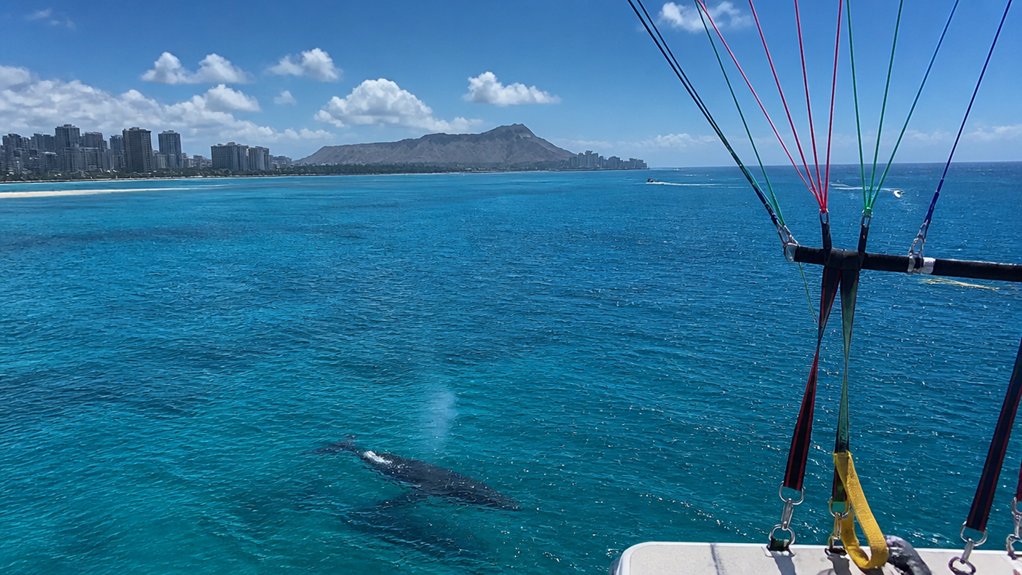
- Most parasail whale sightings are brief and distant, like a spout, dark back, or occasional tail slap.
- Early morning rides often improve spotting because calmer water and softer light make whale activity easier to notice.
- Parasailing stays near Waikīkī, so dedicated whale-watch tours usually offer more consistent and closer whale encounters.
Can You See Whales While Parasailing in Waikiki?

Yes, you can sometimes see whales while parasailing in Waikīkī, but it’s more of a lucky bonus than a sure thing. If you fly during whale season, usually December through May, you might catch a whale spout or dark back in Hawaiian waters below. During parasailing in Waikiki, sightings of turtles, dolphins, or whales can happen, but wildlife encounters are never guaranteed. Your view opens wide once the boat pulls you offshore, with Diamond Head sharp on one side and the reef glowing turquoise on the other. Still, parasailing routes stay fairly close to Waikīkī, so you won’t get the same reach as whale watching tours that head farther out and linger. Sea chop, swell, and distance can blur the moment, so keep your eyes scanning the horizon. If a humpback appears, consider it the ocean’s surprise cameo, brief, bright, and unforgettable.
How Common Are Whale Sightings on Waikiki Parasails?
Spotting a humpback from a Waikīkī parasail happens often enough to feel possible, but not often enough to count on. You might scan the blue water beyond the Ala Wai Boat Harbor and catch a spout, a dark back, or a tail slap, yet most whales spend more time farther offshore. That means Waikiki Whale moments feel exciting and a little lucky. Your flight is short, the boat usually stays near Waikiki, and choppy swell can blur the view when you’re busy watching the horizon and trying not to drop your sunglasses. If you go during whale) season, you have better odds than usual, but parasailing still isn’t the island’s strongest whales watching platform. Longer cruises can roam and listen offshore for more consistent encounters. During whale season, boaters are also encouraged to follow Go Slow, Whales Below guidance and transit at recommended slower speeds to reduce the risk of collisions.
When Is Whale Season in Waikiki?
If you’re hoping to spot whales in Waikīkī, you’ve got the best odds from December through May, when humpbacks return to Hawaiʻi and sightings pick up by mid-December. Your sweetest window runs from January through March, with mid-February to mid-March often bringing the most active scenes and the most fins, blows, and tail slaps. You can still catch a lucky sighting in April or May, but the action usually starts thinning out as the whales head north again. For the smoothest overall experience, the best season for parasailing in Waikīkī often overlaps with calmer, clearer days that can make ocean views even better.
Whale Season Timeline
From November to early May, humpback season sweeps through Hawaiʻi, and that includes the waters off Waikīkī. You might spot first arrivals by late October or early November, but sightings usually grow steadier around mid-December. If you book with Nani Kai Ocean Adventures, keep your eyes on the horizon and your ears open for that sudden cheer when someone spots a spout. For travelers planning a fuller ocean day, an Oahu parasailing and snorkeling combo can pair sky-high views with time exploring the water.
| Time | What you may notice |
|---|---|
| Late Oct to mid-Dec | Early visitors, scattered sightings, silver water and lots of scanning |
| Mid-Dec to early May | More regular encounters in humpback whale national marine waters, with the best months to see whales and months to see humpback still ahead |
Still comparing Waikiki Parasailing?
Ask for tour ideas, hotel suggestions, or a simple trip plan that combines both.
Trip Helper
Peak Viewing Months
Usually, whale season in Waikīkī hits its sweet spot in January and rolls strong through March. Those are the best months to see the big visitors from shore, on a cruise, or while you’re parasailing above Waikīkī. If you want to see humpback whales, aim for mid-February. That’s when numbers peak, and you may catch tail slaps or pectoral fin smacks through mid-March. Daily sightings build by mid-December, so winter trips already offer a solid chance. Book an early morning sail or a sunset cruise, since calmer seas often help you spot blows, backs, and splashes. Waikīkī isn’t always the best place for every sighting, but it gives you a fun front row seat before some whales start heading north in spring each year. While you’re out on the water, follow responsible recreation practices so your whale watching stays safe, respectful, and low-disturbance for marine wildlife.
What Time of Day Gives You the Best Odds?
If you want your best shot, book an early morning parasail when the water often looks smoother and whale activity can be easier to catch. You might spot a quick spout or a humpback rolling at the surface before glare and swell start to work against you. The best time of day can depend on visibility, wind, and ocean conditions around Waikiki. If morning doesn’t fit, a late afternoon or sunset ride can still pay off, with softer light, calmer seas, and a pretty good excuse to stay out on the water.
Early Morning Advantages
Why do so many whale watchers book the first run of the day? In Waikiki, your best shot often comes in the early morning, when the ocean looks smoother and the light throws less glare across the water. That cleaner view helps you catch spouts, fins, and sudden rolls before the breeze roughens the surface. Whale sightings around Oʻahu peak from December through May, and January through March usually brings the steadiest action. If you’re scanning from shore instead of a boat, head to a good vantage point like Diamond Head or Makapuʻu. From those elevated lookouts, you can sweep the blue horizon toward the North and spot a humpback’s breath more easily. Bring coffee, binoculars, and a little patience before breakfast if possible. If you’re considering a boat-based view, knowing what to expect while parasailing in Waikiki can also help you feel more comfortable on the water.
Late Afternoon Chances
By late afternoon, Waikiki often settles down just enough to give you another solid whale-watching window. Softer light helps you spot spouts, dark backs, and quick surface rolls near sunset. Your late afternoon chances improve most during Oʻahu’s December to May whale season, especially January to March, when the Hawaiian Islands Humpback Whale can pass offshore. Still, whales move, so nothing’s guaranteed from Shore or Pink Sails alone.
- Aim for sunset glass and quieter water
- Scan Diamond Head or Makapuʻu on clear days
- Watch for spouts, tail slaps, and brief breaches
- Pair parasailing with Whale Watching Boat Tours
- Expect 1.5 to 2 hours, plus narration, hydrophones, and a skipper who knows where the action usually pops up first before your tow line ever rises
If windy weather rolls through Waikiki, parasailing tours may cancel or reschedule for safety, which can shift your whale-spotting plans.
What Conditions Make Whales Easier to Spot?
When does whale spotting feel almost unfairly easy? Go when the ocean settles down. Early morning usually gives you less wind and swell, so you can pick out a spout instead of guessing at whitecaps. Soft light helps too. Sunrise and even late-day glow can make those mist bursts stand out over the North Pacific.
If you’re scanning from Shore, clear weather and long sight lines really matter. Elevated lookouts like Diamond Head or Makapuʻu rank among the best places to see humpback signs from afar. Peak season, especially January through March, also boosts your odds because whales show up more often. Daily sightings can start by mid-December. Check the forecast before you head out. Choppy water turns every promising splash into a maybe, honestly. Parasailing operators use specific Waikiki launch points, so your exact departure area can affect the offshore views you get while looking for whale activity.
Where Do Whales Usually Surface off Waikiki?
You might spot a humpback surface near Diamond Head, but you’ll usually get better odds in the offshore viewing zones beyond Waikīkī where the water opens up and a quick white spout can catch your eye. If you’re scanning from a boat, you’re watching for that brief burst of mist and the dark back rolling up to breathe. For the most reliable action, you’ll want to look toward Kaʻena and the North Shore, where Oʻahu’s whale traffic tends to put on a better show. A Waikiki parasailing day can fit into a broader 7-day Oʻahu itinerary that also leaves room for island highlights beyond the beach.
Near Diamond Head
Where should your eyes go near Diamond Head if you’re hoping to spot a humpback? Scan the open water beyond Diamond Head on clear winter days and watch for a burst of mist. That spout is your best clue that a Hawaiian humpback has surfaced. You might see one from Waikīkī-adjacent lookouts, especially from January through March, but sightings still feel hit-or-miss. Parasailing can deliver big views, not guaranteed whale action, so set your expectations and enjoy the search. Before booking, remember that operators must follow Coast Guard rules and Hawaii safety requirements designed to protect passengers on the water.
- Look for a quick white puff against the blue horizon
- Bring binoculars if you can from the lookout rail
- Morning light often helps you see past glare
- Calm seas make spots to see whales very much easier
- Treat every scan like a patient treasure hunt
Offshore Viewing Zones
So if you’re picturing a humpback surfacing right beside the Waikīkī swim zone, trim that postcard idea a little. In winter, whales pop up in more productive water offshore, not in the bay where you launch for parasailing in Waikiki. Your higher view can help you scan, but it won’t reliably drop you into the main offshore viewing zones. From Waikīkī, you may catch a spout from Diamond Head or Makapuʻu, though the action often stays far enough out to look like a puff of steam. If you want better odds, choose a boat that actively searches beyond the usual beach corridor. Some routes angle toward Ka‘ena Point state waters, not a North Shore or Pink cruise, and that search matters during humpback months. Since parasailing depends heavily on safe wind conditions, operators may adjust or cancel rides when winds pick up, which can also affect how much time you get to scan offshore.
Kaʻena And North Shore
Better odds start when you look past Waikīkī and up toward Oʻahu’s North Shore and the waters off Kaʻena Point. That side of the island gives you a stronger shot at seeing a humpback than central Waikīkī, especially in winter and early spring.
- Scan for the spout first. That mist plume often pops above the ocean waters before the body follows.
- January through March brings peak chances, though sightings can run from December into May.
- Early morning or late afternoon calm seas help you pick out splashes, backs, and tail slaps.
- Around ten miles out, the northwest zone is often the reliable pocket boat crews watch.
- You may be seeing younger humpback roamers here, which helps explain why the North Shore gets more chatter.
Before you lock in a flight, review basic booking tips like weather policies, operator safety standards, and what the tour actually includes.
What Can You Actually See From a Parasail?
What do you actually see once the tow line lifts you above Waikīkī? During Parasailing in Waikīkī, you mostly watch busy ocean waters spread below like blue glass and wrinkled silk. If whales are around, you probably won’t get a movie moment. You’re more likely to catch a distant humpback whale clue, like a quick spout mist plume, or a dark back rolling at the surface. Winter gives you the best odds, especially from January through March, though sightings can happen from December to May. Calm mornings or late afternoons help you scan better and feel steadier in the harness. Most of the time, the fun is the wide view itself from above: reefs, boats, hotels, and that bright Pacific shimmer pulls your eyes seaward. Ocean conditions can still change quickly, and rip currents are likely in or near the surf zone, so choose beaches and water activities with care.
How Close Can Parasailing Boats Legally Get?
You can’t expect a parasailing boat to cruise up for a whale-side look, because humpbacks have a strict 100-yard legal buffer. If one surfaces nearby, your captain has to keep that distance and follow marine-mammal safety rules, even when the view tempts everyone on board. So if whales pass through the area, you’re more likely to spot a far-off spout or rolling back than get a front-row close-up. The U.S. Coast Guard’s Boating Safety Division focuses on reducing deaths, injuries, and property damage on U.S. waterways by improving recreational boaters’ knowledge and skills.
100-Yard Approach Limit
On the water, the rule is simple: parasailing boats in Hawaiʻi can’t legally approach humpback whales closer than 100 yards, or about 90 meters. That 100 yards approach limit protects winter visitors and shapes what you’ll see from Waikiki.
- Humpbacks are Oʻahu’s most likely winter whales, especially January through March.
- Your Hawaiian guide to whale watching starts with patience, not pursuit.
- You may spot a dark back, a puffing blow, or a tail flash.
- Think of the Hawaiian Islands Humpback Whale National sanctuary as the backdrop.
- Distance keeps the encounter calm, legal, and surprisingly memorable.
Before heading out, check current ocean conditions through HawaiiBeachSafety.com, which updates beach conditions every 15 minutes.
From the parasail, you’re watching wild animals on their terms, which is exactly why a respectful sighting can feel bigger, rarer, and far more exciting than a rushed close-up.
Captain Safety Compliance
Because parasailing boats usually work the nearshore water off Waikīkī, the real legal question is how your captain reacts when a whale shows up. You shouldn’t expect a boat to edge in for a better look. In Hawaiʻi, captains must stay at least 100 yards from humpback whales, and good operators act fast. They slow down, change course, or stop, keeping your ride fun and marine-law friendly. Winter gives you a good chance of sightings, especially from January through March, but Waikīkī isn’t a free-for-all or a floating good place for photo chases. Before you launch, ask about the whale protocol. You can also ask how often the boat undergoes safety inspections and what rules the crew follows before leaving the dock. If the crew can clearly explain distance, speed, and safety steps, you’ve likely found a captain who respects the ocean and your view.
Which Waikiki Parasailing Trips Improve Your Odds?
While parasailing in Waikīkī is mostly about the rush, the trips that improve your whale odds usually launch in humpback season, from about December to May, with the strongest window from January to March. For better parasailing in Waikiki, pick rides from Ala Wai or Ala Moana, target calm early or sunset slots, and ask whether the crew shares Star tips and local whale watching spots, even though you won’t be near the western point of Oʻahu. Some flights also reward you with Diamond Head views, adding a scenic highlight while you scan the water for whale activity.
For better whale odds while parasailing in Waikīkī, book winter flights, calmer launch times, and routes with wider open-water views.
- Winter peak months matter most for reliable sightings in season.
- Morning water is smoother and glare drops faster later.
- Open water routes widen your sight line around Waikīkī.
- Narrated trips help you scan faster with crew cues.
- Pair it with shore lookouts if whales top your list.
What Should You Bring for Whale Spotting?
For whale spotting, a small kit makes a big difference. You’ll scan the ocean longer and catch more detail with binoculars, especially when a far spout looks like mist. Polarized sunglasses cut glare. Reef-safe sunscreen saves your skin. A light jacket helps when trade winds turn cool, and non-slip shoes keep you steady on boats, docks, and tours. Bring your phone or camera in a waterproof case with a full battery. Whale moments don’t wait. Use straps and tethers on phones, cameras, and binoculars so a sudden breeze or boat movement does not send your gear overboard.
| Item | Why bring it | Best use |
|---|---|---|
| Binoculars | Confirm distant spouts | Open water |
| Sunglasses | Reduce glare | Midday scans |
| Reef-safe sunscreen | Protect skin | Sunny decks |
| Waterproof phone | Catch tail slaps fast | Splashy rides |
Charged batteries matter because spy hops and tail slaps can happen in seconds, right after you’ve lowered your camera.
How Can You Improve Your Odds in Waikiki?
Your odds go up when you treat whale spotting in Waikīkī like a timing game, not a sure thing. Winter helps most, especially January through March.
- Pick an early launch or sunset slot. The calmer surface usually makes spouts easier to catch, and that time of day makes watching better.
- Scan for whales from the shore first, using binoculars from Diamond Head or Makapuʻu before you commit.
- Choose elevated watching spots where you can read the water, spot spouts, and notice birds fussing over bait.
- Aim for December through May, then circle January to March, when humpbacks show up offshore more consistently.
- Stay flexible with weather and visibility. Even on great days, ocean conditions shift fast, and whales don’t send you an itinerary ahead.
For the best scenic payoff, pair your whale-watch timing with Waikiki parasailing views toward Diamond Head when visibility is clear.
Is Parasailing or a Whale Watch Tour Better?

So which one wins if whales top your Waikīkī wish list? You should book whale watch tours. They actively search offshore for humpback whales, especially in peak January to March, while parasailing mostly gives you a scenic glide above shallow waters and coastline. If you want songs too, tours often use hydrophones.
| Option | Best for | Why |
|---|---|---|
| Parasailing | Views | Fun ride, limited searching |
| Whale watch tour | Sightings | Captains scan routes, longer time |
| Calm timing | Both | Early or late light helps spot spouts |
Choose parasailing if the thrill matters most and a whale sighting would simply feel like a lucky bonus. Choose a tour if whales are the mission. You’ll trade altitude for focused scanning, steadier viewing, and a better chance of hearing the ocean sing.
Where Else on Oahu Are Whale Sightings Better?
Better whale odds usually lie away from Waikīkī. If you want to see whales while visiting Oʻahu, look beyond the usual parasailing corridor and aim for waters or viewpoints with wider horizons.
- Head to the North Shore, where humpback whales show more often than off central Waikīkī.
- Check the Kaʻena Point side and the northwest coast for stronger winter viewing.
- Try Diamond Head or Makapuʻu Point at sunrise, when calmer seas make spouts easier to catch.
- Go from December through May, with January to March giving you peak odds.
- If you want closer looks, pick tours that search broader offshore water, not just Waikīkī.
You might still wait patiently, but that first misty blow beats squinting at empty chop on those quiet blue winter mornings.
Who Should Choose Waikiki Parasailing for Whales?
If you love the lift and sweep of parasailing and you’d treat a whale spout as a lucky extra, Waikīkī still makes sense. You should book it for the flight, the salt air, and the bright patchwork of Waikīkī waters below, not for reliable whales.
Humpbacks are visiting Hawaiʻi in winter, and the season runs from December to May, with the best odds in January through March. Still, parasail routes don’t chase surfacing animals. If whale watching tops your list, choose a regulated boat tour that can reposition, share narration, or drop hydrophones. For land-based chances near town, bring binoculars to Diamond Head or Makapuʻu Point. Think of parasailing as sky-high sightseeing with a maybe, not a marine safari with gull cries and towrope hum.
Frequently Asked Questions
Do Children Need to Meet Age or Weight Limits for Parasailing?
Yes, your child must meet age restrictions and weight limits for parasailing, because operators enforce child safety rules. You’ll need to check each company’s policies, and some may also have guardian requirements before booking first.
Can You Take Photos or Videos While Parasailing?
Yes, you can sometimes take photos or videos, but like threading a needle in the wind, you’ll need operator approval. Follow dive safety rules, secure camera gear, skip underwater viewing, and keep photo timing overhead.
What Happens if Weather Cancels a Parasailing Trip?
If weather cancels your parasailing trip, you’ll usually get weather rebooking or a refund; ask about cancellation fees. You may wait through safety briefings and delays, then switch to alternative activities if conditions don’t improve.
Are Pregnant Travelers Allowed to Parasail in Waikiki?
Usually, you can’t, wind tugs, the boat surges, and your harness tightens. Waikīkī operators often ban pregnancy under safety guidelines; if they don’t, you’ll need medical clearance, follow life jacket use, and note marine spotting rules.
Do Operators Offer Refunds if No Whales Are Seen?
Sometimes, you can get a refund or rebooking, but you must check each operator’s refund policy. Because whale sightings aren’t guaranteed, customer guarantees vary, and your refund eligibility depends on season, terms, and no-sighting rules.
Conclusion
If you parasail in Waikīkī during winter, you might catch a whale’s misty spout or a tail slap beyond the reefs. That quick glimpse feels bigger when you know around 10,000 humpbacks migrate to Hawaiʻi each season. You won’t get the close, lingering views of a whale watch tour, but you’ll trade them for sky-high perspective, warm salt air, and the sudden thrill of spotting life moving through all that blue beneath your dangling feet.