
Parasailing can look like you’re about to launch into the sky like a human kite with a terrible plan, but you don’t actually jump off the boat. You step onto the rear deck, clip into a harness, feel the tow line tighten, and rise as the canopy fills above the engine’s growl and the salt spray. The takeoff feels smoother than you’d guess, and the way it all works might surprise you.
Key Takeaways
- Yes, parasailing usually takes off from the back deck of the boat, not from a beach or dock.
- You sit on the stern deck while the crew secures your harness and life vest before launch.
- No jumping is required; the boat accelerates, the canopy fills, and you lift off smoothly.
- The captain controls takeoff and landing by adjusting boat speed and tow line tension.
- Most trips launch and land on the boat deck, so you usually stay dry unless you request a toe dip.
Do You Take Off From the Parasailing Boat?
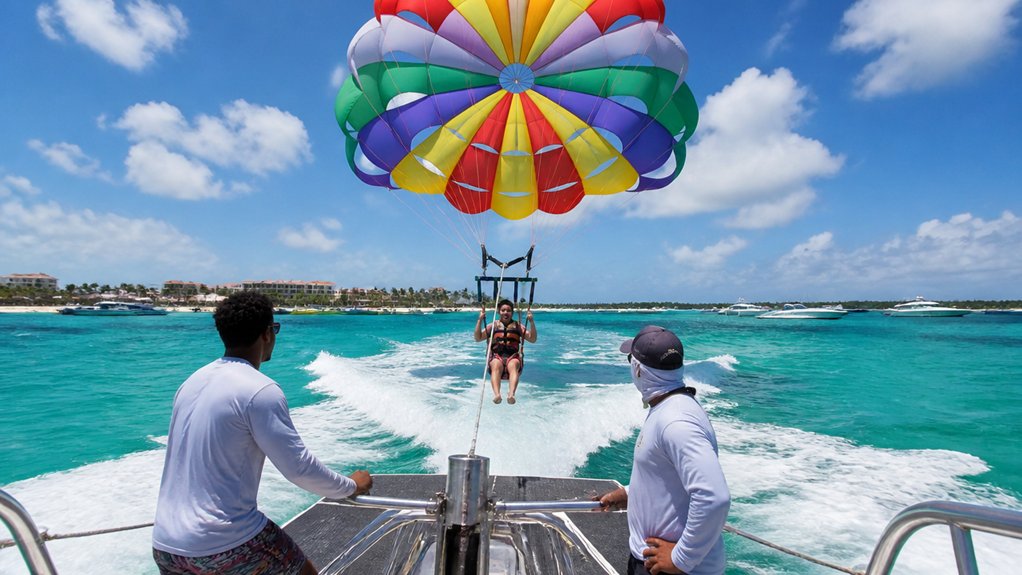
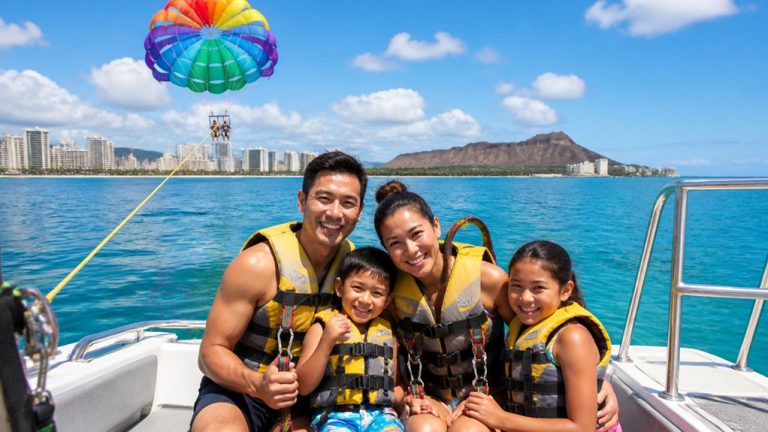
How do you actually take off when you go parasailing? You launch from the back of the parasailing boat, not from a beach or dock. After crew checks your harness and life vest, you settle onto the stern deck while the hydraulic winch handles the tow line. As the boat accelerates, the parasail opens, fills with wind, and starts to rise. You feel a firm pull, hear the engine hum, and lift smoothly into the air. Captains control takeoffs and landings by adjusting speed and line tension, so the whole move feels calm and deliberate. Most trips are deck-to-deck, which means you usually don’t touch the water at launch or return. If you choose a wet finish, your feet might lightly skim the surface. Before boarding, the dock check-in process helps confirm your reservation, safety details, and readiness for the boat.
Do You Jump When Parasailing?
You don’t jump when you go parasailing. You’re usually already seated and clipped in on the boat’s back deck, and as the captain adds speed, the canopy fills with air and lifts you so smoothly it can feel like your seat just grew wings. You simply follow the crew’s signals while you rise in a steady glide and come back down the same controlled way. In Waikiki, many operators can accommodate guests who are not strong swimmers because takeoff and landing typically happen from the boat.
No Jump Required
Although it looks dramatic from shore, parasailing doesn’t ask you to leap off anything. You step onto the boat deck, listen to a safety briefing, buckle into a harness, and wear a life jacket. Then the captain handles the rest. As you’re towed behind a boat, the parachute-like canopy fills with air and lifts you gently from the back of the boat. It feels more like rising from a chair than making a jump. You don’t need training, steering, or swimmer’s lungs. For many riders, the parasailing experience feels surprisingly calm once you are airborne above the sea. Your flight time is usually only 6 to 8 minutes, even though the whole outing lasts about 1.5 hours. You start on the boat deck and finish there too. If offered, a toe dip near the end is optional, not a test.
Smooth Deck Takeoff
Once the mate clips your harness to the parasail line, the biggest surprise is how calm the takeoff feels. You stand on the back deck of the boat in your life vest while the parachute fills above you. Then the captain and hydraulic winch do the work. The tow line snaps taut, your seat settles, and you rise in a slow, steady lift instead of a jump.
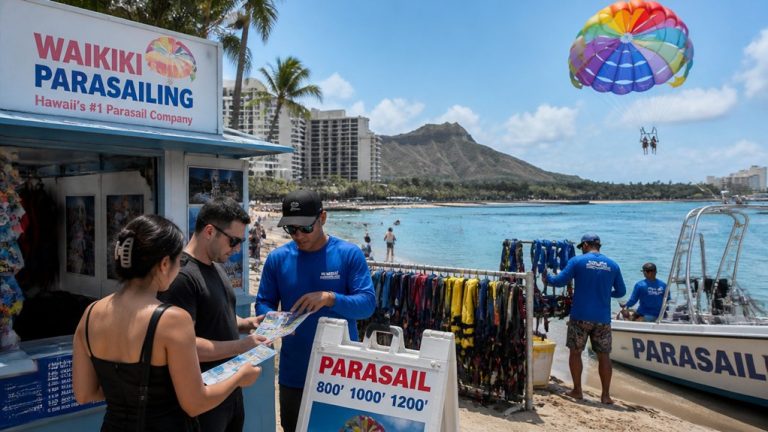
It feels more like leaving an elevator than blasting off. Most of the time, you start your flight on the deck and come back to the spot. Your feet don’t skim the water on takeoff. That splashy part, if you want it, usually happens near the end. Until then, you float upward and watch the wake shrink. In Waikiki, tours use specific parasailing launch points so passengers can board, take off, and return smoothly from the boat.
Still comparing Oahu Parasailing?
Ask for tour ideas, hotel suggestions, or a simple trip plan that combines both.
Trip Helper
How Does Parasailing Takeoff Work?
From the boat’s back deck, a parasailing takeoff feels more like a smooth lift than a dramatic leap. You stand on the flight deck while the boat crew checks that your harness and life vest sit snug and steady.
Then the hydraulic winch releases the tow rope as the boat picks up speed. You hear the engine rise and feel the line pull straight. The canopy fills with air behind you, like a giant kite waking up, and your parasailing takeoff begins. Instead of jumping, you simply glide upward as the stern drops away. Most rides launch and land right on the boat, so you usually stay dry. Once you’re aloft, the flight lasts several minutes, not minutes to an hour, before a controlled return. In Waikiki, typical air time is often shorter than the full boat trip, since the overall outing includes setup, turns, and returning to shore.
What Gear Connects You to the Parasail?

On the deck, the gear that connects you to the parasail feels surprisingly simple and solid. You wear a life vest and an adjustable harness, and the mate clips both into the parasail wing setup before launch. The harness supports your waist and legs, so you stay centered as the boat moves and the canopy fills. Behind you, the tow line runs to the stern, where the captain uses winch controls to manage line length and tension. The towline and winch work together to transfer the boat’s pull smoothly to the parasail. Without that steady pull, the parasail would droop like a sleepy beach umbrella. Crew members double check every buckle and carabiner, so you wear secure gear from the start. It looks technical, but the setup is neat, padded, and reassuring, with clicks and whirrs instead of chaos.
How High and Long Is a Parasailing Flight?
Once the boat picks up speed, you’ll usually rise about 200 to 400 feet above the water, high enough to watch the shoreline shrink and hear the engine fade into a soft hum. Most flights keep you in the air for about 6 to 15 minutes, depending on the package you book and how many riders are on the boat. If you choose a high-fly upgrade, you’ll get more rope and a little more sky, with 500 vertical feet as the legal ceiling. In Waikiki, common package choices may be described by parasailing height options like 600 ft, 800 ft, or 1,000 ft of towline.
Typical Flight Altitude
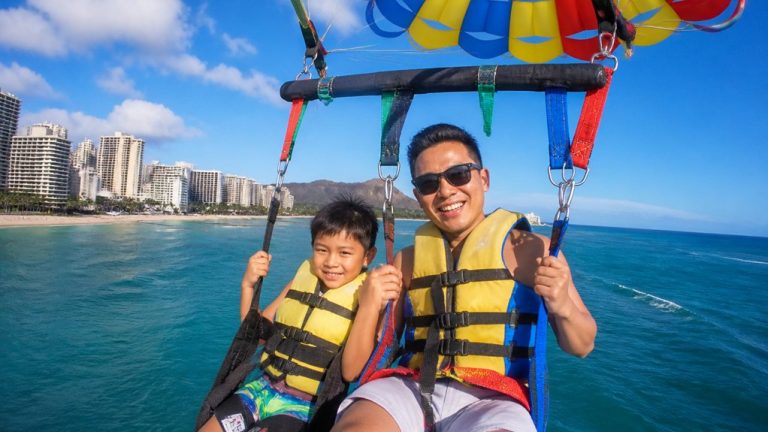
Usually, you’ll rise about 200 to 400 feet above the water, which feels high enough for big horizon views while you can still pick out boats and even swimmers below. That typical flight altitude, often listed as 200–400 feet, gives you a breezy, bird’s-eye look without pushing past the FAA legal ceiling of 500 vertical feet. Operators control height through tow rope length. About 800 feet of rope can put you near the maximum legal altitude because the line angles back behind the boat. Some trips use shorter setups for a lower climb. Your captain may also adjust things depending on weather and changing weather conditions, so you get a smooth ride instead of a dramatic lesson in sea breeze math for beginners too. For parasailing beginners, Honolulu’s calmer tour routes can make the height feel exciting but still approachable.
Time In The Air
For the part that really counts, you’ll spend about 6 to 8 minutes in the air, though some trips stretch to 10 or even 15 if your package allows more flight time or the crew is cycling fewer riders. Your Parasailing Flight usually lasts 45 minutes to an hour and a half from takeoff to landing. During that time in the air, you may rise 200 to 400 feet, or higher on select trips. In Waikiki, parasailing height can vary by operator, weather, and the length of line used during your flight. You leave the boat while attached, then the winch reels you back to the deck. That setup supports water safety and keeps the ride smooth and enjoyable. Watching how people fly looks surreal at first, but the landing feels calm, not dramatic, as the boat hums and salt spray glitters below.
How Do You Land After Parasailing?
Back at the stern, the landing feels more like a slow elevator ride than a plunge. The captain uses a hydraulic winch to reel you in, so you descend smoothly while still attached to the canopy and harness. Your landing usually happens on the back of the boat, where parasailing operators and trained professionals wait to guide you in. You don’t need to run, brace hard, or do anything dramatic. You stay wearing a life vest, and your water shoes simply help with grip on the deck. If you had any water contact during the flight, it typically happens before this final return. The whole trip, from launch to landing, fits within 45 minutes to 1.5 hours, depending on how many guests are aboard. Before going out on Oʻahu, consider signing up for Beach and Ocean Alerts to stay informed about unusual ocean conditions and hazards.
Do You Swim or Get Wet Parasailing?
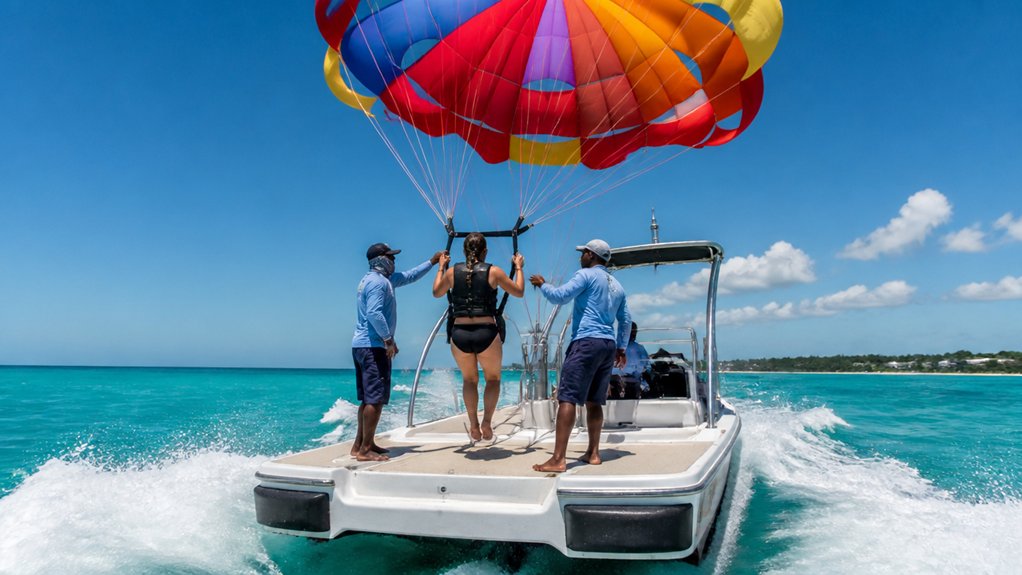
So, do you actually have to swim or get wet when you go parasailing? Usually, no. You launch and land on the boat deck, so you won’t need to swim. Most rides keep you dry because the crew winches you up and back from the rear platform. Once you’re airborne, you feel cool air, hear the engine hum, and watch the water slide by below.
If you’re wondering, do you swim or get wet parasailing?, the answer is mostly only if you want to. Many operators offer a gentle optional dip near the end, and you can skip it by telling the captain before takeoff during safety briefings. In Waikiki, dip options are typically optional, so you can choose a dry ride or a quick splash depending on your comfort level. You still wear a life vest and harness, and quick-dry clothes help with stray splashes too.
Is Parasailing Safe?
How safe is parasailing? Parasailing is generally very safe when you ride with trained captains and crew. They run the winch and canopy system, review hand signals, and manage smooth takeoffs from the boat’s back deck. You don’t steer or sprint into shore. You simply rise into the wind, often 200 to 400 feet up, then float for 6 to 8 quiet minutes above the water. Operators watch weather closely and cancel if conditions turn sketchy, often with a refund or reschedule. In Hawaii and across the United States, reputable operators also follow Coast Guard rules designed to reduce risk on the water. In the United States, long term data shows very low risk compared with millions of rides. A good Beginners Guide also notes weight limits and that many companies offer tandem flights, which helps keep the experience safe and enjoyable for first timers.
Who Can Parasail and When Should You Book?
When can you book, and who gets the green light to fly? You can usually reserve 1 to 3 days ahead, and summer slots may fill two days out, so don’t wait until your last day.
| Need to Know | Rule | Best Time to Go |
|---|---|---|
| minimum age | Around 5; under 18 needs adult | Early in your trip |
| combined weight | About 125 lbs solo, ~600 total | Weather may shift plans |
Most operators judge weight per person and by group load at the captain’s call. Pregnancy and back, neck, or spinal injuries usually mean no flight. The Water Sports Industry Association is a useful checkpoint, but your operator’s rules rule. Before you reserve, review the operator’s booking requirements so you know age, weight, and health limits before arriving. Book earlier so weather delays don’t eat your time spent on the boat before the towline sings.
Frequently Asked Questions
Can Non-Flyers Ride on the Parasailing Boat?
Yes, you can often ride as a non-flyer if space allows, but you’ll follow safety briefing rules, crew instructions, age restrictions, arrival timing, payment deposits, weather impacts, weight limits, and life jacket fitting requirements closely.
Can I Bring My Phone or Camera Parasailing?
Yes, you can bring your phone or camera if you secure it after the safety briefing; life jacket, secure harness, water conditions, wind speed, landing procedures, weight limits, and height rules affect what’s allowed aboard.
What Should I Do With Glasses or Sunglasses?
Secure eyewear: use straps, choose snug fit, and avoid loose frames. Wear polarized lenses, bring a case, protect from splashes, and clean after landing. If you can’t secure them, store them safely before launch instead.
Will I Get Seasick During a Parasailing Trip?
Probably not; you’ll usually feel fine, especially if you follow hydration reminders, timing for meals, body posture tips, anxiety management, sea condition awareness, nausea prevention steps, and consider motion sickness medication options on rougher days.
Should I Tip the Parasailing Crew?
Yes, coincidentally, you’ll tip if you value parachute safety, crew instructions, weight limits, payment options, tour duration, boarding process, cancellation policy, and weather conditions; you can thank the crew with cash after landing, if allowed.
Conclusion
So yes, you usually take off right from the boat, not with a jump but with a smooth lift. You clip in, you sit back, you rise. The deck feels solid, the harness feels snug, the engine hums as the sky opens wide. You may stay dry or skim the water, then land back on deck with help from the crew. It’s simple, scenic, and just a little funny when your flip-flops seem far away.