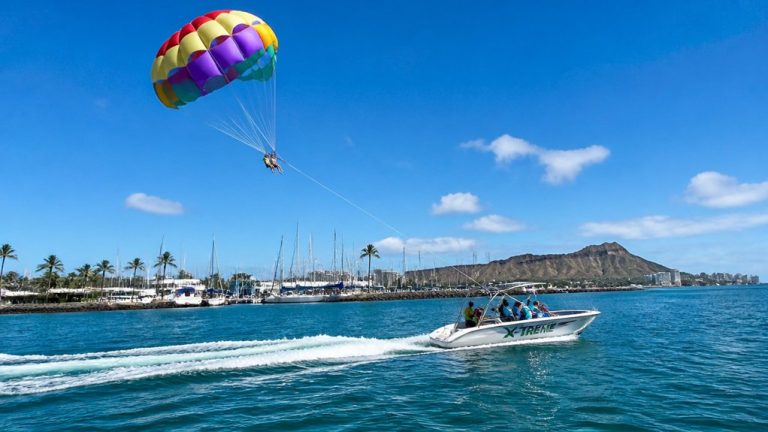
Most Honolulu parasail flights keep you aloft just 8–12 minutes, yet you’ll spend 60–90 minutes total between check-in, boat time, and turns. You’ll lift off from Waikīkī or Kewalo Basin, float 500–1,000 feet up, and watch Diamond Head sharpen into view while the reef turns electric blue below. Expect $120–$200 plus photo upsells, bring a dry pouch and reef-safe sunscreen, skip loose hats, and book mornings for calmer water. Still, the safety fine print matters, and it’s not all the same…
Key Takeaways
- Expect 8–12 minutes airborne at roughly 500–1,000 feet, within a 60–90 minute total outing including check‑in and boat transit.
- Book early-morning flights (8–10 a.m.) for calmer winds, smoother takeoffs, fewer crowds, and easier rescheduling if weather cancels.
- Choose launch harbor wisely: Waikīkī for iconic city/Diamond Head views; Kewalo for calmer mornings; Hawaiʻi Kai for reef scenery but longer travel time.
- Prioritize safety: Coast Guard compliance, clear briefings, double-checked harness/carabiners, maintained gear logs, and captains willing to shorten towline or cancel in gusts.
- Budget $80–$180 per person plus tips; photo packages commonly cost $20–$60, and weekend, sunset, and longer-flight upgrades cost more.
Parasailing in Honolulu: What It Feels Like
Although your feet leave the deck fast, the first thing you notice parasailing in Honolulu is how calm it feels once the rope tightens and the boat eases you up.
Waikiki turns into a postcard, and you get instant sensory immersion: salt on your lips, wind in your ears, sun flashing on the reef.
Most rides give you 8 to 10 minutes aloft, around an hour total, and cost $80 to $140.
Go early to beat crowds and chop.
Bring strapped sunglasses and a thin jacket.
Skip big bags and a heavy breakfast.
For smooth logistics, Viator tours offer verified reviews, hotel pickup, free cancellation, and reserve now pay later.
The adrenaline contrast hits when the crew dips you for a quick brief splash.
From liftoff to landing, it feels less like a wild thrill ride and more like soaring above the sea, with a steady pull from the boat and long, quiet glides where you can see the curve of the coast.
How Safe Is Parasailing in Honolulu?
When you’re 500 feet above Waikiki with the towline humming and the boat tracing a steady arc, safety stops feeling abstract and starts looking like a checklist you can actually see.
You’re clipped into a snug harness, your life jacket sits high, and the crew double-checks carabiners before launch.
Good equipment maintenance keeps the winch and canopy reliable even in salty air.
Honolulu runs trips only when weather forecasting says winds and swell will behave, so cancellations happen, especially on blustery winter afternoons.
Local operators must also follow US Coast Guard rules and Hawaii-specific parasailing safety standards, which cover equipment, crew training, and when conditions are too rough to fly.
Plan 60 minutes total, with 8 to 10 minutes flying, and pay roughly $100 to $140 plus tip.
Go early for smoother air and fewer boats.
Bring strap-on sunglasses, reef-safe sunscreen, and a thin windbreaker.
Skip loose hats and bulky cameras.
How to Pick a Reputable Honolulu Parasailing Company
Safety on the line starts with the operator you choose, so spend ten minutes vetting a Honolulu parasailing company before you hand over $100 to $140 plus tip. Read customer reviews for patterns: calm briefings, smooth boat handling, and no surprise add-ons. Ask when they cancel for wind and how they signal with hand gestures aloft. You can also compare how companies in Honolulu talk about choosing a safe parasailing operator in their safety materials and FAQs to see who takes risk management seriously.
| Check | What you want | Quick test |
|---|---|---|
| License | Coast Guard compliant captain | Ask to see credentials |
| equipment maintenance | Logged inspections, fresh towline | Peek at logbook |
| Launch site | Clear wake, not crowded | Arrive 20 minutes early |
On the dock, look for a tidy gear rack, spare life jackets in varied sizes, and staff who check harness fit twice. Watch one launch. You want clipped carabiners, a clear countdown, and a spotter with a headset. Avoid operators who rush you aboard during peak crowds at Waikiki.
Honolulu Parasailing Prices + Photo Packages
Expect to spend about $100 to $140 per person for a standard Honolulu parasail ride, then decide if the photo package fits your budget before you step on the boat. Longer flight times, tandem options, and weekend slots can push totals higher, and cashless kiosks sometimes add a small processing fee. While the cheapest offers in Waikiki can look tempting, they often mean shorter flight times, older gear, or crowded boats, exactly the kind of trade‑offs locals warn about when they break down the real cost of “cheap” parasailing.
Ask what’s included: harness, life jacket, and a quick safety talk should be standard, and solid Equipment maintenance is worth paying for. Photo add-ons usually run $30 to $60 for a memory card download, with premium bundles adding Drone footage.
Bring a dry bag, reef-safe sunscreen, and water. Skip bulky cameras. If you want to lock a time, Viator listings with verified reviews and free cancellation can help, and reserve now, pay later.
Still comparing Honolulu Parasailing?
Ask for tour ideas, hotel suggestions, or a simple trip plan that combines both.
Trip Helper
Where Honolulu Parasailing Tours Launch (Waikīkī & Beyond)
Most tours launch from Waikīkī Boat Harbor, where you’ll check in early, pay for parking, and board fast before the midmorning crowd rolls in. At the dock, you’ll follow a quick parasailing check-in process that usually includes signing waivers, confirming your flight time, and getting fitted for safety gear before boarding the boat.
If your operator departs from Kewalo Basin, you’ll get a quicker hop from Ala Moana and often a calmer check-in, so bring water, reef-safe sunscreen, and a light jacket for the breezy ride, and skip bulky bags.
Booking a Viator tour can help you lock a time slot with verified reviews, free cancellation, and reserve now pay later, handy when you’re juggling sunrise plans and beach time.
Waikīkī Boat Harbor Launches
Just off Ala Moana Boulevard, Waikīkī Boat Harbor is the classic starting point for Honolulu parasailing, with boats slipping out early to catch calmer morning water and clearer views of Diamond Head. Many operators explain the Waikiki parasailing launch points so first-timers know exactly where their boat will depart and return.
Plan to arrive 30 to 45 minutes before your slot for Harbor logistics: paid parking fills fast, check in happens dockside, and restrooms are nearby but not on every boat.
You’ll show ID, sign waivers, and follow Launch regulations about footwear, life vests, and weight limits.
Bring sunscreen, a light jacket, and a dry bag for your phone, skip bulky backpacks.
Expect about $120 to $180 plus photos.
Midday departures feel breezier and busier too.
For easy timing, Viator listings with verified reviews can sometimes bundle tickets, hotel pickup, and free cancellation.
Kewalo Basin Departure Points
A few minutes west of Waikīkī, Kewalo Basin Harbor gives you a more working waterfront vibe and often a smoother start for parasailing logistics. You’ll check in beside fishing boats and dive charters, then walk straight to the dock. Aim for a 9 to 11 am slot for calmer winds, and arrive 30 minutes early for waivers and easy parking. Expect $90 to $140, plus a small fuel or photo fee. Around the harbor you’ll find easy, walkable access to Kewalo Basin adventures like casual waterfront dining, beginner-friendly surf breaks, and sunset strolls in nearby Kakaʻako Waterfront Park, perfect for before or after your parasail.
Kewalo history shows in old piers, but Marina facilities are modern: restrooms, showers, shaded benches. Weekday crowds stay lighter. Bring reef safe sunscreen, a light jacket, and cash for tips. Skip big backpacks, they’ll get wet. If timing’s tight, Viator can handle tickets with hotel pickup, free cancellation, and reserve now pay later.
Waikīkī vs Hawaiʻi Kai: Which Views Are Better?
Where do you want to float when the rope goes taut and Honolulu drops away beneath your feet: over Waikīkī’s glossy high-rises and postcard beach, or above Hawaiʻi Kai’s quieter coves and green ridgelines? You’ll typically rise to around 500 feet above the water, giving you a clear sense of how high you go parasailing in relation to the shoreline and skyline below.
Waikīkī gives you an Urban Skyline, Diamond Head, and busy surf lines; expect more boats and a shorter ride from most hotels. Hawaiʻi Kai feels calmer, with reef colors and valley shadows, but you’ll spend 20 to 30 minutes getting there.
| Pick | You’ll love |
|---|---|
| Waikīkī | City + beach photos, Sunset Silhouettes |
| Hawaiʻi Kai | Coves, ridges, less boat traffic |
| Both | 12 to 15 minutes aloft, about $120 to $170 |
Bring sunglasses, a rash guard, and cash for photos. Skip bulky bags. Reserve ahead on weekends, since spots sell out fast.
Best Time of Day for Honolulu Parasailing (Wind + Light)
If you want the smoothest ride, book an early-morning flight when winds are usually lighter and the ocean looks calmer, and bring a light jacket because it can feel cool on the boat. Many locals consider early morning the perfect time to parasail over Waikiki because the combination of lighter trade winds and softer light makes conditions especially comfortable and scenic.
Midday gives you the brightest sun and clearest visibility for reef color and skyline shots, but pack sunscreen, a hat, and water, and expect bigger crowds and higher prices around $120 to $200.
For warmer, golden-hour photos, go near sunset when breezes can pick up, skip heavy bags, and consider a Viator tour if you need an exact time slot with verified reviews, hotel pickup, free cancellation, and reserve now pay later.
Morning Winds And Seas
Most days, Honolulu’s smoothest parasailing happens in the morning, when trade winds stay lighter and the ocean surface looks more like brushed glass than chopped-up slate. Book an 8 to 10 a.m. launch, before coastal thermals build and the boat starts bouncing. You’ll rise more steadily, and your turns feel clean. Since operators may pause or cancel trips for parasailing weather cancellations like strong wind or rain, booking earlier in the day also gives you more options to reschedule. Shoreline water may look mellow, but early rip currents can still pull, so follow crew cues during takeoff and landing. Morning runs also mean fewer people at Kewalo Basin and quicker check-in. Bring water, and take seasickness meds 30 minutes before boarding.
Budget $120 to $180 per flyer, and about $20 extra for photos. Pack a light spray jacket and dry bag. Skip dangling jewelry and a heavy breakfast, unless you like surprises.
Midday Sun And Visibility
Late morning into early afternoon trades calmer seas for brighter, sharper views, and Honolulu’s light can make your flight look like a postcard. You’ll see turquoise reef lines and Waikiki towers clearly, but midday glare can wash out photos if you don’t plan. By noon, the boat often fills with families, so book a 11 a.m. to 1 p.m. slot and arrive 20 minutes early. For skyline lovers, pairing this window with Waikiki parasailing and Diamond Head viewpoints gives some of the clearest, wide‑angle vistas of Honolulu’s coast.
- Pack polarized sunglasses and a hat with a chin strap.
- Use sunscreen, plus a light rash guard to skip sticky reapplication.
- If visibility haze rolls in, angle your camera down toward the water.
Expect $90 to $160 per person. Viator tours can help with easy timing, verified reviews, and free cancellation, plus reserve now pay later.
Sunset Light And Breezes
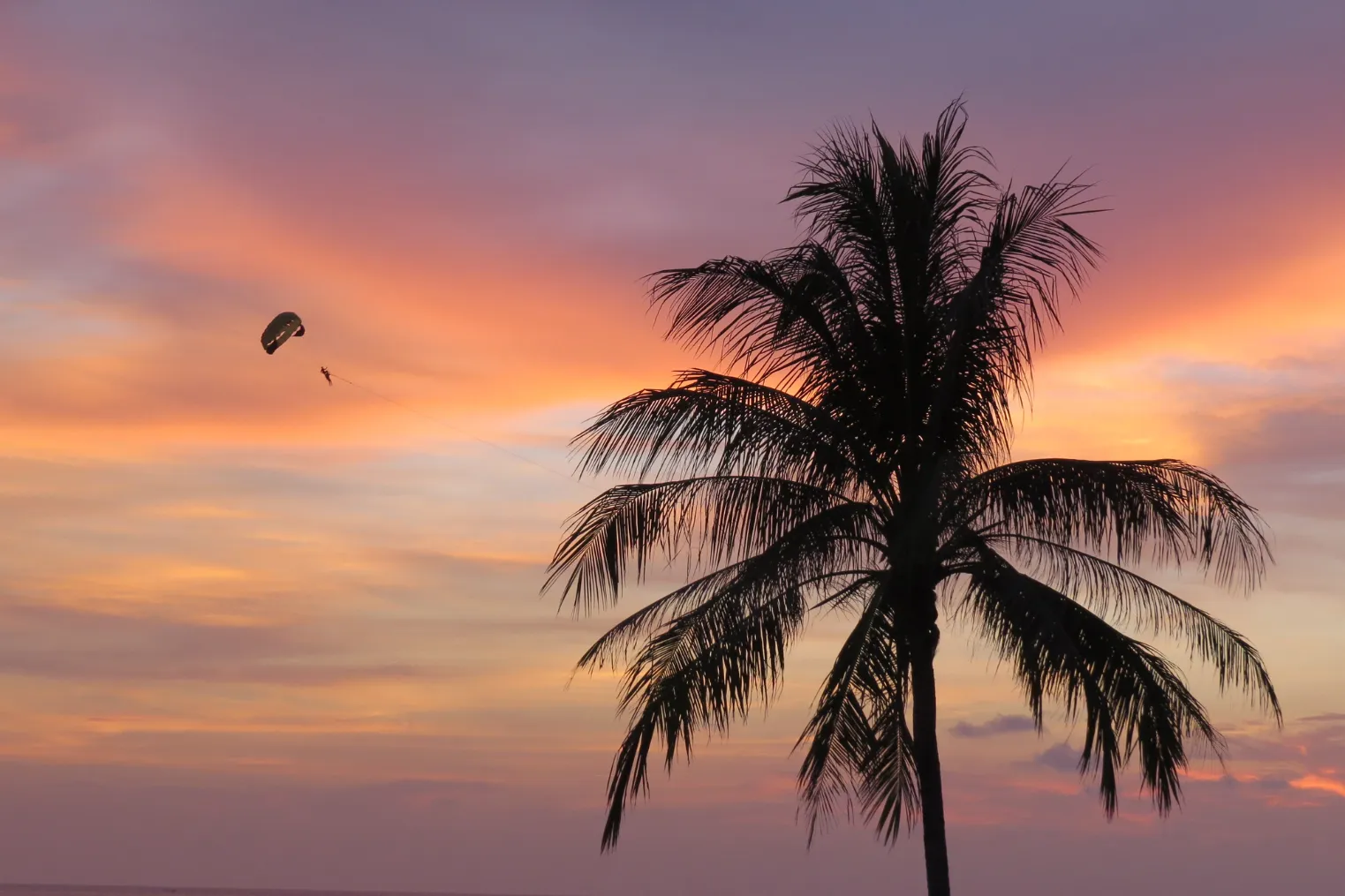
Sunset flights often deliver Honolulu’s best mix of warm, golden light and steadier breezes, so you get softer glare, richer ocean color, and photos that don’t look bleached. Aim for a launch 60 to 90 minutes before sunset to catch golden hour, and land before it gets dark. For Waikiki, timing your flight during golden hour parasailing gives the most flattering light on both the skyline and the water, with long shadows and warm tones that look great on camera.
Trade winds often smooth out late day, but winter fronts can flip conditions, so confirm the call time at noon. Expect $120 to $180, and book 2 to 3 days ahead since this slot sells out especially on weekends.
Bring a light windbreaker, sunglasses strap, and a dry bag for your phone. Skip heavy perfume and dangling jewelry.
For simple timing, Viator listings with reviews, hotel pickup, free cancellation, and reserve now pay later can help.
Calmest Season for Parasailing in Honolulu
Often, you’ll find Honolulu’s calmest parasailing conditions in the shoulder months, especially April to early June and September to mid-November, when trade winds ease up and the ocean outside Waikīkī looks smoother and more glassy. In Waikīkī, the best season for parasailing also lines up with these shoulder months, when lighter winds and fewer squalls create more predictable flying conditions.
You’ll get steadier takeoffs, fewer spray-soaked starts, and a better chance of flying over a calm bay.
- Book a 9 to 11 am slot before the afternoon breeze builds.
- Expect $120 to $180 per person, and slightly shorter lines than July and Christmas week.
- Bring reef-safe sunscreen, a light rash guard, and a dry phone pouch; skip heavy cameras and dangling jewelry.
If your schedule’s tight, a Viator tour with verified reviews, hotel pickup, free cancellation, and reserve now pay later can lock in the gentlest window for you.
How High Honolulu Parasailing Flights Go
Most Honolulu parasailing flights lift you about 500 to 1,000 feet above the ocean, high enough to spot turquoise reefs and tiny boats, and the ride usually runs 8 to 12 minutes once you’re clipped in. If you’re choosing between parasailing height options in Waikiki, most operators offer 600 ft, 800 ft, and 1,000 ft lines, with higher flights giving you a longer ride and wider views, but also depending more on calm conditions.
Your exact altitude depends on wind, towline length, Coast Guard rules, and the captain’s call, so expect limits on gusty days and bring a light jacket, sunglasses strap, and a waterproof phone pouch, but skip bulky bags and loose hats.
If you want to lock in a specific time slot, Viator tours can streamline tickets with verified reviews, hotel pickup on some options, free cancellation, and reserve now pay later, which helps when morning departures fill up.
Typical Flight Altitudes
Altitude is the big question you’ll ask the crew before you even step onto the boat.
In Honolulu, most rides feel like 300 to 800 feet up, high enough to turn Waikiki into a postcard, low enough to spot turtles if the water’s clear. Your altitude perception shifts fast: the lift feels gentle, then the shoreline shrinks and you realize you’re floating. Expect 8 to 12 minutes in the air within a 60 to 90 minute trip, and $90 to $160, plus photo upsells. A typical parasailing flight over Waikiki keeps you aloft long enough to relax into the view while still fitting easily into a half-day plan.
- Bring sunglasses with a strap and a light jacket for spray.
- Skip bulky bags, you won’t have storage.
- Ask about tandem turns, tether dynamics make spins smoother than you’d think.
For peak mornings, Viator can lock timing with free cancellation.
Altitude Factors And Limits
Because the wind calls the shots, your parasail height in Honolulu isn’t just a number on a brochure, it’s a safety decision the captain makes in real time. Trade winds, swell, and boat traffic can keep you lower, while glassy seas may allow a full-height run. Crews check Weather forecasting early, then recheck at launch, and they’ll shorten the towline if gusts build. Mornings off Waikiki feel smoother; afternoons bring chop. On especially blustery days, operators may cut flights short or fully cancel tours due to windy Waikiki conditions and safety policies. Regulatory standards and operator limits usually set maximum line length and rider weight, so tandem flyers may ride a bit lower. Bring sunscreen and a dry bag for your phone, skip heavy backpacks. Plan $120 to $180 and 90 minutes door to door. Viator bookings can help with timing, reviews, and free cancellation.
How Long a Honolulu Parasailing Tour Takes
Plan on setting aside 1.5 to 2 hours for a Honolulu parasailing tour, even though you’ll only spend about 8 to 12 minutes in the air.
Check in, sign waivers, and cruise out past Waikiki.
Your average duration depends on group size and the captain’s turnaround time between flights.
Mornings usually run smoother, afternoons can back up when everyone grabs the same slot.
Boat rides and safety briefings take most time, especially during crowds.
Many operators include hotel or central Waikiki round-trip transportation, which can add extra time on each end of your outing.
- Arrive 20 minutes early, parking and lines eat time.
- Budget $90 to $160, photos and tips cost extra.
- Bring water and a phone in a dry pouch, skip heavy snacks.
If you’re on a schedule, Viator listings with verified reviews and free cancellation help you lock timing.
What to Wear for Parasailing in Honolulu
Most days, you’ll stay happiest in quick-dry swimwear and a light cover-up you can peel off fast once the crew calls your name.
Choose Light clothing that won’t flap in the trade winds, and skip anything with loose ties.
A snug rash guard or tee adds UV protection, plus a cap that clips or fits tight.
On your feet, Water shoes beat flip-flops on wet decks and hot sand.
Wear simple sunglasses with a strap, or go without.
If you book an early-morning slot, wear a thin layer for the breeze, then strip down before takeoff.
Tours often run $90 to $150 and fill by midday, so dress ready to move through the crowd.
Plan a Change of clothes for afterward near Waikiki hotels.
You can also look at the best outfits for parasailing in Waikiki to match practical gear with fun, vacation-ready style.
What to Bring (and What to Leave) on the Boat
Before you step onto the boat, pack the few essentials that actually matter: reef-safe sunscreen, a quick-dry towel, water, and a waterproof phone pouch if you want photos without risking a soaked screen. For parasailing in Waikiki, focus on essential gear like secure straps for your sunglasses, snug-fitting sandals or water shoes, and a lightweight cover-up that won’t flap around in the wind.
Leave the bulky stuff ashore, like backpacks, jewelry, wallets, and anything you’d cry over if it went overboard, because deck space gets tight when the morning runs fill up.
If you’re booking a Viator parasailing tour, check the listing for verified reviews, exact check-in time, and whether hotel pickup, free cancellation, and reserve now pay later are included, so you’re not scrambling at the marina.
Essentials For Parasailing
Although Honolulu parasailing feels breezy and effortless once you’re clipped in, what you pack for the boat can make or break the hour on the water. Arrive 25 minutes early with your ID; morning departures fill first, and winds often rise after lunch. Trips usually cost $90 to $150. Crews follow local regulations and stay on top of equipment maintenance, but you’ll feel more comfortable with:
- Reef safe sunscreen, polarized sunglasses, and a chin strap hat
- Water shoes or secure sandals for the splashy deck
- A light rash guard, plus seasick tablets if you’re sensitive
Tuck your phone and room key in a small dry pouch, and bring a few dollars for tips after you’re back at the dock. You’ll thank yourself in line. For a smoother experience, think through your Honolulu travel tips for parasailing day, what you’ll wear, pack, and plan, before you ever step on the boat.
Items To Leave Ashore
Traveling light is the secret to feeling steady on a wet deck and relaxed in the harness. Leave your passport, extra cash, and anything sentimental in your room safe. Most Honolulu boats pack 10 to 12 riders, so space disappears fast. Skip bulky beach bags, snacks, and books. Plan on jewelry removal before boarding, since rings and studs slip off with sunscreen and spray. Marina lockers cost about $5.
For electronics storage, use the crew’s dry box or a small waterproof pouch, and keep your phone out until you’re back at the dock. Don’t bring laptops, drones, or big lenses. Avoid loose hats and flip flops. Wear them to check in, then stow them. You’ll thank yourself during the bumpy 15 minute ride out.
Honolulu Parasailing Weight Limits (Solo vs Tandem)
Two numbers matter most when you book parasailing in Honolulu: the minimum you need to control the harness, and the maximum the crew can safely fly based on wind and equipment. Most operators post a solo minimum and a higher tandem range, but Weight Variations between you and a partner can shift you into a triple or separate flights. On tandem flights, crews also cap combined weight, and they’ll reshuffle seats or refund if gusts spike at noon.
- Ask the dock staff to check Harness Fit before you pay.
- Expect Safety Protocols like a quick weigh-in and wind check against Weather Limits.
- Book early morning for calmer winds and smaller crowds, often $90–$140.
Bring water and reef-safe sunscreen, skip heavy bags.
Parasailing in Honolulu With Kids: Age Rules and Tips
Once you’ve sorted weight limits and wind rules, the next question is whether your kid can ride, and what “kid” even means on a Honolulu parasail boat.
Most child friendly operators set a minimum age 5 to 7, but you’ll also see height requirements and a must-fit life jacket rule. Call ahead, because captains can veto on the dock if your child looks anxious or too light.
Book an early-morning slot for calmer water and fewer crowds.
Expect about $90 to $130 per rider, and ask about family discounts when adults fly too. Arrive 30 minutes early for safety briefings, sunscreen, and a windbreaker. Skip beach bags; bring water and a phone case. Viator helps with reviews, free cancellation, and reserve now, pay later.
Seasickness Tips for Honolulu Parasailing Boats
Often the boat ride is what stirs your stomach, not the flight, because you’ll bob in the wake zone for 10 to 30 minutes while crews hook up harnesses and rotate riders.
If motion sickness hits you, eat light, skip greasy lunch, and grab a windy seat by the stern.
- Take water and a hat, skip booze.
- Pop ginger remedies 30 minutes before, or choose natural alternatives if pills knock you out.
- Wear pressure points wristbands, and stare at the horizon, not the deck.
Trips last about 75 minutes, usually $90 to $140.
Morning seas are smoother and less crowded than late afternoon.
For tight schedules, a Viator option with hotel pickup, verified reviews, free cancellation, and reserve now pay later can help, too.
Frequently Asked Questions
What’s the Cancellation Policy if Weather Forces Your Tour to Stop?
If weather stops your tour, you’ll cancel safely and choose between reschedule options or full refunds, depending on operator rules. You won’t pay extra, and they’ll confirm by phone or email before processing changes promptly.
Can You Parasail if You’Re Pregnant or Have Medical Conditions?
It’s a sky-high thrill, but you shouldn’t parasail if you’re pregnant; you should skip it. If you’ve medical conditions, get medical clearance, do a risk assessment with your doctor, and follow operator rules to stay safe.
Are There Restrooms Available on the Parasailing Boat?
You’ll usually find a restroom onboard, but it’s often a compact portable toilets setup. Crews provide privacy partitions when possible, yet it’s smart to use shore facilities first and ask during booking for your comfort.
Is Hotel Pickup Offered, or Do You Need to Drive and Park?
Most operators don’t include pickup, only about 1 in 5 offer hotel transfers, so you’ll usually drive. You’ll find nearby paid lots and street spaces; check parking options in advance, arrive early, and avoid rush-hour congestion too.
Do You Need to Know How to Swim to Go Parasailing?
You don’t need to know how to swim to parasail. You’ll wear life jackets and use flotation devices, and crews brief you on safety. Still, tell staff about limits and follow instructions before you launch.
Conclusion
You check in 30 minutes early at Waikīkī, and the same breeze that cools your coffee smooths the sea for your flight. Coincidence, or good planning. Eight to 12 minutes later you’re 500 to 1,000 feet up, Diamond Head sharp against the blue, reef patterns below. Expect $90 to $160 plus photo add-ons, so bring a dry pouch, reef-safe sunscreen, and skip bulky bags. Book mornings. If timing’s tight, Viator helps with verified reviews, free cancellation.