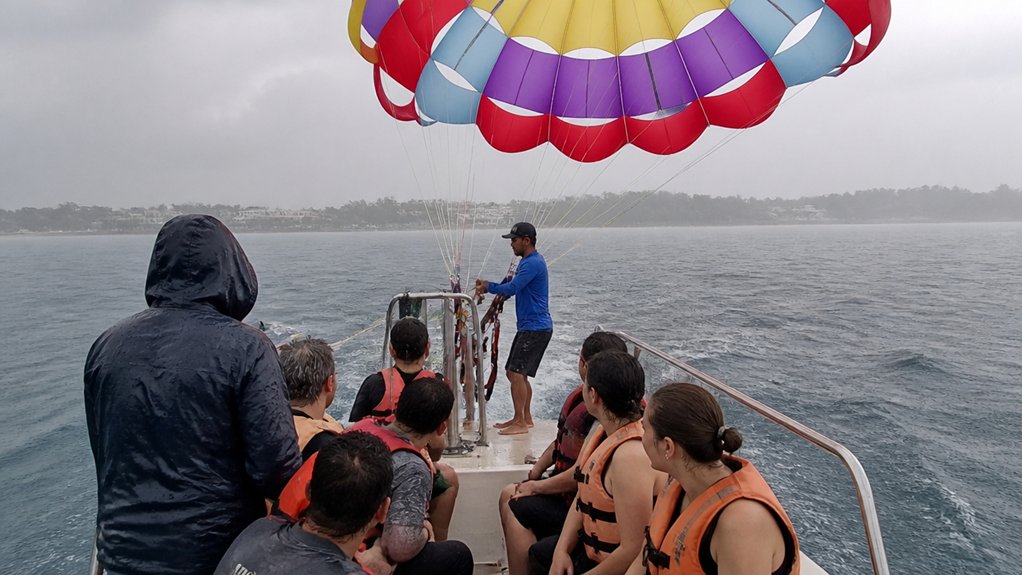
Like Odysseus eyeing dark water, you might glance at the sky and wonder if your parasailing tour is about to change course. A little rain doesn’t always stop the boat. Choppy water and sharp wind usually matter more. Your captain may wait at the dock, pause the launch, or call it off and rebook you. The tricky part is knowing when wet weather is no big deal and when it’s a hard no.
Key Takeaways
- Light rain usually does not cancel parasailing; captains focus more on wind, visibility, water conditions, and overall boat safety.
- Tours may be delayed before boarding or right before takeoff while the crew monitors changing weather.
- If conditions stay safe, your flight still happens, and the actual parasail ride usually lasts about 6 to 8 minutes.
- Strong wind, rough water, or poor visibility are more likely than rain alone to cause a cancellation.
- If the captain cancels for safety, most companies offer a reschedule or full refund before launch.
Can Parasailing Run in Rain?
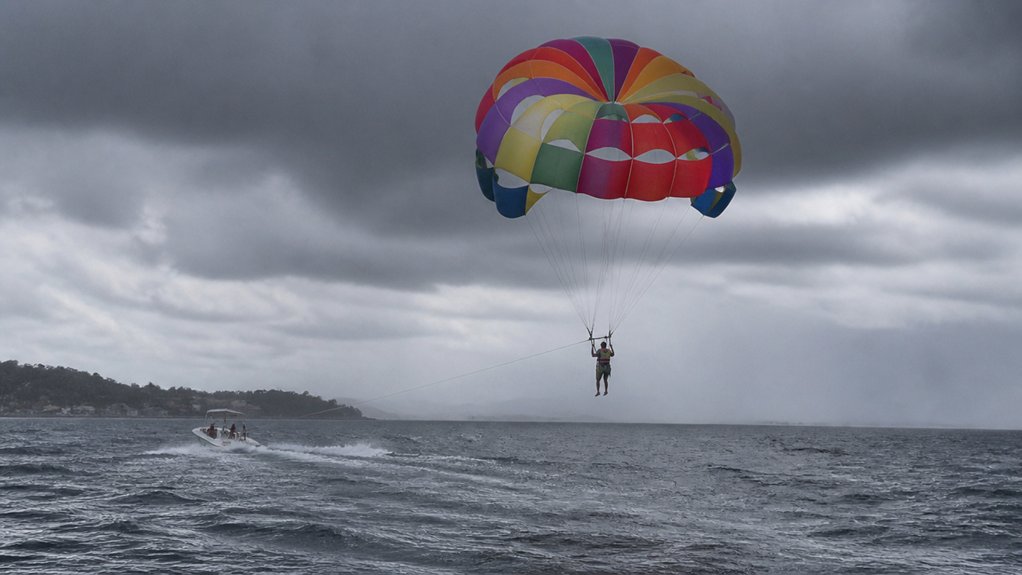
Yes, parasailing can run in rain, and many tours do operate rain or shine. If you book a parasailing trip, you shouldn’t assume a shower automatically ends the plan. Operators watch conditions closely because your flight itself lasts only about 6 to 8 minutes, even though the outing can take around 1.5 hours with check-in and boarding. That gives the captain to determine whether take offs and landings can happen smoothly before you ever gear up. In places like Waikiki, windy weather is often a bigger reason for cancellations than light rain alone. If weather does not cooperate, most companies cancel before launch and offer a refund or a new time. If conditions still work, you may head out anyway, hear the boat hum, feel sea spray, and even get that playful wet finish near the end of the ride there.
Is Light Rain Safe for Parasailing?
A little rain on the back deck doesn’t automatically ground you, because the real issue isn’t the drizzle but whether the overall conditions stay safe. You can often still fly if the wind and water look steady, and your captain will watch the weather closely before giving you the green light. In Waikiki, weather cancellations usually happen because of unsafe wind or water conditions rather than light rain alone. If those conditions slip, the crew won’t chance it, and you’ll get a cancellation, refund, or reschedule instead.
Rain Versus Unsafe Conditions
While a few raindrops might dot the deck and cool your face, light rain usually isn’t a problem for parasailing. What matters more is whether the sky brings unsafe conditions, not a passing sprinkle. You’ll still gear up, hear the boat engine hum, and feel the line tighten as the captain and mate guide smooth takeoffs and landings. Parasailing is built around safety, and trained crews have handled thousands of flights. Since you already expect some contact with water, a little rain doesn’t change the basic experience much. In line with parasailing safety, Waikiki crews monitor weather closely and pause trips when conditions no longer meet safe operating limits. If the weather stays within safe limits, your tour often continues. If conditions turn rough enough to threaten safety, flights stop instead. That’s the line: light rain can be fine, but unsafe conditions never are.
Captain Weather Decisions
That call belongs to the captain, not the raindrops. You can often fly through light rain because parasailing responds more to wind than drizzle. Your captain checks safety limits, watches the shoreline, and keeps the ride smooth from the back deck, so no swimming is required. Hawaii operators also follow Coast Guard rules, which adds another layer of weather-related safety oversight before flights continue. If wind rises, the captain slows the boat and may pause flights before a boat malfunction or rough gust turns fun into risk. Takeoffs stay controlled, and landings are slow. Think of water for a revitalizing sprinkle, not a danger by itself. If conditions cross the line, you’ll get a refund or a new time. Since weather can shrink openings, plan parasailing early in your trip. Rain or shine sounds cheerful, but your captain makes the final call.
Still comparing Oahu Parasailing?
Ask for tour ideas, hotel suggestions, or a simple trip plan that combines both.
Trip Helper
What Weather Cancels Parasailing?
Even if a few raindrops start tapping the deck, your parasailing tour usually won’t stop for rain alone. Parasailing is weather sensitive, so crews watch the whole picture, not just a shower. In the extremely unlikely event that conditions become unsafe, flights pause fast and without drama.
You’ll usually see the captain check real time forecasts, water texture, and how the boat handles offshore. Operators follow strict safety rules, including staying at least 1600 feet from shore when winds top 10 mph. A standard parasailing safety checklist also helps crews confirm that wind, visibility, and boat conditions are appropriate before takeoff. If limits are exceeded and the captain cancels, you won’t be left guessing at the dock. The company should offer a refund or reschedule, because safety decides the schedule, not a brief sprinkle. That simple rule keeps your outing sensible and calm.
Why Does Wind Matter More Than Rain?
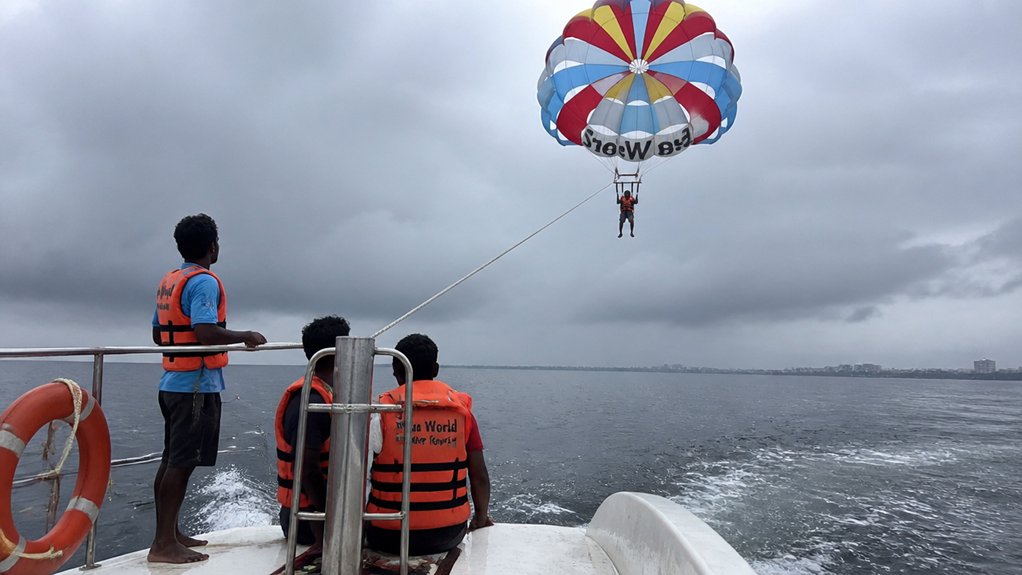
You can still hear the boat motor hum and feel a few raindrops on your arms, yet your flight may go on if the wind stays steady and safe. What really decides your parasailing tour is wind speed and direction, because captains follow strict rules, including staying at least 1,600 feet from shore when winds top 10 mph. Sudden shifts in wind direction can change launch and landing conditions quickly, which is why crews watch it as closely as wind speed. That’s why it’s smart to book earlier in your trip, since rain can pass but tricky wind can ground you fast.
Wind Determines Flight Safety
While a little rain might speckle the water and tap the boat deck, wind is what really calls the shots on a parasailing tour. Since all takeoffs depend on controlled pull, your captain watches wind conditions rather than rain. In the best season, Waikiki parasailing conditions are often more predictable, which helps captains plan safer and smoother flights. With your life vest and harness secured, you want the ride slow and gradual. That keeps the towline steady, and the path predictable, even for a float-down landing.
| Wind fact | What you notice |
|---|---|
| Over 10 mph | Boat stays 1600 ft from shore |
| Safe breeze | parasailing is very serene |
If gusts climb, the boat can’t tow smoothly, and drift grows sneaky. That’s when you may get a refund or a reschedule because safety comes first. You hear the engine strain as crosswinds nudge the canopy.
Rain Is Less Critical
Raindrops can feel dramatic when they pepper the boat deck, but they don’t usually decide whether you fly. Your captain watches wind and sea conditions first because safe flight paths matter more than a passing shower. If the water looks real nice and smooth and the breeze behaves, your plan for parasailing can stay on track. Keep in mind that strong winds can ground you even without rain. Operators may stay at least 1600 feet from shore once winds top 10 mph. That tells you what really runs the show. Rain alone doesn’t cancel much. Unsafe weather does. If conditions turn rough after the mate clips your harness, the crew will stop, refund, or reschedule. A little drizzle might become part of the soundtrack. For first-time parasailing in Waikiki, this can make a light shower feel less intimidating than a gusty afternoon.
How Do Captains Check Parasailing Weather?
Before the tow line ever tightens, the captain checks real-time wind and weather because parasailing only works when the conditions stay safely in bounds. You need prior weather checks because your ride is weather sensitive, not luck powered. If winds climb past about 10 mph, captains also follow a distance rule and stay at least 1,600 feet from shore.
Those readings shape everything you do next. You’re outfitted with a life vest and harness to the parachute while the crew reviews takeoff and landing from the flight deck so things go real nice. The captain listens, watches, and compares conditions to operating limits. If the numbers or the sky look wrong, they won’t fly. That’s seamanship, not stubborn optimism on a rough looking morning. In Hawaii, captains can also monitor official updates from the NWS Honolulu office and weather radio broadcasts for real-time alerts.
What Happens During a Weather Delay?
That same watchful routine continues if the weather slips out of bounds and your parasailing tour hits a delay.
Because parasailing is weather sensitive, your outing can be delayed before boarding or right before takeoff while the captain monitors conditions. You might notice the dock creak, lines flutter, and radios crackle as the crew monitor wind and safety factors. Asking about safety rules and inspections can also help you understand how the crew handles changing weather and delay decisions. During the wait:
- Check-in timing may shift.
- Your flight may leave later.
- The captain monitors gusts, clouds, and chop.
- Trips may be canceled due to unsafe weather.
If that happens, your booking is usually protected, so you won’t be pushed out in sketchy conditions just to keep the schedule. The pause can stretch your 1.5-hour visit, including parking and check-in, by a little sometimes.
Can You Reschedule a Parasailing Tour?
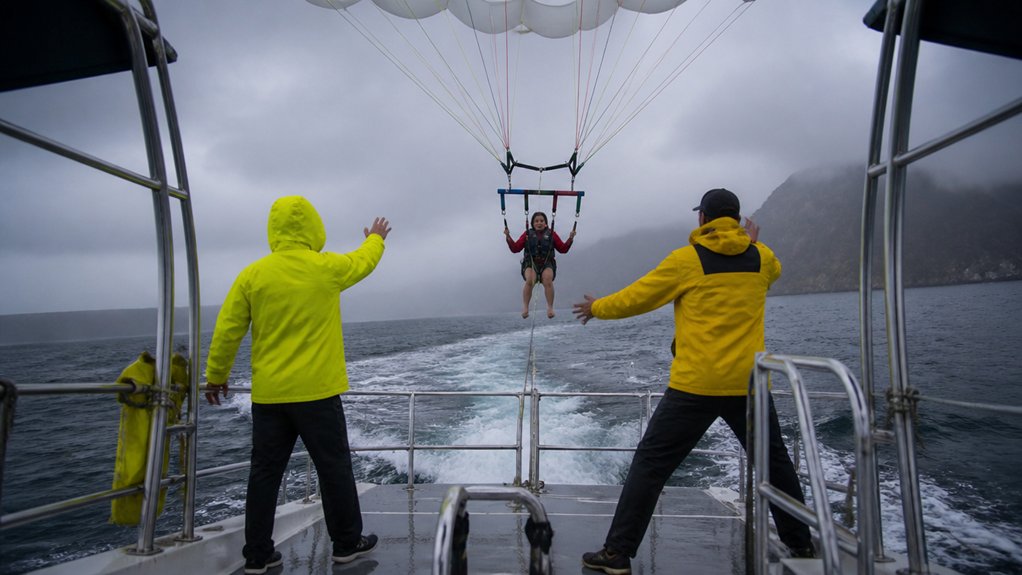
If the clouds thicken past the captain’s comfort zone, you can usually reschedule your parasailing tour instead of being sent up in sketchy weather. Parasailing is weather sensitive, so operators watch wind, rain, and choppy water long before your harness clicks. Before you book, review the company’s weather policy so you know how rain delays, cancellations, and rebooking are handled.
When conditions cross the safety line, a cancellation due to weather often opens the door to another slot later that day or on a different day. That’s why it helps to plan early in your vacation and leave some wiggle room in your schedule. If it’s only light rain and the ride still looks safe, the boat may head out as usual, salt spray and all. If you need to reschedule a parasailing tour, ask about the company’s exact refund or reschedule policy first.
Will You Get a Refund If It’s Canceled?
You’re usually in line for a refund only if the ship or tour company cancels your parasailing for safety reasons, not just because raindrops start tapping the deck. Since many tours run rain or shine, you’ll likely fly as planned if the wind and water still look safe, and that means your money stays put. In Waikiki parasailing, operators often watch wind and ocean conditions more closely than light rain when deciding whether a tour can go out safely. If the crew does call it off for weather, you can usually expect a reschedule or a full refund, though sold-out slots can make the backup plan a little slippery.
Cancellation Refund Triggers
When the captain calls off a parasailing trip because the weather turns unsafe or the boat can’t operate normally, that’s usually the moment a refund or reschedule kicks in. If the trip is labeled rain or shine and you still hear engines hum and water slap the deck of the boat, you shouldn’t expect an automatic refund.
- Safety, not drizzle, drives the decision.
- If the operator cancels, weather likely crossed the safe or legal line.
- Limited space or buying later on board doesn’t change that trigger.
- A child who must have an adult still follows the same cancellation rule.
In Honolulu, real risks are tied more to unsafe wind, visibility, and operating conditions than to ordinary rain alone. You can watch clouds gather, feel salt mist on your cheeks, and know the key trigger isn’t rain itself. It’s whether flying can safely launch.
Reschedule Or Full Refund
That safety call also decides what happens to your booking. If the crew cancels because weather turns unsafe, you’ll usually get a full refund or a chance to reschedule. If rain falls but conditions still look workable, most tours stay rain or shine, so a refund isn’t automatic. The operator makes that call, since they can’t control weather.
If you booked ahead, come prepared for either outcome. Schedule earlier in your trip when possible. Those skies encourage you to plan for a backup day. It sounds less dramatic than launch time, when you’re seated the mate clips in, but it’s practical for sure. You’ll appreciate the flexibility if landings are done early or the captain lands you back safely and calls the flight off then. Many Waikiki parasailing FAQs also recommend confirming the operator’s weather and cancellation policy before your tour.
What Does Parasailing in Light Rain Feel Like?
In a light rain, parasailing usually feels more invigorating than dramatic, with cool drops on your face and the steady buzz of the boat below you. You clip into a harness, lift off smoothly, and realize experience is not necessary. Even if the deck is slick, staff keeps you safely on the boat until launch. From check-in to the ride back, the trip runs ninety minutes, so the airborne mist feels like a passing joke. If you are prone to seasickness, taking simple prevention steps before boarding can help you enjoy the ride more comfortably.
- The flight lasts 6 to 8 minutes, so drizzle rarely overstays its welcome.
- Views still open wide, and photos often catch the silver rain.
- Near the end, you may get a refreshing splash from dipping your feet.
- That gentle dip adds a playful finish to an experience of a lifetime.
What Should You Wear for Parasailing?
For parasailing, wear comfortable clothes you don’t mind getting a little damp. You’re dressing for comfort, not for a swim test, since you’ll take off and land from the boat’s back deck. Expect some spray, even on a dry ride, and choose quick dry fabrics or anything you can rinse later. Before takeoff, you’ll be getting outfitted with a life vest and harness, so skip bulky layers and wear secure clothes that won’t bunch or pull. You may end the flight with your feet in the water, a playful little dip that feels cool after sitting on the swing above the wake. Bring as little as possible on board. Salt water and loose phones are a famously bad match when the boat picks up. If you’re unsure what else to pack, a short packing list for parasailing in Waikiki can help you keep it simple.
How Can You Reduce Parasailing Weather Risk?
Since parasailing depends on the sky behaving itself, the easiest way to cut weather risk is to give yourself room to pivot. Book for the first part of your trip, because this is weather sensitive and captains adjust flights as wind conditions vary according to safety. In Waikiki, best time of day conditions can also make morning or earlier flights a smarter choice when planning around possible rain.
Parasailing plays by the weather, so book early in your trip and leave room to pivot if the wind has other plans.
- Reserve 1–3 days ahead so you can grab a backup slot.
- Call ahead and ask about current wind conditions before you head over.
- Pack quick-dry clothes. You might feel a gentle wet part at landing.
- Check rules early: age 5+, no pregnancy coverage, and skip it with back, neck, or spinal injuries.
That little buffer can save your afternoon, spare you a sad dockside stare, and keep rescheduling from colliding with health limits later in the week too.
Frequently Asked Questions
Can I Bring My Phone or Camera if Weather Changes Suddenly?
Yes, you’ll bring them safely if you use Weather proofing gear, Waterproof cases, and Tethered devices. Follow Crew guidance, prioritize Signal safety, and keep phone secure because changes can splash it or shift position suddenly.
Do Children Have Different Weather Restrictions for Parasailing?
No, you’ll face the same weather restrictions, but kids must meet age minimums, get guardian supervision, complete medical waivers, pass a Safety briefing, and have proper life jacket fit before you fly on any given day.
How Early Should I Arrive if Rain Is in the Forecast?
Arrive 30–45 minutes early if rain’s in the forecast, so you’ll have time for the safety briefing, water safety checks, and weight limits review; bring sunscreen, and confirm refund policies before boarding in case conditions change.
Are Morning Tours Less Likely to Be Affected by Rain?
Yes, you’ll often find morning tours less affected by rain, but wind speed checks, safety briefing, crew discretion, and lightning protocol still decide launch times, so you should plan alternative activities in case conditions worsen.
Does Rain Affect How High or Long You Can Parasail?
If your captain spots rain, you won’t usually fly lower or shorter; Wind safety and operator rules decide that. You may notice water temperature, visibility impact, and ride comfort change, but unsafe weather cancels flights.
Conclusion
Don’t assume a few raindrops will ruin your parasailing tour. You might still lift off into warm mist, hear the boat engine hum below, and watch the shoreline blur into silver. What matters most is wind, waves, and your captain’s call. If conditions turn unsafe, you’ll usually get a refund or a new slot. Check the forecast, dress for splash and breeze, and stay flexible. Sometimes the sky adds extra drama to the whole ride.