
Salt dries on your lips as catamarans clink at the dock and bright parasails lift into the Waikiki sky. Before you book, you should compare more than the headline price. Check the exact harbor and slip, then the real check-in time, not just departure. Match airtime to total boat time, and scan the fine print on photos, weight rules, and wind delays. A few small details can completely change which tour deserves your spot.
Key Takeaways
- Confirm the exact harbor, pier, and slip code, and verify the required check-in time separately from the scheduled boat departure.
- Compare total tour duration with actual airtime, since most trips last 60 to 90 minutes but only 5 to 10 minutes are airborne.
- Check what the listed price includes, including gear, safety briefing, flight, fuel surcharges, gratuity, and optional photo or video packages.
- Compare package tiers by tow line length, observer seat availability, early-bird pricing, and whether combo deals add real value.
- Review capacity, weight limits, tandem or triple rules, and whether the operator offers dry flights, toe dips, or stricter age and health restrictions.
Check the Exact Waikiki Parasailing Departure Point
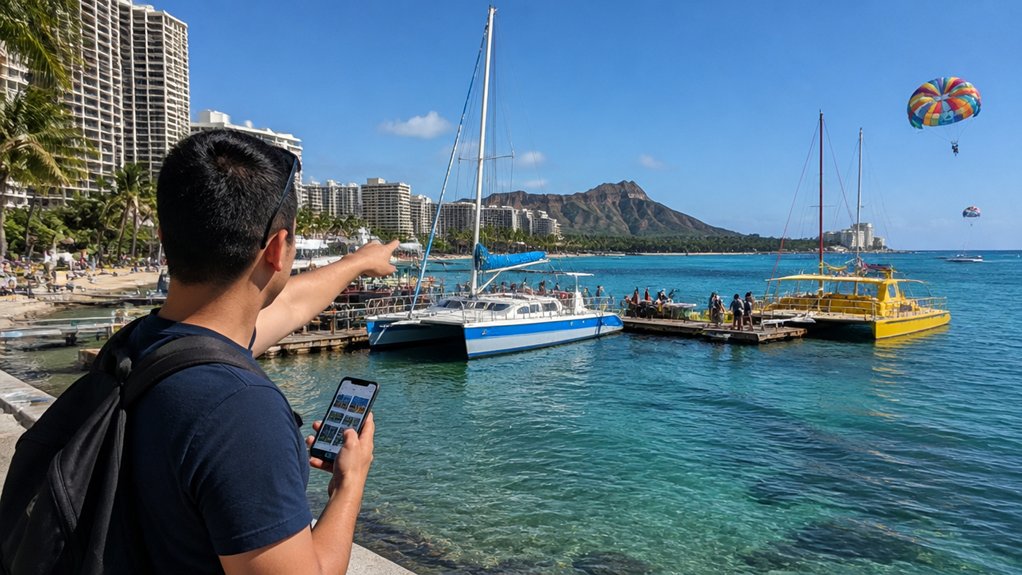
Where, exactly, does your Waikiki parasailing trip leave from? Don’t assume every Waikiki Parasailing boat lifts off right off the beach. One listing might depart from Ala Wai Boat Harbor at 1025 Ala Moana Blvd, Pier E, Slip F6. Another might use Kewalo Harbor or a different pier nearby. Your job is to match the meeting point in the listing to the actual harbor and slip code, then compare that with the address provided. Those small details matter when traffic hums, docks echo, and every pier starts to look strangely alike. Some operators clearly note launch points explained in their tour details, which can help you confirm the exact harbor before arrival. If you’re staying in Waikiki, double-check notes about alternate departure areas before you head out. A Hawaiian Parasail adventure feels breezy and simple once you’ve confirmed the correct dock, not just the general shoreline.
Check Check-In Time, Not Just Departure
Before you lock in a Waikiki parasailing tour, check the check-in time as closely as the flight time. Boats usually leave at the scheduled departure, so showing up late can sink your slot fast. Many operators want you there about 30 minutes early, even for an early-bird window like 8:00 AM or 9:00 AM.
Don’t trust the listed start time alone. One tour may show an 8:00 check-in time but board later, after you sign forms and hear the safety talk. If you’re prone to motion sickness, arriving early also gives you time to settle in before the boat ride begins. Confirm the exact booth or pier, such as Pier E, Slip F6 at 1025 Ala Moana Blvd, and leave time to park and walk. Also scan the print for weather or wind delays, since on-time check-in still matters if the boat shifts later.
Compare Airtime vs Total Tour Time
On Waikiki parasailing listings, the biggest time trap is mixing up airtime with total tour time. Airtime is only the minutes you’re flying beneath the canopy, often about five to ten. Total tour time usually stretches to 60 to 90 minutes because you’ve got check-in, boarding, and turns with other groups. physical fitness rarely changes that clock. Door-to-door timing can run longer than the listed tour itself if your package includes pickup and drop-off in Waikiki.
- Check both numbers on every listing.
- If only one time appears, expect roughly 60 minutes on the boat and 5 to 10 minutes airborne.
- Don’t assume a short boat ride means a longer flight, or that a pricier tier buys more Airtime.
That quick lift can feel huge anyway. You hear the boat, feel salt spray, then float above Waikiki before your watch catches up for real.
See What’s Included in the Tour Price
Price can look simple until the extras start stacking up. You should check whether the listed rate covers the safety briefing, your actual flight, and all gear, including the canopy chute, boat, harness, and life jackets. Some tours bundle everything. Others quietly add fees at checkout. Scan for photo or video add-ons too, since high-resolution shots of the Pacific Ocean can cost about $45. See whether an observer ticket is offered or sold separately, often for age 5 and up. Then confirm required surcharges like a $7 fuel fee and whether gratuity is included. Some Waikiki parasailing prices look low at first but end up costing more once common extras and surcharges are added. Listings should also spell out what you must bring, such as towels, sunscreen, and swimwear. While you’re there, note weight limits before you daydream too hard about that breezy launch.
Still comparing Waikiki Parasailing?
Ask for tour ideas, hotel suggestions, or a simple trip plan that combines both.
Trip Helper
Check Boat Size and Guest Count
At a glance, the boat size tells you a lot about how your Waikiki parasailing trip will feel. A listing that says up to 12 to 15 guests hints at a busier ride, while a tighter booking cap can mean more elbow room and less waiting as the boat pulls away from PIER E. Depending on conditions, you may also notice ocean spray on the ride out, which can affect how comfortable the boat feels before your flight.
- Check the stated capacity and the actual booking limit.
- Count riders and observers together, since spectator tickets still fill seats.
- Note tandem or triple options and any maximum combined weight rules.
If the schedule promises 60 minutes on the boat, ask how many flights run per departure. More people often means more rotation, more engine hum, and more time watching the skyline before your turn in the warm trade wind.
Choose a Dry Flight or Toe Dip

Zero in on whether you want a dry flight or a toe dip before you book, because parasailing listings don’t always mean the same thing by “optional splash.” Some Waikiki tours clearly offer a dry flight, with a dry takeoff and dry landing, while others build in a quick toe dip if conditions allow. If you’d rather stay completely dry, choose listings that say the crew can honor that request and mention dry landing. If a little saltwater sounds fun, look for Toe dip or quick splash notes, then check reviews or FAQs to see when it happens, usually during landing, and whether ocean conditions are required. In general, a brief toe dip during parasailing is considered safe when the crew controls it and conditions are suitable. For splashier options, pack a swimsuit and towel. For a dry flight, quick-dry clothes usually do the trick.
Review Waikiki Parasailing Weight Rules
Before you book, check the fine print for the minimum rider weight and the maximum per person, because one listing may welcome a 50 lb flyer while another sets a different bar. You’ll also want to confirm whether the limit applies to you alone or to everyone clipped in together, since tandem and triple flights often use a higher combined cap. Some operators also publish minimum and maximum weight limits separately, which makes side-by-side listing comparisons easier before you reserve. Keep an eye on the weather note too, because a bright Waikiki breeze can reshuffle solo, tandem, or triple pairings fast and save you a surprised check-in moment.
Minimum Rider Weight
While the view over Waikiki feels light as air, the weight rules are one detail you can’t skim. Before you book, check the minimum rider weight on each listing. Many operators set it around 50 lb, and if you’re near that line, you should confirm your approximate weight before check-in. You should also scan for a per-person maximum weight, since some listings post an individual cap. Waikiki parasailing operators may also adjust eligibility based on weight restrictions explained by changing flight conditions.
- Look for the minimum rider weight in the fine print, not just the headline.
- Check whether the maximum weight applies to you individually, not only to the flight setup.
- Re-read the policy on the day you fly, because wind and weather can change how the crew clears riders.
That small check saves time, stress, and awkward dockside surprises.
Combined Flight Limits
A tandem or triple flight looks simple from the beach, but the numbers behind it matter. A quick review of age guidelines for families can also help you compare listings, since kid eligibility may affect who can fly together. When you compare listings for parasailing in Hawaii, check the combined tandem/triple maximum weight first. A common cap is 450 lb or 204 kg, yet some operators change that total with weather, daily conditions, or captain discretion. You should also verify the individual maximum weight in the rules. One Waikiki company, for example, sets it below 250 lb per person. Then compare limits for solo, tandem, and triple flights, because not every ride type uses the same cutoff. Don’t forget the minimum weight either. Many operators want at least 50 lb per parasailer, which can quietly decide who gets to clip in and who stays on deck today.
Pairing Changes By Wind
Numbers on the listing tell only half the story, because wind can reshuffle who flies with whom once you’re standing on the boat deck in Waikiki’s warm salt spray.
You should read weight rules as flexible, not fixed. A calm morning may allow tandem or triple setups, while stronger breeze can push the captain to split your group, affecting parasailing experiences.
- Check per-person limits 250 pounds.
- Check combined tandem or triple caps 450 pounds.
- Watch for reviews saying crews adjusted pairings by wind.
Also confirm minimum age 5 and minimum weight 50 pounds. Also review the Parasailing Safety Checklist before booking so you know which weather and equipment questions to ask. If a listing says subject to weather, take it seriously. Your line length, package, or solo flight can change fast, and that twist tells you how the operation handles safety well.
Check Age Limits and Medical Restrictions
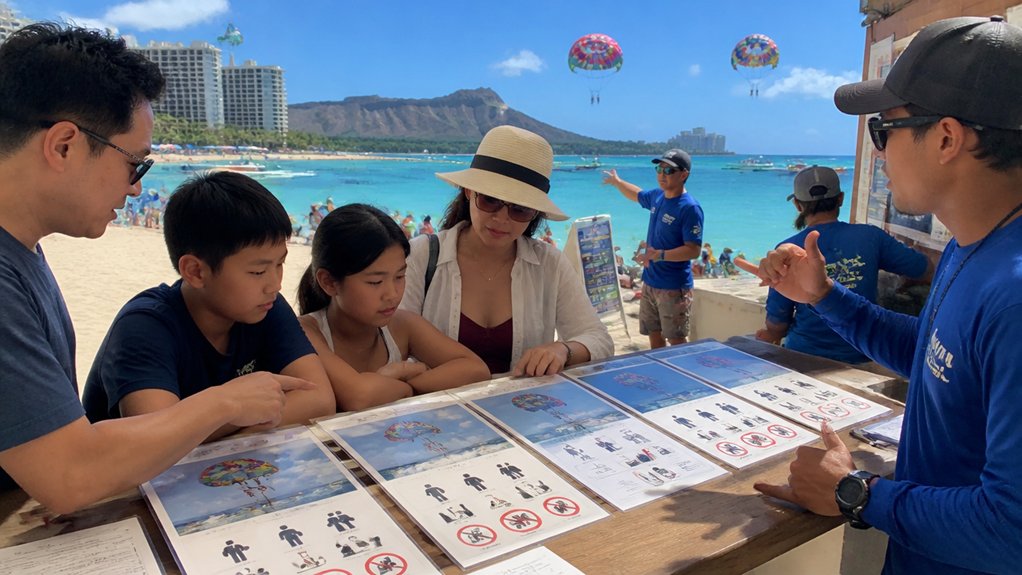
How soon can your crew take flight over Waikiki’s bright blue water? Start with age rules. Many parasailing listings require flyers to be at least 5 years old, and kids 15 and under need a parent or guardian with them on the boat.
Next, scan the medical notes before you click book. Operators often exclude guests who are pregnant or who have heart, neck, back, or joint problems. Some listings clearly note pregnancy restrictions for Waikiki parasailing, so review those policies before booking. If motion sickness turns your stomach, ask questions first. Check access details too. Many tours aren’t wheelchair accessible, and some won’t allow crutches or mobility limits. You should confirm any visual or neurologic restrictions and make sure every rider can board safely without help. Finally, recheck individual and combined weight caps for tandem or triple flights.
Read the Wind and Reschedule Policy
Because Waikiki’s trade winds can turn a smooth blue morning into a whitecapped one by noon, you should read the wind policy before you book. A safety call isn’t bad luck. It shows the captain is paying attention so you can still soar high when conditions settle. In Waikiki, weather cancellations often come down to shifting wind or rain, so a reschedule-friendly listing can matter as much as the flight itself.
Waikiki winds flip fast, so read the policy: a captain’s safety call means your best flight waits for calmer water.
- Check whether the listing offers a time or day change, not only a refund.
- Note departure windows and possible swaps between solo, tandem, or triple flights if the wind shifts.
- Expect close-to-go updates, arrive 30 minutes early, and keep your phone on.
If you’re visiting in July, book on Day 1 or 2. That buffer helps if the ocean turns choppy and your ride gets reshuffled. Flexible plans beat staring at whitecaps and hearing gulls laugh overhead.
Pick the Best Waikiki Parasailing Time Slot
Choose a morning slot if you want the smoothest feel, since those early 8:00 AM or 9:00 AM departures usually bring calmer water, softer wind, and fewer butterflies in your stomach. Later flights can get windier and choppier, so your captain may reshuffle the schedule or cancel for safety. In July, book parasailing for day one or two of your trip so you’ve got room to switch time slots if the breeze starts acting up. That lines up with the best time of day to parasail over Waikiki beaches, when conditions are often most comfortable.
Morning Vs Afternoon
For most travelers, morning wins the Waikiki parasailing showdown. In the morning vs afternoon debate, you’ll usually get calmer water, steadier winds, and a smoother ride for Parasailing in Waikiki. Many operators launch around 8:00 or 9:00 AM, when the ocean often feels less choppy and the boat sounds softer against the wake.
- Morning departures usually feel more stable, which helps if you’re nervous or traveling with kids.
- Afternoon flights can turn windier and bouncier, so motion sickness may show up uninvited.
- Most tours last 60 to 90 minutes, but you’re only in the air 5 to 10, so cooler morning conditions can make the whole outing more comfortable.
If you spot early bird pricing, check whether those cheaper listings lock you into dawn patrol. Morning slots can also make it easier to follow parasailing safety tips in Waikiki, since calmer conditions often support a more comfortable launch and ride.
Book Early In Trip
Morning may give you the smoother ride, but the best Waikiki parasailing time slot often starts with when you book it. If you book early in your trip, ideally on Day 1 or 2, you give yourself room to shift plans if wind-sensitive conditions trigger delays or cancellations. That breathing room matters. If you’re a little nervous or motion sick, target an 8:00 AM or 9:00 AM departure, when the water can feel steadier and the boat ride less jostly. Some listings label those slots as Early Bird Super 1,000 ft flights, so compare that label with regular later pricing. Also read the check-in time carefully. It’s often the real clock you need to follow, usually 30 minutes before the posted boat departure hour. Before booking, review the listing’s cancellation policy so you know how weather-related changes are handled.
Windier Later Slots
Afternoon has a different personality on the water. If you want the smoothest ride, choose a morning departure. Early air often feels calmer, and the boat ride usually seems steadier. Parasailing tours often list 8:00 AM or 9:00 AM flights, so you can sometimes switch when booking allows. In Waikiki, wind picks up later in the day, which can make afternoon parasailing feel more intense or lead operators to adjust the ride.
- Pick morning if you’re nervous or get motion sickness.
- Expect windier and choppier later slots to feel buzzier and more intense.
- Treat timing like a weather flight, since afternoon trips can be delayed, adjusted, or rescheduled.
If you still book later, keep the rest of your day light. Save the roller coaster energy for the sky, not a packed activity lineup. Your stomach will thank you. And you’ll probably hear fewer groans from your sea legs.
Read Recent Waikiki Parasailing Reviews
Recent reviewers’ details tell you more than any glossy listing can. You should scan for notes on takeoff and landing, especially whether guests stayed dry or got a toe dip when conditions changed. Reviews also reveal whether the schedule feels honest. Most trips run about 60 to 90 minutes total, with only 5 to 10 minutes in the air, so confirm the listing matches reality about that mix too. Look for stories about wind delays, cancellations, and how firmly crews enforce weight or health limits. First timers often describe comfort best, plus the views of Waikiki, the reef, and Diamond Head. Finally, verify the meeting point and check in timing. Pier E at Kewalo Harbor is not Ala Wai, and your GPS won’t laugh. The clearest patterns in visitor reviews often show which Waikiki parasailing operators consistently deliver the experience their listings promise.
Compare Waikiki Parasailing Prices and Add-Ons
Usually, the price gap between Waikiki parasailing listings looks bigger than it really is, so start by comparing what each tier actually buys you.
Waikiki parasailing prices can mislead, so compare what each package actually includes first.
- Check tow line length and total trip time. Deluxe 800 ft and Super 1,000 ft may both mean about 60 minutes on the boat but only 5 to 10 minutes in the air.
- Compare extras. A $45 photo package with 60 to 100 high-resolution shots can change value fast, and a $7 fuel surcharge can quietly nibble at your budget.
- Price observer seats against flying tickets. Boat-ride-only spots often run about $45 to $52+, and age or weight rules may decide who flies. Also compare Early Bird versus Regular rates, plus combo deals like parasailing and jet ski packages too.
- The cheapest listing can look great at first, but actual cost depends on what is included versus what gets added later.
Frequently Asked Questions
Is Parking Available Near the Parasailing Marina?
Yes, you’ll usually find parking near Kewalo Harbor, but it’s limited, so arrive 30 minutes early. You should compare pricing options, check tour durations, and confirm whether operators direct you to Lot A before arrival.
Can Non-Flying Spectators Ride on the Boat?
Yes, you can often book an observer ticket and ride without flying, enjoying the Same Sightseeing Options. You’ll still check in, sign waivers, and follow onboard Safety Rules, but availability depends on each operator’s capacity.
Are Restrooms Available Before or During the Tour?
Yes, you’ll usually find restrooms at check-in, but you likely won’t get one during the 60–90 minute tour. Confirm listing details or ask directly, especially for observers, and review Tipping etiquette, Seasickness remedies beforehand.
Should I Tip the Boat Crew After the Tour?
Yes, you can tip the boat crew if they provided attentive help. Crew tipping norms make it optional, not required; a modest gratuity amount works well. You’ll still tip separately even if you bought photos.
What Should I Do if I Get Seasick Easily?
Like a leaf on waves, you’ll feel better if you choose a calm morning, take approved meds first, Use Sea Sickness Remedies, Practice Bracing Breathing, ask crew where to sit, and follow their launch guidance.
Conclusion
If you compare the harbor, check-in window, airtime, and add-ons before you book, you’ll save yourself a headache and get the flight you actually want. You can picture the whole outing more clearly, from the dock lines clinking at Ala Wai to the quick hush above the blue water. Keep one eye on wind policies and recent reviews, and you’ll be ahead of the curve. Then all that’s left is to enjoy the view below.