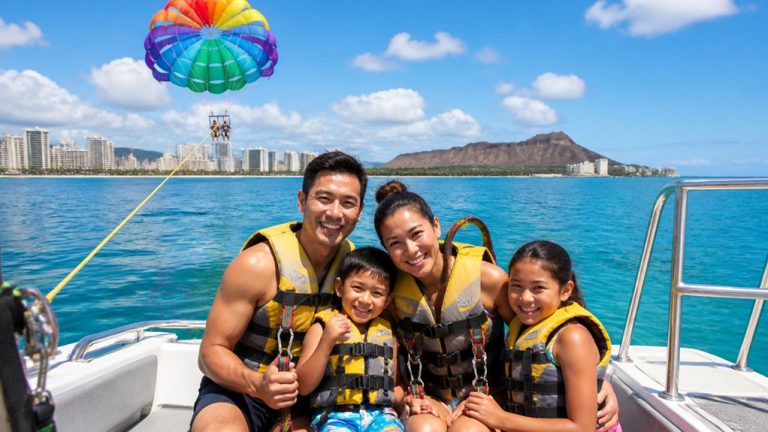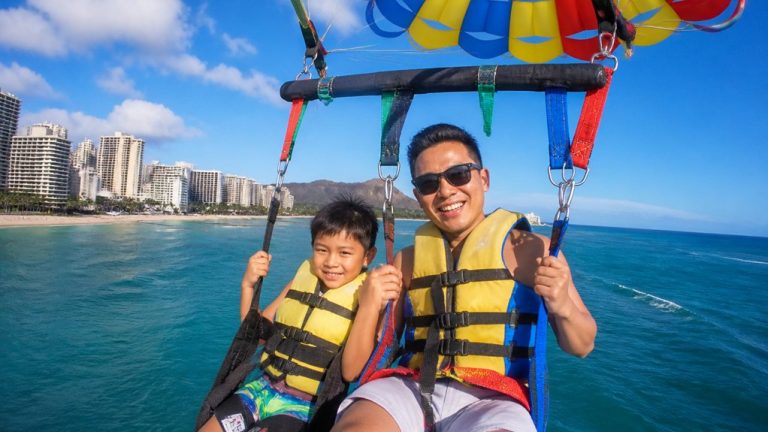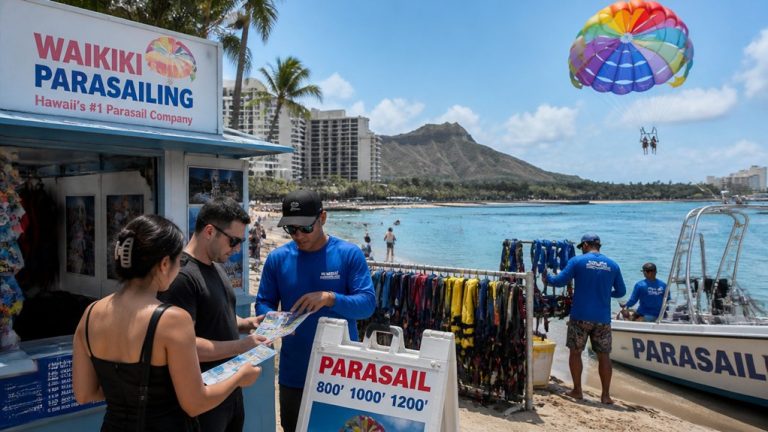
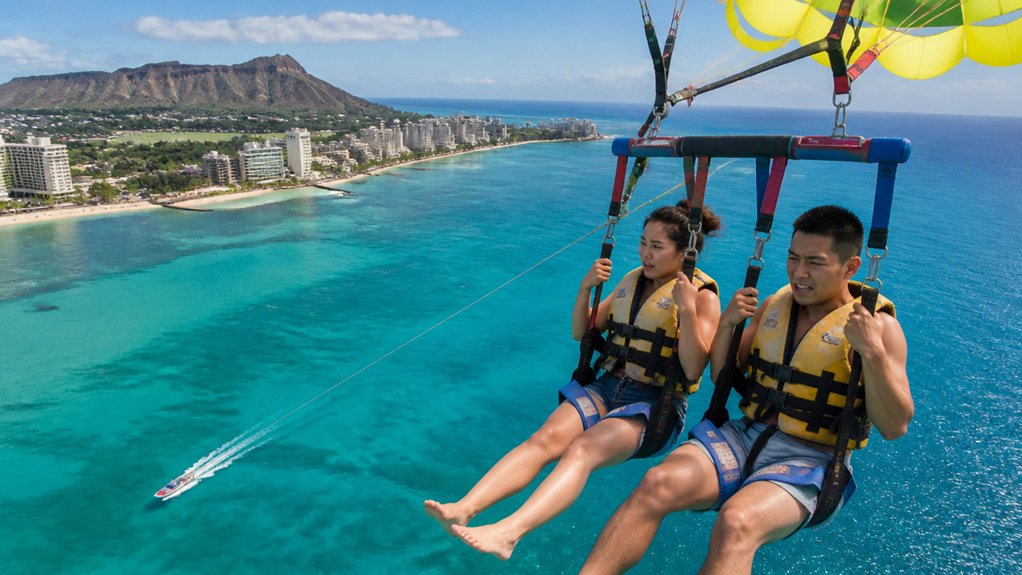
If you grip the boat rail in Waikiki and feel your stomach drop just watching the parasail rise over the bright blue water, you might still find the ride more manageable than you expect. The launch feels smooth, the harness stays snug, and once you’re up, the loud boat fades into wind and wide views of Diamond Head and the shore. The real question isn’t just how high you go, but why so many nervous first-timers come down smiling.
Key Takeaways
- Yes, Waikiki parasailing can be worth it for height-fearful travelers because the actual flight usually lasts only about five to ten minutes.
- It often feels less scary than expected because takeoff is slow and controlled, not a sudden drop or jerky launch.
- A secure seat-style harness and crew safety checks help many nervous first-timers feel supported and more confident.
- Morning trips usually feel smoother, with calmer water and lighter wind, which can make the experience more comfortable.
- If you choose a reputable operator, crews monitor conditions closely and can shorten, delay, or cancel flights for safety.
Is Waikiki Parasailing Worth It If You Fear Heights?
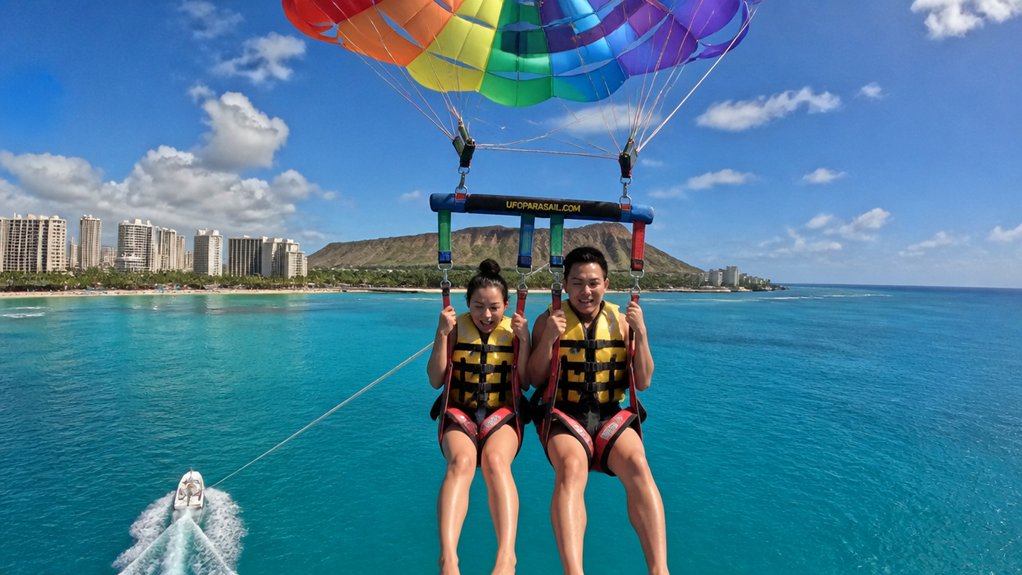
Why do so many people who swear they’re terrified of heights still come back from Waikiki parasailing grinning? If you’re Afraid of heights, it can still be worth booking. You’ll spend only about five to ten minutes in the air, but the wide views feel huge: Waikiki’s curve, the reef’s bright patterns, Diamond Head in the distance, and boats softly humming below. Most trips take about an hour to ninety minutes total, so the adventure stays manageable. You can book a morning slot for calmer water and smoother air. You can also ask to stay drier if you’d rather skip the playful toe dip. Nervous travelers often like that operators adjust for wind and conditions. That practical caution usually feels reassuring, not especially ominous. Many first-timers with a fear of heights say the steady, seated harness and gradual lift help the experience feel calmer than they expected.
Why Does Waikiki Parasailing Feel Less Scary?
You feel locked in from the start, and that snug harness can calm the part of your brain that hates ledges and sudden drops. Instead of a jolt, you rise off the boat in a slow, steady lift and float above Waikiki for a few quiet minutes with Diamond Head, the reef, and the bright coastline spread out below. Once the canopy settles and the boat hums along, you’re usually busy taking in the view and thinking, wait, this is it? For many first-timers, slow, steady lift is what makes parasailing in Waikiki feel more peaceful than scary.
Secure Harness Comfort
Although the launch can make your stomach flutter, the secure harness changes the whole feel of Waikiki parasailing. Once the crew clips you into a full seat style harness connected to the line and canopy, you don’t feel loose or weightless in a bad way. That matters if parasailing scary thoughts hit fast. You’re kept upright and tethered, so the fear usually comes more from looking down than from any real sense of falling. The boat’s towline and winch also help create a smooth, controlled ascent that can feel less intimidating than you might expect. In the first few minutes, you may tense up, then notice the boat’s steady pull and your body settling into the straps. Many riders calm down quickly for that reason. If you want, ask about the optional toe dip too. It’s brief, predictable, and almost funny after all that worry.
Smooth, Serene Flight
Two things surprise most nervous riders in Waikiki: how steady the canopy feels and how fast the fear starts to fade. Once you’re up, parasailing often feels smooth and oddly calming. Many first-timers say the quiet floating feeling is what makes the experience seem less intimidating than they expected. The boat may bob below you but your glide usually stays even, almost like floating in a quiet breeze. Because you’re only in the air for about five to ten minutes, the high moment feels brief and manageable. Your eyes also have somewhere better to go: the Waikiki skyline, bright reef patches, and Diamond Head spread out in a wide, peaceful view. Takeoff and landing tend to be gentle, often dry unless you want a toe dip. If you’re cautious, book a morning flight when winds are calmer and the ride is softer.
Still comparing Waikiki Parasailing?
Ask for tour ideas, hotel suggestions, or a simple trip plan that combines both.
Trip Helper
How High Do You Go Parasailing in Waikiki?
In Waikiki, you can usually choose a flight line from about 600 to 1,000 feet, so your height often depends on the package you book. Most operators offer height options like 600, 800, or 1,000 feet, which can help nervous first-timers pick a level that feels manageable. Once you’re up there, the lift feels smoother than you’d expect, and the blue water, hotel roofs, and tiny boats can make the height seem more scenic than scary. Your captain still watches the wind, the ocean, and your combined weight, so you might fly a little lower that day, which is reassuring if you’re not trying to star in an action movie.
Flight Line Options
From the boat, Waikiki parasailing usually comes in easy-to-grasp tiers: about 600, 800, or 1,000 feet of flight line, depending on what you book. That lets you choose your comfort level with heights before you leave the dock.
- 600 feet makes a gentler starter option.
- 800 feet gives you a middle-ground pick.
- 1,000 feet is often the top-tier choice.
- Observer seats let you ride along without flying.
Even high flights usually last only 5 to 10 minutes, while the whole tour runs 60 to 90. Wind and weather can also change your actual altitude, since the captain calls the safe shot. The best time of day to parasail in Waikiki can also affect how calm and comfortable the ride feels. So you can sample the breeze, the boat buzz, and Diamond Head views without committing to a sweaty ordeal.
Actual Height Perception
Although the numbers sound big, Waikiki parasailing usually feels more scenic than scary once you realize most flights use about 600 to 1,000 feet of line and lift you up gradually as the boat picks up speed.
From up there, you see Waikiki, the reef, and Diamond Head in one wide sweep, which makes many parasailing experiences feel more like floating than confronting a ledge. You’re airborne for only about five to ten minutes, and the landing is often soft on the boat. If you’re testing your nerves, a 600 or 800 foot option can feel kinder for a first try. It still looks impressively high. It just doesn’t trap you there for long. Think elevator views, not roller coaster drops, with salt air. For extra peace of mind, choosing a company with a strong focus on safe parasailing can make the height feel easier to handle.
Weather And Weight Limits
On the water, your top height depends as much on the day’s mood as the package you book. In Waikiki, parasailing tours often offer tiers that reach about 1,000 feet, but wind and chop can trim that number fast. Wind conditions can also affect ride smoothness and whether the captain shortens, delays, or cancels flights for safety.
- You’ll usually see height packages, yet the captain follows safety rules based on the wind.
- Calmer mornings often give you the best shot at going higher.
- Weight matters too. You may need at least 50 pounds, and tandem or triple flights have maximum combined limits.
- If the ocean turns rowdy, reschedules or cancellations happen, so book early in your trip.
That way, if Poseidon feels fussy, you have time to try again and catch more sky before your sandals head home.
What Do Takeoff and Landing Feel Like?
Once the boat cruises a little way offshore, the part most people worry about usually feels smoother than expected. You sit clipped into the harness while the crew checks lines, then the boat powers up and lifts you gradually. Many first-timers say the rising feels calmer than the waiting. Landing is gentle too. Most time in the air on a Waikiki parasailing ride is usually around 5 to 10 minutes, even though the full boat tour lasts longer.
| Step | What you notice |
|---|---|
| Takeoff | Slow lift, secure straps |
| Crew | Guides you back |
| Water | Optional toe dip |
| Timing | 5 to 10 minutes aloft |
If splashing bothers you, ask to stay dry. Even on a 60 to 90 minute tour, the highest part is brief, so the intense moment passes fast. Hawaiian Parasail Since gets the logistics right, and that control can calm your nerves before you even leave the deck there.
What Does the Ride Feel Like in the Air?
After the surprisingly easy lift, the part in the air usually feels less like a thrill ride and more like a smooth glide above Waikiki. You notice a few things right away:
Once you’re up, it feels less like a thrill and more like drifting above Waikiki.
- The view opens wide over Waikiki Beach, the reef, and Diamond Head.
- The motion stays calm, so you focus on scenery, not on gripping anything.
- Even if the boat bobs below, the canopy feels like a steady lift, not a drop.
- The flight only lasts about five to ten minutes, which helps if heights wear on you.
You may even forget your nerves because the whole stretch is brief and surprisingly serene up there. At that point, the ride feels quiet, almost floaty, with wind in your face and the city turning postcard-small. That calm feeling is one reason Waikiki parasailing often surprises first-time riders who expect something more intense.
How Safe Is Waikiki Parasailing?

The reassuring part is that Waikiki parasailing is generally very safe when you book with a reputable operator. You get pre-flight gear checks, a snug harness, and a clear safety briefing before the boat leaves shore. Crews watch wind and ocean conditions closely, so weather cancellations aren’t overreactions. They’re smart calls. Following basic parasailing safety tips can also help visitors feel more prepared and confident before takeoff.
Launch and landing feel controlled, not chaotic. You lift smoothly behind the boat and return for a gentle boat landing, with optional toe dips if you would love a splash. Operators also enforce age, weight, and medical rules, which protects you and your flight partner. Professional crews guide first-timers every step, and many nervous guests say it felt safe once they were strapped in and simply followed instructions from the start to finish.
How Long Does a Waikiki Parasailing Trip Last?
Safety checks also shape the clock, so Waikiki parasailing usually lasts longer than the actual flight. You’ll likely spend 60 to 90 minutes total, even though you’re only in the air for about 5 to 10 minutes. The rest includes check-in, gearing up, a short boat ride, and watching other guests go first. If you have a fear of heights, that slower buildup can actually help you settle in. Most operators describe the experience as a door-to-door trip that includes pickup, check-in, boating out, flight time, and return.
- Arrive about 30 minutes early for check-in.
- Expect a brief ride from the harbor before lift-off.
- Plan a full hour-plus window, not a quick spin.
- Know wind and scheduling can delay takeoff or shift your trip.
That timing feels manageable, not endless, and the ocean views keep the wait interesting while the boat hums softly.
Do You Get Wet Parasailing in Waikiki?
You’ll usually lift off and touch down in Waikiki without getting soaked, though the crew may offer a quick toe dip if the water and wind cooperate. Most of the time, you’ll just feel a cool splash on your legs for a moment while the harness keeps you secure and the boat engine hums below. If you’d rather stay completely dry, you can ask for that before launch, so the only thing you bring back is salty air in your hair. In many cases, dip options depend on the captain, the weather, and whether you want a dry ride or a gentle splash at the end.
Optional Ocean Dip
Wondering if parasailing in Waikiki means a full splashdown? Usually, no. The optional ocean dip is often just a quick toe skim, not a full plunge, and some crews let you choose a stay-dry ride. If heights worry you more than water, that’s good news. Many first-timers say the ride feels calmer than expected, and any dip is brief. Still, wind and sea conditions can change the plan, so ask before you go. Following a simple parasailing safety checklist can also help you feel more prepared before takeoff.
- Expect a light leg dip, not a movie-style soak.
- Ask for the stay-dry option if wet shorts sound annoying.
- Check conditions that day, since choppy water can affect the dip.
- Focus on the view. The ocean hush and tiny beach below often steal the spotlight for most riders.
Takeoff And Landing
If getting soaked is the deal breaker, Waikiki parasailing will probably surprise you. Your takeoff and landing usually happen on or right beside the boat, so the process feels controlled, not splashy. If you want to bring your phone, use a secure case or lanyard since your phone can be risky to handle around water and wind. Lift-off is smooth and steady. At the end, crews often guide you back in with just light splashing, and many offer an optional toe dip where only your legs skim the water. If you want to stay drier, ask. They’ll usually tailor the splash level to the wind and swells.
| Moment | What you notice |
|---|---|
| Takeoff | Boat deck, gentle pull, little spray |
| In the air | Quiet, breezy, calm views |
| Landing | Legs may brush water, then up |
It feels more like a careful glide than a comic splashdown. Good news if heights already test you.
How Wet You’ll Get
Although parasailing looks like a recipe for a soaking, Waikiki rides are often much drier than people expect. You’ll usually take off and land on the boat, and many operators keep the whole parasailing flight dry unless you want a playful splash. Most riders only skim the water with their legs near the end, then pop right back up. Checking what to pack before your Honolulu parasailing day also helps you stay comfortable if you do get a little splash.
- Ask the crew to skip the toe-dip if you’d rather stay dry.
- Expect any splash to be brief, usually after 5 to 10 minutes in the air.
- Wear swimwear or quick-dry clothes so a little seawater feels easy.
- Bring a towel for the 60 to 90 minute trip back to shore. That prep lets nervous first-timers focus on Diamond Head, breeze, and the boat’s hum.
What Can You See While Parasailing Above Waikiki?
How does Waikiki look from 800 to 1,000 feet up? Wider than you expect. Once the boat lifts you into the higher glide, you see the Waikiki coastline run in both directions, the skyline stacked along the beach, and the offshore reef tracing the water below. Diamond Head stands out right away, with its familiar profile anchoring the whole view.
Because you stay offshore instead of drifting over land, the scene often feels more open than scary. In clear weather, you can pick out bands of blue and green across the ocean and watch the canopy lines hum softly above you. The best time for views is often when clear conditions make Diamond Head and the changing ocean colors stand out even more. The best sightseeing happens during the brief 5 to 10 minutes in the air, while takeoff and landing stay close to the boat.
Is Morning the Best Time to Parasail in Waikiki?
If you’re nervous about heights, you’ll usually feel better in a morning parasail slot because the water is calmer, the boat rides smoother, and takeoff feels less rattly. You also get clearer views of Waikiki and Diamond Head in the softer early light, and the cooler air can make the whole trip feel a little less intense. Morning runs can feel less crowded too, so you’ve got more breathing room before your brief 5 to 10 minutes in the sky. This also lines up with best season advice for Waikiki parasailing, since calmer early conditions often make the experience feel more manageable for first-timers.
Calmer Morning Conditions
Since Waikiki mornings usually bring lighter wind and smoother water, they’re often the best pick when heights already make your palms sweat. You’ll likely notice a steadier boat ride, less chop, and a launch that feels gentler than a breezier afternoon. That matters when the whole trip lasts 60 to 90 minutes, even if you’re only airborne for about 5 to 10. If Turtle Canyon Snorkeling is also on your plan, keep parasailing early and simple:
- Book early in your trip.
- Check in on time at the pier.
- Choose morning over late afternoon.
- Leave room for weather reschedules.
If wind picks up later, the ride can feel buzzy. Morning gives nervous first-timers a softer start, not a bravery exam for many anxious travelers overall. In windy conditions, tour cancellations can happen in Waikiki, which is another reason morning trips often feel like the safer bet for anxious first-timers.
Clearer Waikiki Views
Morning doesn’t just calm your nerves. It also gives you a better chance at the kind of view that makes parasailing in Waikiki click. When you rise above the water, you want crisp sightlines, not haze and chop stealing your attention. Early flights often deliver steadier air, so your 5 to 10 minutes aloft can feel smoother and easier to enjoy. From up there, you can trace the reef, scan Waikiki’s curve, and watch Diamond Head stand sharp against the sky. Even if your tour launches near Maunalua Bay, that clear, wide angle is the payoff. Afternoon wind can rough up the boat ride and distract you from the scenery. Arrive early for check-in and aim for the first available morning departure if possible. If you care about photos, golden hour can add warmer light, but it may not match morning for the clearest Waikiki views.
Cooler, Less Crowded Slots
Cool air and a quieter dock can do almost as much for your nerves as the view itself. If heights make you tense, a morning parasail in Waikiki usually feels gentler. The wind is often calmer, the boat ride less rocky, and the dock scene less hectic than later departures.
- Book early in your trip, so weather reschedules don’t wreck plans.
- Choose first departures for fewer crowds and a check-in.
- Arrive 30 minutes early and treat it like a flight.
- Pair it with a Turtle Canyon Snorkel later, when you’re feeling brave.
Afternoons can turn windier and choppier, which may amplify your anxiety. In the morning, you get cooler air, smoother motion, and less reason to clutch the rail before Waikiki fully wakes up.
How Much Does Waikiki Parasailing Cost?
How much should you budget for Waikiki parasailing? For a standard flight, you’ll usually pay about $80 to $150 per person. If you want a longer ride or a higher line, expect roughly $100 to $200+ per person. Those premium tiers often send you 600 to 1000 feet up, so the extra dollars buy more sky and more time aloft.
Then watch for extras. Photo packages often add about $30 to $45, and combo deals like parasailing plus jet ski can run $150 to $250 or more. Peak weeks may push rates higher too. Some trips also tack on fuel surcharges, so your final total can splash a little beyond the headline price. It’s not cheap, but the ocean views definitely sweeten the math.
How Do You Choose a Waikiki Parasailing Operator?
Oddly, choosing a Waikiki parasailing operator gets easier once you ignore the sales pitch and start with safety. Use this quick filter:
- Read the wind and ocean policy. You want clear reschedule or cancellation rules and published limits before booking.
- Pick a reputable Waikiki departure that’s easy to find, like Kewalo Harbor, and confirm check-in timing.
- Compare the full outing, not just airtime. Some small-group trips last 60 to 90 minutes, offer smooth rides, and sell photo packages.
- Check ratings and first-timer reviews. A long-running company with strong scores, secure strap-in setups, and exact booth details can calm your nerves.
That’s how travelers really enjoyed the experience. You’ll feel better before the boat leaves the pier, when the motor starts humming and Honolulu turns bright and breezy.
Who Can Parasail in Waikiki: and Who Should Skip It?
Once you’ve picked a solid operator, the next question gets personal: are you a good fit for parasailing in Waikiki? If you meet the company’s age and weight rules, often around age five and 50 pounds, you can go. Even if heights spook you, you may still enjoy it once the harness feels snug and the boat noise fades below. If ledges make your stomach drop, keep your eyes on the horizon, Diamond Head, and the water instead of straight down. You should skip it if you’re pregnant, prone to severe motion sickness, or have back issues or other restrictions the operator flags. Weather matters too. Wind and waves decide go or no-go. For some, it’s One and done. For others, it’s much fun aloft.
How Can Nervous First-Timers Prepare?
If you want to stack the odds in your favor, book a morning slot when Waikiki’s wind and water are often calmer, and arrive early so check-in and the safety briefing don’t feel rushed.
- Read the operator’s limits. You’ll ride in a secure harness, and the smooth launch and landing often calm first-timers. Professionals run each step for peace of mind once you’re up.
- Ask about a toe dip, or staying dry, before the boat ride leaves the harbor.
- Buy photos if offered. You’ll get memories without clutching your phone like a life raft.
- Pack your calm kit: earplugs, sunscreen, a sunglasses strap, and motion-sickness help. Do a quick self-check, and stay flexible if wind or swell forces a delay.
Frequently Asked Questions
Can I Bring My Phone or Camera While Parasailing?
Yes, you can bring your phone or camera, but you’ll need to secure it. During the Safety Briefing, ask about straps, splash risks, and storage rules; otherwise, choose the operator’s onboard professional photo package instead.
Are Photo Packages Available on Waikiki Parasailing Boats?
Yes, you’ll usually find photo packages on Waikiki parasailing boats, often as add-ons. You can expect professional shots, separate pricing, and Camera Safety benefits since you won’t need to handle your phone or camera aloft.
What Happens if Bad Weather Cancels My Parasailing Trip?
If bad weather cancels your parasailing trip, you’ll usually get Weather Rescheduling with a new time slot or date. Book early in your trip, confirm check-in time, and keep a backup beach plan ready nearby.
Can Friends or Family Ride Along Without Parasailing?
Absolutely, your whole crew can practically storm the boat without parasailing. You’ll book observer seats, so friends or family enjoy the ride while you fly. Check each operator’s Heights Limits, age rules, and availability first today.
Should I Take Motion Sickness Medication Before the Boat Ride?
Yes, if you’re prone to motion sickness, ask your clinician or pharmacist first, then take it before boarding. For Riding Height Fear, book a calmer morning trip, stay dry if possible, and don’t ignore safety rules.
Conclusion
If heights make your stomach stage a protest, Waikiki parasailing can still be worth it. You’ll spend more time checking in, buckling straps, and listening to the boat hum than floating aloft. Once you rise, the water turns blue, Diamond Head sharpens, and the breeze feels cool instead of wild. Pick a trusted operator, book a morning slot, and ask for a dry landing. Your nerves may come along, but they won’t run the show.