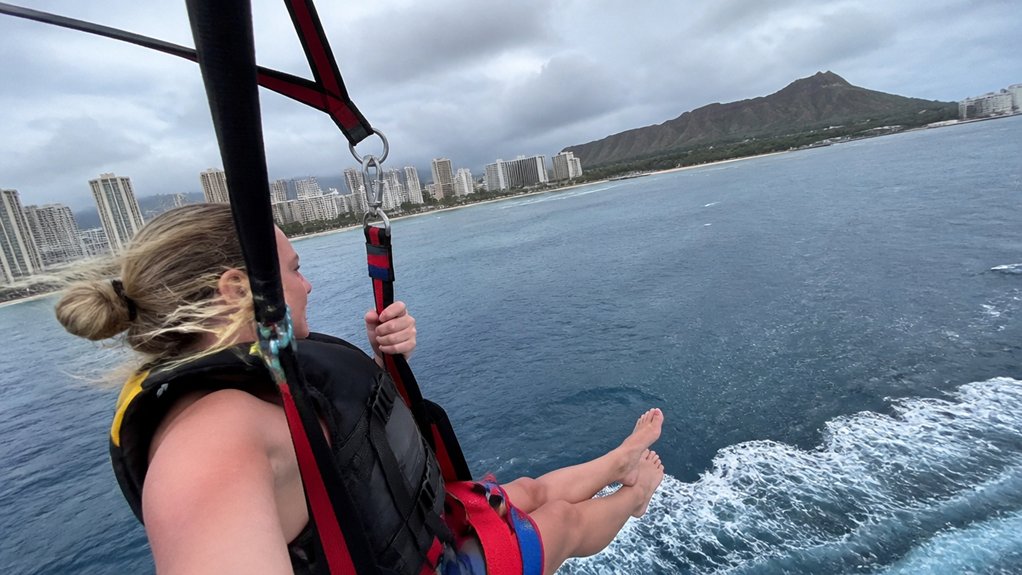
Like Icarus with better safety gear, you might expect a chill once you rise above Waikiki. But most flights feel surprisingly warm, with sun on your shoulders, salt in the air, and a brisk ocean breeze tugging at your legs. The real shiver often comes after a splash or on the boat ride out. So what actually makes you cold, and when should you pack a light layer?
Key Takeaways
- Most Waikiki parasailing rides do not feel cold; the air usually feels warm or neutral during the short 5 to 10 minute flight.
- At typical parasailing heights, temperature changes are minimal, and wind, clouds, and daily weather matter more than altitude.
- Tropical sun and water glare often add warmth, while the sea breeze usually feels gentle rather than sharply cold.
- The main reason riders feel cold is getting splashed or dipped, because wet skin plus wind creates a brief chill.
- Wear swimwear or quick-dry layers, and bring a towel or light extra layer if you are sensitive to wind or splashes.

Parasailing Experience in Waikiki, HI
Experience the thrill of Oahu parasailing on this unforgettable 1-hour adventure from Waikiki. Soar up to 1,000 feet above the stunning south shore of...

Waikiki Parasailing in Hawaii from Oahu
Experience the thrill of parasailing over Hawaii’s stunning coastline as you glide above crystal-clear waters and...

Parasailing in Waikiki from Oahu Hawaii
Scenic Aerial Views Take in unforgettable views of Waikiki, Diamond Head, and Oʻahu’s south shore as you soar abo...

Hawaiian Parasail Since 1977 from Waikiki Beach
Hawaiian Parasail Inc. has been the original parasailing company in Hawaii for over 48 years since 1977. Parasailing...
Will You Get Cold Parasailing in Waikiki?
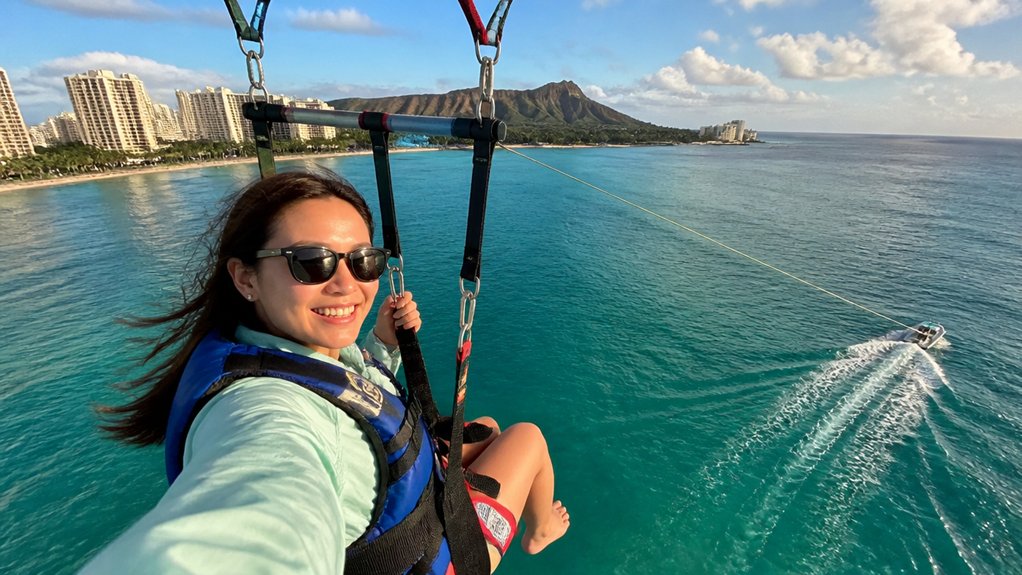
On most Waikiki parasailing trips, you probably won’t get cold. If you’re picturing a high, icy ride, that usually isn’t what happens during Parasailing in Waikiki. You rise to common flight levels, not several thousand feet, so you’re more likely to notice ocean breeze than a real chill. From above waikiki beach, the air often feels a lot like being out on the water during a catamaran sail. Some days run warmer than others, of course, and cooler shore weather can follow you offshore. Still, most riders describe the flight as comfortable, not teeth chattering. The one time you might feel a quick cold shock is after an optional toe dip or splash. Bring a towel or light layer for the boat ride back. Before you book, review basic parasailing safety tips so you know what to expect on the water.
Why Does Waikiki Parasailing Usually Feel Warm?
You rise over Waikiki with the tropical sun on your shoulders, and the air usually feels more like a bright ocean breeze than a real temperature drop. Because most parasail flights top out around 900 feet, you don’t climb high enough for the kind of wind chill that turns a fun ride into a teeth-chatterer. The trip also lasts only about 5 to 10 minutes, so any cool gusts tend to feel invigorating, not like you’ve drifted into a flying freezer. If wind picks up, your crew may adjust, delay, or cancel the ride to keep the experience safe and comfortable.
Tropical Sun Exposure
In Waikiki, parasailing usually feels warmer than people expect. You leave the dock under bright skies, and tropical sun exposure does a lot of the work. Even before lift-off, the boat ride reflects heat off the water, so the breeze often feels fresh instead of cold.
- Sunlight warms your skin fast.
- Clear water throws back extra glare and heat.
- The sea breeze usually cools you gently, not harshly.
- Warm launch conditions matter most, so check the forecast and ask the operator.
A quick parasailing safety checklist can also remind you to bring sunscreen, secure loose items, and follow the crew’s weather guidance before takeoff.
You may still feel wind on your face and legs. Yet on sunny Waikiki days, that airflow often reads like a cooler on a hike, not a freezer. You might even squint, laugh, and wish you’d packed extra sunscreen today.
Short Flights Stay Warm
Because most Waikiki parasailing trips give you only about 5 to 10 minutes in the air, there’s just not much time for a real chill to settle in. On warm days, you’ll probably feel the same breeze you felt on the boat, just with views and fewer elbows. If you book with Hawaiian Parasail, the distance in the air may vary per person and by package, but the altitude still stays far below the several-thousand-foot mark where colder air kicks in. That’s why many riders say it wasn’t cold at all. Even a quick toe dip usually matters less than drying off fast with a towel or sweater. If you’re wondering about the best time to go, comfort is usually easy year-round in Waikiki. For extra comfort, the best time of day to parasail in Waikiki is often when the weather feels warm and the ocean breeze is gentle.

Diamond Head Hike Shuttle with Reservation Tickets Included
Our Diamond Head Shuttle Tour offers a perfect blend of convenience, adventure, and unforgettable vistas.Stress-Fr...

Diamond Head Hiking Tour with Tickets and Shuttle Included
The Diamond Head Hike is a 3-hour round-trip adventure, including pick-up and drop-off from your Waikiki hotel. This...

Private Deep Sea Fishing Charter in Honolulu
Experience the best deep sea fishing charter near Waikiki with Magic Sport Fishing—one of Oahu's top-rated sportfi...
Does the Air Feel Colder at 800 Feet?
Really, does the air feel colder at 800 feet over Waikiki? Usually, not by much. Your flight lasts only about 5 to 10 minutes, and many riders say the air still feels warm or simply neutral. Even if your package reaches 800 or 900 feet, you don’t climb high enough for a clear temperature drop. Day to day weather matters more than the number.
- You may spot Diamond Head and Hanauma Bay and Pearl Harbor while feeling mostly the same breeze.
- Sunny days often feel balmy aloft.
- Cloud cover or wind can add a light chill.
- If you get dipped, the cool shock usually comes from wet skin drying, not from the air at altitude. That’s the real surprise for most riders up there.
If the breeze or boat movement makes you queasy, simple motion sickness tips can help you feel more comfortable before and during your flight.
Does the Boat Ride Feel Colder?
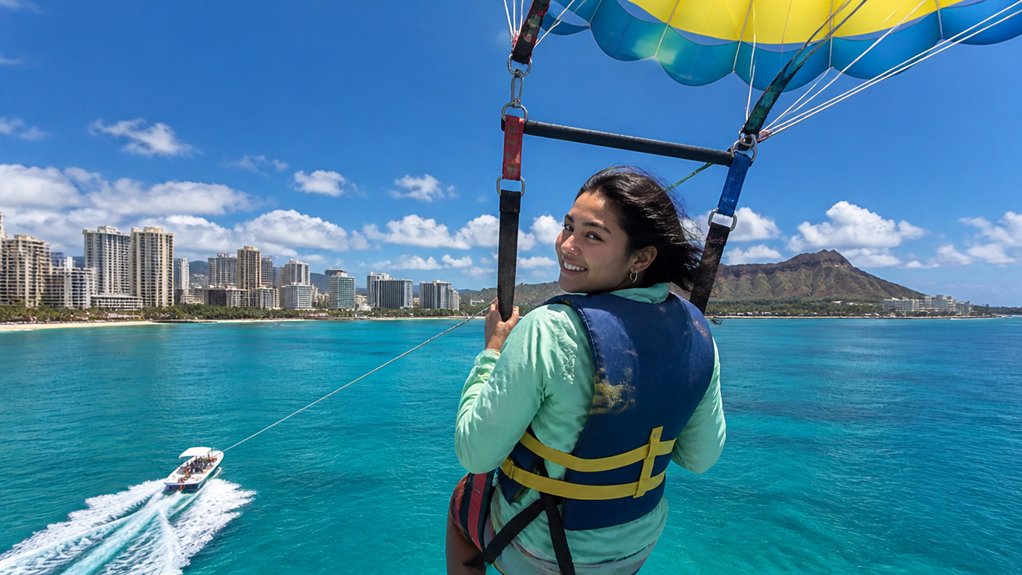
The boat ride usually feels about like any other run across Waikiki waters. You hear the engine hum, smell salt in the air, and get the same splash and breeze you’d expect on a normal ride. Most people don’t report a dramatic drop in temperature before takeoff. If the day already feels cool on deck, you’ll notice that first.
Even a quick cold-water dunk from a slack release tends to pass fast, so you won’t likely stay chilled afterward. One rider even described much of the experience as feeling tethered to the same conditions as the boat. That’s useful HAWAII TRAVEL insight, and LLC makes a fair point here: cold usually isn’t the headline. The boat ride itself stays pretty familiar, with only brief surprises there. Before heading out, it is still smart to check current ocean conditions and respect ocean warning signs, since Waikiki waters can change quickly.
Does the Wind Feel Cold While Parasailing?
You’ll usually feel more warm ocean breeze than real cold when you’re parasailing in Waikiki, since most flights last only a few minutes and the air often feels a lot like it does on the boat. If a chill shows up, it’s usually from a breezy day rather than your height, because you’re not going high enough for major temperature drops to crash the party. You can keep things comfortable with a light cover-up, a towel after a dip, or a stay-dry ride if splashes bother you more than the wind. Knowing what to expect before takeoff can also make the ride feel calmer and more comfortable.
Ocean Breeze Chill
Even though the ocean breeze brushes your face and tugs at your harness, many riders say parasailing in Waikiki doesn’t actually feel cold. On a warm day, you may notice it feels no different than sitting on the boat, just with better views and saltier air.
- Your windchill perception often stays mild in Waikiki’s warm conditions.
- Warm sun on your skin can balance the breezy rush.
- Day temperature variance matters, so one afternoon can feel softer than another.
- For cooler or gustier weather, get operator guidance before you launch, since crews know how the ride usually feels, and they’ll tell you if today’s breeze seems invigorating, not refrigerator-cold. That’s useful when clouds roll in and your swimsuit starts wondering whether it packed enough confidence today.
Choosing the best season for parasailing in Waikiki can help you find warmer, calmer conditions that make the breeze feel more comfortable.
Have a question about this guide?
Ask for tour ideas, hotel suggestions, or a simple trip plan that combines both.
Trip Helper
Height And Wind
At parasailing height in Waikiki, the breeze usually feels more lively than icy. You’re often only 100 to 150 feet up, though some packages climb higher, and those altitude effects rarely create real cold during a short 5 to 10 minute flight. The air may feel brisk on your face and ears, yet many riders say it feels a lot like the boat ride below. On warm days, you might even feel a little sweaty, not chilled. If winds turn sharp or the weather cools off, operators often pause trips, which supports both comfort and gear safety. Because windy weather can lead to canceled Waikiki parasailing tours, it’s smart to stay flexible with your plans. Since conditions change by package and day, ask your operator what to expect. Their local read matters more than guesswork. Keep simple hydration tips in mind too, because sun and salt can sneak up on you.
Dressing For Warmth
For most Waikiki parasail rides, dressing for warmth doesn’t need to be a big project. You’ll usually feel about as comfortable in the air as you do on the boat since typical parasail heights don’t bring real cold. Some riders even feel warm enough to sweat.
- Follow Layer fit guidance: wear a light top you can peel off.
- Ignore most Wind chill myths: Waikiki flights stay far below chilly altitudes.
- Use smart Footwear recommendations: secure sandals or water shoes beat anything loose.
- Pack a towel or thin sweater if a toe dip leaves you chilly after splashdown.
A short parasailing packing list can help you remember simple extras like sunscreen, sunglasses, and a towel before heading out.
You’ll hear surf and boats below clearly. If the morning feels breezy on the water expect only a light nip not Arctic drama there.
Will a Dip Make You Feel Cold?
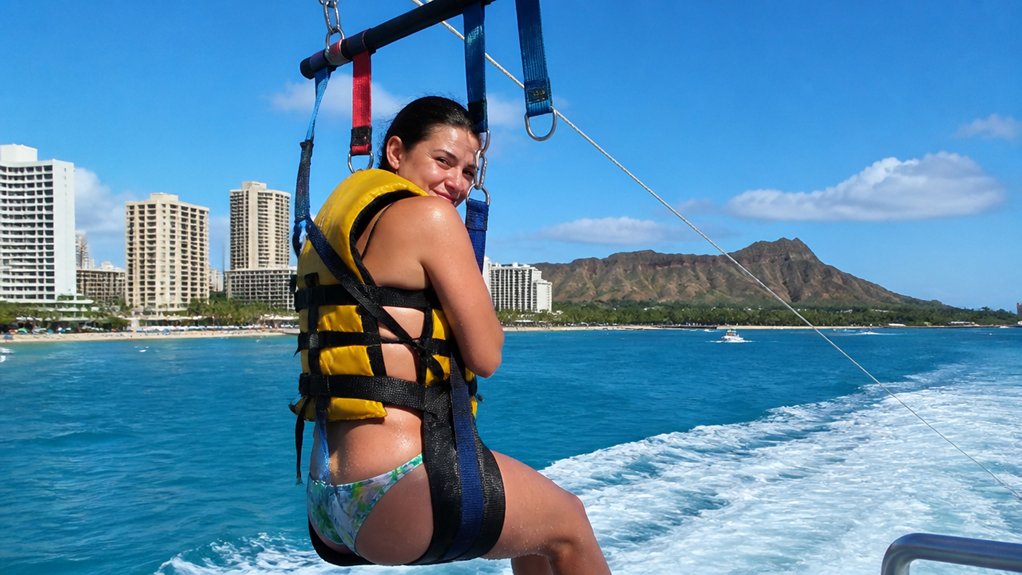
How cold does a parasailing dip in Waikiki really feel? If you get splashed or lowered into the ocean, you’ll probably feel a quick chill on your skin. That Brief Dunking can surprise you for a second, especially when the breeze hits your shoulders. Still, many riders say the whole trip doesn’t feel truly cold, because you spend most of your time soaring above the water, looking at bright surf and hearing the boat hum below.
There’s also some Temperature Variation from person to person. If you’re sensitive to cold, ask for a dry ride or a minimal splash. Many operators can do that. And if you do get dipped, Crew Towel Offloading works, with a towel and sometimes a sweater waiting on board. A quick parasailing dip is generally considered safe when handled by an experienced crew and proper equipment.
What Should You Wear Parasailing in Waikiki?
You’ll feel most comfortable in swimwear or quick-dry layers, since many Waikiki flights start and end dry but a splash or playful toe dip can still happen. You should pack sunscreen and secure sunglasses because the sun feels bright and sharp when you’re floating high above that glittering blue water. If you get chilly fast, you’ll be glad your clothes dry quickly, and a towel waiting on the boat won’t seem like overpacking at all. For more comfort, think in terms of best outfits for parasailing in Waikiki: lightweight clothes, secure footwear, and layers that handle ocean breeze well.

Surf Honolulu: Ala Moana Stand-up Paddleboard Lesson
For good fun and a great workout, take a stand-up paddleboard lesson on your Oahu vacation. At a beach near Waikiki...

Lei Greeting Private Transfer Arrival Honolulu Airport to Waikiki
Your Hawaiian adventure begins the moment you land—complete with a lei greeting! Don’t wait, reserve your ride t...

Small Group Waikiki Sunset Sailing Tour
Hawaii is well known for its majestic sunsets, and there is truly no better way to experience it than on our boat, T...
Swimwear And Quick-Dry Layers
A swimsuit or other snug quick-dry outfit usually makes the most sense for parasailing in Waikiki, since most of the ride happens high above the water and any “dunking” is often brief and sometimes optional. Choose pieces that won’t flap when the boat picks up speed or the wind starts buzzing past your ears.
- Wear a rash guard or thin windbreaker if you get chilly easily.
- Pack a towel and dry layer for the ride back.
- Add sunglasses with a strap to handle spray and glare.
- On cooler, windier days, a budget wetsuit can feel surprisingly cozy.
You’ll likely feel cold only for a minute if you get dipped. Your outfit should also fit comfortably under the parasailing harness so it stays secure during takeoff, flight, and landing. For lip balm options, hydration tips, and nausea prevention, keep a separate checklist handy nearby.
Sun Protection Essentials
Most riders feel the sun before they notice the breeze, since the boat ride out and the flight put you in bright open air with glare flashing off the water. You’ll want sunscreen, plus sunglasses with a strap, so you can keep squinting at Diamond Head instead of chasing frames across the deck. Wear snug swimwear or quick-dry clothes, and skip loose layers that flap around in the harness. If you expect splash or an optional toe dip, bring a towel for the ride back. A waterproof phone case is also smart for keeping your device protected during the boat ride, splashy moments, or photos before and after your flight. Wind chill factors matter on cooler or gusty days, so add a light sweater afterward or explore Wetsuit options if you run cold. Timing strategies help too. Morning trips are often calmer if sun, wind, or seasickness bugs you most.
Should You Bring a Towel or Dry Clothes?
Pack a towel or a dry layer if there’s any chance you’ll get dipped, but don’t assume you’ll feel cold just from flying. Most riders say the air feels much like the boat ride when you stay dry.
Bring a towel if there’s a chance of a dip, but dry flights usually feel no colder than the boat ride.
- Pack towel for after splash.
- Expect optional dips to feel chilly briefly.
- Keep a dry layer handy as your warmth plan.
- Ask for operator guidance if you’re unsure about getting wet.
Your actual air time in Waikiki is usually only part of the full boat outing, so staying warm afterward can matter just as much as comfort during the flight. On warmer days, you may not notice any chill at all. If you react strongly to cool water, stash a sweater on board. That way, you’ll step off comfortable, not shivery, and maybe just a little salty. You’ll hear the lines creak, see blue water flashing below, and appreciate dry clothes more than packing.
Is Morning Waikiki Parasailing Cooler?
So is morning Waikiki parasailing actually cooler? A little at launch, maybe, but not usually once you’re flying. Morning rides often feel easier because calmer water and steadier lines add morning stability comfort. Despite wind chill factors, most riders report only mild coolness overhead. Ocean temperature myths can also mislead you. Airborne chill usually stays minimal at Waikiki’s typical parasailing height. Understanding real risks can help you separate normal cool-air sensations from actual safety concerns.
| Moment | What you feel | Smart move |
|---|---|---|
| Dock | Light breeze | Keep a layer handy |
| Quick dip | Brief chill | Towel up after |
If you’re sensitive to cold, plan for an optional splash, not icy skies. The towline hums, the water flashes blue, and your sweater can wait until after. You hear soft boat noise below and see hotels shrink as Diamond Head glows in sun.
Is Winter Parasailing in Waikiki Cold?
Winter sounds cooler on paper, but Waikiki parasailing usually doesn’t feel cold once you’re in the harness. You aren’t flying high enough for major wind chill, so it often feels much like the boat.
Winter may sound chilly, but Waikiki parasailing often feels more breezy than cold once you’re up there.
- Warm days can feel almost summery above the blue water.
- Even in winter, most rides feel comfortable, breezy, and surprisingly normal.
- A splash or dip is the bigger cold moment, so pack a towel for quick warming.
- Check shower options and keep post dip tips simple: dry off, pull on a sweater, and enjoy the ride back.
If the day turns windier, you may notice it more, yet many winter flights still land in that warm or not cold sweet spot, with sun, surf hiss, and spray doing the talking. Since ocean spray can reach the boat, keep your phone protected from saltwater in Hawaii before you head out.
Who Is Most Likely to Feel Cold?
Some riders notice the chill sooner than others, especially if you already run cold or step onto the boat on one of those breezy gray-blue mornings when the wind nips at your shoulders.
You’re the likeliest to feel cold if the day starts cool and windy, because those sea level conditions can follow you upward. Your wind chill sensitivity matters, but the bigger factor is water. If the crew gives you a quick toe dip or a full dunk, wet clothing effects can turn a mild breeze into something sharper. If you stay dry, you’ll probably feel about the same as you did on the boat, maybe even warmer in the sun. In Waikiki, most parasailing safety concerns are usually about sharks and parasailing rather than temperature, but cold can still affect your comfort if you get wet. In the end, personal tolerance levels shape the ride more than height alone.
How Can You Stay Warm Before and After?
You usually won’t need a parka for a Waikiki parasail, but you’ll feel smarter in quick-dry layers when the boat picks up speed and the wind starts talking. If you get a splash or a quick dunk, you’ll be glad you packed a towel and a dry top for that breezy ride back to shore. And if you’re extra cold-sensitive or the day turns cooler, a wetsuit can be the quiet hero that keeps your teeth from trying to clap. During whale season, boaters are also encouraged to follow Go Slow, Whales Below guidance to reduce collision risk while sharing the water with humpback whales.
Wear Light Layers
On most Waikiki parasailing runs, the air time lasts only five to ten minutes, so the breeze rarely feels truly cold. Still, conditions shift, so you should wear light layers instead of trusting beach myths. You’ll notice the trade winds on takeoff, the salt on your skin, and the cooler boat ride more than the flight itself.
- Start with a thin rash guard or sweatshirt on the boat.
- Add one extra layer if you’re prone to tropical wind chill.
- Skip heavy gear unless weather hints at parasail cancellation.
- After splashes, layer up fast, then sunscreen reapply before shore.
Before you dress for the trip, remember that Coast Guard rules and Hawaii parasailing regulations focus on safe operating conditions, so crews may adjust or cancel flights if weather or wind makes the ride unsafe.
If you run cold, a budget wetsuit can help on cooler days without turning your Waikiki morning into a polar expedition for no real reason either.

The Escape Game Honolulu: 60-Minute Adventures at Ala Moana
Our Hawaii store is on Oahu near Waikiki at Ala Moana. It's conveniently located next to countless dining options, p...

Electric Bike Ride & Diamond Head Hike Tour
*During the busy summer months, please check with us for last minute bookings (1 or 2 days before your desired ride...

Private Fishing Charter for Family and Friends in Honolulu
This is a one of a kind private reef fishing tour. Relax, hang out with friends and family, listen to music while bo...
Bring Dry Clothes
Warmth gets easier when you pack for the splash instead of the sky. Wear quick-dry clothes, and stash a towel, dry shorts, and a light sweater in a bag. If you choose a toe dip or get a surprise dunk, you can change fast once you’re back on the boat. That quick switch matters most on windy days, when the ride between turns feels cooler at the surface than it does up high.
Most riders won’t feel cold while parasailing in Waikiki, but a layer earns its spot. Pack hand warmers if you’re sensitive to wind. Use waterproof layers to protect your dry bag. Bring a backup hoodie, because salt spray has a way of finding the one thing you hoped would stay dry.
Pack A Wetsuit
If chilly trade winds make you hesitate, a simple wetsuit can smooth out the whole parasailing run. You may not feel as cold in the air as you expect, yet the before-and-after moments on the boat can bite when wind speed rises and ocean chop sends spray flying. A wetsuit, even a $30 Amazon option, can work surprisingly well. One family said everyone froze except one person, so your cold sensitivity matters more than bravado. Think of it as armor.
- Wear it from the start if you’re cold-prone.
- Expect brief cold splashes if you get dipped.
- Stash a towel or sweater for after the ride.
- Listen through the safety briefing, then enjoy the view while everyone else chatters their teeth.
When Is It Too Windy to Parasail?
Because Waikiki crews watch the wind more than almost anything else, “too windy” starts when conditions push past an operator’s safety limits, not just when the beach feels a little cool and breezy.
That’s why Wind gusts matter more than your hoodie. Operators use safety thresholds and steady weather checks to decide if flights should run or shift. If next Thursday or Friday looks colder and windy, you should check the weather for wind, not just temperature. A rough forecast doesn’t always ground you, but timing can change as palm fronds rattle and whitecaps flash offshore. If you want your best shot at smoother air, book an earlier morning slot. Waikiki mornings are often calmer, while afternoons can turn choppier and rowdier by noon.
What Happens if Wind Cancels Parasailing?
When the trade winds start bossing the harbor around, Waikiki parasailing crews don’t try to tough it out. They pause flights because Harbor wind rules put safety first. If your ride gets scrubbed, you’ll usually see a short delay, a later slot, or a full cancellation. That’s annoying, but it beats bouncing around like beach laundry.
- Book for Day 1 or 2 so Rebooking timing policies work in your favor.
- Choose a morning launch. Calmer water and steadier air often help.
- Watch the harbor, not the hotel beach. Conditions can differ fast.
- Keep Weather day alternatives ready, so a windy forecast doesn’t hijack your plans.
You’ll feel informed, not stranded, when the captain makes the call.
What Can You Do in Waikiki Instead?
Where do you point the day when parasailing gets scratched and Waikiki feels more brisk than beachy? You pivot to Alternative activities that still feel very Oahu. You can duck into indoor options, tour Pearl Harbor, or keep it simple with a Mai Tai at Duke’s while trade winds rattle the palms. If you still want water, try sunset cruising nearby.
| Mood | Try | Why |
|---|---|---|
| Chill-shy | Hanauma Bay | Sheltered snorkel |
| Very breezy | Pearl Harbor | Easy daytime |
| Stay local | Duke’s stop | Cozy reset |
| Want waves | Catamaran | Anchors close |
If chill bites fast, pack a wetsuit. A cheap one, about $30 online, can make a surprising difference. One family swore it worked so well that everyone else froze except the suited swimmer on their windy beach day.
Frequently Asked Questions
Can You Wear Glasses or Sunglasses While Parasailing in Waikiki?
Yes, you can wear glasses or sunglasses while parasailing in Waikiki, but you’ll want secure eyewear for lens safety. Choose sunglasses with UV protection, add a strap, and request a stay-dry ride if needed, too.
Is Parasailing in Waikiki Safe for People With Seasickness?
Yes, smooth, short parasailing’s safer for your motion sensitivity than longer boat trips. You’ll likely handle calm Waikiki rides well, but for medical safety and nausea prevention, book mornings and choose operators with clear briefings carefully.
Can You Bring a Phone or Camera While Parasailing?
Yes, you can bring a phone or camera while parasailing, but you’ll need waterproof cases, straps, and confidence handling it. Ask about gear storage and crew ride documentation if you’d rather not risk your device.
Are There Age or Weight Limits for Waikiki Parasailing?
Yes, you’ll face age requirements and weight limits for parasailing, and operators may change solo or tandem flights based on weather restrictions, medical considerations, and harness fit, so you should confirm operator’s policy before booking.
How Long Does a Typical Parasailing Ride in Waikiki Last?
Your typical Waikiki parasailing ride lasts 60–90 minutes overall, though you’ll usually fly just 5–10 minutes. You’ll spend the rest on check-in, safety briefings, other riders’ turns, and weather effects that can extend ride duration.
Conclusion
You probably won’t get cold parasailing in Waikiki. You’ll feel sun on your shoulders, salt in the air, and a steady breeze instead of mountain-level chill. Stay dry, bring a light cover-up, and the whole outing usually feels easy. If the wind picks up, the crew cancels and you pivot to the beach, a catamaran, or shave ice. You go up, you glide out, you come back smiling, maybe a little splashy by sunset that day.
Waikiki Parasailing in Hawaii from Oahu
Experience the thrill of parasailing over Hawaii’s stunning coastline as you glide above crystal-clear waters and lush island landscapes. You’ll s...

Arrival - Private Transfer Honolulu Airport to Waikiki Hotel
Skip the long taxi lines, don’t waste your precious vacation time waiting in long taxi lines or taking public tran...

Honolulu Airport & Waikiki Hotels Private Transfer by Minivan (up to 5 people)
Arrive in Hawaii feeling relaxed with a pre-arrange airport transfer waiting; Avoid navigating public transport or j...

Honolulu Airport to Waikiki Shared Shuttle Transfer
From Honolulu International Airport to Waikiki. Infants under 2 year old is free when they are held by an adult. Car...

Hawaiian Parasail Since 1977
Experience one of Oahu’s most popular water adventures with a Waikiki parasailing tour. Perfect for thrill-seekers and first-timers alike, this guid...

Waikiki and Diamond Head Parasailing Experience
Take flight up to 1,000 feet above Oahu’s famous coastline on a thrilling 1-hour parasailing adventure from Waikik...

Parasailing on Maunalua Bay- Oahu's off Waikiki Playground
Bring the whole family along for an exhilarating Oahu parasailing adventure from Honolulu! Soar above the waters of...

Maunalua Bay Higher Flyer Parasailing Adventure
Bring the whole family along for an exhilarating Oahu parasailing adventure from Honolulu! Soar above the waters of...
Experiences to explore
 Explore experience ↗
Parasailing Experience in Waikiki, HI
◷ 1 hr
Experience the thrill of Oahu parasailing on this unforgettable 1-hour adventure from Waikiki. Soar up to 1,000 feet above the stunning
From $44.00 USD
View dates Explore experience ↗
Parasailing in Waikiki from Oahu Hawaii
◷ 1 hr
Scenic Aerial Views Take in unforgettable views of Waikiki, Diamond Head, and Oʻahu’s south shore as you soar above the water. Choose f
From $35.00 USD
View dates Explore experience ↗
Waikiki and Diamond Head Parasailing Experience
◷ 1 hr
Take flight up to 1,000 feet above Oahu’s famous coastline on a thrilling 1-hour parasailing adventure from Waikiki. Launch from the bo
From $34.00 USD
View dates